

So, how often should you really be washing your bed sheets? The short answer is pretty simple: for most of us, once a week is the golden rule. Sticking to this schedule is one of the easiest ways to keep your bed fresh and hygienic—a must, considering we spend about a third of our lives there.
Why a Weekly Wash Is the Standard

Even if your sheets look clean after a few nights, there's a whole invisible world of build-up happening. Every night, your body sheds dead skin cells, sweats, and releases natural oils. It's completely normal, but it quickly creates the perfect environment for dust mites and bacteria to settle in.
Think of it like this: you wouldn’t wear the same shirt for seven days straight without washing it. The same logic applies to your sheets. A weekly wash hits the reset button on this microscopic ecosystem, keeping things fresh.
The Big Three Reasons for a Weekly Wash
This isn't just about that crisp, clean-sheet feeling; it's also about your health and comfort. A regular laundry day helps to:
- Keep Allergens Away: Washing gets rid of common triggers like dust mites and pet dander that can mess with your sleep and flare up allergy or asthma symptoms.
- Help Your Skin Breathe: Clean sheets and pillowcases mean fewer pore-clogging oils and bacteria, which can help reduce the chances of breakouts and skin irritation.
- Create a Healthier Sleep Zone: Regular washing stops bacteria and potential fungi from growing in the warm, sometimes moist environment of your bed.
A weekly wash is a foundational habit for a healthy home. It’s a simple, proactive step that minimises your exposure to allergens and germs while you sleep, contributing to better overall wellness.
But of course, this one-size-fits-all rule isn't set in stone. Things like your health, whether your furry friends share the bed, and even the season can mean you need to wash your sheets more often. We'll get into all those details, but as a solid starting point, the weekly standard is your best bet.
For a quick reference on washing frequency for all your bedding, this table breaks it down.
Quick Guide to Washing Your Bedding
| Bedding Item | Recommended Washing Frequency |
|---|---|
| Sheets | Once a week |
| Pillowcases | Once or twice a week |
| Duvet Covers | Every 1-2 weeks |
| Pillows | Every 3-6 months |
| Duvets/Quilts | Every 6 months |
| Blankets | Every 2-3 months |
This simple habit not only keeps your bed clean but also helps preserve the life of your sheets, ensuring your bedroom stays a true sanctuary for rest. For a deeper dive into extending the life of all your bedding, check out our guide on how often to wash and replace bedding.
What Really Lurks in Your Sheets Between Washes
It’s easy to think of unwashed sheets as just a bit stale, but what's happening on a microscopic level is far more active. Your bed is a bustling ecosystem that thrives in the dark, and knowing what’s in there is a pretty compelling reason to stick to that weekly wash.
Every single night, your body contributes to this environment. We're constantly renewing our skin, shedding roughly 500 million skin cells a day. A huge chunk of those are left behind in your bed, becoming the perfect food source for a thriving colony of dust mites. While the mites themselves are mostly harmless, their waste is a major trigger for allergies and asthma.
The Unseen Buildup of Oils and Sweat
It’s not just dead skin, either. Your body produces sweat and natural oils while you sleep, even if you don't wake up feeling sweaty. This mix of oil and moisture turns your warm, cosy bed into an ideal breeding ground for bacteria and even fungi.
This isn't just a hypothetical problem; it has real-world consequences for your health and comfort:
- Skin Health: All those oils, dead skin, and bacteria building up on your pillowcase can clog pores, leading to acne breakouts, blackheads, and general skin irritation.
- Allergy Symptoms: For anyone with sensitivities, the accumulation of dust mite allergens can mean sneezing, a runny nose, itchy eyes, and other respiratory issues that wreck a good night’s sleep.
- General Hygiene: Over time, this microbial party can lead to funky odours and a generally unhygienic place to rest your head.
For a deeper dive into getting on top of these allergens, our guide to understanding dust mites in Australia has practical solutions for your home.
This might sound alarming, but it’s a completely natural process. The key is regular maintenance. A weekly wash cycle effectively hits the reset button on this ecosystem, washing away the food source for mites and getting rid of bacteria before they can multiply to problematic levels.
Think of washing your sheets like weeding a garden. A little consistent effort stops small issues from growing into a major headache, ensuring your sleep sanctuary stays healthy, clean, and genuinely restful.
Interestingly, a lot of us might be falling behind. A recent Australian survey revealed that approximately 43% of people wash their sheets only once every two weeks or even less. This points to a big gap between best hygiene practices and what’s actually happening in most households.
And when you consider how long viruses can survive on fabric surfaces, the argument for regular washing becomes even stronger. A clean bed isn't just a luxury—it's a cornerstone of a healthy home.
Creating Your Personal Sheet Washing Schedule
The weekly wash is a fantastic baseline, but your life isn't one-size-fits-all, and neither is your laundry schedule. Think of the weekly rule as a starting point. Your personal habits, health needs, and even who you share your bed with can mean you need to adjust that frequency.
Getting your routine right ensures your bed is always a clean, healthy sanctuary.
For example, your skin is a great indicator. If you have sensitive skin or are prone to acne, the buildup of oils, sweat, and bacteria on your pillowcase can aggravate the issue. In this case, washing your pillowcases twice a week while keeping the rest of the sheets on a weekly schedule can make a noticeable difference. It’s a small change that can seriously support your skincare routine.
Factors That Demand More Frequent Washing
Certain situations throw the standard weekly wash right out the window. If any of the following apply to you, consider bumping up your laundry frequency to every three to four days, or at the very least, swapping out for a fresh set of sheets mid-week.
- Allergies or Asthma: If you suffer from allergies or asthma, your sheets can become a trap for pollen, dust mites, and other irritants that trigger your symptoms. More frequent washing, especially in warm or hot water, helps eliminate these allergens and lets you breathe easier through the night.
- Sleeping with Pets: We love our furry friends, but they bring along pet dander, hair, and whatever they’ve picked up on their paws. If your pet sleeps in your bed, washing your sheets more often is non-negotiable to keep your sleep space hygienic.
- Illness: When you or a family member is sick, your bed becomes a hotspot for germs. Washing sheets more often helps prevent the spread of bacteria and viruses, protecting both the sick person and others in the household.
- Night Sweats: If you naturally run hot or experience night sweats, that extra moisture creates an ideal breeding ground for bacteria and fungi. More frequent washing is key to keeping things fresh and clean.
This simple flowchart helps visualise the most common reasons to stick firmly to a weekly wash schedule.
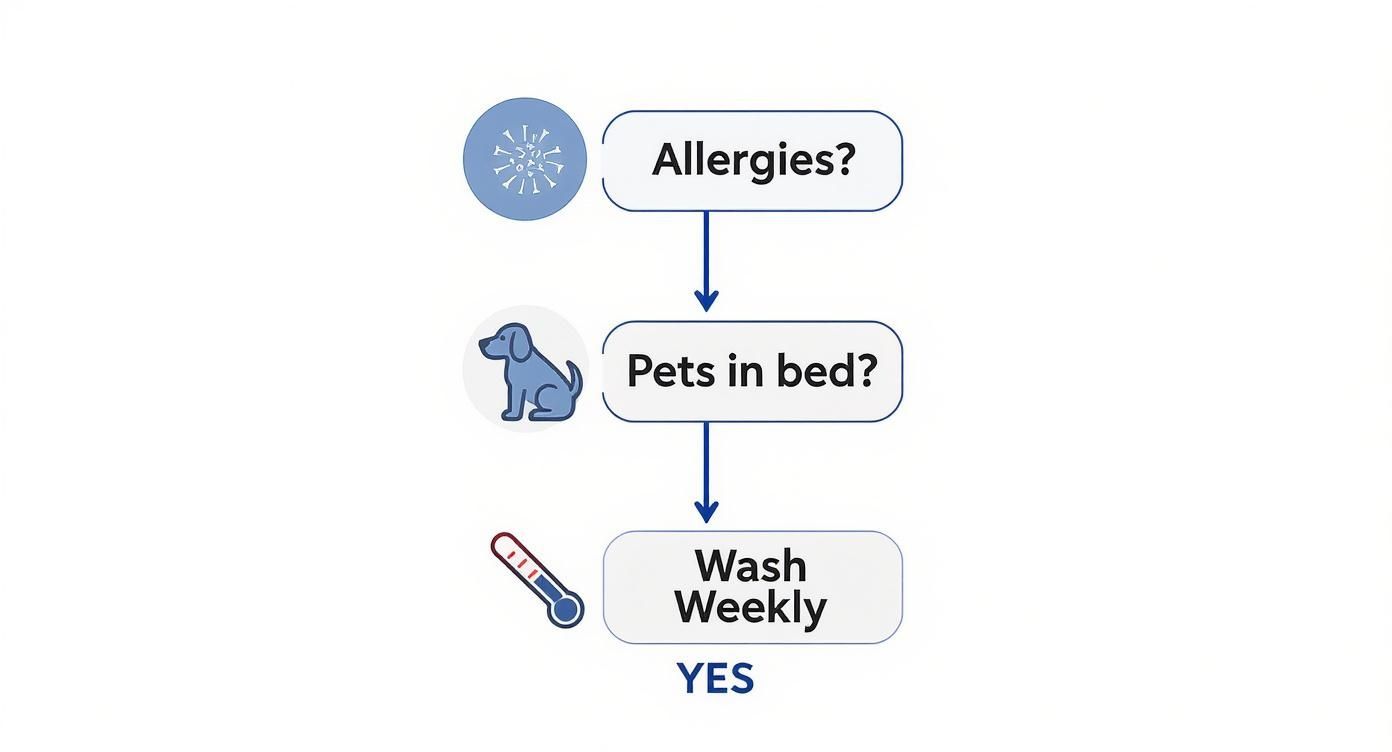
The key takeaway is that factors like allergies, pets, or recent illness are strong signals that your sheets need attention at least once a week to maintain a healthy environment.
Creating a Routine That Works for You
Building these adjustments into your routine is about creating healthy habits, not adding stress. A great way to start is by tying your sheet-washing day to another weekly task you already do, like taking the bins out or doing the grocery shop. This simple trick makes it much easier to remember.
Your bed should be a place of rest and recovery. A personalised washing schedule is a proactive step towards ensuring your sleep environment actively supports your health, rather than working against it.
By considering these personal factors, you can move beyond a generic rule and create a schedule that truly works for you. A consistent routine is fundamental to good sleep hygiene, which is all about setting up your environment for the best possible rest. You can learn more by exploring our tips for creating a healthy sleep environment.
Ultimately, listening to your body and being aware of your lifestyle are the best ways to determine exactly how often to wash your bed sheets.
How Seasons and Fabrics Change the Rules
Your bed sheet laundry routine shouldn’t be a set-and-forget job. Just like you swap summer shorts for winter jumpers, your washing schedule needs to adapt to the seasons and the sheets you’re sleeping on. If you stick to the same old routine year-round, you could be washing too often—or not nearly enough—which affects both hygiene and how long your sheets last.
During a hot, sticky Australian summer, you’re naturally going to sweat more at night. That extra moisture makes your bed an even more inviting place for bacteria and dust mites to set up shop. This is when a strict weekly wash becomes non-negotiable. For particularly hot sleepers, bumping that up to every four to five days is a smart move to keep things fresh.
On the other hand, the cooler, drier winter months usually mean less perspiration. You’ll probably find you can stretch your wash cycle out to every ten days without any issues, especially if you shower before bed and don’t have any furry friends sharing your space.
Why Your Sheet Fabric Matters
The material your sheets are made from plays a massive part in how often they need a wash. Different fabrics deal with sweat, body oils, and general grime in their own way, and that directly impacts your laundry schedule.
- Natural Fibres (Cotton, Linen, Bamboo): These are the champions of breathability. They let air circulate and moisture evaporate, which helps keep the microbial party from getting started. But because they’re so good at absorbing moisture, they still soak up sweat and oils, making a weekly wash the gold standard.
- Synthetic Fibres (Microfibre, Polyester): While they’re often durable and budget-friendly, synthetic fabrics just aren’t as breathable. They can trap heat and moisture against your skin, which means they might need washing more often—especially in warmer weather—to stop odours and buildup from taking over.
- Delicate Fabrics (Silk, Satin): These luxurious materials are less absorbent than cotton, but body oils can build up over time and damage their fine fibres. They need a gentle touch in the wash, and sticking to a regular schedule is the key to keeping them in good condition.
Think of your sheets like you think of your gym clothes. A breathable cotton t-shirt is fine for a casual walk, but a synthetic top after a sweaty workout needs to go straight into the wash. It’s all about how the fabric interacts with your body and the environment.
Getting to know how different materials perform is a game-changer for both hygiene and proper care. For example, understanding what makes popular natural fibres unique can help you choose better bedding in the first place. You can learn more by checking out our guide to bamboo vs cotton sheets. By matching your wash schedule to the season and the fabric, you’ll make sure your bed stays a clean, inviting sanctuary all year long.
The Right Way to Wash and Dry Your Bed Sheets

Knowing when to wash your sheets is only half the battle. If you don't wash them the right way, they won't come out truly clean, and you could be shortening their lifespan. A proper wash does more than just get rid of grime—it protects the colour, softness, and integrity of your bedding.
Before you do anything else, find the care label. Seriously. This little tag is your roadmap, spelling out exactly what the manufacturer recommends for water temperature and cycle type. Ignoring it is one of the fastest ways to accidentally shrink or ruin a perfectly good set of sheets.
Another classic mistake is cramming too much into the washing machine. It's tempting to get it all done in one go, but your sheets need space to tumble and swish around to get properly clean. Overcrowding means the detergent and water can't do their job, leaving you with grubby patches and leftover residue. As a general rule, give your sheets their own load or wash them with other lightweight items.
Choosing the Right Temperature and Cycle
The temperature you choose is a balancing act. You want to sanitise your sheets and get them clean, but you also need to be gentle on the fibres to make them last.
- Cold Wash (Below 30°C): This is your best mate for delicate fabrics like silk or for your regular wash of coloured sheets. Cold water is gentle, prevents shrinking, and is the most energy-efficient choice. Plus, modern detergents are brilliant in cold water.
- Warm Wash (30°C to 40°C): This is the sweet spot for most cotton or linen sheets. It's warm enough to cut through body oils and everyday grime without being too harsh on the fabric.
- Hot Wash (60°C and above): Keep hot washes for specific situations. They’re fantastic for sanitising sheets after someone’s been unwell or for blitzing allergens like dust mites. But be warned, frequent hot washes can make colours fade and cause the fibres to break down much faster.
The cycle you pick is just as important. A ‘normal’ or ‘cottons’ cycle works well for most durable sheets, while a ‘delicates’ or ‘gentle’ cycle is a non-negotiable for materials like silk. To keep certain fabrics feeling their best, specific guidelines apply, especially when it comes to washing and caring for luxury European linen.
Drying for Softness and Longevity
How you dry your sheets makes all the difference. While throwing them in the dryer is quick and easy, high heat is the number one enemy of soft, long-lasting sheets.
If you are using a machine, always tumble dry on a low or medium heat setting. It might take a little longer, but it stops the fibres from going brittle and helps prevent shrinkage. A couple of wool dryer balls thrown in can also speed things up and soften the fabric naturally.
But whenever you can, take advantage of the Aussie sun. Line drying is the gentlest method of all, and the sun’s UV rays are a natural sanitiser and whitener. Honestly, nothing beats the fresh, clean smell of sun-dried sheets. For more tips on keeping your bedding in top shape, check out our guide on caring for your bed sheets.
Of course. Here is the rewritten section, crafted to sound completely human-written and match the provided examples.
Common Sheet Washing Mistakes to Avoid
Even if you have the best intentions, some common laundry habits can accidentally damage your sheets or leave them feeling less than clean. Knowing how often to wash your sheets is the first step, but sidestepping these simple mistakes will ensure you get a better, longer-lasting clean every time.
One of the biggest culprits is using way too much detergent. The logic seems simple—more soap means more clean, right? But the opposite is actually true. Excess detergent doesn't rinse out properly, leaving behind a stiff, scratchy residue that can irritate your skin and make lovely soft fabrics feel rough. Always stick to the recommended amount for your load size.
Using the Wrong Products
It’s not just about how much product you use, but also what you use. A few common laundry additions can do more harm than good when it comes to your bedding.
-
Fabric Softener: While it sounds like a great idea for sheets, liquid fabric softeners and dryer sheets actually coat the fibres in a waxy film. Over time, this build-up kills the absorbency and breathability of natural materials like cotton and bamboo.
-
Harsh Bleach: Chlorine bleach can be far too aggressive for most fabrics. It weakens the fibres and can even cause white sheets to yellow over time. If you need to tackle a stain, an oxygen-based bleach is a much gentler—but still very effective—alternative.
A critical mistake is letting wet laundry sit in the machine. This creates the perfect warm, damp environment for mildew to grow, leading to those musty smells that are almost impossible to get rid of. Get your sheets into the dryer or onto the clothesline as soon as the wash cycle finishes.
A Few Common Questions About Washing Your Bedding
Even once you’ve got your sheet-washing routine down pat, a few questions always seem to pop up about the other bits and pieces on your bed. Here are some quick, clear answers to the most common queries we get, helping you round out your laundry know-how.
Can I Wash My Pillows and Duvet the Same as My Sheets?
Definitely not. Your pillows and duvet (or doona) need a completely different game plan. While sheets are a weekly job, you should only need to wash your pillows every four to six months and your doona just once every two to three months.
Always start by checking the care label. These bulkier items often need a bigger washing machine and a delicate cycle. More importantly, they need a very thorough drying process to stop mould from growing inside or the filling from clumping up.
What Is the Best Detergent for Bed Sheets?
The ‘best’ detergent really comes down to what you need it to do. If you or someone in your family has sensitive skin, a hypoallergenic, fragrance-free liquid detergent is always the safest bet to avoid any irritation.
For sheets that are heavily soiled, or if you’re trying to combat dust mites, a detergent with enzymes will be your best friend. Those enzymes are brilliant at breaking down sweat and body oils. Here in Australia, there are some great eco-friendly brands designed for both front and top loaders that give a powerful, versatile clean.
A cold wash with a good quality, modern detergent is surprisingly effective for lightly soiled sheets. It’s much gentler on the fabric, helps prevent shrinking, and will definitely save you a few dollars on your energy bill.
That said, if you’re sanitising sheets after someone’s been sick or for anyone with severe allergies, a warm or even hot wash (around 60°C) is the way to go. You really need that higher temperature to properly kill off any lingering germs and eliminate dust mites, making sure your bed is a truly healthy space. It's all about finding the right balance between caring for your fabrics and meeting your household's hygiene needs.
Ready to upgrade your sleep sanctuary? Explore the beautiful and comfortable bedding collections at Manchester Factory and find your perfect set today. Shop now at https://www.manchesterfactory.com.au.