

When you're trying to pick out new bedding, all the different terms can get a bit confusing. But the main difference between bedspreads and comforter sets is actually pretty simple. One is all about creating a sleek, floor-length look, while the other is built for plush, insulating warmth.
Think of a bedspread as a lightweight, polished finishing touch, and a comforter set as your ticket to cosy, lofty comfort. Getting this difference is the first step to really changing up the feel of your bedroom.
Decoding Your Bedding Choices
At first glance, bedspreads and comforters seem to do the same job—they both go on top of your bed. But their design, purpose, and how they make your room look and feel are worlds apart.
It’s a bit like choosing a coat. A bedspread is like a stylish, lightweight trench coat that pulls an outfit together, while a comforter is that thick, insulated puffer jacket you reach for when it gets properly cold.
A bedspread is a single, often quilted, layer that’s cut generously enough to hang all the way to the floor. It’s designed to cover everything—the mattress, the bed base, and even the pillows—for a clean, tailored, and unified look. Because it’s thinner, it’s a brilliant choice for warmer climates or for people who love to layer up with different blankets.
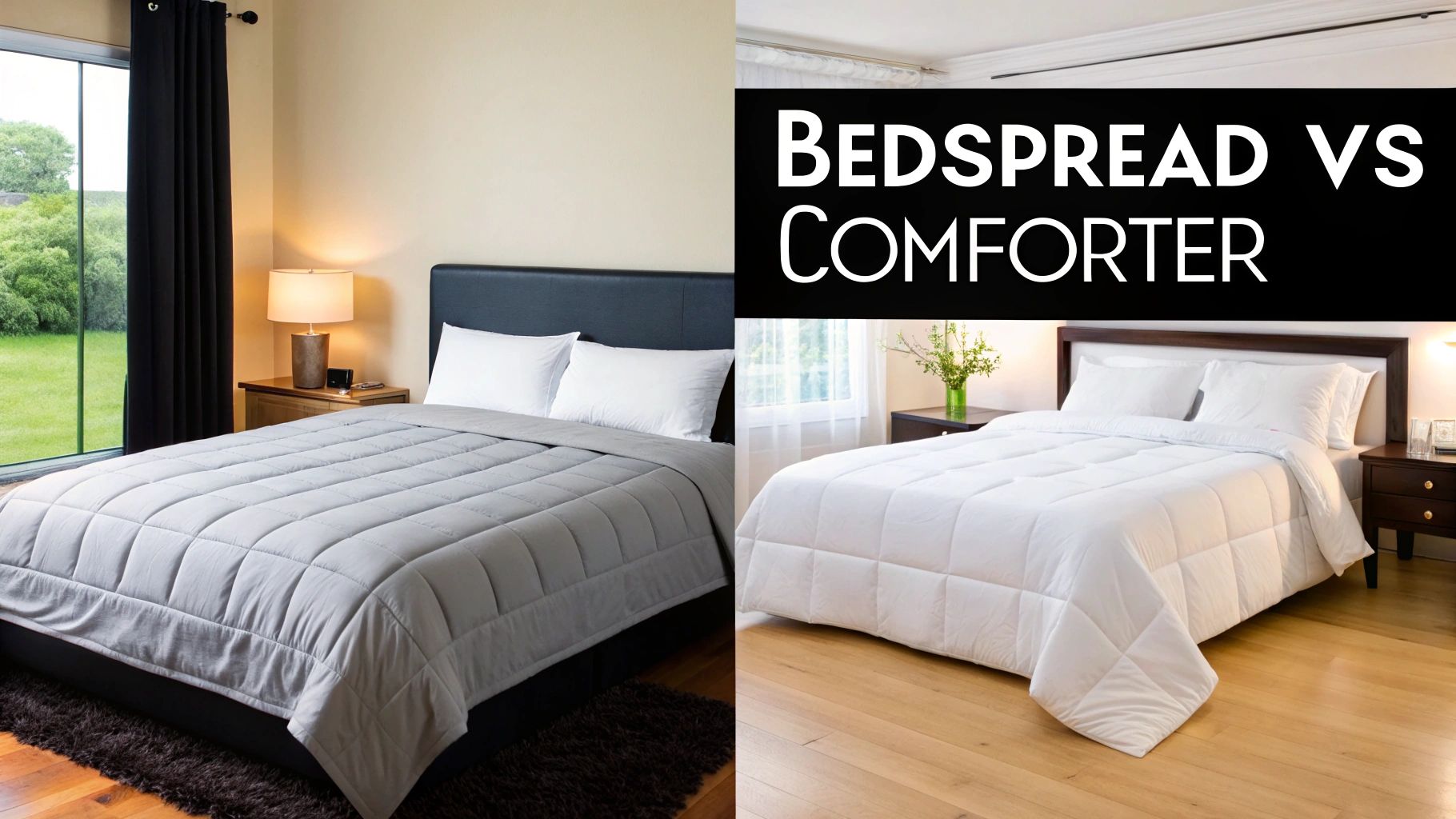
A comforter, on the other hand, is made specifically for warmth. It’s a thick, fluffy blanket filled with insulating materials like down, wool, or synthetic fibres. Comforters are cut shorter, so they typically just drape over the sides of the mattress without hitting the floor. This is why you often see them paired with a valance or bed skirt to hide the base.
So, the choice really boils down to your priorities. Are you going for a decorative, streamlined look, or are you all about maximum warmth and cosiness?
A lot of people find the lines start to blur with other bedding types, too, especially quilts. If you're curious about those finer details, you can dive into our https://www.manchesterfactory.com.au/blogs/news/bedspread-vs-quilt comparison.
The core distinction lies in function. A bedspread is primarily a decorative cover providing a light layer of warmth, while a comforter's main job is to provide significant thermal insulation for a comfortable night's sleep.
Bedspreads vs Comforter Sets At a Glance
To make the choice even clearer, we've put together a simple breakdown of the main features. This table gives you a quick snapshot of what each option offers, helping you decide which one is the right fit for your bedroom and sleep style.
| Feature | Bedspread | Comforter Set |
|---|---|---|
| Primary Function | Decorative, provides a clean and finished look. | Provides significant warmth and insulation. |
| Size & Drape | Large enough to hang to the floor, covering the bed. | Smaller, designed to cover the mattress top and sides. |
| Thickness | Thin and lightweight, often quilted for texture. | Thick, fluffy, and filled with insulating material. |
| Styling | Creates a seamless, all-in-one look. | Often requires a valance or bed skirt to hide the bed base. |
| Best For | Warmer climates or as a decorative layering piece. | Colder climates or for sleepers who prefer extra warmth. |
Ultimately, both have their place. And for those who want to get a broader understanding of all the layers that make a perfect bed, this comprehensive guide to bedding, mattress protectors, and comforters is a great resource to explore further.
Choosing the Right Bedding Material
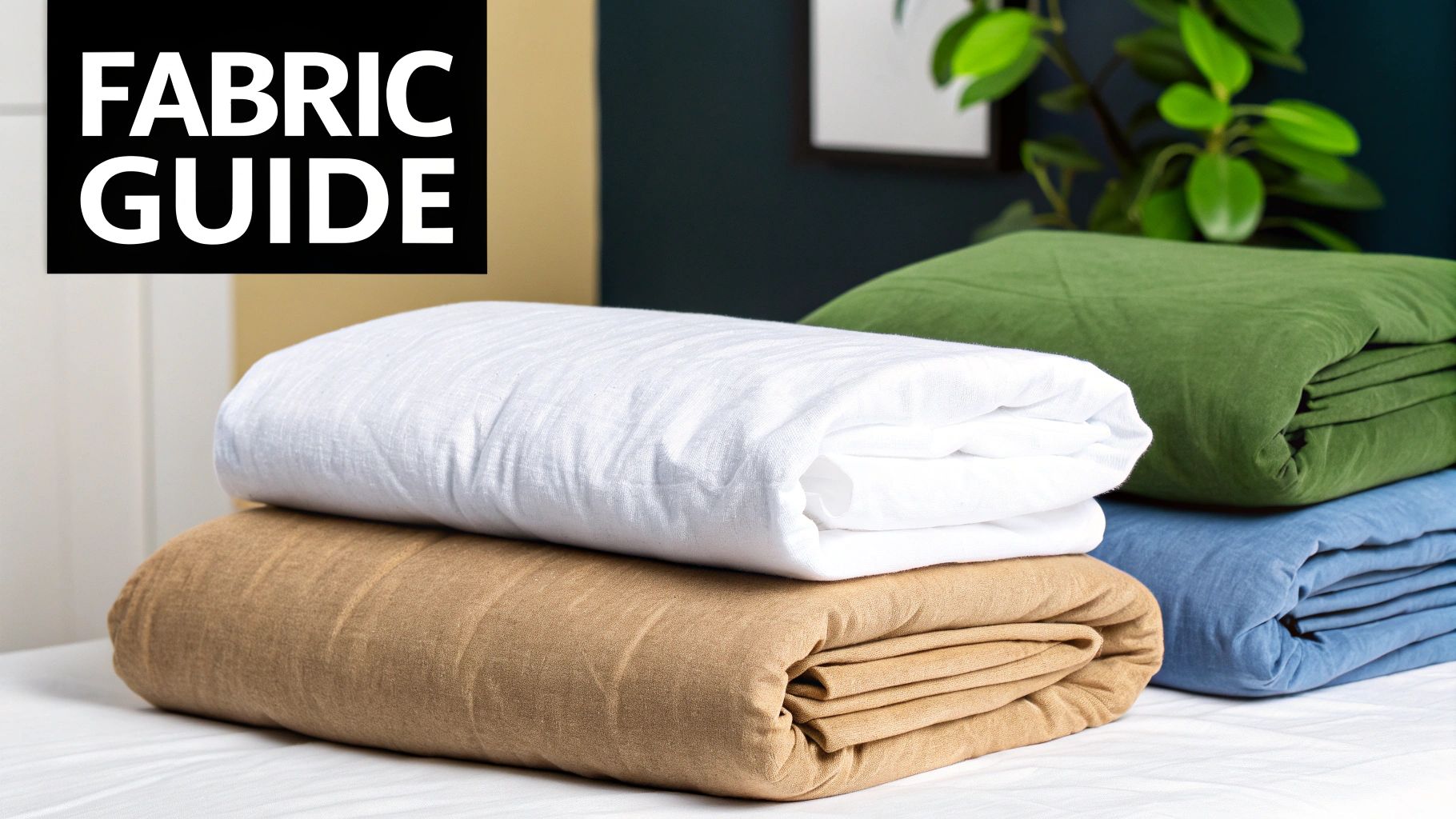
When you’re deciding between bedspreads and comforter sets, it’s easy to focus on colour and pattern. But the real secret to a great night’s sleep lies in the material. The fabric that touches your skin and the fill that keeps you warm are what truly make the difference between a restless night and one that’s deeply refreshing.
Think of it like picking an outfit. You wouldn't wear a thick wool jumper on a hot summer day, right? The same logic applies to your bed. Matching the material to your local climate and how you personally sleep is the key to creating your perfect sleep sanctuary.
The Fabric Face-Off: Common Shell Materials
The "shell" is just the outer fabric of your bedspread or comforter. It's the first thing you see and feel, and it sets the tone for the texture, breathability, and overall style of your bed. Let’s break down the most popular choices.
Cotton: A Timeless Classic
There's a reason cotton is the undisputed champ of bedding. It’s naturally breathable, soft, and durable, making it a fantastic all-rounder. If you're a hot sleeper, especially during a humid Queensland summer, a cotton comforter or bedspread is a game-changer. It lets air circulate, wicking away moisture to keep you comfortable all night.
Microfibre: The Smart and Soft Alternative
Engineered for supreme softness and affordability, microfibre is a brilliant modern option. Its ultra-fine fibres create a silky-smooth feel that resists wrinkles and is incredibly easy to look after. Because the weave is so tight, it’s also great at resisting dust mites, which is a huge plus for anyone with allergies.
Linen: The Effortlessly Cool Choice
For a relaxed, textural look, nothing beats linen. It has a unique, slightly crisp feel that gets softer and more beautiful with every single wash. Linen is also incredibly breathable and moisture-wicking, making it perfect for year-round comfort. It delivers that laid-back, coastal vibe while working hard to keep you comfortable.
Bamboo: The Sustainable Superstar
Bamboo fabric is a bit of a hero, celebrated for being hypoallergenic and amazing at regulating temperature. It feels incredibly soft and smooth against the skin—often compared to silk—and is a dream for anyone with sensitive skin. Best of all, it adapts to your body temperature, helping to keep you cool in summer and cosy in winter. A true year-round performer.
Understanding the unique properties of different materials is key. Natural fibres, for instance, offer distinct advantages in breathability and comfort that can significantly improve sleep quality. You can explore a deeper comparison in our article on the benefits of natural fibres in bedding.
Understanding Comforter Fills
While a bedspread is a single, elegant layer, a comforter gets its warmth from what’s inside. The type and amount of fill are what determine how warm and heavy it will feel when you’re snuggled up underneath.
- Down: The traditional luxury choice, down is the soft, fluffy stuff found under the feathers of ducks and geese. It's incredibly lightweight yet offers amazing insulation, making it perfect for a chilly Melbourne winter.
- Down-Alternative: For those with allergies or who are on a budget, down-alternative is a fantastic synthetic solution. Made from polyester microfibres, it mimics the lofty, cloud-like feel of real down, is hypoallergenic, and is much easier to wash and dry.
- Wool: As a natural insulator and temperature regulator, wool is another brilliant fill material. It does a great job of wicking moisture away from your body and is even naturally flame-resistant. A wool-filled comforter provides steady, breathable warmth without causing you to overheat.
Ultimately, choosing the right material for your bedspreads and comforter sets is a personal decision that will directly impact your comfort every night. By thinking about your local climate, whether you sleep hot or cold, and what textures you love, you can find bedding that not only looks beautiful but helps you get the best rest possible.
Matching Your Bedding to Your Bedroom Style
Sure, picking the right material is all about comfort, but the style of your bedspreads and comforter sets is what really brings a bedroom to life. Your bed is the visual anchor of the room, so its design truly sets the tone for the entire space. This is your chance to show off your personal style, whether you're into a clean, minimalist look or something more vibrant and eclectic.
Think of your bed as a blank canvas. The bedspread or comforter you choose is the main event, the piece that defines the room's entire character. From there, every cushion, throw, and accent piece adds another layer of personality, turning a simple place to sleep into a genuine retreat.
Aligning Bedding with Popular Decor Styles
Matching your bedding to your decor theme is the secret to getting that cohesive, "pulled-together" look you see in design magazines. It just makes a room feel intentional. Here’s a quick guide on how to pick the perfect bedding for some of Australia's most popular bedroom styles.
- Hamptons Style: This look is all about relaxed, coastal elegance. You can't go wrong with crisp white, soft grey, or classic navy blue. A quilted bedspread with a simple pattern like diamond or channel stitching adds just the right amount of texture and sophistication without being too busy.
- Modern and Minimalist: Clean lines and a simple colour palette are your best friends here. A sleek, unadorned comforter set in a solid neutral—think charcoal, beige, or pure white—works perfectly. The key is to focus on a high-quality fabric to add a touch of quiet luxury.
- Bohemian (Boho): Time to embrace colour, pattern, and texture. Look for comforter sets with bold prints, maybe some tassels or chenille details. Don't be afraid to mix and match patterns; the more layered and free-spirited it feels, the better.
- Coastal Vibe: For that breezy, beach-house feel, stick to light and airy materials. A lightweight cotton or linen bedspread in shades of sand, soft blue, or seafoam green will instantly make you feel like you're on a seaside escape.
The right bedding doesn't just match the room; it completes it. It's the most significant piece of fabric in the space, so its colour and pattern have the power to either harmonise or clash with everything else.
Using Colour Theory to Your Advantage
You don’t need to be an interior designer to use colour like a pro. A couple of simple principles can make sure your new bedspread or comforter set complements your furniture and walls, rather than fighting with them.
For a serene, harmonious look, try a monochromatic scheme. That just means picking bedding in different shades of the same colour as your walls. If your walls are a light grey, for example, a charcoal comforter set creates a sophisticated, layered effect that looks effortlessly chic.
On the other hand, if you want to make a bolder statement, look at complementary colours. If your room has blue accents, a touch of burnt orange in a patterned comforter can create a look that's vibrant but still feels balanced. This is where the right bedspreads and comforter sets can completely transform a room.
The Art of Layering for a Professional Finish
A beautifully styled bed is rarely just a comforter and a couple of pillows. The real secret to that plush, inviting bed you see in photos? Layering. It's a simple technique that adds visual interest, texture, and a sense of indulgent comfort.
Start with your chosen comforter or bedspread as the foundation. Then, start adding these elements:
- A Coverlet or Quilt: Fold a thinner quilt or coverlet and lay it across the bottom third of your bed. This instantly adds another layer of texture and colour.
- A Throw Blanket: Casually drape a soft throw—maybe a chunky knit or faux fur—over a corner. It adds a touch of effortless style and, of course, extra warmth.
- Cushions: Use a mix of large European pillows and smaller decorative cushions. Play around with different shapes, sizes, and textures to create a bit of depth. For more expert tips, check out our guide on the art of mixing and matching bed linen.
This layered approach is a huge part of designing a cozy bedroom retreat and is what turns your bed into the undeniable focal point of the room. By carefully selecting and layering your bedding, you can easily achieve that polished, magazine-worthy look yourself.
How to Get the Perfect Fit for Your Bed
You’ve found the perfect style and material, but if the fit is wrong, none of it matters. Poorly fitting bedspreads and comforter sets can make even the most stunning bedroom look messy and unfinished. Nailing the size is the final, crucial step to creating that polished, inviting bed you’re dreaming of.
Thankfully, you don’t need to guess. Getting your head around a few key ideas like ‘drape’ and ‘overhang’ will ensure you choose bedding that looks like it was custom-made for your bed. It’s all about knowing how each piece is meant to work.
A bedspread is designed to be a grand, elegant statement. Its purpose is to create a seamless, floor-length look that completely covers the mattress and bed base. A comforter, on the other hand, is built for cosy comfort, draping generously over the sides of your mattress without actually touching the floor.
Understanding Drape and Mattress Depth
The amount of fabric that hangs over the edge of the mattress is known as the drape or overhang. This is probably the most important factor in achieving a luxurious, well-styled look. A skimpy overhang looks cheap and accidental, but a generous drape gives your bed a plush, intentional appearance.
The depth of your mattress plays a huge role here. Modern mattresses, especially those with pillowy tops, can be significantly thicker than older styles. A standard mattress might be around 25cm deep, but many newer ones can be 35cm or even deeper. That extra height eats into the bedding's width, which can seriously reduce the amount of drape you're left with.
When in doubt, always size up, especially for a comforter. Choosing a King size comforter for a Queen bed is a common designer trick to ensure a generous, high-end overhang that properly covers a deep mattress.
Standard Australian Bed Sizes
Before you can get the drape right, you need to know your bed's basic dimensions. It’s always best to measure your own mattress, but these are the standard sizes you’ll find across Australia. For a complete overview, you can check out our detailed Australian bedding size chart on the blog.
Once you know your mattress width, you can figure out the ideal size for your new bedding. For a comforter, you’ll want enough fabric to cover the sides of the mattress completely. For a bedspread, you need to measure from the top of the mattress all the way down to the floor to ensure it drapes perfectly.
To make it easier, we've put together a quick guide with recommended dimensions to help you find the perfect fit.
Australian Bedding Size Guide
| Mattress Size | Mattress Dimensions (cm) | Recommended Comforter Size (cm) | Recommended Bedspread Size (cm) |
|---|---|---|---|
| Single | 92 x 188 | 140 x 210 | 200 x 265 |
| King Single | 107 x 203 | 165 x 210 | 220 x 265 |
| Double | 138 x 188 | 180 x 210 | 250 x 265 |
| Queen | 153 x 203 | 210 x 210 | 265 x 280 |
| King | 183 x 203 | 245 x 210 | 285 x 280 |
| Super King | 204 x 204 | 270 x 240 | 315 x 280 |
These recommendations provide a great starting point for achieving that professionally styled look, ensuring your bedding hangs just right.
This infographic gives you a visual cue for how different bedding styles can define a room's entire feel.

As you can see, specific textures and colour palettes—from breezy Coastal blues to textural Boho tassels—are key to pulling a cohesive look together.
One common mistake is accidentally buying bedding based on US sizing, which is different from Australian standards. Always double-check the dimensions in centimetres on the packaging before you commit. Taking a few moments to measure your bed and confirm the product size will save you from the disappointment of a poor fit, ensuring your new bedspreads and comforter sets look absolutely perfect from day one.
Caring for Your Bedspreads and Comforter Sets
You’ve invested in a great bedspread or comforter set—something that makes your bedroom feel just right. The last thing you want is for it to lose that fresh, cosy feel after a few washes. Proper care isn't just about keeping it clean; it's about making sure the fabric, fill, and colours stay as vibrant as the day you brought it home.
With a little know-how, you can keep your bedding in pristine condition for years. The trick is understanding that different materials need slightly different handling. Getting it right prevents the kind of wear and tear that makes bedding look tired and old before its time.
And it’s a smart move, considering how much Aussies are valuing quality bedding. The Australian bed linen market is currently worth a massive USD 10,424.24 million and is expected to almost double by 2033. It shows we’re all looking for more comfort and style at home. You can read more about the trends in Australia's expanding bed linen market.
General Washing Guidelines
Before you do anything else, always check the care label. Seriously, it’s the golden rule. That little tag is your personalised instruction manual, written specifically for your item’s fabric and fill. That said, a few general tips work for most bedspreads and comforters.
- Go for a Mild Liquid Detergent: Powder detergents can sometimes leave a chalky residue or be too harsh on delicate fibres. A gentle liquid option is a much safer bet.
- Choose a Gentle Cycle: A gentle or delicate wash cycle is kinder to the stitching and fabric, preventing unnecessary stress and stretching.
- Stick to Cool or Warm Water: Cold water is your best friend for keeping colours from fading. A warm wash is great for tackling body oils and dust mites. Just steer clear of hot water—it’s the fastest way to shrink or fade your bedding.
Handling Bulky Items Like Comforters
Washing a big, fluffy comforter can feel like a mission, but it’s totally doable. The main thing is to make sure your washing machine is big enough. If the comforter is squashed in there, it won’t get a proper clean. Worse, it could damage both the comforter and your machine. If it’s a tight fit, head to a laundromat and use one of their large-capacity machines.
When it comes to drying, low and slow is the way to go. A low-heat setting is crucial because high heat can melt synthetic fibres or make natural fills like down go brittle.
Pro Tip: Throw two or three clean tennis balls (or wool dryer balls) into the dryer with your comforter. They’ll bounce around, breaking up any clumps in the filling and helping it dry evenly. The result? A perfectly fluffy, lofty comforter, just like new.
Spot Treating Stains and Storing for Later
Spills happen. For small stains, spot treating is the way to go. Just mix a little mild detergent with water, dab the stain gently with a clean cloth, and work from the outside in to stop it from spreading. Easy.
When it’s time to store your bedding for the off-season, make sure it’s completely clean and bone-dry to avoid any chance of mildew. A breathable cotton storage bag or a sealed container is perfect. Tuck it away in a cool, dry place away from direct sunlight. This keeps your bedspreads and comforter sets safe from dust, dampness, and pests, so they’re fresh and ready to go when you need them next.
Got Questions About Bedding? We’ve Got Answers.
As you get closer to picking out the perfect bedding, a few practical questions usually pop up. It’s one thing to love the look and feel, but it’s another to know how your new bedspreads and comforter sets will fit into your daily life.
Think of this as your final checklist. We’ll cover the common queries we get all the time, from layering and washing to telling the difference between similar bedding types. A little know-how goes a long way in making a choice you’ll be happy with for years.
Common Bedding Questions Answered
The world of bedding has its own language, but it’s easy to get the hang of. Here are the answers to four questions our customers ask the most.
Can I use a bedspread and a comforter together?
Absolutely! Layering the two is actually a really popular way to get that plush, professionally styled look.
A common method is to make the bed with the floor-length bedspread, then fold your comforter neatly across the foot of the bed. This adds texture, depth, and a touch of luxury—think boutique hotel vibes. It’s also practical, giving you a clean, tidy look during the day and an extra cosy layer ready for you at night.
How often should I wash my comforter or bedspread?
Good news—your top layer doesn't need washing nearly as often as your sheets. As a general rule, washing your comforter or bedspread two to three times per year is usually enough.
Using a top sheet creates a barrier between you and your comforter, which keeps it much cleaner for longer. Of course, if you have a spill or if allergies are a concern, you’ll want to wash it right away.
Pro Tip: A duvet cover is another great way to protect your comforter. It works like a giant pillowcase, so you only need to wash the cover regularly. This is far easier than washing a bulky comforter and will help it last much longer.
What is the difference between a comforter and a quilt?
While people often use the terms interchangeably, they’re two distinct things. A comforter is a thick, fluffy blanket filled with an insulating material (like down or synthetic fibres). It’s stitched through to keep the fill evenly distributed, and its main job is to keep you warm.
A quilt, on the other hand, is much thinner. It’s made of three layers: a decorative top, a thin inner layer of batting, and a bottom fabric, all stitched together in a pattern. Quilts offer a light layer of warmth but are often used as decorative pieces, too. If you're looking for more in-depth information, you might find answers in our main bedding FAQs.
At Manchester Factory, we believe the right bedding can completely transform your sleep and your space. Explore our beautiful collection of bedspreads and comforter sets today.