

Here in Australia, a standard double bed quilt is 180 cm x 210 cm. This size is spot-on for covering a standard double mattress, giving you plenty of drape without dragging on the floor.
Understanding Standard Australian Quilt Sizes
While knowing the exact double bed dimensions is a great start, it helps to see where it fits in the bigger picture. Australian standards are designed to make buying bedding a breeze, ensuring you get enough overhang on the sides and end of the bed for both comfort and a polished look.
That generous drape isn't just for show—it covers the sides of your mattress and gives you room to move without getting tangled or left out in the cold. It’s the sweet spot between practical coverage and a beautifully made bed. For a full rundown of how all the sizes stack up, you can check out our complete guide to Australian quilt sizes.
The standard double quilt is designed to fit a mattress measuring roughly 138 cm x 188 cm. A quick bit of maths shows this gives you about 21 cm of overhang on each side—just right for most bed frames and sleepers.
Standard Australian Quilt and Mattress Dimensions
To make things even clearer, here’s a quick-reference chart. It’s a simple way to see exactly how your quilt (or doona) size matches up with standard Aussie mattress dimensions, so you can visualise the fit before you buy.
| Bed Size | Standard Quilt Dimensions (cm) | Standard Mattress Dimensions (cm) |
|---|---|---|
| Single | 140 x 210 | 92 x 188 |
| King Single | 160 x 210 | 107 x 203 |
| Double | 180 x 210 | 138 x 188 |
| Queen | 210 x 210 | 153 x 203 |
| King | 245 x 210 | 183 x 203 |
| Super King | 270 x 240 | 203 x 203 |
As you can see, each quilt is sized to give you that ideal overhang, making sure your bed not only looks great but keeps you perfectly covered all night long.
How Mattress Depth Affects Your Quilt Size Choice
Standard double bed quilt dimensions used to be a perfect fit for traditional mattresses, but modern beds have thrown a spanner in the works: mattress depth. Today’s popular pillow-top and integrated topper mattresses can easily add an extra 10 to 20 cm of height you need to account for.
That extra thickness eats into your quilt's width, stealing precious centimetres from the drape on either side. A standard 180 cm wide quilt on a deep mattress can leave the sides exposed, ruining that luxurious, fully covered look everyone wants.
Calculating for Your Mattress
To sidestep this common problem, you absolutely have to factor in the height. Start by measuring your mattress depth from its bottom edge right to the very top of the surface, making sure to include any built-in toppers. It’s a crucial step that’s so often missed. Getting your quilt dimensions right is just as important as choosing the right fitted sheet—it’s all about getting that perfect fit. For more on this, see our guide explaining what a fitted sheet is and why its pocket depth is so important.
A simple formula will give you the ideal quilt width you're looking for:
Mattress Width + (Mattress Depth x 2) = Minimum Quilt Width
This chart shows just how much wider a quilt needs to be than the mattress it’s covering to give you that beautiful, generous drape.
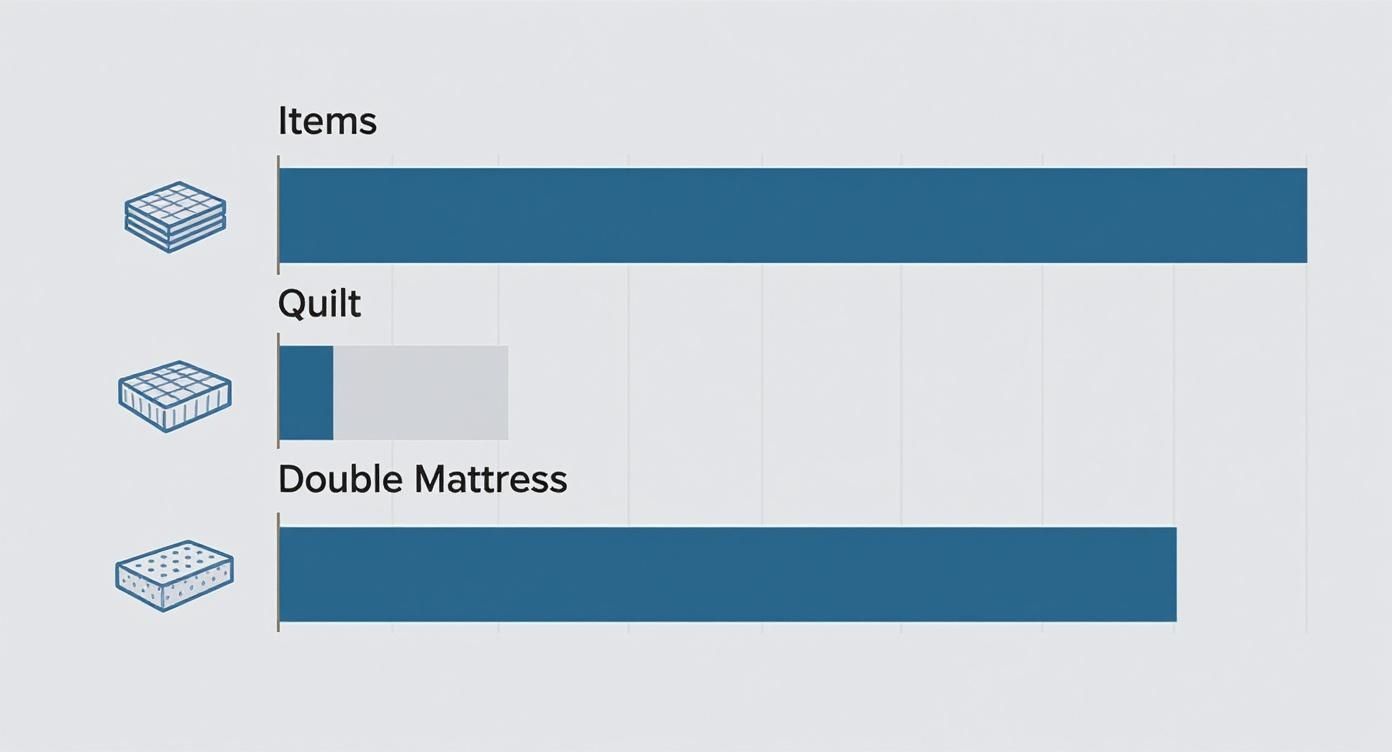
As you can see, a standard quilt is designed with extra width for overhang. This becomes even more critical with the deeper mattresses that are so common in Aussie homes today.
Measuring Your Bed For A Perfect Quilt Fit
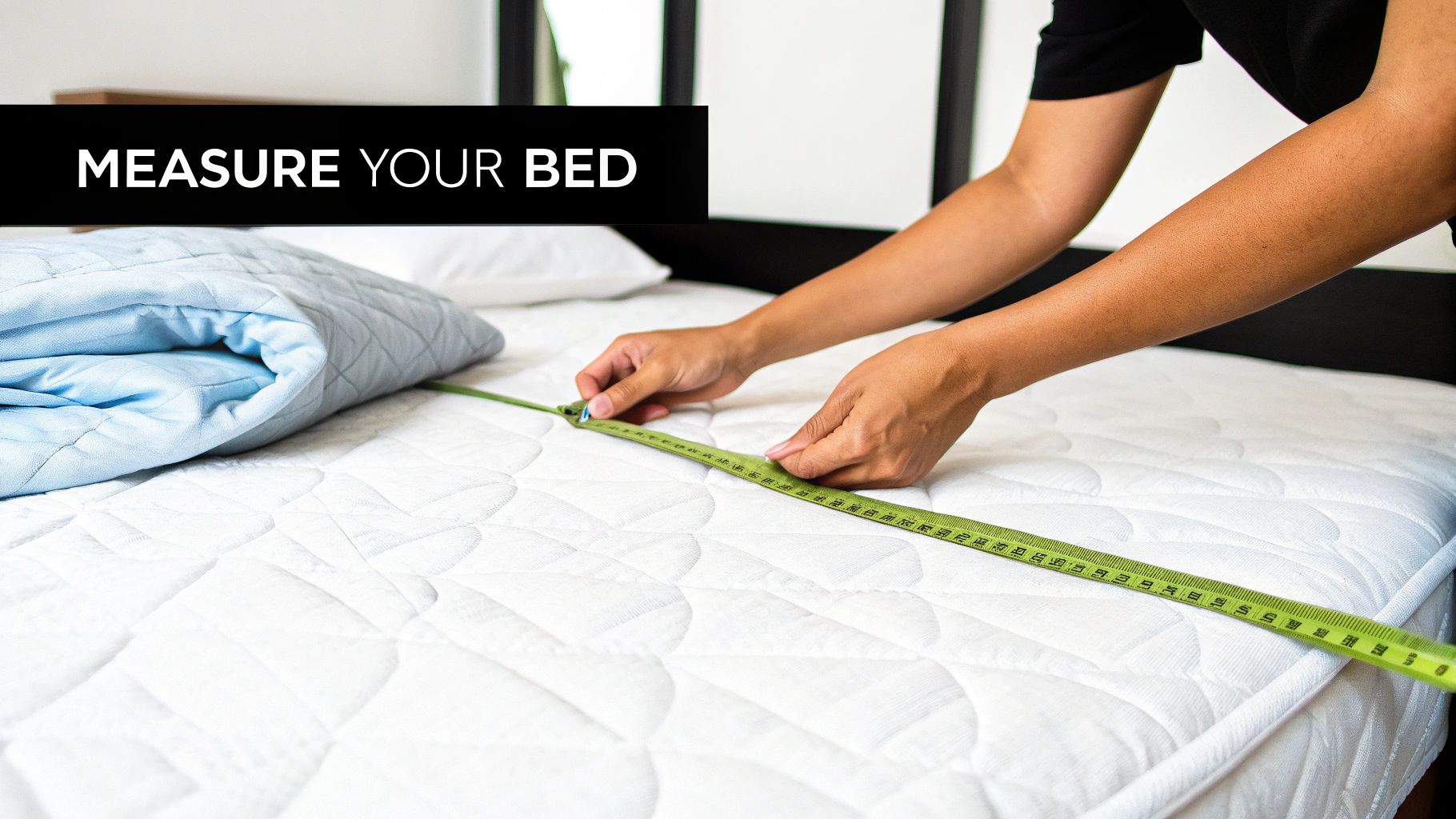
To make sure your new quilt fits beautifully, it’s worth taking a couple of minutes to measure your bed. Guesswork is the number one reason quilts end up too short, leaving the sides of your mattress awkwardly exposed. All you need is a simple tape measure to find the perfect double bed quilt dimensions for your setup.
This quick process takes all the uncertainty out of the equation. It guarantees you get the exact look you're after, whether that’s a tidy, minimal overhang or a more luxurious, floor-grazing drape.
Step 1: Measure Your Mattress
First things first, grab the three essential measurements of your mattress. It's best not to rely on standard size charts alone, because mattress depths can vary wildly between brands and styles.
- Width: Measure straight across the top of the mattress, from one side to the other.
- Length: Measure from the head of the mattress right down to the foot.
- Depth (or Height): This is the game-changer. Measure from the very bottom edge of the mattress to the highest point of its top surface. This number is the key to calculating your overhang.
Step 2: Calculate Your Ideal Quilt Width
Once you have your numbers, you can figure out how much 'drape' or overhang you really need. This is the part of the quilt that hangs down over the sides, covering the mattress and part of the bed base.
For great coverage on both sides, this simple formula is all you need:
Mattress Width + (Mattress Depth x 2) = Your Ideal Quilt Width
Let’s run an example. A standard Aussie double mattress (138 cm) with a common 30 cm depth would need a quilt at least 198 cm wide (that’s 138 + 60) to cover everything properly. This little bit of maths makes it obvious why sizing up to a Queen quilt is often a fantastic idea for a Double bed.
For a complete rundown of all the standard sizes, check out our comprehensive Australian bedding size chart to see how your own measurements stack up. By following these easy steps, you can choose a quilt that not only fits like a glove but also makes your whole bedroom look and feel more comfortable.
Choosing Between a Double and Queen Quilt
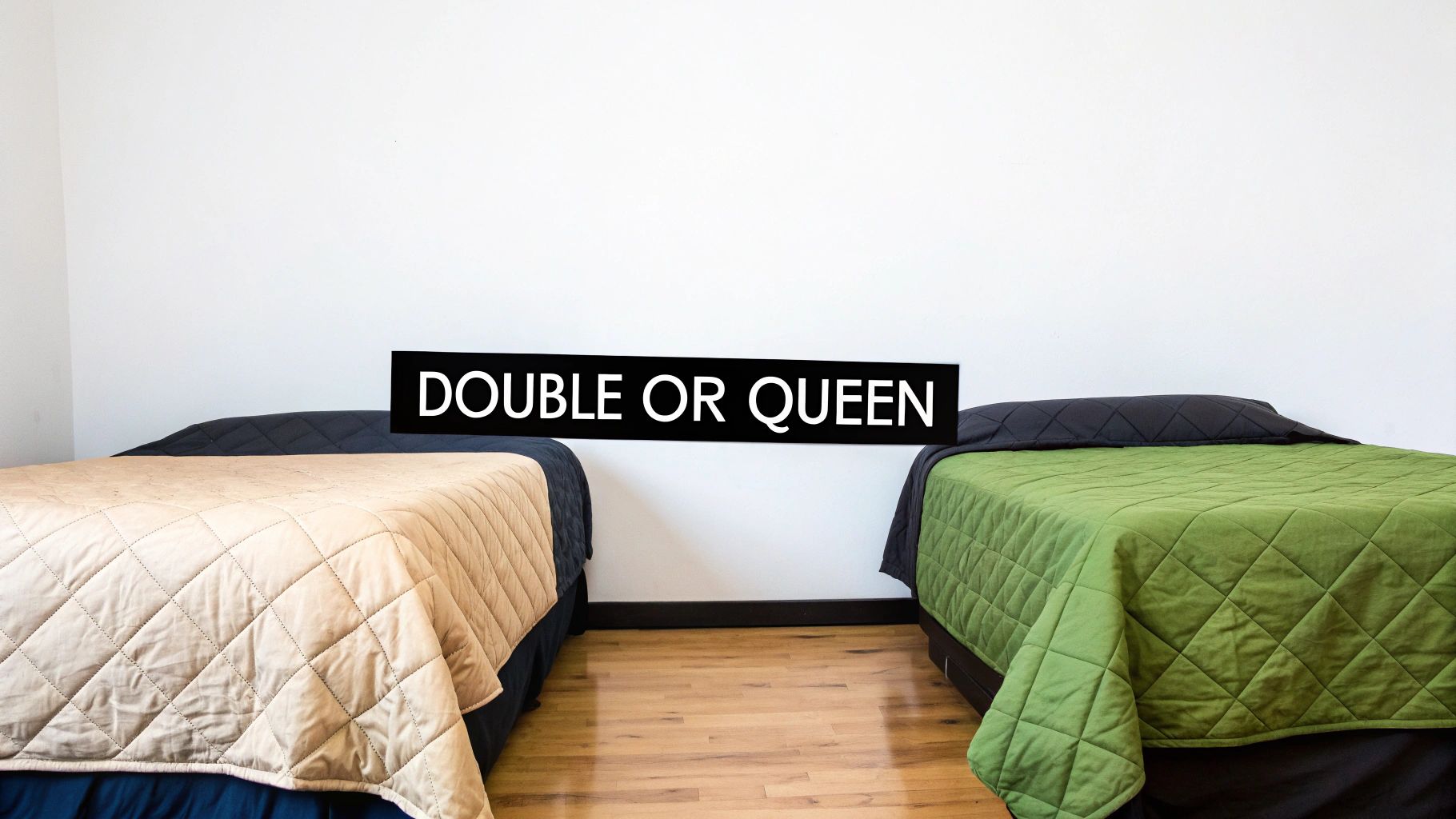
It's a classic dilemma for anyone with a double bed: should you stick with the standard double bed quilt dimensions (180 x 210 cm) or go a size up to a queen (210 x 210 cm)? While a double quilt is technically the correct fit, opting for a queen often turns out to be a more luxurious and practical choice.
The biggest win with a queen quilt on a double bed is the generous overhang. That bit of extra fabric means full coverage, which is a lifesaver for couples tired of the nightly tug-of-war for the blankets. It also drapes beautifully over deeper, pillow-top mattresses, making sure the sides aren’t left exposed and giving the whole bed a much plusher, more inviting look.
Why Sizing Up Is a Smart Choice
For most modern bedrooms, a queen quilt is simply the better option. Here’s a quick rundown of why it works so well on a double bed:
- Better Coverage for Couples: The extra 30 cm of width gives two people plenty of room to sleep comfortably without one person being left out in the cold.
- Accommodates Deep Mattresses: It easily handles the extra height of today’s mattresses, ensuring a tidy, seamless look without any awkward gaps.
- Creates a Luxurious Look: The generous drape makes the bed look fuller and more opulent, instantly elevating your bedroom’s style.
When to Stick with a Double Quilt
With all that said, a bigger quilt isn't always the right move. If you have a low-profile bed frame or prefer a clean, minimalist look with less fabric hanging over the sides, a standard double quilt will give you a neater, more tailored fit.
Ultimately, it’s about balancing your bed’s proportions with how you actually like to sleep.
If you're leaning towards this popular upgrade, it helps to know the specifics. Check out our detailed guide on queen size quilt measurements in Australia to see exactly how the dimensions stack up and why it’s become such a go-to choice for double beds.
Comparing International Quilt Size Standards
Shopping for bedding online opens up a world of options, but it can also throw a confusing mix of international sizes your way. The double bed quilt dimensions you’re used to here in Australia can be surprisingly different from those in other countries, which can lead to a costly mistake if you’re not paying attention.
Knowing these regional differences is the key to getting it right. While Australia keeps things simple with centimetres, the US and UK often use inches and completely different names. For instance, what we call a "double" is often labelled a "Full" size in the United States.
International Double Quilt Size Comparison
But the differences aren't just in the name—the actual measurements vary, too. A UK double quilt is often wider but shorter than an Australian one, while a US full size is a little wider but quite a bit shorter. This small difference can affect everything from how the quilt drapes over your bed to whether it even fits inside your existing quilt covers.
If you want more tips on sizing up for that perfect overhang, our guide on choosing the right size duvet for a queen bed has some great advice that works just as well for doubles: Learn more about duvet sizing here.
To save you any guesswork, here's a quick comparison of how double quilt sizes stack up around the world.
International Double/Full Quilt Size Comparison (Approx.)
This table gives you a rough idea of the measurement differences you'll encounter when shopping for a double (or its equivalent) from international brands.
| Region | Size Name | Typical Dimensions (cm) |
|---|---|---|
| Australia | Double | 180 x 210 |
| United Kingdom | Double | 200 x 200 |
| United States | Full/Double | 203 x 218 |
As you can see, relying on the name alone is a bit of a gamble. An Aussie double is longer and narrower, designed for our standard mattress dimensions, whereas a UK double is a perfect square.
Key Takeaway: Always, always double-check the exact measurements listed in centimetres on the product description before buying from an international retailer. Trusting size names like "Double" or "Full" alone is a recipe for a quilt that just doesn't fit right.
Looking After Your New Quilt
Nailing the right quilt dimensions is just the beginning. To make sure you love your quilt for years to come, choosing the right material and knowing how to care for it is just as important. The fabric and filling play a huge part in how it feels—think breathable wool, lofty down, or hypoallergenic microfibre for those with sensitivities.
A key thing to look for is the GSM (grams per square metre). It’s a simple measure of warmth: a higher GSM means a warmer, heavier quilt, perfect for those chilly winter nights.
Once you’ve got it home, proper care is what gives your quilt its longevity. Always, always check the care label first, because different fillings need different handling.
Quilt Care Essentials
- Washing: Stick to a gentle cycle with a mild detergent. If you can, use a large, front-loading washing machine so the quilt has plenty of room to move around and get properly cleaned.
- Drying: Tumble dry on a low heat setting and throw in a few clean tennis balls or dryer balls. This is a great little trick to fluff up the filling and stop it from clumping together, keeping your quilt light and airy.
- Storing: When it’s not in use, store your quilt in a breathable cotton bag. Pop it somewhere cool and dry to keep it fresh and prevent any moisture or mildew from building up.
Quilt Sizing FAQs
Even after you've measured everything, there are always a few lingering questions. It’s completely normal. Getting the right fit is about more than just numbers, so here are some straightforward answers to the questions we get asked all the time.
Common Sizing Scenarios
Lots of people wonder about mixing and matching sizes, and honestly, it’s a great way to solve common bedding problems and get a more luxurious look.
-
Can I use a double quilt on a king single bed?
Absolutely. In fact, we often recommend it. A double quilt on a king single mattress gives you a much better overhang than a standard king single quilt does, so you get plenty of coverage and a cosier, more styled feel. -
Why doesn't my quilt reach the floor?
This is a common one! Standard quilts aren't actually designed to touch the floor. They’re made to cover your mattress and drape neatly over the sides of the bed frame. If you're after that floor-length, hotel-style look, you'll need to measure from the top of your mattress right down to the floor and look for an oversized quilt that matches that length.
One of the main reasons a quilt feels too short is that people forget to account for a deep mattress. A thick pillow-top can easily "steal" several centimetres of width from your quilt, leaving the sides looking a bit bare. That’s why measuring your mattress height is a step you just can't skip.
And what about quilt covers? A standard Aussie double quilt cover is made to fit a 180 x 210 cm quilt. It’s always a good idea to check the measurements on the packaging though, as some brands can vary slightly and you want a nice, snug fit for maximum comfort.