

In Australia, a standard single blanket is typically 180cm x 230cm. This generous size is designed to do more than just cover a single mattress—it provides that beautiful, elegant drape over the sides that makes a bed look inviting and feel extra comfortable.
Your Quick Guide to Single Blanket Sizes
Picking the right blanket can feel a bit tricky, but it really doesn't have to be. Getting the size right is about more than just warmth; it's the secret to achieving that perfectly styled, cosy bed you see in magazines. Think of this as your starting point for finding the perfect layer for a kid's room, a guest bed, or even a luxurious throw to curl up with on the sofa.
The single blanket is a staple in Australian homes, particularly for kids' rooms, smaller apartments, and guest spaces. Given that over 35% of Aussie households have one or two bedrooms, compact and versatile bedding is more important than ever. This makes the standard single blanket a perfect fit for children, teens, and solo sleepers.
Matching Your Blanket to Your Bed
The first step is understanding the relationship between your mattress and your blanket. To get that snug, tucked-in feel and a stylish overhang (often called the 'drape'), your blanket needs to be significantly wider and longer than the mattress itself.
That extra fabric is what stops cold drafts from sneaking in and creates a plush, inviting look. Without enough overhang, you end up with a blanket that just skims the edges of the bed, looking a bit sparse and feeling less secure when you're all wrapped up.
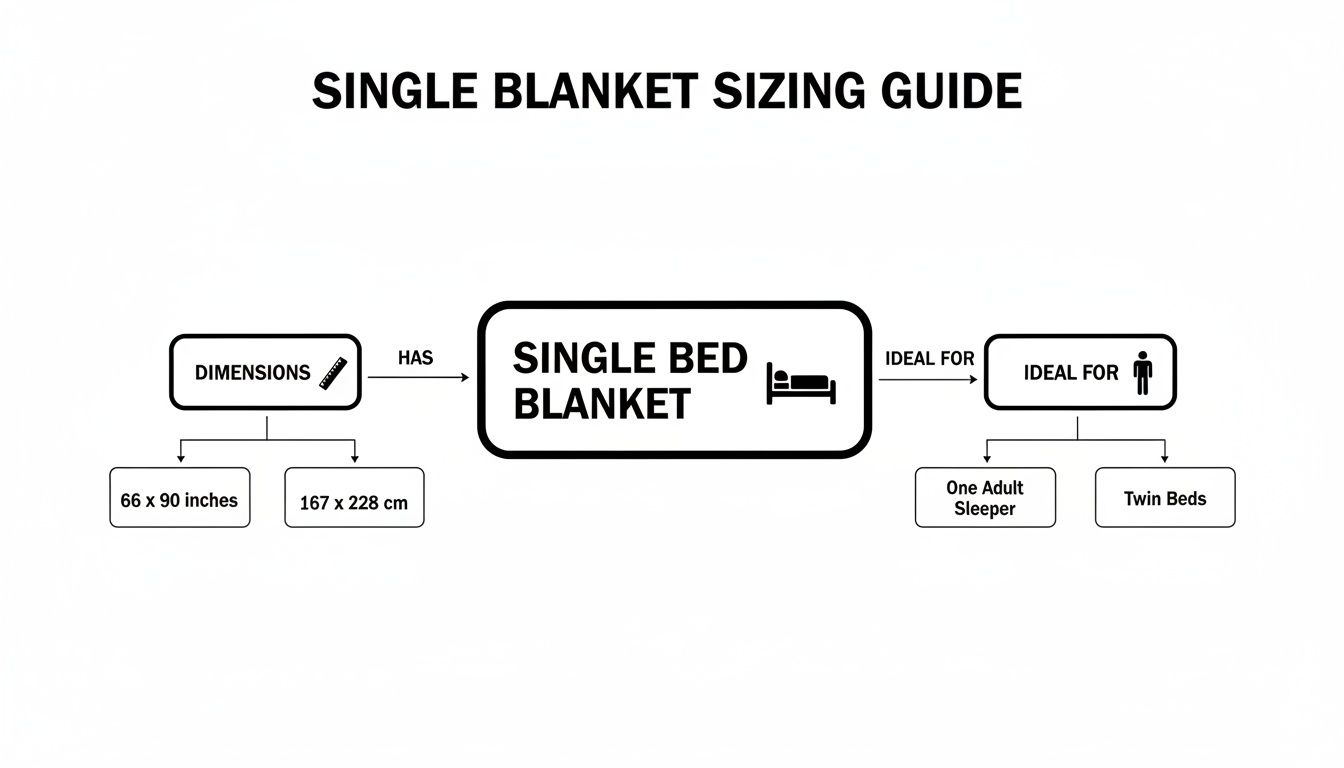
The key takeaway here? Always choose a blanket that's comfortably larger than your mattress to ensure it looks great and keeps you covered all night long.
Australian Bed and Blanket Sizing at a Glance
To make things simple, we've put together a quick-glance table to help you match standard Australian mattress sizes with the right blanket dimensions. This should help you visualise how a blanket will fit and drape on different beds.
| Bed Type | Standard Mattress Size (cm) | Recommended Blanket Size (cm) | Best For |
|---|---|---|---|
| Single Bed | 92 x 188 cm | 180 x 230 cm | Children, teens, guest rooms |
| King Single Bed | 107 x 203 cm | 180 x 230 cm | Taller teens, single adults |
| Double Bed | 138 x 188 cm | 230 x 240 cm | Single sleepers wanting more space |
| Queen Bed | 153 x 203 cm | 245 x 255 cm | Couples or solo luxury sleepers |
This table shows how a 180cm x 230cm single blanket is ideal for both Single and King Single beds, offering plenty of coverage. It also shows why you'd need to jump up in size for anything larger.
Our Tip: The goal is to choose a blanket that gives you at least 30-40 cm of overhang on each side of the bed. This ensures you're never left uncovered during the night and gives your bed that professionally styled, luxurious look.
For a complete rundown of all bedding dimensions, from sheets to quilts, have a look at our comprehensive bedding size chart for Australia. It's a great resource for making sure every layer on your bed fits together perfectly.
Understanding Blanket Dimensions and Drape
A blanket’s dimensions on a label are just numbers until you see how it actually sits on a bed. To really get your head around a single blanket size, we need to talk about something designers and comfort-seekers swear by: drape. This is the secret ingredient that takes a bed from looking just okay to feeling utterly luxurious and inviting.
Think of it like choosing a winter coat. One that fits your shoulders perfectly might look fine, but it won’t do much to keep you warm when a bitter wind blows. You want a coat that wraps right around you, with generous coverage to block out the cold. A blanket is exactly the same—if it only covers the top of the mattress, you’re left exposed to draughts and the dreaded midnight tug-of-war for more coverage.
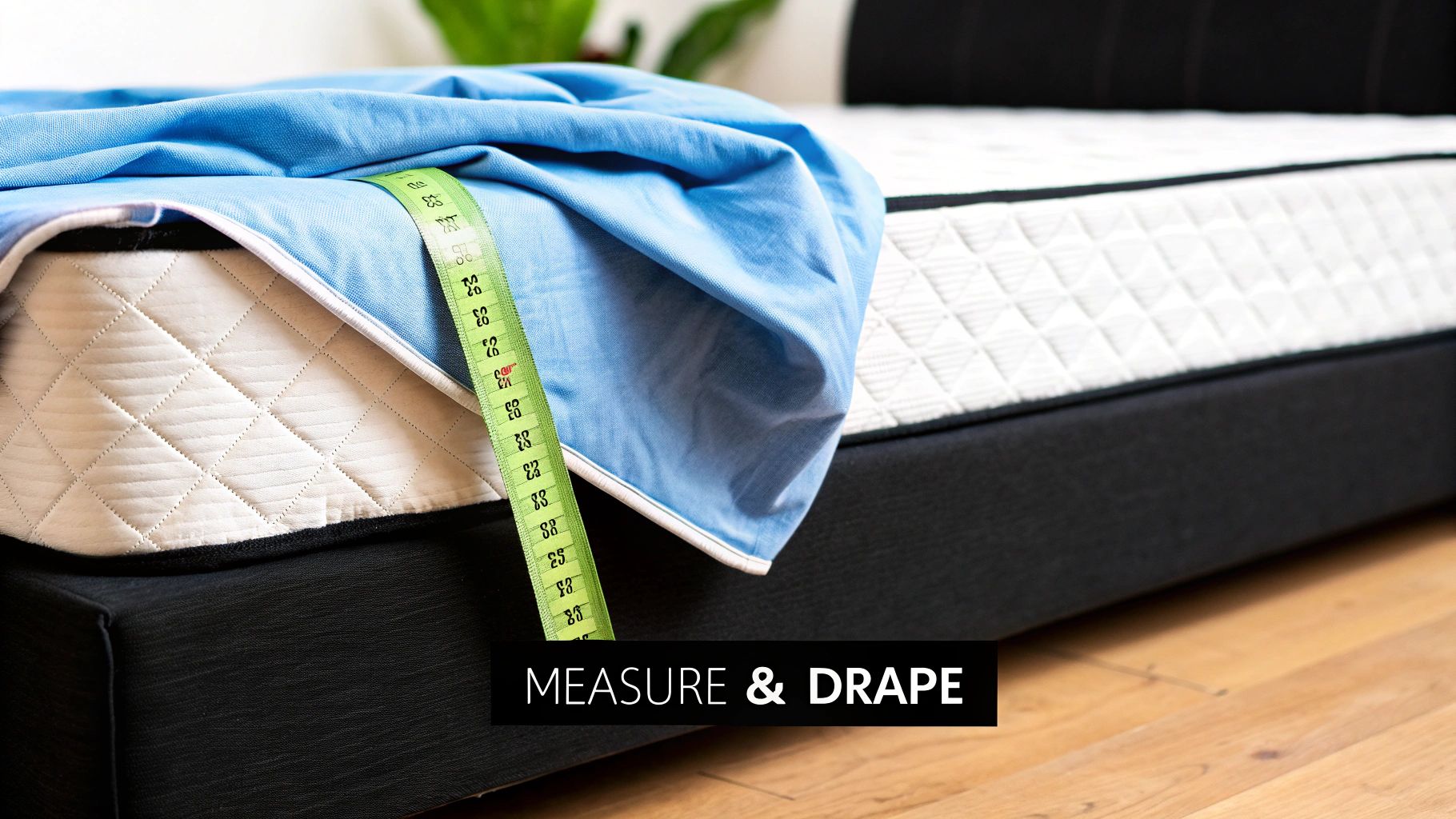
Why Drape Is Your Best Friend
Drape is simply the extra fabric that hangs elegantly over the sides and foot of your bed. This overhang isn't just for show; it's crucial for both comfort and style. A good drape ensures you stay completely covered even if you toss and turn, trapping warm air and creating a cosy little sleep sanctuary.
From a styling point of view, drape gives your bed a weighted, plush, and professionally styled look. It makes the whole setup feel complete and intentional, rather than looking like you’ve accidentally put a kid’s blanket on an adult bed.
Measuring Your Bed for the Perfect Fit
You can’t just rely on knowing you have a "single" bed to find a blanket with the ideal drape. The mattress thickness—also called its depth or profile—plays a massive role in how a blanket will fit. Modern mattresses, especially those with pillowy tops, are often much deeper than older styles.
Getting the right measurements is easy. Just follow these quick steps:
- Measure the Width: Grab a tape measure and run it from one side of your mattress to the other. For a standard Aussie single bed, this is typically 92 cm.
- Measure the Length: Next, measure from the head to the foot of the mattress. This is usually 188 cm for a single.
- Measure the Thickness (Depth): This is the key step for figuring out drape. Measure from the bottom edge of the mattress right up to the top surface. For this example, let's say your mattress is 30 cm thick.
Now, let's put those numbers to work. To calculate the ideal blanket width, you need enough fabric to cover the top and both sides of the mattress.
Simple Drape Calculation:
Mattress Width + (Mattress Thickness x 2) = Minimum Blanket Width
For our example: 92 cm + (30 cm x 2) = 152 cm
This quick sum shows you need a blanket that’s at least 152 cm wide just to reach the bottom edge of the mattress on both sides. This is why a standard single blanket, at 180 cm wide, is the perfect choice—it gives you plenty of coverage plus extra for tucking in securely. The same logic applies to the length, making sure there’s enough fabric to cover the foot of the bed and tuck under. It’s also why a single blanket is often the best fit for king single beds, a topic we cover in our guide to the king single quilt cover size.
Choosing the Right Blanket for Every Sleeper
A single bed isn't just one-size-fits-all, and neither is the person sleeping in it. A child needs a different kind of comfort than a teenager, a guest room has unique requirements, and even a solo adult sleeper has specific preferences.
Getting your head around these different scenarios is the key to picking a single blanket size that delivers perfect comfort and style every time. It’s about moving beyond simple measurements and picturing how a blanket will actually work in your home, ensuring it fits the bed and the life of the person using it.
For a Child’s First Big Bed
Transitioning a child into their first single bed is a huge milestone, and the right blanket plays a massive part in making their new space feel secure and cosy. For kids, the goal is warmth without being weighed down.
A standard 180cm x 230cm single blanket is perfect here. It provides plenty of fabric to be tucked in firmly on all sides—a parent’s best friend for keeping covers in place, even for the most active little sleepers. This generous tuck stops them from kicking the blanket off during the night and waking up cold. Plus, it’s big enough to accommodate them as they grow, making it a smart, long-lasting investment.
For the Teenager and Their King Single
Teenagers and their bedrooms are a world of their own, often centred around the slightly larger king single bed. A king single mattress measures 107cm x 203cm, making it longer and wider than a standard single.
While you might think that calls for a bigger blanket, the standard Aussie single blanket is often the perfect match. At 180cm x 230cm, it offers more than enough drape over the sides and foot of a king single. This extra coverage is ideal for taller teens and works well with the thicker mattresses popular today, giving them the comfort they need and the stylish, plush look they want for their personal space.
For the Versatile Guest Room
A guest room needs to be a welcoming and adaptable space, ready for anyone from a visiting grandchild to a friend staying over. A high-quality single blanket is an absolute staple for this room, offering immediate, straightforward comfort any guest can appreciate.
Here, it serves as a primary layer of warmth that can be easily combined with a lighter quilt or a decorative throw. This layered approach lets your guests customise their sleeping temperature, ensuring they have a comfortable and restful stay. The simplicity of a single blanket just makes it essential for any guest-ready setup.
For the Solo Adult Sleeper
Who says luxury is only for couples? A solo adult sleeper on a single or king single bed can create a perfectly inviting sleep space without being swamped by a huge double or queen blanket.
Using a generously sized single blanket provides all the coverage you need for a great night's sleep without unnecessary bulk. This is especially good for those who sleep warm and prefer lighter layers. If that's you, a single blanket in a breathable material like cotton can be the perfect solution. And if you're a really hot sleeper, you might also like our guide to the best cooling blankets for year-round comfort.
A single blanket is one of the most versatile pieces of manchester you can own. Its uses extend far beyond the bedroom. Drape it over your sofa for an oversized, luxurious throw—perfect for movie nights or snuggling with a book on a chilly evening. Its generous size makes it far more functional than a standard throw.
The popularity of single blankets in Australia reflects a broader trend towards practical, stylish, and space-saving home essentials. Digging into the stats, it's clear single blankets are a dominant force for budget-conscious families and savvy homeowners. The Australian home bedding market reached USD 3,987.2 million in 2024 and is projected to hit USD 9,205.4 million by 2033, with online sales showing the fastest growth. A recent federation study also revealed that 55% of online bedding purchases were driven by families furnishing kids' rooms, highlighting the single blanket's central role. You can find out more about these Australian bedding market trends.
How to Select the Best Blanket Material
Getting the single blanket size right is half the battle, but the material you choose is what really defines your comfort. The fabric dictates everything—its weight, how warm it feels, and how it feels against your skin. It’s a bit like picking the right coat for the weather. A light linen jacket won't do you much good in a blizzard, and a heavy parka is just overkill on a sunny day.
Your blanket is no different. The right fabric will keep you comfortable on a hot summer night, while another will give you that deep, insulating warmth you crave in winter. Getting to know the properties of each fabric will help you find a blanket that doesn’t just fit your bed, but fits your sleeping style and the Aussie climate perfectly.
Decoding Blanket Warmth and Weight
Before we get into specific materials, let's talk about warmth. While blankets don't usually come with an official TOG rating like quilts, the idea is the same. Some materials are simply better at trapping heat than others.
A blanket’s weight is just as important. A heavier blanket can give you that secure, comforting feeling (almost like a gentle hug), while a lighter one offers more freedom to move. This really comes down to personal preference. What feels cosy and safe to one person might feel a bit restrictive to another.
A Closer Look at Popular Blanket Fabrics
Every material offers a completely different experience. From the breezy feel of cotton to the serious warmth of pure wool, here’s a quick rundown of the most common options you’ll come across.
-
Cotton: Famous for its softness and breathability, cotton is a true all-rounder. It’s brilliant for year-round use, feeling cool in summer while still offering a decent layer of warmth when the temperature drops. Cotton blankets are also super easy to look after, making them a practical choice for kids' rooms and everyday living.
-
Wool: When it comes to natural, powerful warmth, wool is the absolute champion. It’s an incredible insulator that also wicks moisture away from your body, keeping you dry and comfortable all night long. Because it regulates temperature so well, it’s a game-changer for cold sleepers. If you need a blanket that will stand up to a proper winter, learning more about the benefits of an Australian wool blanket is a great place to start.
-
Fleece and Mink (Polyester): These synthetic fabrics are known for one thing: plush, cloud-like softness. Fleece and mink blankets are surprisingly lightweight for how warm they are, trapping heat without weighing you down. They’re also durable, fade-resistant, and budget-friendly, which is why they’re such a popular choice for family homes.
Expert Tip: Don't just think about the season; think about how you sleep. If you're someone who kicks off the covers at night, a breathable material like cotton is your best friend. If you’re always reaching for an extra pair of socks, a dense wool or plush mink blanket will give you the consistent warmth you need for a great night's sleep.
Comparing Common Blanket Materials
Choosing a material often comes down to weighing up the pros and cons for your specific needs. This table offers a side-by-side comparison to help you select the ideal blanket material based on warmth, feel, and maintenance.
| Material Type | Best For (Climate/Season) | Feel & Weight | Care Instructions | Ideal Use Case |
|---|---|---|---|---|
| Cotton | All Seasons, especially Summer | Soft, breathable, lightweight to medium | Machine washable, easy to maintain | Everyday use, layering, hot sleepers |
| Wool | Winter and cold climates | Dense, heavy, naturally textured | Often requires gentle wash or dry clean | Ultimate winter warmth, cold sleepers |
| Fleece | Autumn and Winter | Very soft, plush, and lightweight | Machine washable, dries quickly | Children's beds, cosy throws, camping |
| Mink (Plush) | Winter | Silky, thick, and medium to heavy | Machine washable on a gentle cycle | Luxurious top layer, guest rooms |
At the end of the day, the best blanket material comes down to what feels right for you, your home, and how you plan to use it. Whether you need a light layer for a breezy night or a heavy shield against the winter chill, there's a perfect fabric waiting to keep you comfortable.
Expert Tips for Styling Your Single Blanket
A blanket is so much more than just a way to keep warm—it's one of the best tools you have for styling your bedroom. With a few simple tricks, that single blanket size can take your bed from just okay to a stunning centrepiece. It all comes down to how you fold, drape, and layer to create a look that’s inviting and completely your own.
Forget just laying it flat. We're talking about adding texture, colour, and personality. Whether you’re after that crisp, hotel-style finish or a more relaxed, lived-in feel, these styling tips will get you there. The best part? They’re quick, easy, and you can change them up anytime you feel like a fresh look.
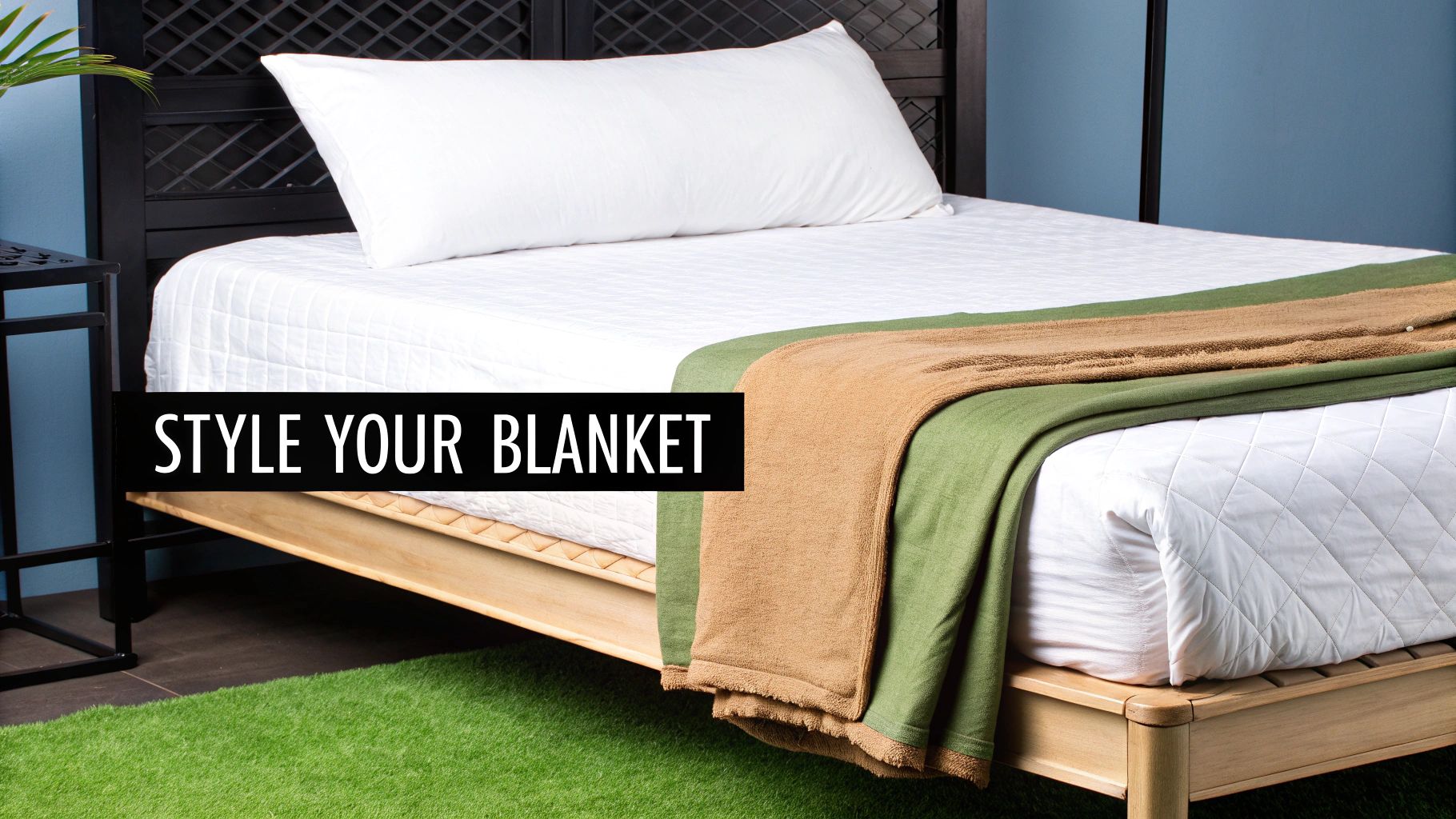
Mastering the Art of the Fold
How you fold your blanket can completely change the vibe of your bed. Each fold tells a different story, from neat and organised to effortlessly casual. The trick is to pick the fold that matches the aesthetic you're going for.
Here are three popular styling folds you can try today:
- The Classic Hotel Tuck: For a sharp, clean look, lay the blanket flat and tuck it in tightly around the sides and foot of the mattress. Think crisp "hospital corners." This method is perfect if you love a minimalist, orderly space.
- The Relaxed Half-Fold: This is a more casual approach. Just fold your blanket in half lengthwise and lay it neatly across the bottom third of your bed. It adds a welcoming layer of colour and texture without looking too formal.
- The Artful Drape: For that effortlessly chic vibe, fold the blanket once and casually drape it over one corner at the foot of your bed. This asymmetrical look feels organic and inviting, and it’s a great way to show off a blanket’s beautiful texture.
The Power of Layering for Depth and Texture
Layering is the secret weapon of interior stylists. Mixing your single blanket with other bedding, like a quilt cover or a lighter throw, adds visual depth and makes your bed look incredibly plush and comfortable. It’s practical, too—letting you adjust your warmth levels as the seasons change.
Think of it like putting together an outfit; every layer adds interest. Start with your sheets, add a quilt cover, and then bring in your single blanket as a key textural piece. This is what gives those magazine-worthy bedrooms their rich, curated feel.
A well-layered bed isn’t just about looks; it's about creating a sleep setup you can adapt. Peel back layers on warmer nights or snuggle under them when it's cold, making sure you're always comfortable.
To nail the look, play with different materials and textures. Try pairing a smooth cotton quilt cover with a plush mink blanket or a chunky wool throw. That contrast is what makes a bed look and feel so inviting after a long day.
Playing with Colour and Pattern
Your blanket is the perfect chance to inject a bit of colour and personality into your bedroom. It can either blend in with your existing colour scheme or stand out as a bold statement piece that catches the eye.
When picking a colour, think about the mood you want to set:
- For a Calming Retreat: Go for neutral tones like grey, beige, or soft blues. These colours create a serene, peaceful atmosphere.
- For a Pop of Energy: Choose a blanket in a vibrant colour like mustard yellow, emerald green, or deep navy to create an instant focal point.
- For a Cohesive Look: Pick a blanket that pulls an accent colour from somewhere else in the room—your curtains, artwork, or cushions.
Don't be shy about mixing patterns, either. Just stick to one simple rule: pair a large-scale pattern with a smaller one. For instance, if your quilt cover has a bold floral print, team it with a blanket in a subtle stripe or a simple solid colour. This balance keeps the space from feeling too busy and creates a look that’s both sophisticated and thoughtfully put together.
How to Care for Your Blanket
A good blanket is an investment in comfort. With the right care, it'll keep you cosy for years, but getting the washing and drying right is key to preserving its softness, colour, and shape. A few simple habits will protect your blanket and make sure it stays a favourite.
The first rule is always to check the care label. It’s the single most important instruction you’ll get. Different materials have completely different needs—what works for a sturdy cotton throw could easily ruin a delicate wool one. Think of the label as your personal guide to keeping that blanket in perfect condition.
General Washing and Drying Tips
Most modern blankets, especially those made from cotton or synthetic fibres like fleece, are designed for easy, at-home care. Still, a gentle approach always gives the best results.
- Use a Gentle Cycle: Always choose a gentle or delicate cycle with cold water. This minimises stress on the fibres and helps prevent colours from fading or bleeding.
- Go Easy on Detergent: It’s tempting to use a lot of soap, but too much can leave a residue that makes blankets feel stiff and scratchy. A small amount of mild detergent is all you need for a soft, clean finish.
- Tumble Dry on Low: High heat is the enemy of soft fibres. It can cause shrinking, melting, or pilling. Dry your blanket on a low or no-heat setting, and throw in a few wool dryer balls to help fluff it up and speed up the drying time.
One of the most common mistakes is overloading the washing machine. Your blanket needs plenty of room to move around to get properly clean. If your single blanket size seems too big for your machine, it's better to take it to a laundromat with larger capacity washers.
Caring for Special Materials
Some fabrics need a bit more attention to stay at their best. Wool, for instance, is a natural fibre that can shrink or felt if washed incorrectly, while a plush mink blanket needs a gentle touch to keep its silky feel.
For those with sensitivities or who prefer a more eco-friendly approach, exploring natural cleaning solutions for textile care can be a great alternative to harsh chemicals. You’d be surprised how effective simple household items can be for gentle stain removal without damaging delicate fabrics.
To get the best results for specific materials, it pays to follow detailed instructions. Cotton is a popular and durable choice, but even it has best practices for washing and drying. You can learn everything you need to know in our detailed guide on how to care for cotton blankets to keep them feeling soft and looking vibrant. Taking these extra steps ensures every blanket, no matter the material, gets the best possible care.
Your Single Blanket Questions Answered
When you're shopping for bedding, a few last-minute questions always pop up. Getting them sorted helps you buy with confidence, knowing you've picked the perfect single blanket for your bed and how you live. Here are a few of the most common things we get asked.
Can I Use a Single Blanket on a King Single Bed?
Yes, absolutely! In fact, it's often the best choice. A standard Aussie single blanket, which is typically 180cm x 230cm, fits a king single mattress (107cm x 203cm) beautifully.
It gives you plenty of drape over the sides and end of the bed, so you won't have to deal with that dreaded "short blanket" problem where your feet are left out in the cold. That generous coverage means you’ll stay tucked in and cosy all night, even if you toss and turn.
What Is the Best Single Blanket Size for a Child's Bed?
For a standard Australian single bed, a blanket measuring around 180cm x 230cm is perfect. It’s large enough to be tucked in securely on all sides, which is a lifesaver for parents with active little sleepers who are notorious for kicking off their covers.
This size also gives them plenty of room to grow, making it a smart, long-lasting purchase. While a smaller blanket might seem right for a toddler bed, a standard single gives you the best value and cosiness for their main bed.
How Do I Know if a Blanket Is Warm Enough for Winter?
A blanket’s warmth comes down to its material and construction, not just its size. For chilly Australian winters, look for materials known for great insulation, like wool, fleece, or a high-pile plush mink.
Pro Tip: Check the blanket's GSM (grams per square metre) rating. As a rule of thumb, a higher GSM number means a heavier, denser, and warmer blanket. Layering a single blanket with a quilt is also a brilliant way to create adjustable warmth you can tweak on colder nights.
What Is the Difference Between a Blanket and a Throw?
The main differences are their size and job. Blankets are sized to fit standard beds (like single, double, or queen) and are made for sleeping under. Throws are usually smaller and more decorative—perfect for draping over the arm of a sofa or for a quick snuggle on the couch.
While you could definitely use a single blanket as a luxe, oversized throw in the lounge room, a standard throw is almost always too small to give you enough coverage to sleep with on a bed.
At Manchester Factory, we believe finding the perfect blanket should be simple. Dive into our huge collection of high-quality single blankets to find the ideal layer of comfort and style for your home. Discover your perfect match today at https://www.manchesterfactory.com.au.