

Right, let's get one of the most common bedding questions sorted. In Australia, the standard single quilt cover size is 140cm x 210cm.
Getting this measurement right is the key to a beautifully made bed. Think of it as the foundation—everything else, from the look to the comfort, falls into place once you’ve nailed the size.
Decoding Single Quilt Cover Dimensions
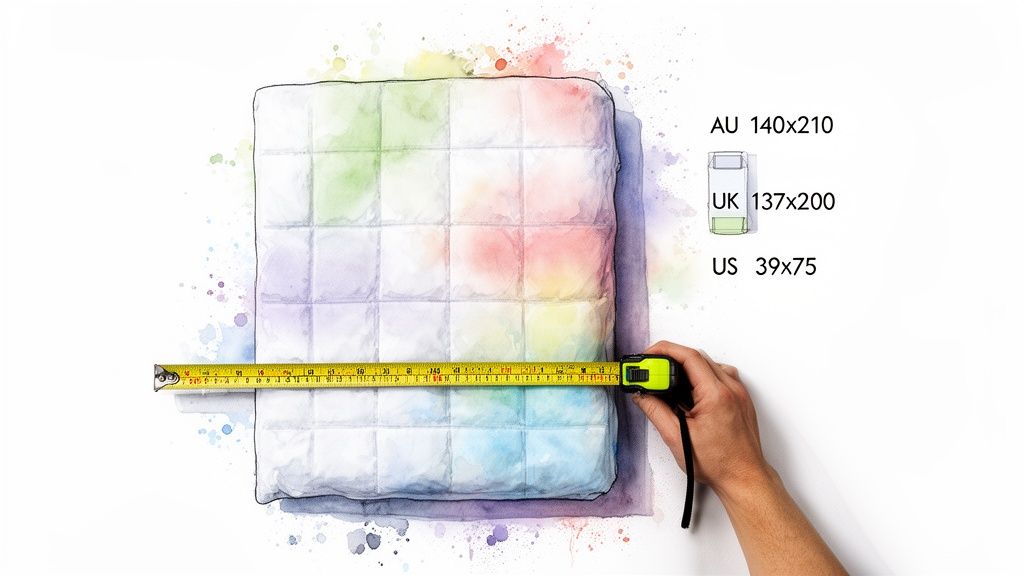
While Australia has its standard, you’ll find that single quilt cover sizes can vary a bit across the globe. This is something to keep in mind if you're shopping online from overseas or using bedding you’ve brought back from a trip.
These differences aren't just random; they’re designed to match local mattress sizes and manufacturing standards. Here in Australia, the 140cm x 210cm size is perfectly proportioned for our single beds, giving you just the right amount of overhang without drowning the bed in fabric. It’s a practical size that just works.
A Quick Global Comparison
To save you the headache of a quilt cover that’s too baggy or too snug, it helps to see how Aussie sizes compare to others. Below is a simple chart that breaks down the standard single quilt cover sizes in Australia, the UK, and the US (where it's usually called a 'Twin').
And on that note, if you ever see 'Twin' sizing mentioned, it’s often the US equivalent of our 'single'. For a really detailed look at how those measurements work, a complete guide to the dimension of a twin bed is a great resource.
Single Quilt Cover Size Chart AU vs UK vs US
Here’s a quick comparison to help you visualise the differences when you're shopping.
| Region | Dimensions (cm) | Dimensions (inches) |
|---|---|---|
| Australia | 140cm x 210cm | 55" x 83" |
| United Kingdom | 135cm x 200cm | 53" x 79" |
| United States (Twin) | 167cm x 218cm | 66" x 86" |
As you can see, the differences are significant. An American 'Twin' cover would completely swamp a standard Aussie single quilt, while a UK one might leave your toes sticking out. It’s always best to stick to local sizing to get that perfect, tidy fit.
For a deeper dive into every bedding size we have here in Australia—from single all the way to super king—our comprehensive bedding size chart for Australia has all the answers.
Why the Right Quilt Cover Size Elevates Your Sleep
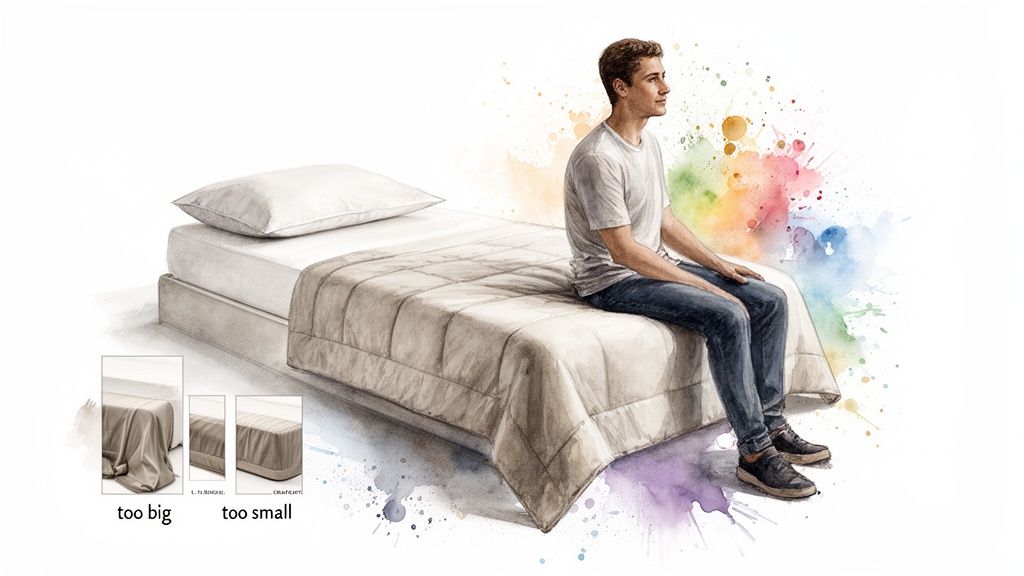
Think of your quilt cover like a well-tailored suit for your bed. It’s about so much more than just the numbers on the tag; it’s the difference between a truly comfortable night’s sleep and a restless one. Choosing the right single quilt cover size makes your bed look inviting, but more importantly, it makes it a functional haven for rest.
When a cover fits just right, it gives the quilt inside space to breathe and achieve its full loft. That’s the fluffy, airy quality that traps warmth, helping to regulate your body temperature all night long. It creates that perfect cosy cocoon without ever feeling heavy or restrictive.
The Problem with a Poor Fit
A poor fit doesn’t just look messy—it can actively disrupt your sleep. It creates a couple of very specific problems that many of us have experienced without even realising the cause.
- Too Large: A cover that’s too big is a recipe for frustration. The quilt shifts around, bunching up inside and leaving you with empty, cold pockets. You end up chasing the warmth all night, and no matter how well you make the bed in the morning, it always looks a bit sloppy.
- Too Small: On the other hand, a cover that’s too tight is just as bad. It compresses the quilt’s filling, squeezing out all those important air pockets that provide insulation. This completely flattens its loft and drastically reduces its ability to keep you warm, defeating the whole purpose of a quilt.
A correctly sized quilt cover is essential for both thermal performance and aesthetic appeal. It ensures your quilt functions as it should, providing consistent warmth while contributing to a polished, well-kept bedroom look.
Beyond Comfort to Visual Harmony
The impact of a proper fit extends to the entire atmosphere of your room. Your bed is the centrepiece, and a neatly fitted quilt cover instantly creates a crisp, clean, and inviting look. It's the foundation of a beautifully styled bed and signals a space that is cared for and calm.
This sense of visual harmony is a key part of creating a truly restful environment. If you want to dive deeper into how small details like this can improve your rest, you can learn more in our article on the science of sleep quality.
Ultimately, matching your cover to your quilt is a simple step that pays off in both comfort and style, setting you up for a much better night’s sleep.
How to Measure Your Quilt for a Perfect Match
Guessing your quilt’s size before you buy a new cover is a recipe for frustration. To make sure your new single quilt cover fits like a glove, the single most important thing you can do is take a moment to measure your quilt insert. It’s a simple step that takes all the guesswork out of shopping online and lets you buy with total confidence.
Don't just trust the size on the original packaging, either. Over time, quilts can settle, shrink a tiny bit in the wash, or stretch slightly. A quick, hands-on measurement is the only way to know its true, current size, ensuring a perfect fit for beautiful bedding.
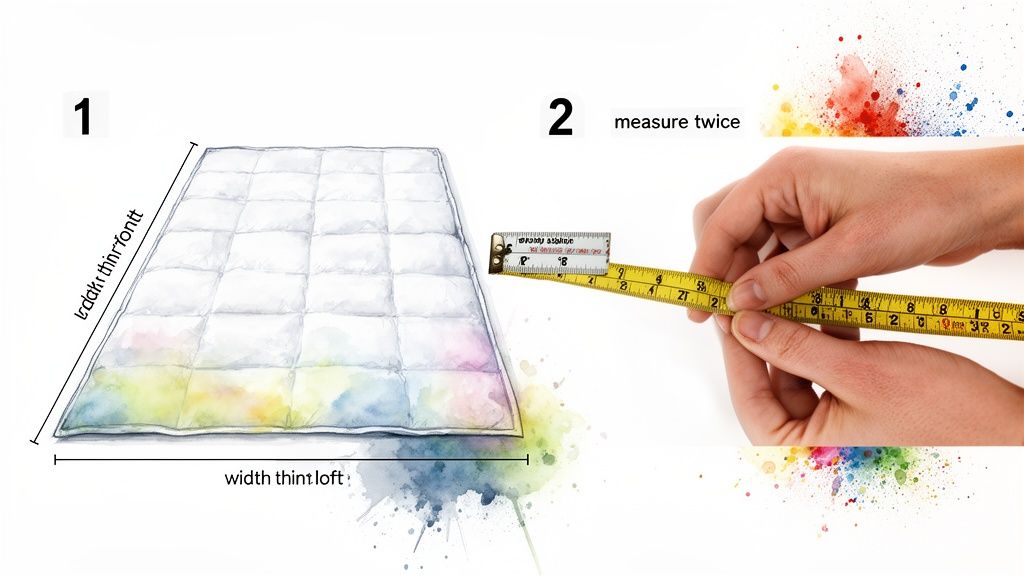
A Simple Three-Step Guide
Follow these straightforward steps to get an accurate measurement in just a few minutes. All you'll need is your quilt and a retractable measuring tape.
- Lay It Flat: Take the quilt out of its current cover and lay it on a large, flat surface, like your bed or the floor. Smooth out any major wrinkles or bunches so it’s lying as flat as possible.
- Measure the Width: Starting from one side, run your tape measure across to the other side. Keep the tape taut, but don’t stretch the quilt itself. Jot down this number—that's your width.
- Measure the Length: Now, do the same from the top edge all the way down to the bottom. Write this down as the length. It never hurts to measure twice, just to be sure!
Don’t Forget the Loft
"Loft" is just a simple way of describing the thickness or puffiness of your quilt. A high-loft quilt, like a big, fluffy down-filled one for winter, will naturally take up more space inside a cover than a thin, lightweight summer quilt.
This puffiness comes down to what's inside it. The type of filling makes a huge difference, and understanding the best batting for quilts can give you a good idea of how much volume it has. If your quilt is particularly thick, it’s a smart move to add an extra centimetre or two to your measurements. This gives it that little bit of extra breathing room and stops the cover from looking tight and compressed.
Pro Tip: Once you have your measurements, compare them to the standard Australian single quilt cover size of 140cm x 210cm. If your quilt is a few centimetres different, you'll know exactly what to look for when shopping.
This same measuring trick works for bigger beds, too. If you’re sizing up bedding for other rooms, our guide to the measurements of a double bed quilt cover follows the same easy steps.
Decoding Bedding Jargon: Quilt Cover vs. Duvet vs. Comforter
Navigating the world of bedding can feel like learning a new language. You’ll see terms like quilt cover, duvet, and comforter thrown around, sometimes even interchangeably, which gets confusing when you’re just trying to buy the right thing for your bed. Getting these key differences straight is the first step to making a great choice.
Think of it like a pillow and a pillowcase—the relationship between a quilt and its cover is exactly the same. The quilt cover is the protective, decorative outer layer, while the quilt is the soft, filled insert that provides all the warmth. This two-part system is incredibly practical. It lets you change your bedroom's style in minutes and makes laundry day so much simpler.
Clarifying the Core Bedding Terms
To make sure you buy exactly what you need, let’s quickly break down the three main players in the bedding world. Each one has a completely different job.
- Quilt Cover: This is simply a decorative fabric sleeve that protects your quilt. It has an opening with buttons, a zip, or ties to keep the quilt insert securely inside. Its main job is to keep your quilt clean and give you an easy way to refresh your room's look without buying all new bedding.
- Quilt or Duvet: Here in Australia, we tend to use 'quilt' and 'duvet' for the same thing—the soft, insulated insert filled with down, feathers, wool, or synthetic fibres. This is the part that provides the warmth and fluffy feel.
- Comforter: This is an all-in-one bedding piece. It's a thick, quilted blanket where the filling is permanently stitched into the decorative outer fabric. Unlike a quilt and cover set, you can’t separate the two pieces for washing.
The biggest advantage of a single quilt cover is its versatility. It protects your quilt from dirt and wear while giving you the freedom to update your decor without having to buy a whole new quilt.
Getting this distinction right is crucial. When you purchase one of our stylish Morgan & Reid single quilt covers, you're buying the essential 'pillowcase' for your single-sized quilt insert. This popular two-piece system is the backbone of the Australian bed linen market, which is seeing incredible growth. In fact, the market is projected to nearly double from USD 10,424.24 million to USD 20,238.15 million by 2033.
For a deeper dive, you might find our guide on the differences between a duvet and a quilt really helpful. Knowing the lingo means you'll never accidentally buy a comforter when you really just needed a cover.
Solving Common Quilt Cover Fit Problems
Have you ever brought home a beautiful new single quilt cover, only to find it doesn’t quite sit right after the first wash? Or maybe you’re in a constant battle with a quilt that bunches up inside its cover, leaving you with cold patches in the middle of the night. These little fit problems are incredibly frustrating, but the good news is they’re usually easy to fix once you know what you’re looking for.
It often starts with the fabric itself. Natural fibres like cotton and linen have a tendency to shrink a little, especially during their first few encounters with your washing machine. This isn't a flaw; it's just how these materials behave. A cover that fits perfectly straight out of the packet might feel a tad too snug after laundry day.
The Shrinkage Factor
To get ahead of this, many quality quilt covers are made from pre-shrunk fabrics. Even so, you can plan for minor shrinkage by following a few simple rules at home.
- Wash in Cold Water: Hot water is the number one culprit for shrinkage. Always choose a cold, gentle cycle to be safe.
- Avoid the Dryer: That intense heat from a tumble dryer can cause natural fibres to contract. Line drying is always the best way to preserve the original single quilt cover size.
- Look for Generous Sizing: If you know your quilt is a precise 140cm x 210cm, choosing a cover that's a centimetre or two larger gives you a helpful buffer.
These small habits can make a huge difference in keeping that perfect fit long-term, protecting your bedding and keeping it looking its best.
Achieving the Perfect Drape
Another common headache is getting that elegant, hotel-style drape over the sides of the bed. If your quilt cover looks too short, the problem is often your mattress depth, not the cover itself. These days, mattresses are much thicker than they used to be, especially if you have a plush pillow top.
To get that luxurious overhang, you need to factor in your mattress height. While a standard single quilt gives you a decent drape, some people with extra-deep mattresses size up to a double quilt and cover. This ensures the sides of the mattress are completely hidden.
It's a clever styling trick that creates a much cleaner, more polished look in the bedroom.
Ultimately, a well-fitting cover is the key to preventing annoying issues like bunching and shifting. If your quilt still moves around inside its cover no matter what you do, our guide on why your quilt keeps bunching up has some simple fixes that actually work. Getting the size right from the start is more important than ever, especially with the move towards more thoughtful, sustainable bedding choices that reduce waste. It’s a growing part of Australia's home textiles market—now valued at over USD 1.72 billion—where finding the perfect fit for common sizes like singles is a priority for shoppers.
Choosing Your Ideal Single Quilt Cover
Picking the right single quilt cover size is just the start. The real magic happens when you choose a fabric and style that truly brings a room to life. Whether you're putting together a fun kid's bedroom or a peaceful guest retreat, the right material can completely shift the vibe and, of course, the comfort.
When it comes to a child's room, you know it needs to be ready for anything. We're talking pillow forts, accidental spills, and endless cuddles. That's where durable, easy-care fabrics like cotton or a cotton-blend percale really shine. They're breathable, gentle on sensitive skin, and tough enough to handle countless trips to the washing machine, keeping those fun, vibrant designs looking great. If you need some ideas, our kids' collection is packed with lively patterns and colours.
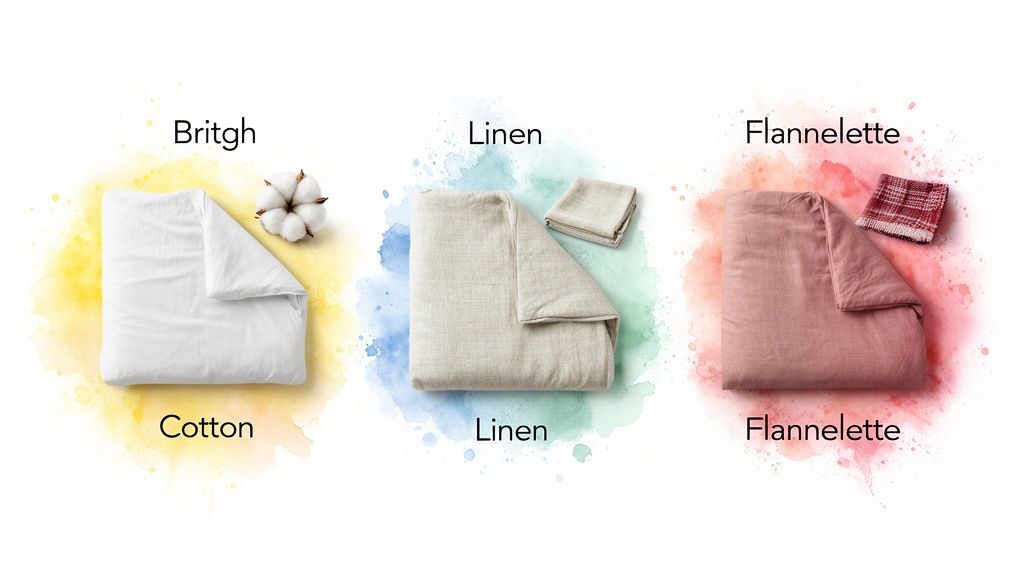
Matching Fabric to Function
For a guest room, the goal is often a touch of quiet luxury. Here, the focus shifts to materials that feel welcoming and calm from the moment someone walks in. A high-thread-count cotton offers that crisp, clean, hotel-like finish, while the beautiful, relaxed drape of linen brings a sense of effortless style.
To find your perfect match, think about how you want the bed to feel:
- Breathable Cotton: An absolute classic for a reason. It's perfect for year-round comfort and just gets softer and softer with every wash.
- Cosy Flannelette: The ultimate choice for chilly nights. Its brushed surface is brilliant at trapping warmth, making the bed incredibly snug.
- Textured Linen: Known for its lovely drape and amazing breathability, linen offers a relaxed, sophisticated look that honestly just gets better with age.
Tailoring Your Choice to Your Home
Single beds are everywhere in Australian homes, so choosing the right cover is a bigger part of home styling than you might think. In fact, over 40% of Aussie homes have single beds, making these covers a real staple. This is especially true in places like Queensland and Western Australia, where apartment living means there's a 12% higher use of single beds compared to larger sizes.
When you're choosing, think about the room's purpose. A durable, colourful cover is perfect for a high-traffic kid’s room, while a subtle, high-quality fabric can make a guest room feel like a five-star retreat.
At the end of the day, matching your choice to your comfort preferences and the room's function is the key. It ensures you’ll find a single quilt cover you absolutely love for years to come. Whether it’s the practical durability of a Sienna Living design or the classic appeal of Morgan & Reid, the right fabric makes all the difference.
Your Single Quilt Cover Questions Answered
To wrap things up, let’s go through a few of the most common questions we get from customers. Think of this as your final checklist—a few quick answers to give you that last bit of confidence before you choose the perfect bedding for your home.
It's a topic that's become more relevant than ever. Since the pandemic, as families invested more in kids' rooms and home learning spaces, we saw single quilt cover purchases jump by 30%. It’s clear that creating a comfortable, personal space for kids (and adults with single beds!) is a top priority. You can dig into this trend and see how bundled sets boosted order values by 18% in this in-depth research on the Australian home bedding market.
Can I Use a King Single Quilt Cover on a Single Bed?
While you technically can, we really don't recommend it if you want a neat look and a comfy night's sleep. A king single quilt cover is quite a bit wider than a standard single, leaving you with a lot of extra fabric that droops over the sides and can look messy.
The bigger issue is comfort. All that extra space inside the cover lets your quilt shift around and bunch up, which often leads to annoying cold spots in the middle of the night. For a snug, tidy fit that looks sharp and feels great, it's always best to match your single quilt with a proper single quilt cover size.
What Size Pillowcase Comes with a Single Quilt Cover Set?
Here in Australia, you can almost always expect one standard-sized pillowcase included in a single quilt cover set. It will typically measure 48cm x 73cm, which is the perfect size to fit most standard pillows snugly. This way, your whole bed has a coordinated, complete look right out of the bag.
It never hurts to double-check the product description, but you can shop with confidence knowing one matching pillowcase is the standard for single sets.
How Often Should I Wash My Quilt Cover?
To keep things fresh and hygienic, we recommend washing your quilt cover every one to two weeks. This simple routine helps get rid of dust, natural body oils, and allergens, making for a much healthier sleep environment. If you have pets who love to share the bed or if you struggle with allergies, bumping this up to a weekly wash is a great idea.
And, of course, always follow the specific care instructions on the label. This is the best way to keep the fabric feeling soft, looking vibrant, and lasting for years to come.
At Manchester Factory, we're here to help you find beautiful, practical bedding for every room. Why not explore our range of high-quality and affordable single quilt covers today?