

In our hectic, always-on world, true bedroom comfort isn’t a luxury—it’s a necessity. It’s what turns a room with a bed into your own personal sanctuary, a place where you can properly switch off, recharge, and get ready for the next day. But real comfort is more than just a soft blanket; it’s a thoughtful blend of physical sensations, emotional security, and a look that just feels right.
Why Ultimate Bedroom Comfort Matters More Than Ever

More and more, people are realising that creating a comfortable bedroom is one of the best things you can do for your wellbeing. Think of it like this: choosing the right bedding is like picking the perfect pair of running shoes. It has to be tailored to your specific needs if you want to perform at your best—and in this case, ‘performing’ means getting deep, restorative sleep. It’s all about intentionally creating an environment that supports your health from the ground up.
True comfort is layered. It’s a mix of a few key ingredients working together.
The Pillars of Bedroom Comfort
- Physical Sensation: This is the most obvious one—how things feel against your skin. It’s the crisp softness of a Sienna Living sheet set, the gentle pressure of a good quilt, and the way the right pillow supports your head just so. It’s all about that tactile sense of ease.
- Emotional Security: Your bedroom needs to feel like a safe haven. It’s the one place you can completely let your guard down and leave the day’s stresses at the door. A well-designed, organised space naturally feels calmer and more orderly, which is exactly what your mind needs to unwind.
- Aesthetic Harmony: How your room looks really does matter. When the colours, textures, and lighting all match your personal style, it creates an atmosphere that feels welcoming and truly yours.
A truly comfortable space is one where your physical, emotional, and visual needs are met in unison. It’s a deliberate creation, not an accident, turning your bedroom into the ultimate sanctuary for rest and rejuvenation.
Your Path to a Restful Sleep
Getting this right means understanding how all the different pieces fit together. For example, keeping your room at a consistent temperature is a massive factor in getting uninterrupted sleep. If you're looking for practical ways to achieve this, exploring smart thermostat energy savings can be a game-changer for creating that perfect sleep environment.
At the end of the day, the quality of your sleep is directly linked to your surroundings. To really build a foundation for better rest, it helps to understand the science of sleep and how it impacts your health. This knowledge empowers you to make choices that will genuinely foster a restorative atmosphere, night after night.
How Your Bedding Materials Define Sleep Quality

Choosing your bedding is about so much more than just picking a colour that matches your walls; it’s a decision that genuinely shapes how well you sleep. The materials you wrap yourself in every night are the unsung heroes of comfort, quietly working to regulate your temperature, wick away moisture, and create that perfect feel against your skin.
Think of bedding fabrics as the secret ingredients in a recipe for a great night's sleep. Each one brings its own unique qualities to the bed, and understanding what makes them different is the first step to unlocking your best rest. It’s less about what looks good on a screen and more about what feels right for your body.
This search for better sleep is completely reshaping Australia's home bedding landscape. The market, currently valued at USD 3,987.2 million, is set to grow to USD 9,205.4 million by 2033. This isn't just a random trend; it shows a real shift as families and older women invest more thoughtfully in comforters and quilts that blend style with that elusive, supreme softness. As you can discover in more detail about the home bedding market, this growth is all about the demand for premium, breathable fabrics that promise a better night's sleep.
Decoding the Language of Fabrics
When you start shopping for bedding, you'll come across a few key players. Each has its own strengths, making them a better fit for different sleepers and climates. Let’s break down the most popular choices.
-
Cotton: The timeless classic. Cotton is loved for its breathability and reliable softness. Long-staple varieties like Egyptian or Pima cotton are even stronger and have a silky-smooth finish. It’s a fantastic all-rounder for year-long comfort.
-
Bamboo: A rising star in the bedding world, and for good reason. Bamboo is celebrated for being exceptionally soft and brilliant at wicking away moisture. It’s also naturally hypoallergenic and temperature-regulating, which helps keep you cool in summer and cosy in winter.
-
Linen: Made from the flax plant, linen is incredibly durable and one of the most breathable fabrics you can find. It has a unique, slightly textured feel that gets beautifully soft with every wash, creating a relaxed, lived-in look that’s perfect for hot sleepers.
-
Microfibre: This synthetic option is known for being budget-friendly, durable, and resistant to wrinkles. It can offer a soft, plush feel, but it's generally less breathable than natural fibres.
The debate between natural fibres can get pretty detailed. If you're weighing up your options, our guide on the differences between bamboo and cotton sheets offers a deeper comparison to help you decide.
Thread Count Isn't the Whole Story
You’ve probably heard that a higher thread count means better sheets. That’s not always true.
Think of thread count like a camera's megapixels. A high number sounds impressive, but it’s the quality of the lens—in this case, the fibre itself—that really determines the quality of the final picture.
A 400-thread count sheet made from high-quality, long-staple cotton will feel far more luxurious and last longer than an 800-thread count sheet made from a lower-grade, short-staple fibre. The quality of the raw material is the true foundation of comfort.
So, focus on the type of fibre first. Once you've chosen a material that suits your needs, then you can use thread count as a secondary guide to its texture and density.
Choosing Your Ideal Bedding Material
Finding the perfect bedding material is much easier when you know what you’re looking for. Are you a hot sleeper? Do you have sensitive skin? This table breaks down the key benefits of each material to help you find your perfect match.
To help simplify your decision, we've put together a quick comparison of the most common bedding materials.
| Material | Key Benefit | Best For | Feel |
|---|---|---|---|
| Cotton | Breathable & Versatile | All-season use and those who love a crisp, clean feel. | Soft, crisp, and gets softer with time. |
| Bamboo | Temperature Regulating | Hot sleepers, allergy sufferers, and eco-conscious buyers. | Silky-smooth, buttery, and drapes beautifully. |
| Linen | Highly Breathable & Durable | Hot climates, warm sleepers, and lovers of rustic style. | Lightly textured, airy, and effortlessly relaxed. |
| Microfibre | Affordable & Easy Care | Budget-conscious shoppers, kids' rooms, and low-maintenance lifestyles. | Plush, smooth, and lightweight. |
Ultimately, choosing the right material is what transforms your bed from just a piece of furniture into your own personalised comfort zone. By understanding how each fabric performs, you can look past the marketing buzzwords and make a smart choice that will genuinely improve your sleep, night after night.
Understanding Your Bedding Layers
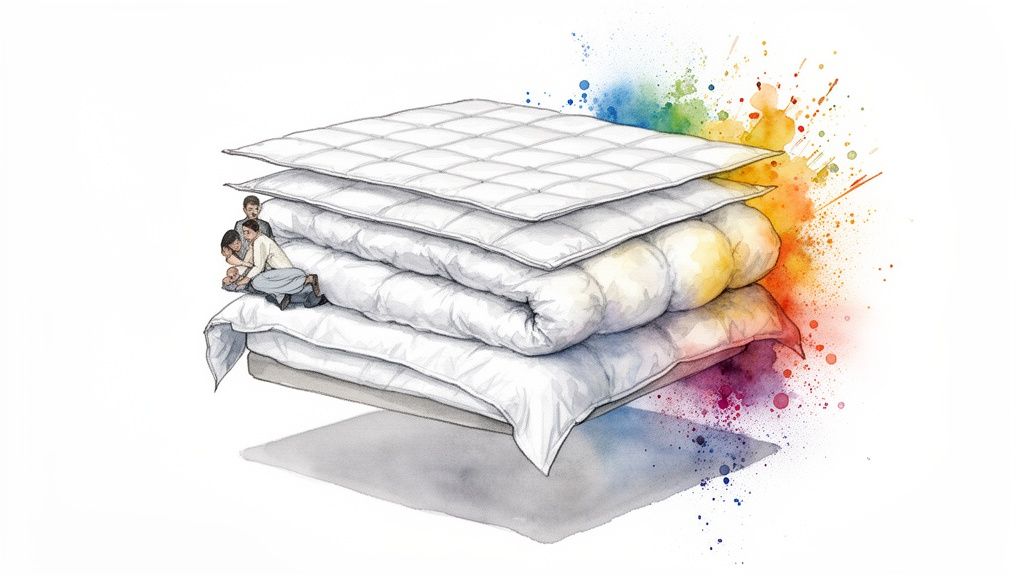
Creating a truly comfortable bed is a bit like dressing for unpredictable weather—it’s all about smart, adaptable layers. Understanding what each piece of bedding does is the secret to unlocking year-round comfort, letting you add or remove warmth as the seasons change.
But with so many terms floating around—comforters, quilts, coverlets—it’s easy to get tangled up in what you actually need.
Think of each layer as a tool designed for a specific job. Once you know what each one does, you can move from a one-size-fits-all approach to a flexible sleep system that’s perfectly tailored to your needs, whether you're battling a summer heatwave or a chilly winter night.
The Foundation of Your Comfort System
Before we even get to the blankets and quilts, the foundation of your bed plays a huge part in how comfortable you feel. This is the bit people often forget, but it can make a massive difference.
If you’re looking to add an extra layer of plushness or support, understanding what a mattress topper is and how it helps can be a brilliant first step. From there, we build upwards with the layers that provide warmth, weight, and style.
Quilts and Coverlets: The Versatile Lightweights
Quilts and coverlets are the adaptable heroes of the bedding world. They're thinner, less insulated, and offer a lighter level of warmth, which makes them perfect for layering or for using on their own during milder weather.
-
Quilts: Think of a quilt as a "lightweight sandwich." It’s traditionally made with three layers—a decorative top, a thin inner batting for warmth, and a bottom fabric layer, all stitched together. This gives it a lovely, slightly weighted feel without being bulky.
-
Coverlets: A coverlet is even simpler. It's usually a single decorative layer of fabric, often with a woven texture like matelassé. It provides just a touch of warmth and a clean, finished look, making it an ideal top layer in summer or a stylish addition over a comforter in winter.
The real magic of quilts and coverlets is their versatility. They give you precise control over your comfort, letting you add or remove warmth to perfectly match the room's temperature and your body's needs.
Comforters and Duvets: The Cosy Powerhouses
When you need serious warmth and that cloud-like feeling, you turn to comforters and duvets. These are the thickest, most insulated layers, designed to trap heat and give you maximum cosiness during the colder months.
A comforter is a single, pre-filled piece of bedding, stitched through to keep the filling from shifting around. It's ready to use straight out of the bag and is often sold as part of a matching set. They are simple and effective, providing instant, plush warmth.
A duvet (and its duvet cover) is a two-part system. The duvet itself is the plain, filled insert, while the duvet cover is the decorative, washable shell it slips into. This setup is incredibly flexible because you can change the whole look of your bedroom just by swapping the cover.
How to Layer for Perfect Year-Round Comfort
Layering isn't just about piling on blankets; it's a strategic way to build a sleep environment that works for you in any season.
- Start with a Base: Begin with your fitted sheet and a top sheet (also called a flat sheet). This creates a soft, breathable layer right against your skin.
- Add a Mid-Layer: Next, add a quilt or coverlet. This will be your main source of warmth for most of the year.
- Introduce the Top Layer: In winter, place a fluffy comforter or duvet over your quilt. In summer, you can ditch this heavy layer and just use the quilt on its own.
- Finish with a Throw: A decorative throw at the foot of the bed adds a final touch of style and is perfect for a quick afternoon nap without messing up the whole bed.
By mastering these layers, you can create a bed that not only looks inviting but is also a finely tuned system for personal comfort. Premium collections from brands like Morgan & Reid offer beautiful, high-quality pieces that make building your perfect sleep sanctuary effortless and stylish.
Creating Personalised Comfort for Your Whole Family
A comfortable home isn't built on a single definition of what feels good; it's a mosaic of individual needs and preferences. What feels like a warm hug to one person might be stifling to another. This is especially true in a family home, where creating a sanctuary means understanding that comfort is deeply personal and rarely a one-size-fits-all solution.
Think of it like a shared meal. While everyone sits at the same table, each person might need a slightly different dish to feel satisfied. One person might prefer something light and crisp, while another craves warmth and substance. The goal isn't to force everyone to like the same thing, but to create a collection of options where everyone finds their perfect match.
This thoughtful approach is becoming more common as Australian families prioritise wellbeing. In fact, bed linen now makes up 38.3% of the home textiles market, a sector projected to hit USD 2.94 billion by 2030. This growth shows a real shift towards viewing quality bedding not as a luxury, but as a crucial investment in family wellness. Learn more about the Australian home textiles market and see how this trend is shaping household spending.
Comfort Solutions for Children
For kids, comfort needs to be tough enough to handle pillow forts and gentle enough for sweet dreams. Their bedding has to be a blend of durability, safety, and a touch of fun.
- Durability and Easy Care: Let's be honest, children's bedding goes through a lot. Look for robust, machine-washable materials like high-quality cotton or microfibre blends that can withstand frequent washing without losing their softness or colour.
- Engaging and Safe Designs: A child's room is their whole world. Bedding with their favourite colours or characters makes their space feel personal and secure. Always look for OEKO-TEX certified fabrics to ensure they are free from any harmful chemicals.
Addressing Comfort for Older Adults
As we get older, our comfort needs change. For older women and adults, sleep can become more sensitive, making the right bedding absolutely essential for restorative rest. Thermal regulation and skin sensitivity are often top priorities here.
Materials like bamboo are brilliant for this, as they naturally regulate temperature to help prevent overheating or feeling too cold during the night. The incredibly soft and smooth texture is also gentle on delicate skin, reducing any potential irritation.
For older adults, hypoallergenic properties aren't just a bonus—they're a cornerstone of comfort. Bedding that resists dust mites and other allergens can significantly improve sleep quality and respiratory health, ensuring a truly peaceful night.
If allergies or sensitivities are a concern for anyone in the family, it’s worth exploring all your options. You can check out our guide on hypoallergenic bedding to find the best materials for a sneeze-free sleep.
Finding Harmony for Couples with Different Needs
It's one of the most common comfort challenges out there: the couple with different internal thermostats. You've got the classic "blanket hog" versus the "human furnace." Instead of battling over the thermostat, the real solution lies in smart, individualised layering.
Imagine one person needs a lightweight quilt while the other needs a thick, cosy comforter. The answer isn't some middle-ground compromise that leaves you both unhappy, but a clever system that works for both.
The Scandinavian Sleep Method:
- Start with a shared fitted sheet. This creates a unified base for the bed.
- Use two separate, individual duvets or quilts. Instead of one large quilt, each person gets their own. One can choose a light, breathable quilt, while the other opts for a warmer, higher-loft duvet.
- Add a large coverlet or throw. To keep the bed looking cohesive, you can lay a single, large coverlet or a stylish throw over the two duvets during the day.
This simple approach gives each person total control over their temperature without disturbing their partner. It transforms the bed from a comfort battlefield into a shared space of personalised peace. By thoughtfully selecting bedding for each person, you turn every bedroom into a unique sanctuary tailored to whoever is sleeping in it.
Designing Your Ultimate Bedroom Sanctuary

While the right bedding is definitely the heart of a good night's sleep, true comfort wraps you in a way that involves your entire environment. It's about turning your bedroom from just a place where you sleep into a genuine sanctuary. This means looking beyond the bed and fine-tuning the whole atmosphere so that every little detail works together to signal peace and relaxation to your mind and body.
Think of your bedroom as its own little ecosystem. Just like a garden needs the perfect balance of sunlight, water, and soil to thrive, your sanctuary needs the right mix of lighting, temperature, and sensory cues to help you properly unwind. The good news? You don't need a massive renovation. It’s all about making small, deliberate changes that deliver a big impact.
Master Your Lighting and Temperature
The first place to start is with light and warmth—two of the most powerful influences on our sleep cycles. Nobody feels relaxed under harsh, jarring overhead lighting, and it's impossible to settle down in a room that’s too hot or too cold. The goal is to create a soft, adaptable environment you can control.
-
Layer Your Lighting: Don't just rely on a single, bright ceiling light. Instead, combine a few different sources. Think a soft bedside lamp for reading, putting the main light on a dimmer switch for general ambience, and adding blackout curtains to create complete darkness when it's time to sleep. This layering gives you total command over the mood.
-
Find the Ideal Temperature: Most sleep experts agree the sweet spot for sleep is surprisingly cool, sitting around 18.3°C. Keeping your room consistently at this temperature can be an absolute game-changer. If you can, a programmable thermostat is a brilliant tool for making sure your room is perfect right when you need it to be.
Declutter for a Clearer Mind
A cluttered space almost always leads to a cluttered mind. Your bedroom should be your escape from the day's chaos, not a reminder of it. A simple, organised room sends a powerful message to your brain that it’s time to switch off and rest.
This isn’t about becoming a minimalist overnight. It's much simpler than that. It just means giving everything a proper home and keeping your surfaces clear. You can start small—just tidy your bedside table or clear out one messy drawer. You’ll be surprised at the immediate sense of calm an orderly space can bring.
A peaceful environment is the bedrock of restorative sleep. By consciously shaping your surroundings, you're not just decorating a room—you're designing a nightly ritual of relaxation and recovery.
Engage the Senses for Deeper Comfort
The final layer of creating your sanctuary is about bringing your other senses into the picture. Comfort isn't just one thing; it's a full sensory experience. Adding subtle details that appeal to touch, scent, and sound can elevate your space from simply nice to truly restorative.
-
Incorporate Plush Textures: Bring in things that feel good to the touch. A soft rug next to the bed makes those first steps in the morning a little kinder, while a velvet cushion or a chunky knit throw adds a touch of tactile luxury.
-
Introduce Calming Scents: Aromatherapy can have a huge effect on your mood. A diffuser with a few drops of lavender or chamomile essential oil is known to promote relaxation. The key is to be subtle—you want a gentle, barely-there fragrance, not something overpowering.
-
Manage Sound: If you're bothered by noise from outside, a white noise machine or even a quiet fan can create a consistent, soothing soundscape that helps to mask any disruptions and lets you drift off peacefully.
By thoughtfully designing each part of your bedroom, you build a complete comfort zone. For more ideas, have a look at our guide to styling your bedroom for a dreamy and relaxing space and see how the right homewares can pull your whole sanctuary together.
How to Care for Your Bedding for Lasting Comfort
Buying beautiful, high-quality bedding is the best part of creating your comfort zone. But keeping that cloud-like softness and vibrant colour for years to come? That all comes down to how you care for it. Good maintenance is what turns a simple purchase into a long-term investment in your sleep.
Think of your favourite linen sheets or bamboo quilt cover like a luxury car; it needs the right fuel and regular tune-ups to perform at its best. A few simple, consistent habits are all it takes to protect the integrity of the fibres, making sure your bedding stays just as soft, breathable, and comfy as the day you brought it home.
And it seems Aussies are catching on. We're prioritising comfort more than ever, with the bed linen market tipped to reach an incredible USD 20,238.15 million by 2033. This isn't just about pretty sheets; it shows a real understanding of how premium bedding improves our rest, with more and more of us seeing it as a key part of a healthy lifestyle.
Washing and Drying Best Practices
To keep your bedding feeling soft and new, you have to avoid the common laundry mistakes that break down fabrics over time. Small tweaks to your routine can make a massive difference in preserving the texture and feel you fell in love with.
- Choose a Gentle Detergent: Harsh chemicals are tough on natural fibres like cotton and bamboo. Stick with a mild, pH-neutral liquid detergent to get things clean without stripping away the material’s natural softness.
- Wash in Cold Water: Always use a gentle cycle with cold water for your sheets and quilt covers. Hot water is the enemy of longevity—it can cause fibres to shrink and colours to fade.
- Avoid Overloading the Machine: Don't cram everything in at once. Your bedding needs room to move around to get properly cleaned and to prevent the friction that wears down the fabric.
When it comes to drying, less heat is always the answer. Tumble dry on a low setting or, even better, let it line dry. This is the single best way to prevent damage to delicate fibres and keep the fabric’s natural texture intact.
Storing and Freshening Your Linens
Proper storage is key to keeping your spare bedding sets fresh and ready to go. A cool, dry, and well-ventilated space like a linen closet is perfect. Try to avoid plastic containers, as they can trap moisture and lead to that musty smell.
Of course, a truly comfortable bed is more than just clean sheets. The foundation matters, too. To maintain that fresh feeling all year round, it’s worth learning how to clean a mattress like a pro. After all, a clean base is essential for a healthy and genuinely comfortable sleep environment.
Common Questions About Bedroom Comfort
Navigating the world of bedding can feel like learning a new language. With so many terms, materials, and options out there, it’s easy to get a bit lost. We've pulled together the most common questions we hear about bedroom comfort and answered them in a clear, straightforward way to help you build your perfect sleep sanctuary.
Think of this as your quick-reference guide for those specific comfort challenges. From decoding technical terms to finding practical solutions for a shared bed, these insights will help you choose with confidence.
Does a Higher Thread Count Always Mean More Comfort?
Not always. While thread count is often shouted from the rooftops in marketing, the quality of the fibre is what really matters.
Imagine two sweaters: one is made from thin, scratchy wool but has a very tight knit. The other is made from luxuriously soft cashmere with a slightly looser knit. Which one would you rather wear?
It's the exact same principle with sheets. A 400-thread count sheet made from high-quality, long-staple cotton will feel softer and last longer than an 800-thread count sheet made from a lower-grade, short-staple fibre. Always prioritise the material quality first, and use thread count as a secondary guide.
The real secret to comfort isn't just the number of threads, but the quality of the yarn they're spun from. High-quality fibres create a smoother, more durable, and ultimately more comfortable fabric, regardless of the final count.
How Can My Partner and I Both Be Comfortable?
This is the classic bedroom dilemma, and the solution is smart layering. Instead of a single, one-size-fits-all duvet that leaves one person sweating and the other shivering, think in modular layers.
Start with a set of breathable sheets for both of you.
Next, use a lightweight quilt as your main layer. From there, the colder sleeper can add a personal throw or an extra blanket just on their side of the bed. This simple trick lets each of you easily adjust your warmth level without disturbing your partner, guaranteeing a peaceful night for everyone.
How Often Should I Replace My Pillows?
For the best hygiene and support, you should aim to replace your pillows every 1-2 years. Over time, they collect dust mites and lose their structure, which can lead to poor neck alignment and restless nights.
Here’s a simple test you can do right now: fold your pillow in half. If it doesn’t spring back to its original shape, its supportive filling is worn out, and it’s definitely time for a new one.
At Manchester Factory, we believe everyone deserves comfort that feels made for them. Explore our diverse collections of high-quality bedding to find the perfect solution for every member of your family. Start building your ultimate sleep sanctuary today by visiting Manchester Factory.