

When it comes to bedding, the great debate often boils down to two heavyweights: the comforter and the doona. For many Aussies, these terms get thrown around interchangeably, but they’re actually two very different beasts. Getting your head around the difference is the first step to choosing the right one for your bed.
The simplest way to think about it is this: a comforter is a single, stitched bedding item with its cover already built-in. A doona, on the other hand, is a plain insert that needs a separate cover. This one distinction changes everything, from how you style your bedroom to how you do your laundry.
Settling The Great Bedding Debate
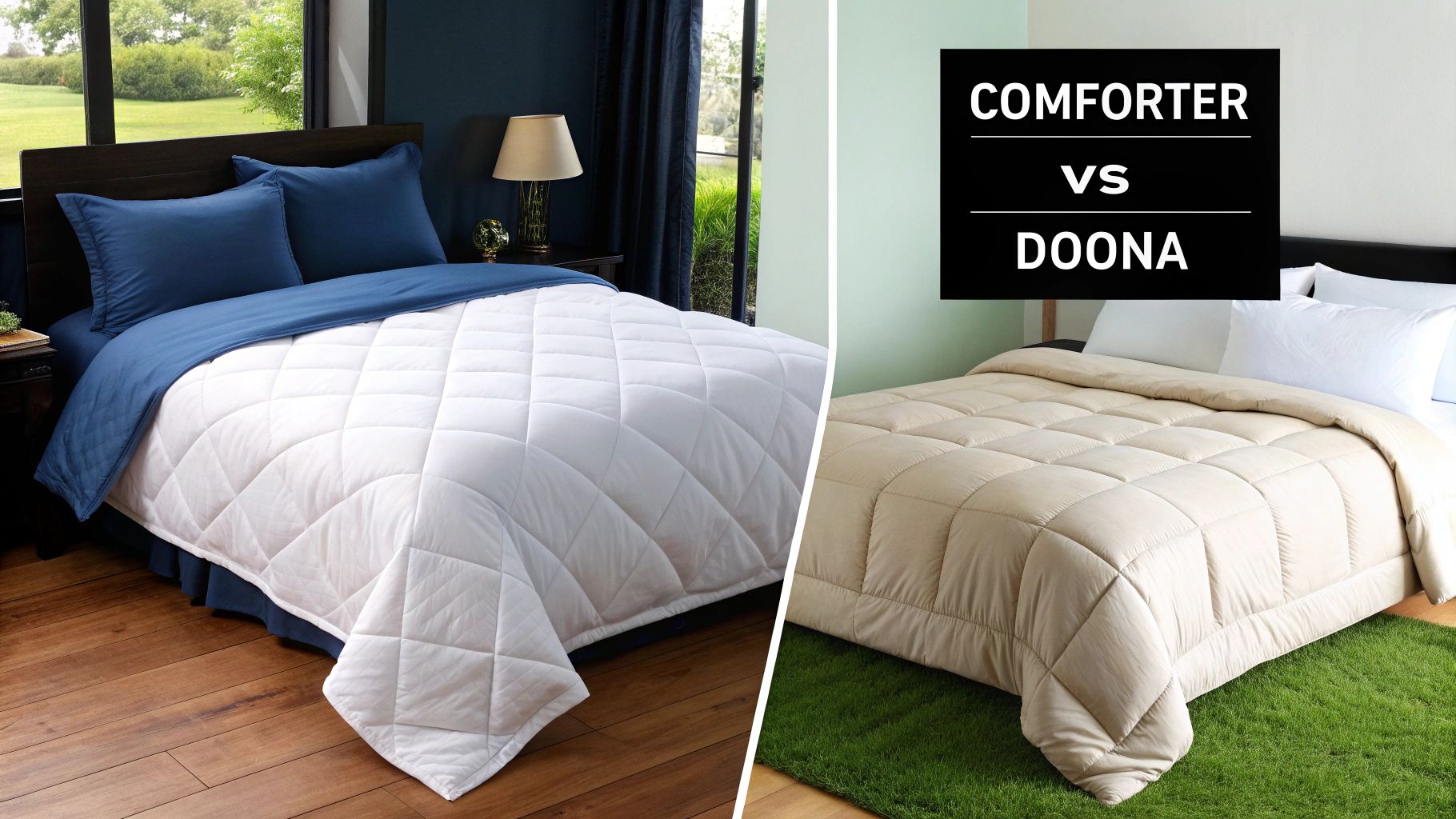
Let's clear up the confusion. A comforter is designed as an all-in-one solution. It’s a thick, quilted blanket where the filling (usually synthetic fibres) is stitched into a decorative outer fabric. You just throw it on the bed, and you're done. No covers, no fuss.
A doona is what the rest of the world often calls a duvet. It’s essentially a soft, plain bag filled with down, wool, or a synthetic alternative. It's not meant to be used on its own; it acts as an insert that you pop inside a separate doona cover. This two-part system is pretty much the standard in Australia, and for good reason.
Key Functional Differences
Here in Australia, the doona has become the go-to, mainly because it’s so adaptable to our climate and just easier to live with. While the word 'comforter' might bring to mind those big, puffy styles popular in the US, 'doona'—a term that caught on here in the 1970s—is all about that lightweight, versatile insert we all know and love.
The practical differences between the two are huge:
- Style: With a doona, you can change your bedroom’s entire look just by swapping out the cover. A comforter’s design is permanent.
- Hygiene: A doona cover can be stripped off and tossed in a standard washing machine. Cleaning a bulky comforter is a much bigger job, often requiring a trip to the laundromat.
- Versatility: Doonas are sold with different warmth ratings (measured in GSM), so you can switch them out for a lighter one in summer and a warmer one in winter.
At its core, the choice between a comforter vs doona is a decision between convenience and customisation. A comforter offers simplicity, while a doona provides long-term versatility and style potential.
To make things even clearer, here’s a quick side-by-side look at how they stack up.
Quick Comparison Comforter vs Doona
| Characteristic | Comforter (All-in-One) | Doona (Insert + Cover) |
|---|---|---|
| Structure | A single, stitched unit with a built-in cover. | Two separate pieces: a plain insert and a removable cover. |
| Cleaning | Needs a large machine; washed less often. | The cover is easily removed and machine-washed regularly. |
| Style | The design and colour are fixed. | You can change the style instantly with a new cover. |
| Versatility | Usually offers a standard 'one-size-fits-all' warmth. | Available in various warmth ratings (GSM) for different seasons. |
Getting these basics down is the best way to start before you dive into the nitty-gritty of fill materials and warmth ratings. If you're leaning towards the all-in-one approach, you can get a more in-depth look from our detailed guide on what a comforter is.
Why Australians Say Doona Instead Of Duvet
Ever wondered why Aussies talk about climbing under a ‘doona’ while Brits mention their ‘duvet’ and Americans have a ‘comforter’? It’s not just a quirk of Aussie slang. The story behind the word ‘doona’ is a classic piece of Australian cultural history, and it all comes down to a brand name that completely changed the way we sleep.
It's a perfect example of a brand becoming the generic term for a product, just like ‘Esky’ became the go-to word for any cooler box or ‘Hoover’ for a vacuum cleaner.
The story kicks off back in the 1970s when the Scandinavian-style duvet insert first hit the Australian market. A company called Tontine launched its new product under a catchy brand name: ‘Doona’. The word itself was borrowed from the Danish ‘dyne’, which means down feathers. The marketing was a runaway success, and the product was so popular that the name just stuck. Before long, ‘doona’ was the default word for any quilt insert right across the country.
From Brand Name to Household Staple
This little piece of history also explains a big difference in how we like our bedding. While Americans went all-in on the one-piece comforter, Australians fell in love with the more practical two-part system. The doona and its separate cover was a perfect match for our varied climates and our no-fuss approach to life. Splitting the insert from its protective cover made laundry day a breeze and let us change up our bedroom style without buying a whole new quilt.
Knowing this isn't just trivia—it's essential for smart shopping. When you’re scrolling through international websites or looking at overseas brands, remembering that ‘duvet’ is the global equivalent of our ‘doona’ means you’ll be comparing the right products. It stops you from accidentally ordering a bulky, non-washable American-style comforter when what you’re really after is a versatile, easy-care insert.
The term ‘doona’ is more than just a word; it represents a distinctly Australian approach to bedding that prioritises versatility, hygiene, and adaptability—qualities that a traditional comforter often lacks.
This distinction is crucial when you think about styling and caring for your bed. The whole idea of a doona is built around its partnership with a cover, which is both a decorative layer and a protective shield. To really get the most out of this system, you need to understand the role of its other half. For a closer look, our guide explains in detail what a doona cover is and why it's such a game-changer. At the end of the day, our unique Aussie term reflects a practical choice that continues to shape our bedrooms.
Comparing Fill Materials And Construction Quality
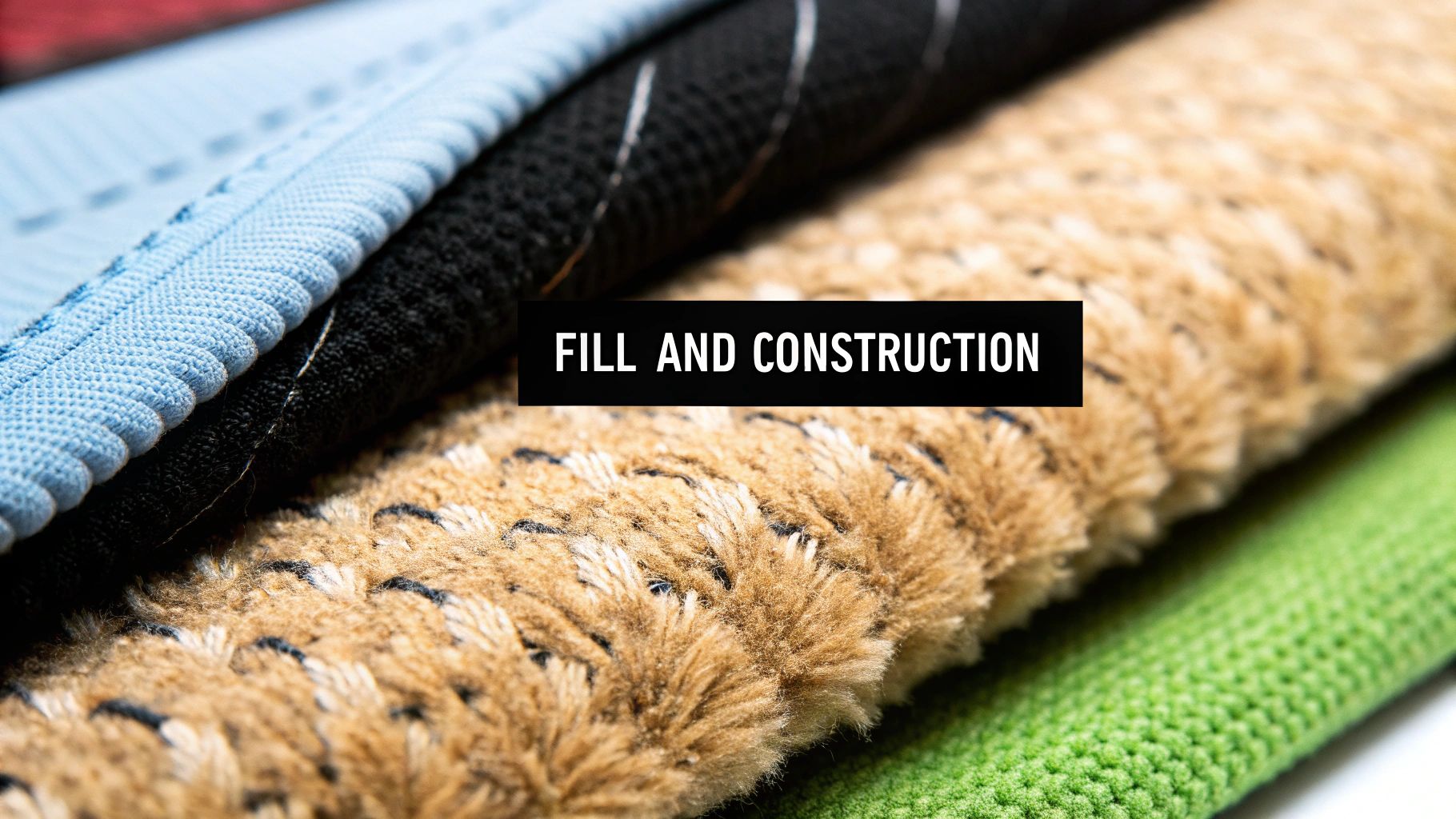
Let’s get into what really matters: what’s on the inside and how it’s all held together. When you’re weighing up a comforter versus a doona, the real difference in feel, warmth, and how long it lasts comes down to the fill and construction. In our experience, doonas generally come out on top with a wider range of high-quality, specialised fills designed specifically for the Australian climate.
Aussies are becoming much more invested in their sleep, and we’re seeing a big shift towards premium materials like goose down and Australian wool. It shows people are willing to spend a bit more for bedding that genuinely performs and handles our unique seasons. This is where doonas really shine, offering tailored options for almost any sleeper.
Natural Fills For Superior Performance
There’s a reason natural fills are so prized—they breathe and regulate temperature in a way synthetics just can't match, making them perfect for year-round comfort.
- Australian Wool: A true wonder material. Wool is naturally hypoallergenic, wicks away moisture, and acts as an amazing insulator. It keeps you warm when it’s cold and cool when it’s hot, making it ideal for anyone whose temperature fluctuates overnight.
- Goose or Duck Down: This is the ultimate in lightweight luxury. Down gives you incredible warmth without the weight, creating that classic, lofty, cloud-like feeling everyone loves.
- Cotton: A fantastic option for hot sleepers or for those balmy summer nights. Cotton-filled doonas are breathable, lightweight, and help keep you from overheating.
Synthetic Fills For Practicality
Don't discount synthetic fills. Modern alternatives offer brilliant benefits, especially for families with allergies or anyone looking for super easy, wash-and-wear bedding.
Key Insight: For households managing allergies and asthma, a high-quality, hypoallergenic microfibre doona is the most practical choice. It provides warmth and comfort while inhibiting dust mites and other common allergens.
High-grade microfibre and down alternative fills are specifically designed to mimic the softness and loft of natural down, but without the potential allergens. They're incredibly durable, a breeze to wash, and offer fantastic value. For more on this, check out our guide on the benefits of down alternative bedding for allergy sufferers.
How Construction Impacts Your Comfort
How a doona or comforter is stitched is just as important as what’s inside it. Good construction is what stops the filling from shifting around, which prevents annoying clumps and cold spots while you sleep.
Doonas often feature a superior baffled-box construction. This method uses small fabric walls (the baffles) inside each stitched square. It allows the fill to expand to its full loft for maximum warmth but keeps it perfectly in place. It’s the hallmark of a high-quality doona that’s built to last.
On the other hand, many comforters use simpler channel stitching (long parallel seams) or are just sewn-through from top to bottom. While this works, it can let the fill move around over time, leading to uneven warmth and a less comfortable sleep. The choice here directly affects how well your bedding performs night after night.
Choosing The Right Warmth For The Australian Climate
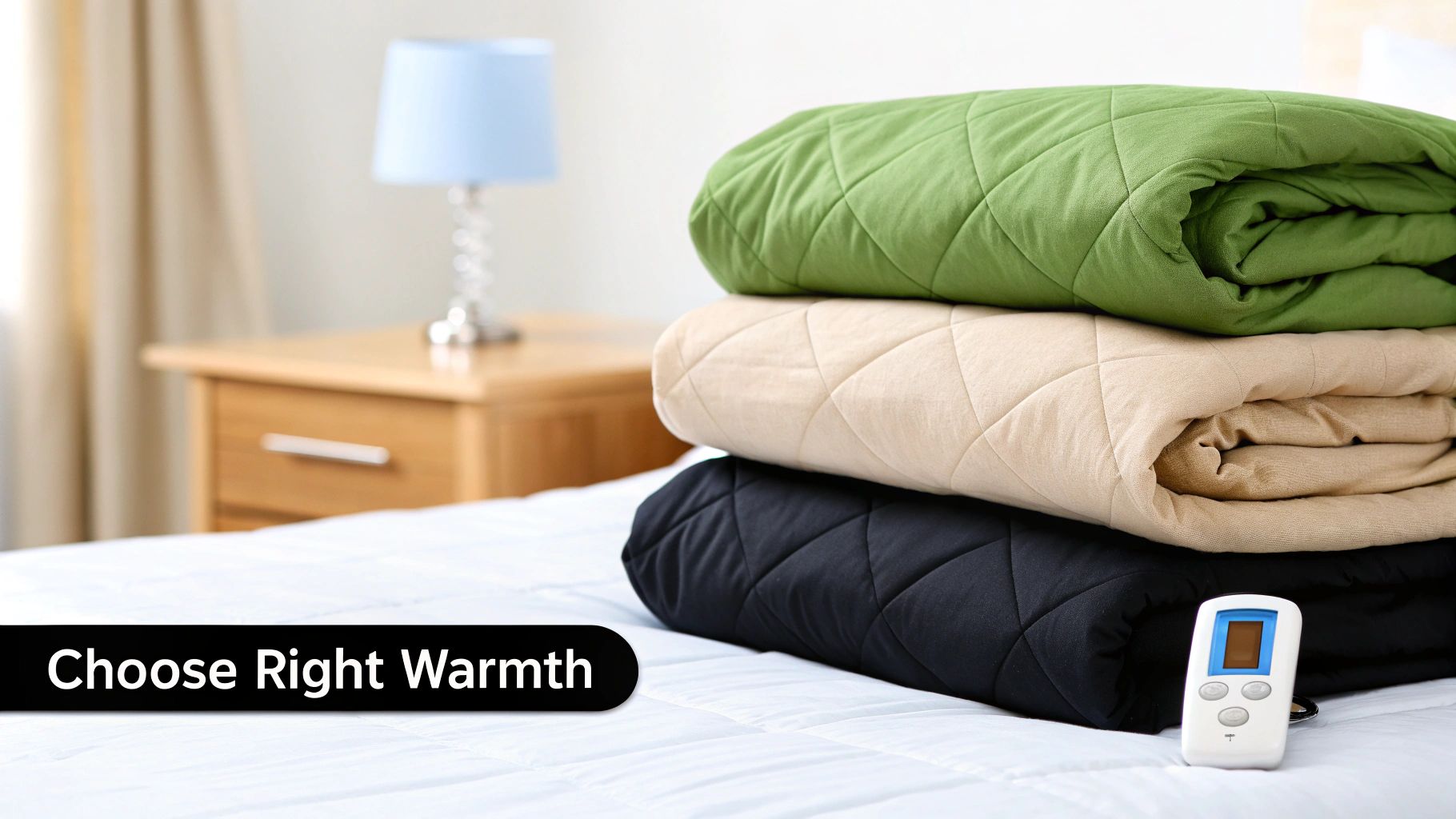
Let's be honest, finding the right bedding for Australia's wild and varied climates can feel like an impossible task. What keeps you cosy through a Melbourne winter will have you sweating in a humid Brisbane summer. This is where the practical difference between a comforter and a doona really shows, especially when we talk about warmth.
Comforters often come with vague labels like ‘all-seasons’ or ‘medium weight’. While it sounds simple, this one-size-fits-all approach rarely delivers true comfort for both a frosty July night and a sweltering January evening. It’s a compromise that often doesn't quite fit anyone perfectly.
Doonas, on the other hand, give you a much clearer system. Their warmth is usually measured in GSM (grams per square metre). This number tells you the weight of the fill inside, which is a direct indicator of how warm it will be. A higher GSM means more fill, which means more insulation. Simple as that.
Decoding Warmth Ratings For Your Location
Once you understand these ratings, you can stop guessing and start choosing bedding that actually improves your sleep. It’s about tailoring your bed to your exact needs.
- Low GSM (150-350): Perfect for hot sleepers, anyone living in humid climates like Queensland, or simply as a lightweight summer option. Natural fills like cotton, bamboo, or a light wool are fantastic choices here.
- Medium GSM (400-600): This is your ideal ‘all-seasons’ range, especially for temperate climates like Sydney or Perth. A high-quality Australian wool doona in this weight is a brilliant year-round workhorse.
- High GSM (700+): Absolutely essential for cold sleepers or for those frosty winters in places like Tasmania, Canberra, or the Victorian highlands. A lofty goose-down or dense wool doona will be your best friend.
The real advantage of a doona is the power to choose a warmth level that perfectly matches your climate and how you sleep. It’s a targeted approach that a standard comforter just can’t replicate.
Another rating you might come across is the TOG (Thermal Overall Grade). While more common in the UK, it’s a precise measure of thermal insulation. For Aussie winters, a TOG between 4.5 and 14.5 is usually what you're looking for. With 71.9% of home textiles spending driven by residential shoppers who replace doonas every 2-3 years, making an informed choice about warmth is crucial for long-term satisfaction.
For many of us, the ultimate solution is an all seasons quilt. These clever designs usually feature two separate doonas that can be clipped together. This gives you three different warmth options in one package, adapting seamlessly from a light summer layer to a seriously cosy winter cocoon. You can learn more about how to stay comfortable year-round with an all seasons quilt in our dedicated guide.
Comparing Style Flexibility And Bedroom Design
Your bedding is often the visual centrepiece of your bedroom, so the choice between a comforter and a doona can have a massive impact on your design options. This is where the two-part doona system really shines, offering a level of aesthetic freedom that a comforter just can't match.
A comforter’s design is permanent. The colour, pattern, and texture you buy are what you’re stuck with until you replace the whole thing. While that all-in-one approach is convenient, it locks you into a single look. If you decide to repaint your walls or just fancy a seasonal refresh, your comforter might suddenly clash with your new vision.
The Power of the Quilt Cover
A doona, on the other hand, is basically a blank canvas. Its greatest strength is its partnership with a separate quilt cover. This simple separation empowers you to completely transform the look and feel of your bedroom in minutes—and for a fraction of the cost of buying a brand-new comforter.
You can switch from a crisp, white linen cover for a breezy summer vibe to a rich, velvet one for a cosy winter retreat. This adaptability makes it incredibly easy to keep your space feeling fresh and current.
The core difference in design is this: a comforter dictates your style, while a doona adapts to it. This flexibility is key for anyone who enjoys updating their home décor without a significant ongoing investment.
Creating a Designer Look
Layering is fundamental to achieving that polished, high-end bedroom aesthetic, and doonas make this process almost effortless. Start with your chosen doona cover, then build upon it with complementary textures and colours.
Here’s a simple formula for a beautifully styled bed:
- Start with your doona and cover as the main colour or pattern.
- Add a folded coverlet or throw at the foot of the bed for texture.
- Layer pillows: Begin with your sleeping pillows, add two European pillows in shams that match the doona cover, and finish with one or two smaller decorative cushions.
This layered approach adds depth and visual interest, turning your bed into an inviting sanctuary. For those aiming for a specific ambiance, finding inspiration for creating a cozy minimalist bedroom can help refine your choices. To explore more styling techniques in depth, our guide on styling your bedroom for a dreamy and relaxing space offers practical tips for Australian homes.
Making The Best Choice For Your Home
So, how do you decide between a comforter and a doona? The right choice really comes down to your lifestyle and what you value most in your bedding. Let's match your daily habits to the right product, so you can pick something that delivers on comfort and convenience for years to come.
Think about how you really live. For busy families with young kids or anyone who loves giving their bedroom a seasonal refresh, the answer is pretty clear. The doona and cover combo is the undisputed winner because it’s just so practical and easy to style.
Lifestyle-Based Recommendations
Your day-to-day routine and how you use your space are the best clues. Let’s look at a few common scenarios to see which one fits your home life better.
-
For the Style-Conscious Decorator: If you treat your bedroom like a canvas and love changing its look, a doona is your best friend. A new quilt cover is a simple, affordable way to get a total style transformation without having to buy entirely new bedding every season.
-
For Families with Kids or Pets: Life gets messy, and your bedding needs to keep up. A doona is the most practical choice here. You can strip the cover off and throw it in a standard washing machine weekly, keeping things hygienic and fresh with zero fuss.
-
For the Minimalist or Guest Room: If you just want a simple, one-and-done solution, a comforter can be a great option. This is especially true for a spare room that doesn't get used all the time. Its all-in-one design means no extra covers to store, wash, or wrestle with.
This simple flowchart helps visualise the choice based on how you approach your bedroom styling.
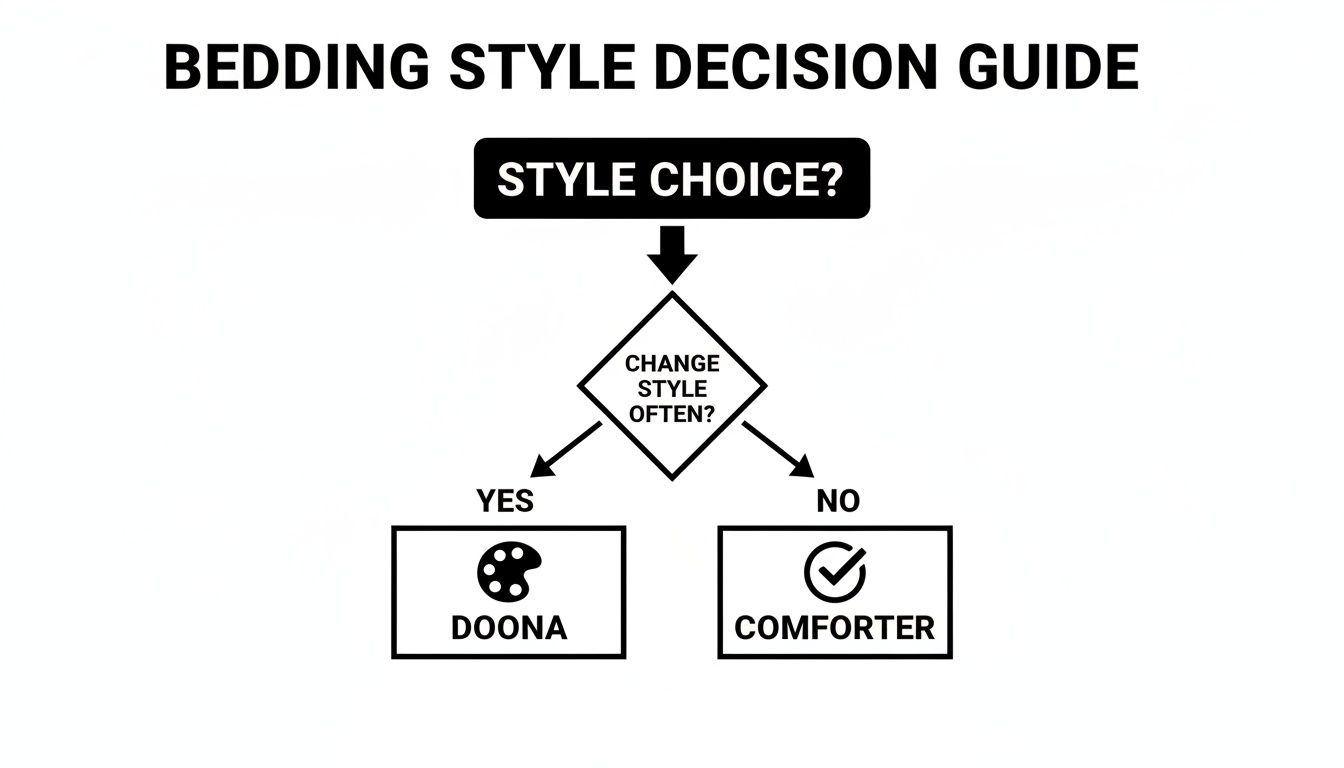
As you can see, if you’re someone who craves frequent style updates, a doona is the obvious path. But if you’d rather have a fixed, singular look, a comforter is a perfectly good alternative.
Ultimately, the huge popularity of the doona system in Australia comes down to one thing: adaptability. It’s a choice that supports easy cleaning, seasonal warmth adjustments, and endless design potential—all key factors for a modern home.
Frequently Asked Questions
When you’re deep in the world of bedding, a few final questions always pop up. We’ve pulled together the most common ones our customers ask about the whole comforter vs doona thing, so you can make your choice without any lingering doubts.
Can You Put a Doona Cover on a Comforter?
You technically can if the sizes line up, but it’s usually not a great idea. Comforters are often thicker and fluffier than doonas, and their stitched-through construction means they’re more likely to bunch up and look awkward inside a cover.
If you love the ease of washing a cover and changing up your style, a proper doona insert is always going to give you that smooth, hotel-perfect finish you’re looking for.
How Often Should You Replace a Doona?
With the right care, a good quality doona can easily last you anywhere from 5 to 15 years. The tell-tale signs that it’s time for an upgrade are when it starts to lose its fluffiness (what we call 'loft'), the filling gets clumpy, or it just isn't keeping you as warm as it used to.
Airing it out regularly and washing its cover often will make a massive difference in how long it lasts.
Quick tip on local lingo: In Australia, we use 'doona' and 'quilt' to mean the same thing—the insert that goes inside a cover. But if you’re shopping overseas, a 'quilt' often means a thinner, decorative bedspread. Knowing the difference helps avoid confusion!
What Is the Best Doona for Hot Sleepers?
If you’re a hot sleeper, we always point you towards doonas made from natural, breathable materials. Lightweight Australian wool, bamboo, or cotton are your best friends here.
Look for a lower GSM rating—anything under 300 is designed specifically to help regulate your temperature and wick away moisture, giving you a comfortable, sweat-free night.
At Manchester Factory, our specialty is helping Aussies find the perfect bedding to suit their homes and sleep styles. Dive into our huge collection of high-quality doonas and quilt covers to build your ideal sleep sanctuary. Shop our full range today.