

A double bed quilt is far more than just another layer on your bed. It’s a stylish, versatile piece of bedding, often with beautiful stitching and a decorative finish. Unlike a plain doona that lives inside a separate cover, a quilt is a single, all-in-one piece that brings both warmth and personality to a room. It’s the perfect solution for layering up or down as Australia's seasons change.
What Makes a Double Bed Quilt a Bedroom Essential?
Choosing the right bedding can feel like a huge task, but a double bed quilt is one of the most practical and beautiful additions you can make to your home. Think of it less like a simple blanket and more like a key piece of furniture for your bed. Its main job is to give you an easily adjustable layer of warmth and style that lifts the look of the entire room.
In Australia, we often use the words 'quilt' and 'doona' for the same thing, but it helps to know the difference. A doona is usually a plain insert filled with down or polyester, made to go inside a separate cover. A quilt, on the other hand, is a finished, decorative layer. This makes it incredibly handy for busy family homes, especially for:
- Guest rooms: Instantly create a welcoming, hotel-like feel without fussing with multiple pieces.
- Kids' bedrooms: A durable, stylish quilt can handle daily wear and tear while adding a splash of personality to their space.
- Master bedrooms: Use it as an extra layer over your doona in winter or as a lightweight standalone covering when summer nights are warmer.
A Cornerstone of Australian Comfort
You only have to look at the numbers to see how much we value quality bedding. The Australian home bedding market generated a massive USD 3,317.8 million in 2023, and bed linen like quilts made up a huge 38.3% of that. It’s clear that creating comfortable, inviting spaces is a priority for families.
If you'd like to dive deeper into the world of bedding, you might find some great insights in this complete guide to bedding, including comforters. Understanding these trends helps you see why choosing a high-quality double bed quilt from a trusted retailer like Manchester Factory isn't just a purchase—it's a smart investment in your home's comfort.
Finding the Perfect Fit for Your Double Bed
Choosing a quilt for your double bed seems simple enough, but getting the size right is probably the single most important step. It's the difference between a bed that looks perfectly polished and inviting, and one that just feels a little… off.
Think of it like a well-fitting coat. If it’s too small, it looks awkward and definitely won’t keep you warm. Too large, and it can completely swamp the bed frame. The goal is to find that sweet spot between great coverage and effortless style, so your bed looks just as comfortable as it feels.
This handy flowchart breaks down the common bedding types you'll come across.
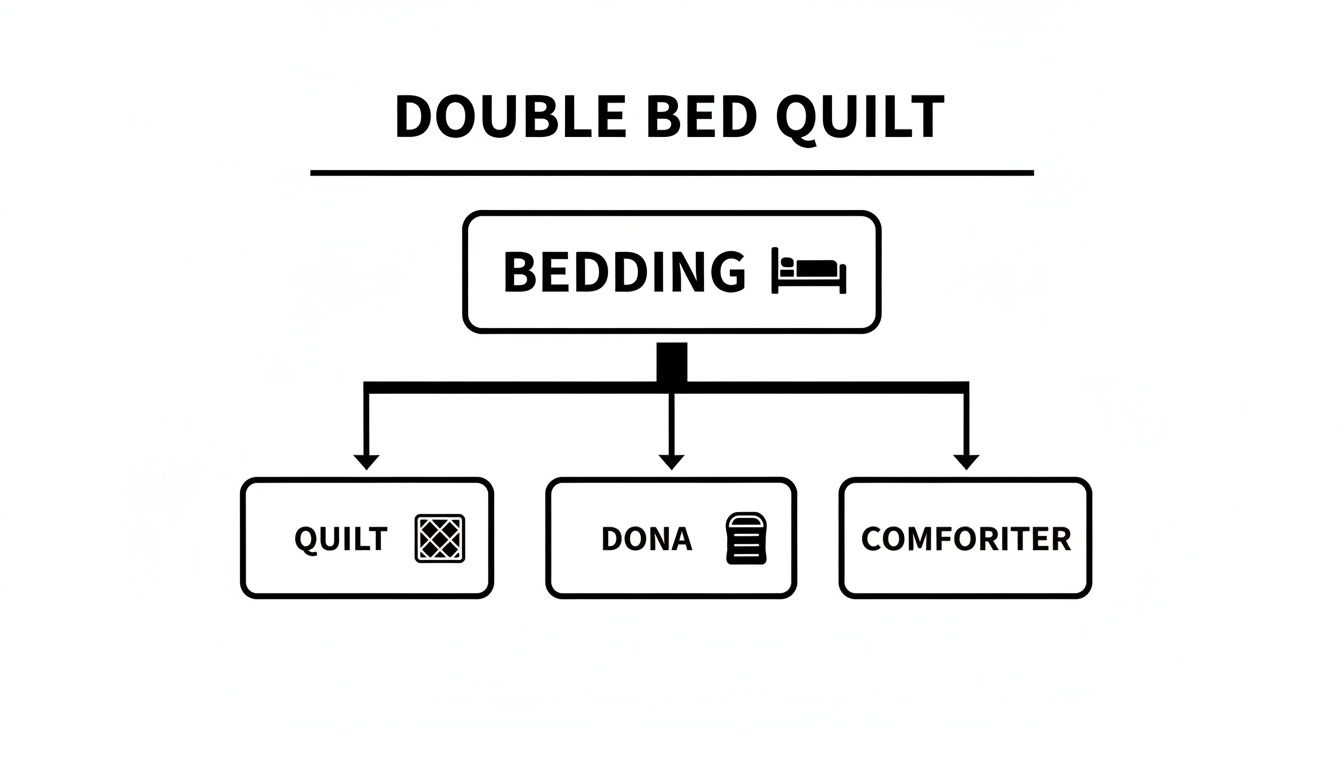
As you can see, quilts, doonas, and comforters are all slightly different, and each plays its own part in layering up your bed for both style and comfort.
Understanding Australian Double Bed Dimensions
Here in Australia, a standard double bed mattress measures 138cm x 188cm. Now, you might think a double quilt would be made to the same size, but it's actually designed to be quite a bit larger. Why? It all comes down to one crucial styling element: drape.
Drape is simply the amount of quilt that hangs over the sides and foot of your bed. A good drape gives your bed a plush, luxurious look, while a quilt that’s too small can look skimpy and, worse, leave you fighting for the covers all night.
A standard Aussie double bed quilt measures 180cm x 210cm. This gives you enough overhang to neatly cover the mattress and part of the bed base, creating that clean, finished look. Crucially, that extra fabric ensures there's enough quilt to comfortably go around, even with two people in the bed.
To make things easier, here’s a quick-glance table to help you match your mattress to the right quilt size.
Australian Quilt and Mattress Size Guide
This table is a great starting point for comparing standard Australian mattress dimensions with the recommended quilt sizes to get that perfect drape.
| Bed Size | Mattress Dimensions (cm) | Standard Quilt Size (cm) | Best For |
|---|---|---|---|
| Single | 92cm x 188cm | 140cm x 210cm | Kids' beds, daybeds |
| King Single | 107cm x 203cm | 180cm x 210cm | Taller kids, guest rooms |
| Double | 138cm x 188cm | 180cm x 210cm | Couples, guest rooms |
| Queen | 153cm x 203cm | 210cm x 210cm | Most popular size for couples |
| King | 183cm x 203cm | 245cm x 210cm | Extra space, master bedrooms |
| Super King | 203cm x 203cm | 270cm x 240cm | Ultimate luxury and space |
As you can see, the quilt is always wider and longer than the mattress it’s designed for, ensuring you get that cosy coverage and styled finish.
The Secret to a Hotel-Worthy Look
Want to really elevate your bedroom? Here’s a popular interior design trick: size up your quilt. Using a queen size quilt (210cm x 210cm) on a double bed is a fantastic way to create an exceptionally plush and opulent look.
That extra width and length give you a much more dramatic drape, making the bed seem fuller and more inviting—just like the ones you see in high-end hotels. This works especially well if you have a deep mattress or a thick mattress topper, as the larger quilt guarantees you'll still get that beautiful, sweeping coverage down the sides.
For a deeper dive into all the measurements and how to make the right choice, check out our complete guide on double bed quilt dimensions. Getting the size sorted from the get-go is the foundation for a perfectly comfortable and beautifully styled bed.
Decoding Quilt Fabrics and Fillings for Ultimate Comfort
Choosing the right double bed quilt is a bit like picking the perfect coat. The outside has to look good, sure, but it’s what’s on the inside that really matters for keeping you comfortable. The outer fabric (the shell) and the internal filling work together to give a quilt its unique feel, weight, and warmth. Getting to know these materials is the secret to finding a quilt that feels like it was made just for you.

The outer shell is what you feel first, and it plays a big part in how the quilt breathes and drapes.
- Cotton: You can't go wrong with this classic. Cotton is loved for its natural softness and fantastic breathability. It’s great at wicking moisture away from your body, keeping you dry and comfortable no matter the season.
- Microfibre: Known for being incredibly soft and surprisingly durable, microfibre is a brilliant, budget-friendly choice. It has a silky-smooth feel and is often the star in our popular Sienna Living collections.
- Linen: If you love a bit of relaxed, lived-in texture, linen is a fantastic option. It’s a natural temperature regulator, which means it feels cool in summer and cosy in winter.
Choosing Your Quilt Filling
Inside the quilt, the filling (sometimes called batting) is what gives it warmth and substance. This is where you can really tailor your comfort, choosing between natural fibres that breathe beautifully or synthetic options that offer other great benefits. This choice is becoming a bigger deal for Aussie families, who are increasingly looking for quality materials in their bedding.
Bed linen makes up a huge 38.3% of home textiles revenue in Australia, and the whole market is expected to hit USD 2.94 billion by 2030. This growth is all about a shift towards quality materials, with a big focus on hypoallergenic and eco-friendly options that help us sleep better. You can find more details on this trend in Australia's home textiles market report from Mordor Intelligence.
This trend shows just how important it is to pick a filling that suits your lifestyle and sleep needs.
Here’s a quick rundown of the most common filling materials:
| Filling Type | Key Features | Best For |
|---|---|---|
| Wool | Natural, breathable, temperature-regulating, and wicks away moisture. | Anyone who runs hot one night and cold the next. |
| Cotton | Lightweight, soft, and naturally hypoallergenic. | Warm sleepers and people with sensitive skin or allergies. |
| Polyester | Lightweight, super easy to care for, and a hero for allergy sufferers. | A low-maintenance, budget-friendly choice for busy family homes. |
Each filling has its own personality. Natural options like the Australian wool in our Morgan & Reid quilts offer a reassuring weight and excellent temperature control. On the other hand, synthetic polyester feels light and lofty while still delivering consistent, reliable warmth.
Many modern quilts are also made to be hypoallergenic. These are usually filled with specially treated synthetic fibres or naturally resistant materials like wool, making them a safe haven for anyone sensitive to dust mites or other common allergens. You get all the cosiness, with none of the worry. If you're stuck between the two, our guide comparing wool vs synthetic quilts breaks down the pros and cons in more detail.
How to Select a Quilt for Every Australian Season
Choosing the right double bed quilt is the secret to staying comfortable all year round, but let's be honest, Australian weather doesn't always play by the rules. So how do you pick one that works? The answer is simpler than you think. It all comes down to a little acronym you’ll see on most quilts: GSM.
GSM stands for Grams per Square Metre. Think of it as the warmth rating for your quilt. It’s not about how heavy the quilt feels on top of you, but how densely packed the filling is. A higher GSM means more filling and more warmth, while a lower GSM means a lighter, breezier feel. Getting your head around GSM is the first step to building a bed that’s just right, no matter what the forecast says.
Matching GSM to the Season
From a sticky summer in Brisbane to a frosty winter morning in Melbourne, your bedding needs to keep up. Using GSM as your guide makes it easy to find that perfect sweet spot between too hot and too cold.
Here’s a simple breakdown to help you choose:
- Summer (Low GSM 150-350): For those hot, humid nights, a low GSM quilt is your best friend. It’s light and breathable, giving you that comforting sense of being covered without trapping any heat.
- Winter (High GSM 500-700+): When the temperature really drops, you’ll want a high GSM quilt. The dense filling is brilliant at trapping your natural body heat, creating a cosy cocoon that keeps the chill out.
- All Seasons (Mid GSM 350-500): If you’re after just one quilt to do most of the heavy lifting, an all-seasons option is the perfect middle ground. It’s warm enough for those cooler autumn and spring nights but still light enough that you won’t overheat when it’s milder.
The Art of Layering for Year-Round Comfort
For ultimate climate control, the smartest approach is layering. You wouldn’t wear the same coat all year, and the same thinking applies to your bed. Creating a flexible bedding setup means you can add or remove layers as the weather shifts, keeping your family perfectly comfortable every single night.
A great quilt system isn't just about warmth; it's about adaptability. By having a couple of different weight options on hand, you can create a customised sleep setup that works for any forecast.
A mid-weight all-seasons quilt is a fantastic starting point for most of the year. When a cold snap hits, just throw a wool blanket or a stylish coverlet over the top for an extra layer of insulation. Come summer, you might find that same coverlet is all you need on its own. It’s a simple strategy that turns your double bed quilt into a hard-working, versatile investment.
To really get the hang of it, you can learn more about how to stay comfortable year-round with an all-seasons quilt in our detailed guide. It's all about making your bed work for you.
Styling Your Double Bed Quilt Like a Pro
A beautiful double bed quilt does more than just keep you warm—it's the heart of your bedroom's design. With a bit of styling know-how, you can turn a simple bed into a stunning centrepiece that shows off your family's personality and feels incredibly inviting.
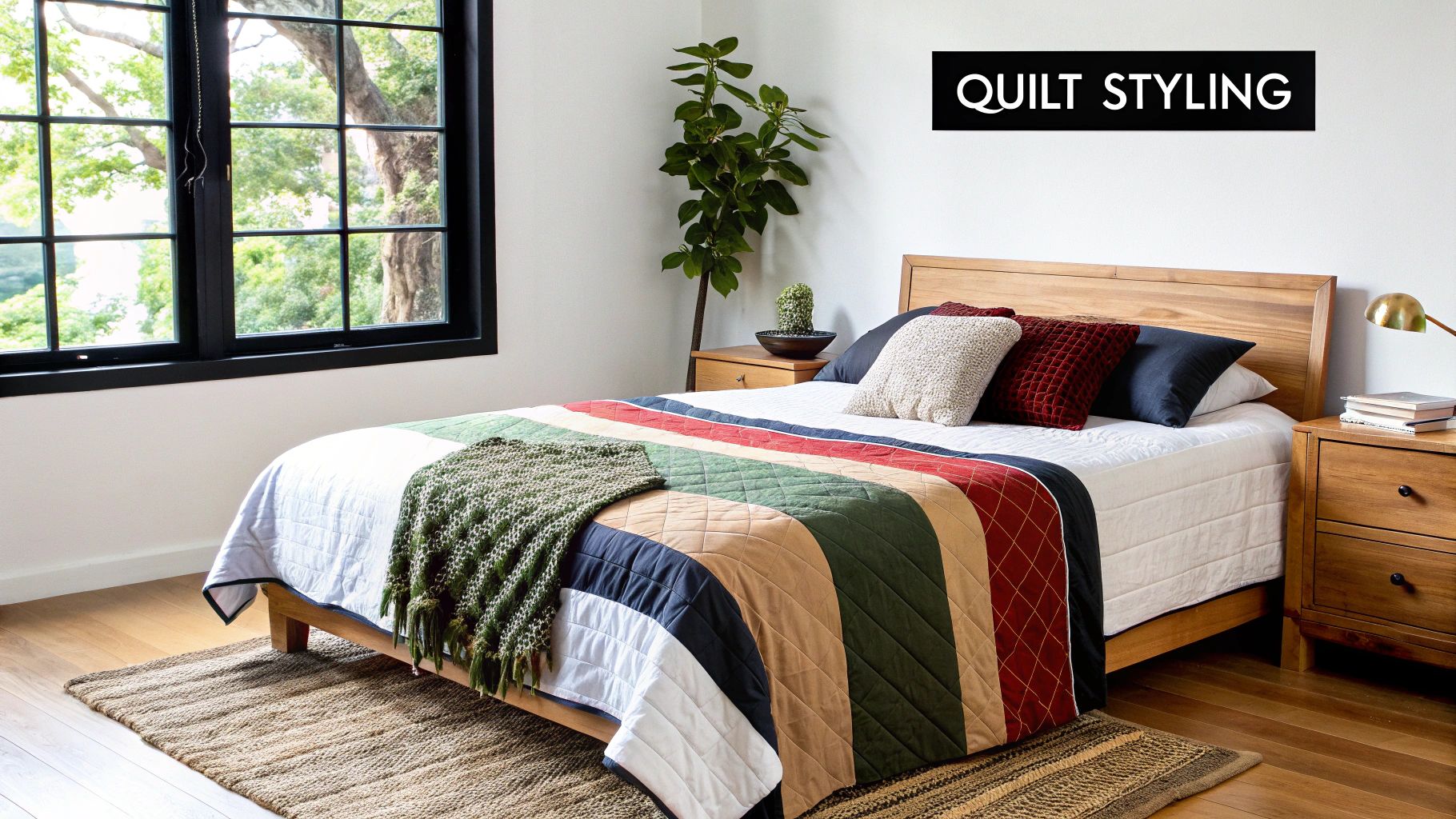
Think of your quilt as the foundation. Collections like Sienna Living offer versatile designs that can anchor any look, whether you’re going for serene and minimalist or something a bit more bold and colourful. The real magic happens when you start building layers around it to add depth, texture, and that touch of everyday luxury.
Master the Art of Layering
Layering is the secret weapon for a professionally styled bed. It’s what adds all that visual interest and, bonus, makes it easy to adjust for comfort on warmer or cooler nights. Start with your quilt as the main event, then add a few other pieces to create a rich, textured look that feels as good as it looks.
- Add Complementary Throws: A chunky knit or a lightweight linen throw blanket draped across the foot of the bed instantly breaks up the large surface of the quilt and introduces a new texture.
- Play with Cushions: A good mix of cushions is a must. Start with your two standard pillows, prop a pair of larger European square pillows behind them, and then finish it off with one or two smaller decorative cushions in different shapes or fabrics.
- Fold with Intention: Instead of pulling the quilt right up to the top, try folding it back to show off your sheets. This simple trick creates a lovely layered effect and can bring in a pop of contrasting colour or pattern.
For more ideas on building the perfect bed, check out our guide on the art of mixing and matching bed linen.
Create a Cohesive Colour Palette
Your quilt can either set the colour scheme for the whole room or blend right into your existing decor. A neutral quilt, like a soft grey from Morgan & Reid, provides a calming backdrop that lets you play with colourful cushions and throws. On the other hand, a vibrant or patterned quilt can be the star of the show, with other bedding elements pulling colours from its design.
The goal is to create a look that feels both curated and effortlessly comfortable. A well-styled bed isn't just for show; it's a practical invitation to relax and unwind at the end of a long day.
This focus on home styling is a huge trend, especially as more families look for bedding online. The residential sector is the main driver of the USD 2.5 billion mattress and bedding retail market, fuelled by a growing awareness of sleep health and home aesthetics. With over 4,500 five-star reviews, Manchester Factory is all about meeting this demand by offering stylish, high-quality options that make that pro-styled look achievable for everyone.
Keeping Your Quilt Fresh for Years to Come
A beautiful double bed quilt is an investment in your family’s comfort. With the right care, it can stay soft, lofty, and inviting for years. Looking after it properly doesn’t just preserve its look and feel—it actually extends its life, making sure you get the most out of it.
The very first step? Always check the care label. Think of it as the quilt's own instruction manual. It gives you specific advice straight from the manufacturer on the best way to wash and dry it, based on its unique fabric and filling. Following those directions is the easiest way to avoid accidental shrinkage or damage.
Simple Washing and Drying Steps
When it's time for a wash, the good news is that most modern quilts, like those in our Sienna Living and Morgan & Reid collections, are designed for easy home care.
For machine washing, always use a gentle cycle with cold or lukewarm water. Hot water can make natural fibres like cotton or wool shrink, and it might fade those lovely colours over time. It's also best to stick with a mild liquid detergent, as powders can sometimes leave behind a chalky residue.
When it comes to drying, you’ve got two great options:
- Line Drying: This is by far the gentlest method. Hang your quilt outside on a warm, breezy day, but try to keep it out of harsh, direct sunlight, which can weaken the fibres. As a bonus, it’ll come back inside with that amazing fresh-air scent.
- Tumble Drying: If you're using a machine, stick to a low-heat, gentle setting. A great little trick is to toss in a few wool dryer balls—they help fluff up the filling and stop it from clumping, bringing back your quilt’s plushness.
A quilt cover is a total game-changer for keeping the quilt itself clean. You can wash the cover weekly with your sheets, meaning the quilt insert might only need a proper clean once or twice a year.
Between Washes and Storing Smartly
For little spills, spot-cleaning is usually all you need. Just blot the area gently with a damp cloth and a tiny bit of mild soap. To keep your double bed quilt feeling fresh between washes, just air it out now and then by draping it over a balcony rail or clothesline for a few hours.
If you want more in-depth advice on handling different materials or tricky stains, take a look at our ultimate guide to caring for your quilt for more expert tips. A little bit of proper care will ensure your quilt remains a treasured part of your home for a long time.
Your Double Bed Quilt Questions Answered
We get asked these questions all the time, so we've put together some quick, clear answers. Here’s everything you need to know to choose your quilt with confidence.
Can I Use a Double Bed Quilt on a King Single Bed?
Yes, absolutely! This is actually a great styling trick that a lot of people use. Putting a double quilt on a king single gives you a generous, cosy overhang on the sides.
It creates that plush, luxurious look you see in magazines, and it’s perfect for making a kid's or teenager's room feel extra snug. Plus, no more fighting for the covers.
What Is the Difference Between a Quilt and a Doona?
In Australia, we tend to use these terms interchangeably, but there's a slight difference. A 'doona' (or duvet) is typically the plain, white insert filled with down or synthetic fibres that you put inside a separate cover.
A 'quilt' can be a decorative, pre-filled, and stitched layer that doesn’t necessarily need a cover, though using one is always a good idea to keep it clean.
Essentially, a quilt can be an all-in-one solution for warmth and style, while a doona relies on a cover to complete its look and feel.
How Often Should I Wash My Double Bed Quilt?
To keep it fresh, we generally recommend washing your quilt every two to three months.
However, if you protect it with a quilt cover (which you should be washing weekly with your sheets), you can get away with washing the quilt itself just once or twice a year. Always check the care label on your specific quilt for the best instructions—it’s the surest way to make it last.
Ready to find your perfect match? Explore the beautiful and comfortable collections from Manchester Factory and transform your bedroom today. Discover your ideal quilt at https://www.manchesterfactory.com.au.