

Ever settled your head onto a pillow and thought, "Ah, this feels like a cloud"? That's the feeling so many people are chasing, and it's exactly what a quality duck & down pillow promises. Forget the confusing technical specs for a moment; let's talk about what really matters: getting a truly restorative night's sleep. This guide is all about helping you understand if these pillows are the right investment for your comfort and wellbeing.
Your Guide to Comfort with Duck and Down Pillows

Choosing the right pillow is one of the biggest decisions you can make for your sleep. Get it right, and you wake up feeling refreshed and ready for the day. Get it wrong, and you’re left with a stiff neck and that all-too-familiar groggy feeling. Duck and down pillows have been loved for generations for one simple reason: they strike that perfect balance between plush softness and gentle, responsive support.
Unlike synthetic pillows that can feel a bit stiff or go lumpy over time, natural-fill pillows have a luxurious feel that beautifully moulds to the shape of your head and neck. Think of this guide as your trusted friend in the bedding aisle. We’ll walk you through what’s inside these pillows, the real benefits, and how to pick the perfect one for your sleep style.
Why Natural-Fill Pillows Remain a Popular Choice
Here in Australia, we take our comfort seriously, and the demand for quality bedding just keeps growing. Duck and down pillows are a huge part of this. The broader Australian cushion and pillow market was recently valued at around USD 478.8 million, with analysts expecting it to keep climbing. It's clear that natural-fill products hold a special place in Aussie bedrooms.
So, why do so many people swear by them? It usually comes down to a few key things:
- Superior Comfort: There's a cloud-like softness to natural down that synthetic materials just can't seem to replicate.
- Excellent Breathability: Down and feathers are natural insulators that still let air circulate, which helps keep you from overheating on warmer nights.
- Long-Lasting Durability: A well-made duck and down pillow, when cared for properly, can easily outlast synthetic options by years, making it a smart long-term purchase.
A great pillow is more than just a place to rest your head; it’s a tool for better health. It aligns your spine, relieves pressure, and sets the stage for deep, uninterrupted sleep.
This is just the start of our journey into the world of duck and down pillows. To find the absolute best fit, it's always a good idea to see how different materials stack up, and this comprehensive guide on choosing the perfect pillow is a fantastic resource. After all, learning the secret to having the comfiest bed in the world is about creating a complete sleep sanctuary, one perfect piece at a time.
Understanding What's Inside Your Pillow

When you see "duck and down pillows," it’s easy to assume the two are the same thing. But knowing the difference between duck down and duck feathers is the key to finding a pillow you'll truly love.
They both come from the same bird, but they feel and perform in completely different ways.
Think of the fluffy, white seed head of a dandelion after its yellow petals have gone. That’s a perfect way to picture a down cluster. It’s that incredibly soft, three-dimensional puff found under the tougher outer feathers of a duck, designed by nature to be an amazing insulator without any weight.
Feathers, on the other hand, are the bird's protective outer layer. They're flatter, more two-dimensional, and have a firm little quill running straight down the middle. That tiny quill is the secret to their structure, giving feathers a springiness that soft, weightless down just doesn't have.
Down: The Secret to Cloud-Like Softness
Down clusters are brilliant at trapping air. This is what creates that light, lofty filling that offers gentle cushioning and amazing insulation. Because they don’t have quills, they are exceptionally soft and can be squashed down and fluffed back to their original shape over and over again.
A pillow with a high percentage of down will feel incredibly plush and luxurious. It’ll mould perfectly to your head and neck, giving you soft support that feels almost weightless. This is what gives premium duck & down pillows that signature cloud-like feeling.
The magic of down is all in its structure. Each cluster has thousands of tiny filaments that interlock, creating insulating air pockets. That’s why it’s so good at providing warmth without feeling bulky.
This exact same principle is why down quilts are so popular for all-seasons comfort. If you want to dive deeper, learning about why down quilts are the best choice for every season can give you great insight into your pillow choice, too.
Feathers: The Foundation of Support
While down brings the incredible softness, feathers bring the substance and support. That little quill gives feathers a natural springiness, helping a pillow hold its shape and offer a much firmer foundation for your head.
Without any feathers, a 100% down pillow might feel a bit too soft for some people, compressing too much overnight and not offering enough support. By blending feathers with down, you get the best of both worlds: luxurious comfort balanced with the support you need for a good night's sleep. As a rule of thumb, a higher feather content means a firmer, heavier, and more budget-friendly pillow.
Duck Down vs Duck Feathers at a Glance
To make it even clearer, here’s a quick comparison to help you understand the core differences between the two main components of duck and down pillows.
| Feature | Duck Down | Duck Feathers |
|---|---|---|
| Structure | 3D, fluffy clusters without quills | 2D, flatter with a central quill |
| Primary Feel | Exceptionally soft and airy | Firmer and more springy |
| Support Level | Gentle, light cushioning | Substantial, structural support |
| Weight | Extremely lightweight | Heavier and denser |
| Cost | Higher | More affordable |
This simple breakdown shows how each material plays a vital role. Down gives you that plush, sink-in feeling, while feathers ensure the pillow doesn't just flatten out under pressure.
Finding Your Perfect Blend
Most duck & down pillows you'll find are made with a carefully chosen blend of both. This ratio is one of the most important things to check on the product label, as it tells you exactly how the pillow will feel.
- Pillows with 80-90% down content are for those who crave supreme softness and a truly luxurious, hotel-style feel. They’re perfect if you want a pillow that sinks in and gently cradles your head.
- A 50/50 blend is a fantastic middle ground. You get a beautiful balance of plush comfort from the down and reliable support from the feathers, making it a versatile choice that suits a lot of sleepers.
- Pillows with a higher feather content (like 75% feathers, 25% down) will give you a much firmer and more supportive feel. These are often the best choice for people who need more structure to keep their neck properly aligned.
Ultimately, the right blend comes down to your personal preference for softness versus support. Now that you know what's inside, you can read any label and know exactly how that pillow will feel when you lay your head on it tonight.
Decoding Fill Power and Loft for Perfect Softness
When you start looking at premium duck & down pillows, you'll quickly come across two terms that sound a bit technical: fill power and loft. Don't let the jargon put you off—understanding them is the secret to choosing a pillow with that perfect, cloud-like softness you're after.
Think of fill power as a simple 'fluffiness' rating. It’s just a measurement of how much space one ounce (about 28 grams) of down takes up. This number tells you a lot about the quality of the down tucked inside your pillow.
A higher fill power means the individual down clusters are larger and more mature. These bigger, fluffier clusters are brilliant at trapping air, which is what makes a pillow feel light, stay warm, and bounce back into shape. In short, a higher fill power equals higher quality.
What Fill Power Really Means for Your Comfort
Imagine you have two identical boxes. You loosely fill one with big, fluffy pieces of popcorn, and you pack the other with small, dense unpopped kernels. The box with the popcorn is light, airy, and full of space—that’s your high fill power.
This is exactly how down works. A pillow with 600+ fill power duck down will feel incredibly light and plush, springing back to life with just a quick fluff. On the other hand, a lower fill power (anything under 500) means smaller down clusters that won’t insulate as well and will flatten more easily over time.
The key takeaway is simple: Fill power is your best indicator of a pillow's potential softness and durability. A higher number doesn't necessarily mean a firmer pillow, but it does mean a plusher, higher-quality one that will last longer.
For a deeper dive into how these factors influence your final choice, our detailed guide on how to choose pillows offers even more practical tips and comparisons.
Connecting Fill Power to Pillow Loft
So, where does loft fit into all this? If fill power is the quality rating of the down, then loft is the direct result. Loft is simply the height, or 'plumpness,' of the pillow. It’s what you see and feel.
A pillow packed with high-quality, high fill power down will naturally have a higher loft. It’ll sit taller on the bed, look much fluffier, and feel more luxurious. This happens because those large down clusters are working together to create and hold all that airy volume.
When you're browsing for a new duck & down pillow, here’s what to look for:
- Low Loft: These pillows are thinner and softer. They’re ideal for stomach sleepers who need to keep their neck in a neutral, flat position.
- Medium Loft: A great all-rounder, this height is perfect for back sleepers. It provides just enough support to cradle the head and neck without pushing it too far forward.
- High Loft: Thicker and often feeling a bit firmer, these pillows are best for side sleepers. They have the height needed to fill that gap between your head and shoulder, keeping your spine properly aligned.
By understanding the link between fill power and loft, you can move beyond just guessing. You can look at a pillow's specs and know exactly how plush, supportive, and durable it will be, making sure you invest in years of truly restful sleep.
Finding the Right Pillow for Your Sleep Style

Choosing the perfect pillow isn’t about finding the ‘best’ one on the market. It’s about finding the best one for you. Your sleeping position is the single biggest clue, as it dictates exactly how much support your head and neck need to stay properly aligned all night long.
A pillow that feels like a dream for a side sleeper could easily cause a stiff neck for someone who sleeps on their back.
The goal is always the same, no matter how you sleep: to keep your head, neck, and spine in a straight, neutral line. Think of your pillow as the bridge that fills the gap between your head and the mattress. The size of that gap changes dramatically with each position, which is why a one-size-fits-all approach just doesn’t cut it.
Thankfully, the unique qualities of duck & down pillows make them incredibly versatile. By adjusting the ratio of soft down to supportive feathers, manufacturers can create the perfect combination of height and firmness for every type of sleeper.
Best Pillow for Side Sleepers
If you’re a side sleeper, you have the largest gap to fill between your head and the mattress. To keep your spine straight, you need a pillow that’s both high enough and firm enough to support your head and stop it from drooping towards your shoulder.
A high-loft, firm pillow is your best friend here. Look for a duck and down blend with a higher percentage of feathers. Their natural springiness provides the structure needed to hold its shape, while a touch of down keeps it feeling cushioned and comfortable. Without this firm foundation, your neck muscles would be working overtime all night, leading to those familiar aches and pains in the morning.
Best Pillow for Back Sleepers
Back sleepers need a delicate balance. You need enough loft to support the natural curve of your neck, but not so much that it pushes your head too far forward, straining your neck and upper back. The ideal pillow should simply cradle your head, letting it rest in a neutral position.
For this, a medium-loft, medium-firmness pillow is the perfect choice. A 50/50 blend of duck down and feathers often hits the sweet spot. The down provides soft, gentle contouring that moulds to your shape, while the feathers offer just enough underlying support to stop your head from sinking too deep. This combination helps keep your airway open and your spine beautifully aligned.
Best Pillow for Stomach Sleepers
Stomach sleeping can put a lot of strain on the neck and spine because it forces you to turn your head to one side for hours. To minimise this stress, you need a pillow that keeps your head as low and as close to the mattress as possible.
A soft, low-loft pillow is essential. A pillow with a very high percentage of duck down—or even 100% down—is the ideal solution. These pillows are incredibly soft and compressible, meaning they flatten right down under the weight of your head. This prevents your neck from being bent back at an unnatural angle, promoting a much healthier sleeping posture. In fact, some stomach sleepers find they’re most comfortable with no pillow at all.
Your sleep position is the roadmap to your perfect pillow. Aligning your pillow's loft and firmness with how you sleep is the most effective way to ensure a night of deep, restorative rest and wake up pain-free.
To make things even simpler, we've put together this quick guide to match your sleep style with the ideal pillow.
Pillow Finder for Your Sleep Style
Use this table to find the best type of duck and down pillow based on your preferred sleeping position.
| Sleeping Position | Ideal Loft and Firmness | Why It Works |
|---|---|---|
| Side Sleeper | High Loft, Firm | Fills the significant space between the head and shoulder, keeping the spine straight and aligned. |
| Back Sleeper | Medium Loft, Medium Firmness | Cradles the natural curve of the neck, providing support without pushing the head too far forward. |
| Stomach Sleeper | Low Loft, Soft | Minimises neck strain by keeping the head as flat as possible, preventing an unnatural upward bend. |
By figuring out your main sleep style first, you can narrow down your options straight away. This focused approach takes the guesswork out of the equation, guiding you directly to a duck & down pillow that will feel like it was made just for you.
How to Care for Your Duck and Down Pillows
A quality duck and down pillow is a brilliant investment in your sleep, but so many people worry they’re a hassle to look after. The good news? They’re not. With a few simple tricks, you can keep your pillows fresh, fluffy, and hygienic for years to come.
Let’s bust the myth that they’re high-maintenance. Down is a natural, resilient material, and all it needs is a little bit of the right kind of care. A gentle approach is all it takes to protect the loft and softness that made you fall in love with it in the first place.
Your Simple Washing Guide
You really don’t need to wash your pillows all that often—once or twice a year is usually plenty. The key is doing it correctly, because over-washing or using harsh methods can break down those delicate down clusters.
-
Check the Care Label First: Before you do anything, always read the manufacturer’s instructions. Most modern duck and down pillows are perfectly fine for the machine.
-
Use a Gentle Machine: A front-loader is your best friend here as it’s much gentler on the filling. If you’ve got a top-loader, use the delicate cycle and, if possible, one without that big central agitator.
-
Choose the Right Detergent: Go for a mild, down-safe liquid detergent. Steer clear of harsh chemicals, bleach, and especially fabric softeners—these strip the natural oils from the down, making it brittle.
-
Wash and Rinse Thoroughly: Use a gentle cycle with warm water. I always recommend running an extra rinse cycle, too. It’s crucial for getting all the soap residue out, as any leftover detergent will cause the down to clump together.
The most common mistake people make is not rinsing thoroughly enough. Soap left in the down can attract dirt and stop the pillow from drying properly, leading to clumps and a total loss of that signature fluff.
The Secret to Perfect Drying
Drying is easily the most important step in this whole process. Your goal is to get the pillow 100% dry to stop any mildew from forming and bring its original loft back to life. This isn't a quick job, so be patient.
Use a low heat setting on your dryer. High heat will just scorch or damage the delicate down clusters. My favourite trick is to toss in a couple of clean tennis balls or wool dryer balls—they work wonders for breaking up clumps and fluffing the filling as it dries.
This can take a few hours. Pull the pillow out every so often and give it a good fluff by hand to make sure the filling is drying evenly. Don’t even think about taking it out until it feels completely dry right down to its core.
Daily Care for Lasting Freshness
Beyond the occasional deep clean, a few daily habits will make a massive difference to the life and comfort of your pillows.
-
Fluff Daily: This is the easiest and most effective thing you can do. Give your pillows a vigorous shake and a good fluff each morning when you make the bed. It redistributes the filling, stops it from clumping, and keeps that lofty shape.
-
Use a Pillow Protector: Honestly, this is non-negotiable if you want to preserve your pillow. A good protector is a barrier against sweat, body oils, dust mites, and spills. To see just how much they help, check out this great guide on the benefits of cotton pillow protectors.
Follow this simple routine, and your duck and down pillows will stay clean, comfortable, and luxurious for many years.
Your Simple Pillow Buying Checklist
Feeling ready to find the perfect pillow? It’s much easier to make a great choice when you know exactly what to look for. This final checklist pulls everything we've talked about into a simple, step-by-step guide for your next purchase. Think of it as your personal roadmap to finding a duck and down pillow that will deliver incredible comfort for years to come.
This isn’t about getting bogged down in jargon; it’s about matching a pillow’s features to what you actually need. From the way you sleep to your budget, each step will get you closer to the right choice, ensuring you bring home a pillow that truly makes your sleep better.
Step 1: Figure Out Your Sleep Position
Before you even look at a pillow, think about how you sleep. This is the single most important factor because it determines the right height and firmness you need to keep your spine happy and aligned.
- Side Sleepers: You’ll need a high-loft, firm pillow to fill that gap between your head and the mattress. Look for blends with more feathers to get that crucial support.
- Back Sleepers: A medium-loft, medium-firm pillow is your best bet. A balanced 50/50 mix of down and feathers will gently cradle your head and neck without pushing them too far forward.
- Stomach Sleepers: Go for a low-loft, soft pillow. A pillow with a high percentage of down is ideal because it will compress nicely, keeping your head and neck as flat as possible to avoid strain.
Step 2: Choose Your Feel and Budget
Next, decide on the down-to-feather ratio that works for your comfort preferences and your wallet. Just remember, down gives you that lovely softness, while feathers provide the supportive springiness.
A higher down content means a softer, more luxurious, and pricier pillow. On the flip side, a higher feather content creates a firmer, more affordable pillow. It’s all about finding that perfect balance that feels great and makes good financial sense.
Your personal preference is what matters most here. Some people love sinking into an ultra-plush, down-rich pillow, while others need the solid, reliable support that comes from a higher feather blend. There’s no wrong answer—only what feels right for you.
Step 3: Check for Quality
Once you know the firmness and blend you're after, it's time to check for quality. Two key things will tell you almost everything you need to know about how the pillow will feel and how long it’ll last.
- Look at the Fill Power: This number is your best clue to the quality of the down inside. A fill power of 600 or higher means you're getting larger, more mature down clusters that offer better loft, warmth, and durability.
- Inspect the Outer Casing: The shell is just as important as what’s inside. You want to see a high-thread-count cotton cover—at least 233-thread-count is a good starting point—with a really tight weave. This makes sure the casing is breathable but also "down-proof," so no sharp feather quills can poke through.
This attention to detail is what separates a good pillow from a great one. Australian consumer research backs this up, showing that quality natural-fill pillows consistently rank among the most satisfying choices. In fact, one review found that down and latex pillows were the second highest-rated for satisfaction, and a trusted brand like Downia saw over 90% of buyers say they'd purchase again.
Step 4: Plan for Long-Term Care
Finally, to get the most out of your new pillow, you’ll want to look after it properly. A quality duck and down pillow can last for many, many years if it's cared for correctly.
This simple infographic breaks down the essential three-step routine.
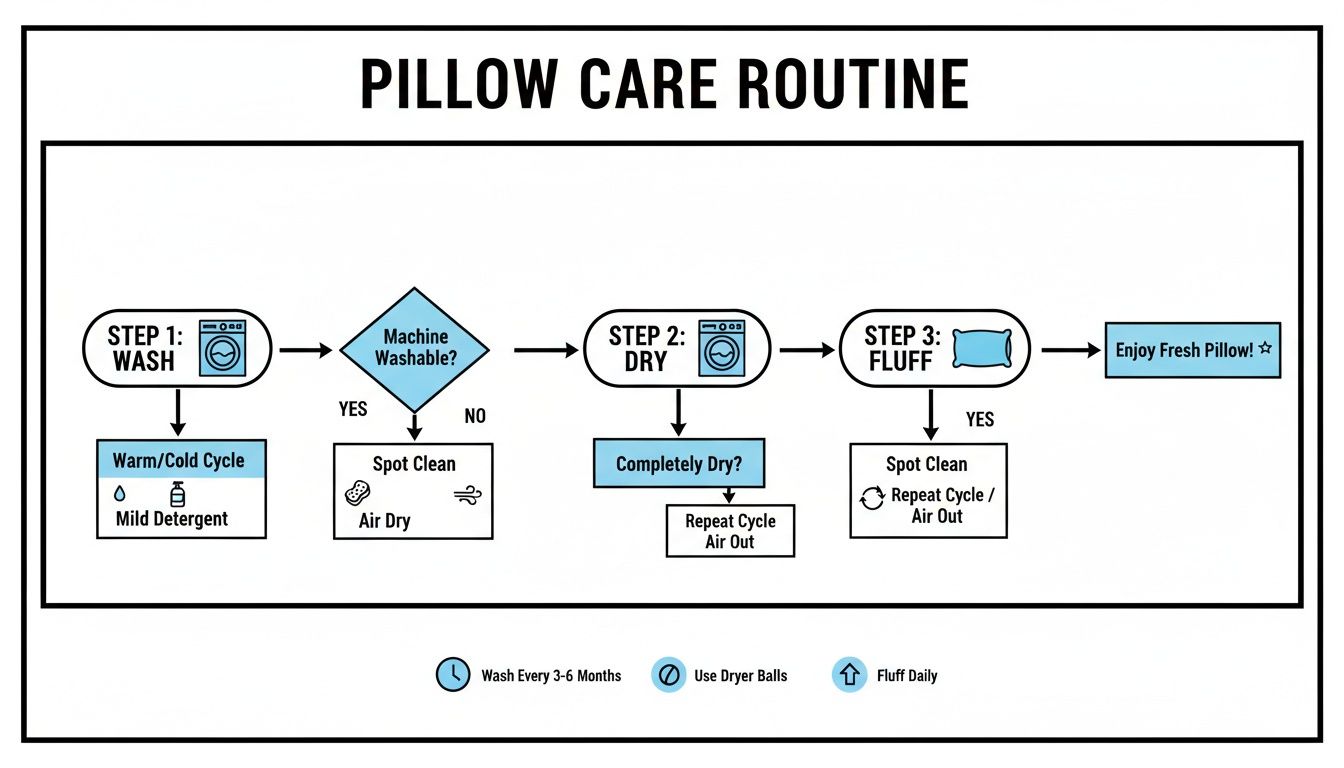
As you can see, a simple cycle of washing, drying, and daily fluffing is all it takes to keep your pillow feeling fresh and supportive. With this checklist in hand, you’re now ready to browse our collection and choose the perfect down and feather pillows with complete confidence.
Frequently Asked Questions
It’s completely normal to have a few questions when you’re looking at natural-fill bedding. To help you feel confident in your choice, we’ve answered some of the most common queries we hear about duck and down pillows.
Are Duck and Down Pillows Hypoallergenic?
Yes, many high-quality duck and down pillows are perfect for allergy sufferers. The secret isn't in the fill itself, but in how it's prepared. Reputable brands put the duck down and feathers through a really strict washing and sterilising process to get rid of any dust, dander, or other nasties before the pillow is even made.
If you’re worried about allergies, just look for two things on the label:
- A clear "hypoallergenic" or "allergy-friendly" statement.
- A tightly woven, down-proof cotton cover, which acts as a physical barrier to stop anything from getting in or out.
How Long Do Duck and Down Pillows Last?
With just a little bit of care, a good duck and down pillow is a brilliant investment in your sleep. You can expect it to keep you comfortable for five to ten years, sometimes even longer. That's a huge step up from many synthetic pillows, which can lose their shape and support in just a couple of years.
The key to making them last is simple maintenance. Regular fluffing in the morning, always using a good pillow protector, and washing them correctly will keep them feeling lofty and supportive for years.
What Is the Difference Between Duck Down and Goose Down?
Both duck and goose down make for wonderfully luxurious pillows, but there are a few subtle differences. Geese are generally larger birds, so their down clusters are usually bigger and fluffier than a duck's. This means goose down can often achieve a higher fill power, giving it a bit more insulation for its weight.
But here’s the thing: you should always compare quality, not just the type of bird. A high-quality, high fill power duck down pillow will always feel better and last longer than a low-quality goose down one. The right choice really comes down to your budget and the specific feel you're after.
At the end of the day, both options provide that soft, five-star hotel feeling.
At Manchester Factory, we believe everyone deserves a great night's sleep. Explore our curated collection of premium bedding to find the perfect foundation for your comfort. Shop now at Manchester Factory.