

So, what’s the real difference between a comforter and a quilt? It's pretty straightforward: a comforter is a single, thick, fluffy piece of bedding, while a quilt is a thinner, layered blanket defined by its intricate stitching.
Your choice really comes down to whether you love sinking into plush, cloud-like warmth (that’s a comforter) or prefer the versatility of lightweight layers (that’s a quilt).
Making the Right Bedding Choice
Choosing between a comforter and a quilt can feel like a bigger deal than it needs to be, but once you understand what makes them different, the decision gets a lot simpler. Here in Australia, where the climate can swing wildly from one city to the next, picking the right bed covering is the key to a good night’s sleep.
This guide is designed to give you a clear, honest comparison to help you figure out which one is the right fit for your bed and your sleep style.
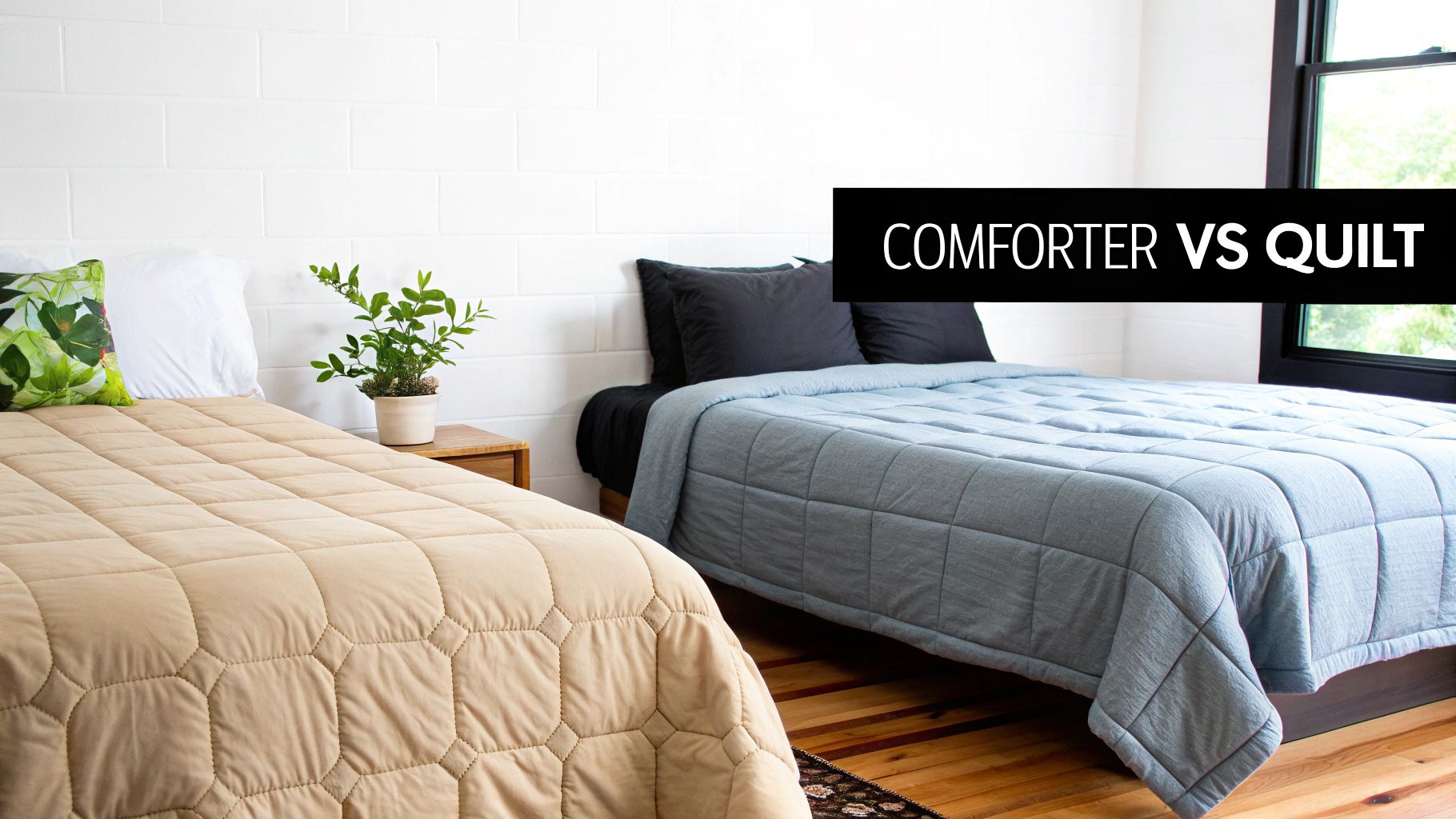
Before we jump in, let's clear up a common Aussie term. You'll often hear "doona" used interchangeably with comforter or duvet. For this guide, we'll stick with comforter to describe that single, lofty bed covering filled with down or synthetic fibres.
The Rise of the Comforter
While quilts have been a staple in Australian homes for generations, we're seeing a definite shift in what people are buying. Comforters are becoming more and more popular, with the Aussie market valued at USD 67.69 million this year and expected to hit USD 103.66 million by 2033.
This trend points to a growing love for plush, insulated fills like down, which offers incredible warmth without feeling heavy—perfect for navigating the changing temperatures from Sydney to Melbourne.
The core difference is all about construction and purpose. A comforter's main job is to provide singular, lofty warmth. A quilt, on the other hand, is built for layering and often plays both a functional and decorative role in the bedroom.
At a Glance: Comforter vs Quilt
To kick things off, here’s a quick visual summary of the main characteristics that separate these two bedding favourites. This table should help you quickly see which one aligns with your needs before we get into the finer details. For instance, if you're wondering which is best for summer in Australia, you can immediately see how their construction and warmth profiles differ.
| Feature | Comforter | Quilt |
|---|---|---|
| Construction | A single piece of bedding filled with down, wool, or synthetic fibres. | Three distinct layers: top fabric, thin batting, and bottom fabric, all stitched together. |
| Warmth | Generally warmer and loftier, designed for insulation. | Lighter and less insulating, ideal for layering or warmer weather. |
| Weight & Loft | High loft (fluffy and thick) but can be lightweight depending on the fill. | Low loft (thin and flat) with a more substantial, weighted feel. |
| Aesthetics | Creates a plush, cloud-like, and often minimalist look. | Offers texture, pattern, and a more traditional or decorative appearance. |
| Care | Often requires a cover for easy washing; the insert needs specialised cleaning. | Typically machine-washable and more straightforward to maintain. |
This at-a-glance view gives you a great starting point. Now, let's dive deeper into what these differences actually mean for your sleep and your bedroom style.
How Construction Defines Your Comfort
When you’re comparing a comforter versus a quilt, what you see on the surface—the colour or pattern—is only half the story. The real difference is hiding inside, in the way each one is built. Their internal architecture dictates how they feel, how warm they are, and ultimately, how well you’ll sleep.
Think of a comforter as a single, plush envelope filled with soft, insulating material. Its entire purpose is to trap air and keep you warm. Its construction is all about managing that internal filling to make sure the warmth is consistent right across the bed.
A quilt, on the other hand, is more like a layered textile sandwich. It has a distinct top layer (often decorative), a thin middle batting, and a fabric backing. All three layers are meticulously stitched together, creating something denser, less lofty, and focused on light, breathable warmth.
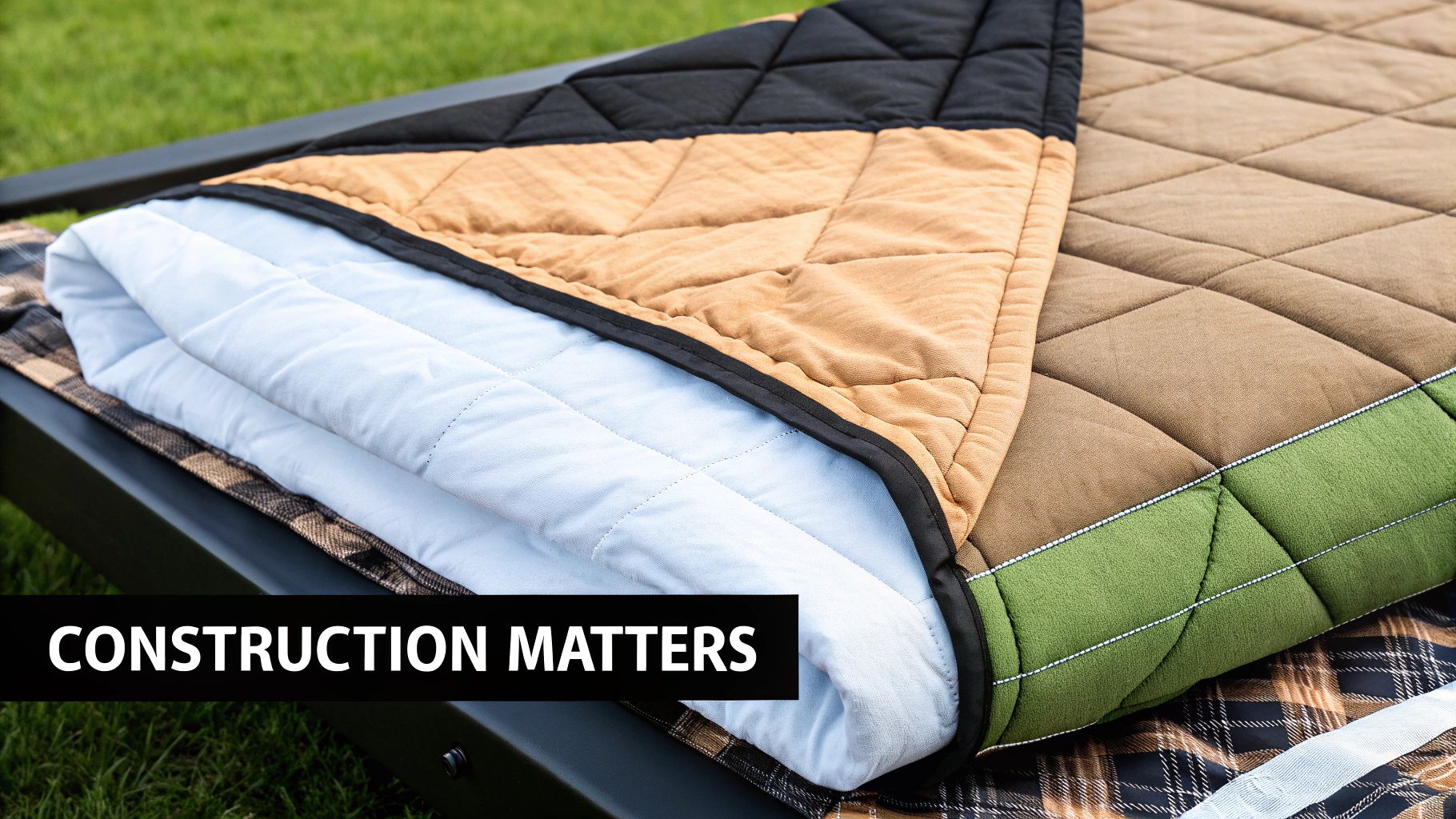
Inside a Comforter: The Key to Fluffy Warmth
The magic of a comforter lies in its fill and the stitching that holds it all in place. Without the right construction, all that lovely down, wool, or synthetic fibre would just clump into one corner, leaving you with cold spots and uneven coverage. This is where stitching techniques come in.
- Baffle-Box Construction: This is the gold standard. Small fabric walls (or baffles) create individual 3D chambers that let the fill expand to its maximum loft. It traps more air for superior insulation without adding extra weight and is the best method for stopping fill from shifting around.
- Sewn-Through Construction: A more common technique where the top and bottom fabric layers are stitched directly together into pockets. It’s effective at keeping the fill mostly distributed, but it also creates tiny uninsulated channels along the stitch lines that can lead to minor cold spots.
The fill material itself is just as important. Down offers an incredible warmth-to-weight ratio, while wool is brilliant for regulating temperature. Modern synthetics give you hypoallergenic and budget-friendly options that often mimic the pillowy feel of down.
The Anatomy of a Quilt: Structured and Breathable
A quilt’s construction is a great example of craftsmanship. Its classic three-layer structure is what gives it a unique character—less fluffy than a comforter, but with a comforting, gentle weight to it. The defining feature is the intricate stitching that binds these layers together.
This stitching isn't just for looks. It's functional, preventing the thin internal batting from bunching up or shifting. The density of the stitching also changes how the quilt drapes and feels. More stitching creates a stiffer, flatter quilt, while less stitching allows it to feel softer and more flexible.
The core difference is simple: A comforter is an insulated bag built for maximum loft and warmth. A quilt is a tightly integrated, multi-layered textile engineered for breathability and a more structured feel.
Why This Matters for Your Sleep
Getting your head around these construction details makes choosing the right bedding so much easier. If you’re a cold sleeper who loves that cloud-like feeling, a baffle-box down comforter is designed exactly for you. Its entire construction is focused on maximising thermal efficiency and plushness.
But if you're a hot sleeper or live in a warmer Aussie climate, a quilt’s stitched three-layer design offers breathability a thick comforter just can’t compete with. Its structure gives you a light covering without trapping too much heat. The weight of a quilt is also influenced by its fill density, which is measured in Grams per Square Metre (GSM). To get a better handle on how this impacts your comfort, check out our guide on what is GSM in quilts.
In the end, the choice between a comforter and a quilt comes down to which construction method suits your personal sleep style best. One is built for lofty insulation, the other for breathable, layered comfort.
Comparing Warmth Across Australian Climates
Picking the right bedding for Australia's wild weather isn't just about finding the thickest option. To get a truly comfortable night's sleep, whether you're in chilly Hobart or tropical Cairns, you need to understand how comforters and quilts actually work to keep you warm. Their warmth comes down to construction, and it affects everything from insulation to breathability.
A comforter's main job is to insulate, and it does that with loft—basically, how fluffy it is. High-loft fills like goose down or premium microfibre are brilliant at trapping air, creating a thermal bubble that holds onto your body heat. This is why a puffy down comforter can feel incredibly warm yet almost weightless, making it a dream for a Melbourne winter.
A quilt, on the other hand, provides warmth through its dense, layered build. It has very little loft, so instead of intense insulation, it offers a more grounded, gentle warmth. This design is also far more breathable, letting excess heat and moisture escape—a massive plus on a humid Brisbane night.
Decoding Warmth Ratings and Real-World Use
To make things easier, most comforters come with a Thermal Overall Grade (TOG) rating. It's a straightforward way to measure how well a comforter insulates, giving you a reliable number to compare different brands and styles.
- Low TOG (1-4.5): Perfect for summer or anyone who sleeps hot. These are light and airy, stopping you from overheating on warm nights. A low-TOG synthetic comforter is a great match for Sydney’s milder winters.
- Mid-Range TOG (6-10.5): These are your all-season workhorses. They’re versatile enough for most Australian climates, especially during those in-between spring and autumn months in cities like Adelaide or Perth.
- High TOG (12+): Built for serious cold. You’ll want a high-TOG comforter in the coldest parts of Australia, like Canberra or the southern highlands, where temperatures regularly dip near freezing.
You’ll almost never see a TOG rating on a quilt. Their warmth isn't about single-layer insulation; it's about their potential for layering. A lone quilt is ideal for a cool summer evening, but its real magic is how well it works with other blankets. This flexibility is why so many people love quilts—you can customise your warmth level every single night. If you want to know more, you can learn how to stay comfortable year-round with an all-seasons quilt, which really shows how adaptable they can be.
A comforter gives you set-and-forget warmth based on its TOG rating. It’s a simple, one-and-done solution for a specific season. A quilt, however, offers adaptable warmth. Think of it as a foundational layer you can build on when the temperature drops.
Climate Scenarios: Comforter vs. Quilt
This choice really is personal and depends entirely on where you live. It's no surprise that bedding that can handle changing conditions is a top priority for Aussies. It's why blankets, quilts, and comforters are the biggest sellers in the bed linen market. With comforters alone set to grow into a USD 103.66 million market by 2033, it’s clear we're all investing in plush, practical solutions that fit our local weather.
So, how does the comforter vs. quilt decision look in different parts of Australia?
For the Cold Sleeper in Tasmania: A high-loft, baffle-box down comforter with a TOG rating of 12 or higher is the clear winner. It delivers maximum warmth without the crushing weight of multiple blankets, keeping you consistently toasty all night.
For the Hot Sleeper in Darwin: A lightweight cotton quilt is the way to go. Its breathability is non-negotiable on humid nights, giving you just enough coverage to feel comfortable without trapping all that heat and moisture.
For the Family in a Four-Season Climate like Sydney: This is where things get interesting. A comforter with an all-season TOG rating (around 9) is simple and consistently plush. But a quilt offers unbeatable versatility—use it by itself in summer, add a wool blanket in autumn, and throw another layer on top for winter.
How Each Shapes Your Bedroom Aesthetic
Your bedding isn't just about staying warm; it's the visual anchor of your entire bedroom. The choice you make between a comforter and a quilt will set the whole personality for your space, defining whether it feels like a plush, cloud-like retreat or a room full of textured, layered character.
A comforter makes a bold, singular statement. Its high loft and sheer volume create that inviting, luxurious bed that instantly brings to mind the clean, crisp appeal of a high-end hotel. By its very nature—a single, puffy layer—it’s the perfect match for minimalist, modern, and contemporary styles.
Just by slipping on a simple quilt cover, you can create a solid block of colour or a subtle pattern that turns the bed into a calming centrepiece. This simplicity really lets other design elements, like artwork or statement furniture, have their moment.

The Comforter: A Canvas for Plush Minimalism
A comforter’s biggest design contribution is the smooth, uninterrupted surface it creates. All that puffiness softens the lines of the bed, giving you a soft, welcoming silhouette that feels both tidy and incredibly comfortable.
This "less is more" approach is also incredibly versatile. A crisp white comforter can anchor a Scandi-inspired room, while a deep charcoal or navy one can create a moody, sophisticated atmosphere.
The real beauty is in the quilt cover. Because the comforter itself stays protected, you can effortlessly swap out covers to refresh your bedroom's look with the seasons, or just whenever you feel like a change. It’s a low-commitment way to play with new colours and trends without having to buy entirely new bedding.
A comforter provides a foundation of plush volume. Its style is defined by the cover you choose, offering endless versatility and a clean, hotel-luxe finish that makes the bed the undisputed focal point.
The Quilt: A Tool for Texture and Personality
Where a comforter offers simplicity, a quilt brings detail, texture, and a bit of a story. Its stitched construction is decorative in its own right, lending itself to a huge range of design themes that go far beyond a minimalist look. A quilt doesn't just cover the bed; it dresses it.
The intricate patterns of the stitching—whether it’s a classic diamond, modern channel stitching, or an elaborate floral design—add a layer of visual interest that a smooth comforter just can’t replicate. This makes quilts the go-to choice for styles that celebrate texture and craftsmanship.
Think about these popular aesthetics where a quilt really shines:
- Farmhouse or Rustic: A patchwork or vintage-style floral quilt adds instant warmth and a sense of history.
- Coastal or Hamptons: A crisp white, navy, or light blue quilt with simple channel stitching evokes a relaxed, breezy seaside feel.
- Bohemian: Layering multiple quilts with different patterns and colours creates that eclectic, free-spirited vibe.
- Modern: A solid-coloured quilt with a geometric stitching pattern can bring in subtle texture without overwhelming a clean design.
Unlike a comforter, which is typically used alone, a quilt is a master of collaboration. It can be your main bed covering in summer or a stylish accent folded at the foot of the bed over a comforter in winter. This layering potential is the secret to creating a dynamic, professionally styled bed. Learning about the art of mixing and matching bed linen can help you combine quilts with other pieces to perfection.
Ultimately, your choice comes down to the story you want your bedroom to tell.
Practicality: Care, Cleaning, and Longevity
Beyond how it looks and feels on night one, you need to think about the day-to-day reality of living with your bedding. The long-term practicality of a comforter versus a quilt really comes down to care and maintenance, and this is where they differ significantly.
Comforters, especially those with natural fills like down or wool, need a bit more TLC. Their sheer bulk and delicate fillings mean you can't just toss them in your home washing machine whenever you feel like it. Doing so can cause the fill to clump up, creating cold spots and ruining that even, lofty feel.
That’s why a removable quilt cover is non-negotiable. The cover is your first line of defence, catching all the dirt and body oils. You can strip it off and wash it weekly with your sheets, keeping things fresh. The comforter insert itself? It generally only needs a professional clean once or twice a year, or a good airing out in the sun to freshen it up.
The Simplicity of Quilt Maintenance
Quilts, on the other hand, are much more straightforward. Most modern quilts are made from durable cotton or cotton-blends, designed to handle regular machine washing. Their thinner, denser construction means they fit easily into a standard washing machine without a fight.
This wash-and-go durability makes quilts a brilliant choice for households with kids or pets, where spills and muddy paws are just part of life. Knowing you can throw the entire thing in the wash for a quick clean offers serious peace of mind. If you want detailed tips on keeping your quilt in top shape, have a look at our ultimate guide to caring for your quilt.
For busy families, the ease of care is a major win for quilts. Their machine-washable nature streamlines laundry day, whereas a comforter system relies on the regular washing of its separate cover.
Comparing Lifespan and Storage
When it comes to longevity, both comforters and quilts can be fantastic long-term investments if you look after them. A high-quality down comforter, always protected by a cover, can easily last 10 to 15 years because the delicate fill is shielded from most of the wear and tear.
A quilt’s lifespan really depends on its craftsmanship and the quality of the fabric. A well-made quilt with strong, durable stitching will last for years, although you might notice some gentle fading over time with frequent washing.
Storage is another practical point to consider. A fluffy comforter is bulky and takes up a fair bit of real estate in the linen cupboard. Quilts, with their flatter profile, are a dream to store. They fold down neatly and compactly, which is a huge advantage if you’re short on space or like to switch up your bedding with the seasons. And for either option, ensuring your dryer is working efficiently is key; understanding how often to clean your dryer vent helps with performance and safety.
Which Bedding Matches Your Lifestyle?
So, you've learned about the construction, warmth, and style of comforters and quilts. Now for the most important part: which one actually fits your life? The perfect bedding isn't just about features; it’s about how it works for you day in and day out. The right choice for a renter in Sydney will look very different from what a family needs in Perth.
Let's move past the general specs and get into real-world scenarios. By looking at a few common Australian lifestyles, we can pinpoint whether a quilt or a comforter is the better pick for you, helping you choose something you'll love for years.
Still on the fence? This decision tree cuts through the noise, focusing on what matters most: washability, feel, and style.
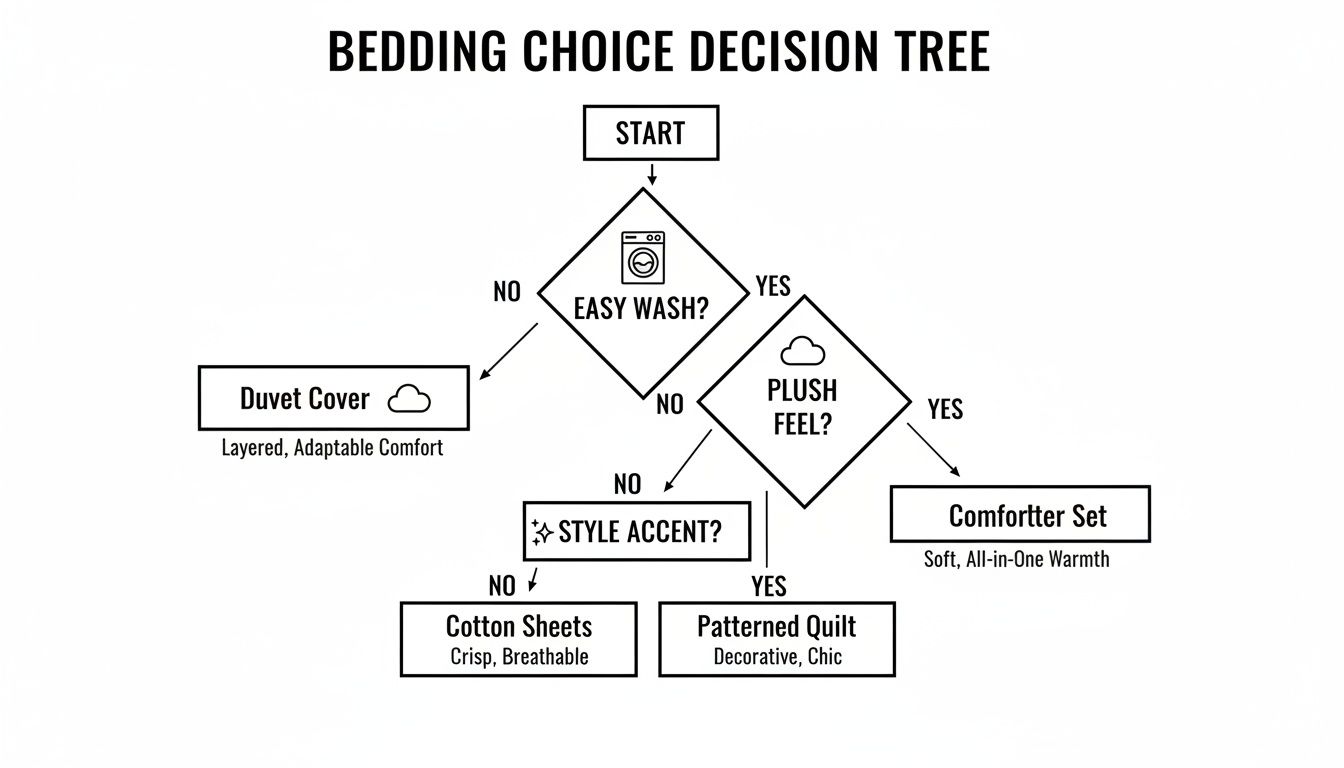
As you can see, if easy cleaning is your top priority, a quilt is almost always the answer. But if you’re chasing that plush, sink-in feeling, a comforter is hard to beat.
For the Style-Conscious Renter in Sydney
When you’re renting, especially in a smaller space, you want smart, non-permanent ways to make your bedroom feel like your own. Your bedding needs to be stylish, practical, and flexible, without taking up precious cupboard space.
Recommendation: A high-quality quilt.
A quilt is the perfect solve here. Its slim profile is far easier to store in a crowded apartment wardrobe. Plus, it’s a stylistic powerhouse. Use it as your main covering in summer, then fold it at the foot of your bed as a textured accent piece over a blanket in winter. It adds colour and personality without the bulk of a comforter.
For the Family with Young Kids in Perth
With a family, practicality is everything. Bedding has to be tough enough to handle spills, accidents, and constant trips to the washing machine, all while keeping everyone comfortable. Durability isn't a bonus; it's a must-have.
Recommendation: A durable, machine-washable quilt.
In the constant battle against spills and mess, the ability to throw the entire bedding into the wash is a game-changer. Quilts are built for this, offering a level of convenience that a comforter system, with its separate cover and delicate insert, simply cannot match for a busy family.
A quilt’s sturdy, stitched construction holds up beautifully to the rigours of weekly washing. You can have it cleaned and back on the bed in the same day—a massive plus when you're dealing with life's little messes.
For the Hot Sleeper in Darwin
Living in Australia’s tropical north means staying cool is the main game. Heavy, insulating bedding is completely off the table. What you need is something that offers a bit of coverage and security without trapping all that heat and humidity.
Recommendation: A lightweight, breathable cotton quilt.
When it comes to comforter vs quilt in this climate, it's not even a fair fight. A quilt made from natural fibres like cotton is designed for airflow. Its thin layers allow air to circulate freely, wicking away moisture and stopping you from overheating. A comforter, which is made to insulate, would be far too warm and stifling.
For the Comfort-Seeking Couple in Melbourne
For couples in cooler climates, the bedroom is a sanctuary. The goal is to create a cosy, inviting space with enveloping warmth that feels luxurious on a chilly winter night—without having to pile on five different blankets.
Recommendation: A high-loft down or wool comforter.
A comforter delivers that plush warmth like nothing else. Its lofty fill is brilliant at trapping heat, creating a consistent cocoon of comfort that works well for two different body temperatures. If you’re chasing that sink-in, hotel-luxe feeling, the single, puffy layer of a comforter is the ultimate choice for a snug and restful night's sleep.
To make things even clearer, we’ve put together a quick guide to help you find your perfect match at a glance.
Best Choice Based on Your Needs
This table breaks down common scenarios to help you quickly decide whether a comforter or quilt is the right fit for your home.
| If You Are... | Recommended Choice | Why It Works |
|---|---|---|
| A busy parent with young kids | Quilt | Much easier to wash and dry after spills. Its durable stitching withstands frequent cleaning. |
| Someone who loves a plush, hotel-like feel | Comforter | Offers unmatched loft and a 'cloud-like' feel. The single, fluffy layer provides consistent warmth. |
| A hot sleeper or live in a warm climate | Quilt | Thinner, lighter, and more breathable. Natural fibres like cotton allow for better air circulation. |
| A renter with limited storage space | Quilt | Takes up significantly less space in the cupboard and is versatile enough to use as a decorative layer. |
| A couple seeking cosy winter warmth | Comforter | The lofty fill traps heat efficiently, creating a warm cocoon without the need for multiple blankets. |
| Someone who wants to change their bedroom style often | Quilt | Acts as a versatile styling piece. It's easy to fold, layer, or swap out to refresh your room's look. |
Ultimately, choosing between a quilt and a comforter comes down to balancing practicality with your personal comfort preferences. Hopefully, seeing these real-life examples helps make that decision a whole lot easier.
Frequently Asked Questions
Even after comparing the two, a few questions always come up when you're trying to make that final decision. We get these from Aussie shoppers all the time, so let's clear up any lingering doubts to help you choose with confidence.
Can a Quilt Be as Warm as a Comforter?
This is probably the biggest point of confusion. On its own, a quilt is almost never going to match the warmth of a medium-to-high TOG comforter. A comforter has one job: to provide powerful, lofty insulation by trapping a huge amount of air.
But that doesn't mean a quilt can't keep you warm. A quilt is a fantastic team player. By layering it over a flat sheet and a wool blanket, you create multiple air pockets that work together to trap heat. This layered approach can easily rival the warmth of a comforter, but gives you way more flexibility to adjust.
Which Is Better for People with Allergies?
For anyone dealing with allergies, the real deciding factor is the fill material, not whether you choose a comforter or a quilt. Most bedding allergies are triggered by dust mites, which can make a home in natural fillings like down.
- Comforters with a hypoallergenic synthetic fill, like microfibre, are a brilliant choice. They give you that plush, down-like feel without any of the potential sniffles.
- Quilts are also a great option, particularly those made with a tightly woven cotton. Because they're designed to be washed more often, you can easily keep allergens and dust mites under control.
The bottom line? A synthetic-fill comforter (used with a cover you wash weekly) or a cotton quilt that you can launder regularly are both top-notch choices for keeping allergies at bay.
It’s not about quilt vs. comforter for allergy sufferers—it's about the fill and washability. A synthetic-fill comforter or a machine-washable quilt are both winners for keeping allergens out of your bed.
Can I Use a Quilt on Top of a Comforter?
Absolutely, and it's a fantastic way to get the best of both worlds. Layering a quilt over a comforter is a popular styling trick that adds texture, a pop of colour, and another welcome layer of warmth. It’s a perfect setup for colder climates or the middle of winter.
In this combination, the comforter does the heavy lifting with its lofty insulation, while the quilt adds a bit of comforting weight and acts as a beautiful decorative piece. You can fold it at the foot of the bed for a styled look or pull it all the way up on those extra-chilly nights.
What Is a Coverlet and How Is It Different?
People often mix up quilts and coverlets, but a coverlet is even simpler. It’s a single, lightweight layer of fabric, usually woven with a decorative texture like matelassé. This gives it a quilted look without any batting or fill inside.
Here's the easiest way to think about it:
- A quilt has three distinct layers: a top, a thin middle batting, and a bottom layer, all stitched together.
- A coverlet is just one decorative layer of fabric, making it much lighter than a quilt.
Coverlets are ideal for hot Australian summers as your only bed covering, or you can use them year-round as a purely decorative layer over your warmer bedding.
Ready to find the perfect addition to your bedroom? Whether you've settled on the plush warmth of a comforter or the versatile style of a quilt, Manchester Factory has a beautiful collection designed to suit every Australian home.
Explore our full range of high-quality comforters and quilts at Manchester Factory