

Polar fleece blankets are a staple for cosy comfort, and for good reason. They’re known for being incredibly soft, lightweight, and surprisingly warm.
Made from a synthetic polyester material, they were designed to give you all the insulating goodness of wool but without the heavy weight or potential for itchy skin. It’s pretty much the perfect fabric for snuggling up on the couch.
What Makes Polar Fleece Blankets So Popular?
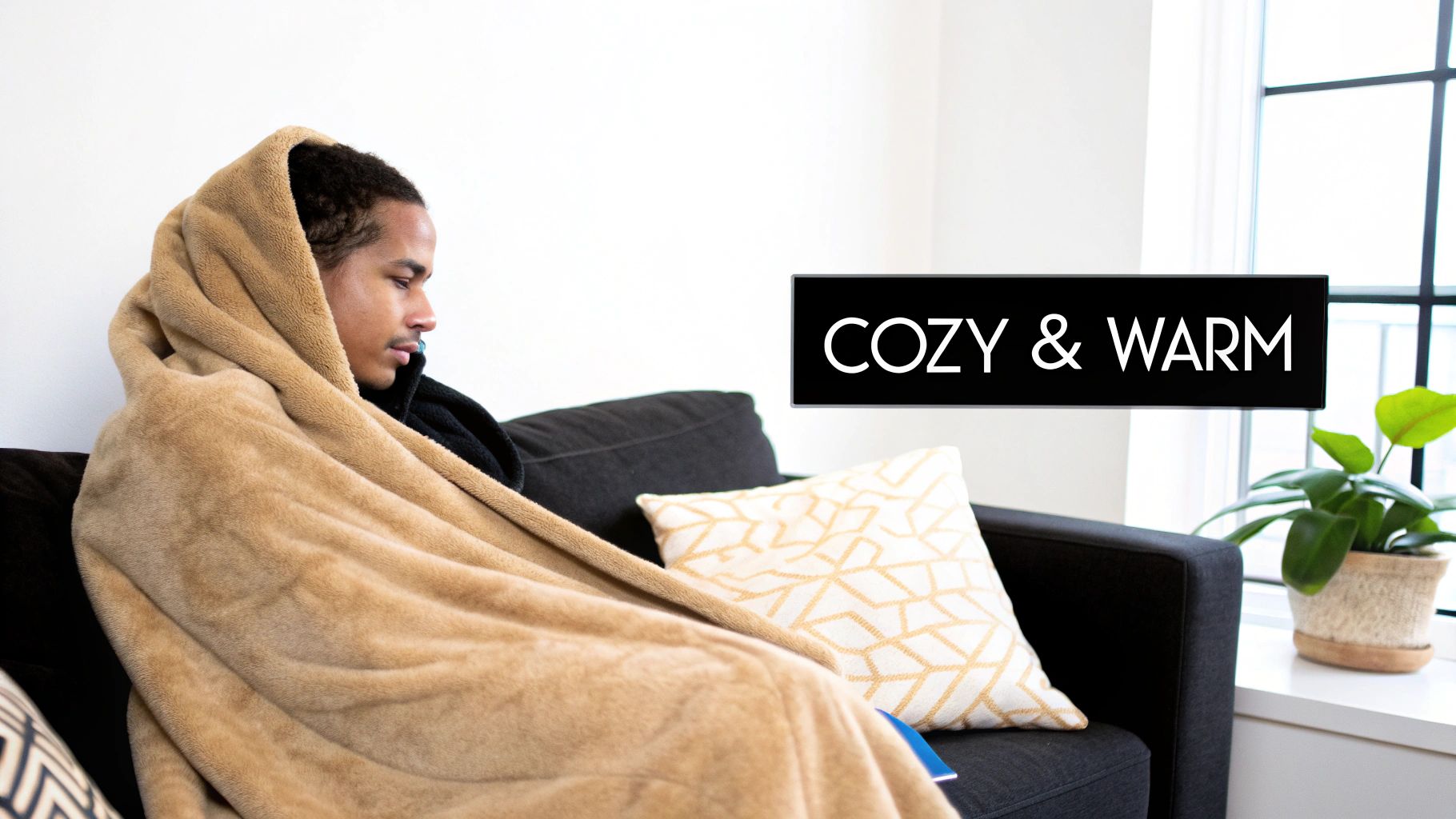
Step into the world of polar fleece, the go-to fabric for ultimate comfort in Aussie homes. If you could turn your favourite comfy jumper into a blanket, this would be it.
The magic is all in how it’s made. The fabric is brushed to create a soft, raised texture that’s filled with countless tiny air pockets.
These pockets are the secret to its warmth, trapping your body heat to keep you perfectly snug. This makes polar fleece blankets an essential for everything from chilly Melbourne winters to those breezy Sydney evenings on the balcony.
The Core Benefits of Fleece
Beyond just being warm, the popularity of polar fleece comes down to its practical features, which make it a staple in modern households. Its synthetic nature gives it a few key advantages over traditional materials like wool or cotton.
Here are the main benefits:
- Moisture Resistance: Unlike natural fibres that soak up moisture, polar fleece is hydrophobic. That’s just a fancy way of saying it repels water and dries remarkably fast.
- Breathability: While it’s incredibly warm, the material still lets moisture vapour escape, which prevents that clammy feeling you can get with less breathable fabrics.
- Lightweight Comfort: It provides exceptional warmth for its weight, delivering serious insulation without feeling bulky or restrictive.
- Hypoallergenic Properties: As a synthetic material, it’s a safe bet for anyone with allergies or sensitivities to wool.
This blend of comfort and practicality has cemented its place in the market. The Australian blankets and quilts market, where polar fleece is a major player, hit a value of USD 421.4 million. This figure shows a real surge, driven by Aussies' rising disposable incomes and a growing focus on making our homes look and feel better.
Polar fleece offers a fantastic balance of performance, affordability, and easy care. It’s a low-maintenance luxury that fits right into busy family life, providing reliable comfort year after year.
Whether you're looking for an extra layer for your bed or a durable throw for family movie nights, its versatile nature makes it an excellent choice. To see how it stacks up against other options, check out our comprehensive guide to choosing the perfect blanket for your needs.
How To Measure Fleece Warmth And Softness
When you start shopping for a polar fleece blanket, you’ll quickly notice they aren't all the same. The difference between a light, breezy throw and a seriously warm, heavy blanket comes down to a few key details. Understanding them helps you look past the packaging and pick the perfect level of cosy.
The most important term you’ll see is GSM, which stands for Grams per Square Metre. Think of it like thread count for sheets, but for fleece density instead. It’s a straightforward measure of the fabric’s weight, which directly tells you about its thickness, plushness, and how well it will keep you warm.
A higher GSM means more polyester fibres have been packed into every square metre of fabric. This creates a denser, plusher blanket that’s much better at trapping air—and in turn, keeping you toasty.
This number is a super reliable way to gauge warmth. A blanket with a low GSM will feel light and breathable, perfect for just taking the chill off. A high GSM blanket will feel substantial and incredibly warm. To get a better handle on this, check out our guide on what GSM means for quilts to see how it works across different types of bedding.
Understanding Fleece Pile
Beyond the weight, it’s the texture—or ‘pile’—that gives polar fleece its famous softness. The pile is the fuzzy, raised surface created when the fabric is brushed during manufacturing. These are the fibres that feel so good against your skin.
They also do the heavy lifting when it comes to insulation. The pile creates millions of tiny air pockets that trap your body heat, stopping it from escaping. This clever structure is why polar fleece is such a staple in Aussie homes; it provides up to 25% better warmth retention than cotton. That’s a game-changer for the 40% of households in non-heated homes, according to ABS data.
You’ll often see fleece described as having a single-sided or double-sided pile. A double-sided pile just means both sides of the blanket have been brushed, giving you maximum softness and heat-trapping power for a truly luxurious feel.
Matching GSM To Your Needs
So, which GSM is right for you? It really just depends on how you plan to use your blanket. There isn’t one “best” weight; it’s all about matching the blanket’s features to the situation.
Not all fleece is created equal, and picking the right GSM can be the difference between a light summer throw and a deep winter warmer. This simple table breaks down the common weight categories to help you match the blanket to your needs.
Polar Fleece GSM and Ideal Use Guide
| GSM Range | Weight Category | Common Use Cases | Best For |
|---|---|---|---|
| 150-250 GSM | Lightweight | Sofa throws, kids' blankets, extra layer on a spring night. | Taking the chill off without adding bulk. |
| 250-350 GSM | Midweight | Primary blanket in mild climates, all-season bedding layer. | The versatile, go-to option for everyday comfort. |
| 350+ GSM | Heavyweight | Deep winter bedding, ultimate cold-weather snuggling. | Maximum insulation and a luxurious, plush feel. |
Whether you need something light for the couch or a heavy-duty layer for the coldest nights, using GSM as your guide ensures you get exactly the warmth and feel you're looking for.
If you’re interested in other ways warmth is measured in textiles, you might find it useful to read about understanding warmth measurements like TOG ratings, which are often used for baby sleeping bags. By looking at both GSM and pile, you can confidently choose a polar fleece blanket that delivers the exact warmth and softness you’re after.
Understanding the Pros and Cons of Polar Fleece
To figure out if polar fleece is right for you, it helps to look at both sides of the story. These blankets offer a fantastic mix of comfort and practicality, but like any material, they come with a few trade-offs.
By weighing up the good against the not-so-good, you can confidently decide if a polar fleece blanket is the right fit for your home and lifestyle.
The Clear Advantages of Polar Fleece
The popularity of polar fleece isn’t an accident; it’s built on real benefits that suit modern family life down to the ground. These blankets consistently deliver on performance, feel, and just being plain easy to live with.
First and foremost is that exceptional softness. The brushed pile creates a plush, velvety texture that feels incredible against the skin, making it instantly comforting. This is paired with some serious insulation—those tiny air pockets are brilliant at trapping body heat, keeping you warm without the heavy weight you’d get from traditional wool.
Other key benefits include:
- Budget-Friendly Price: Polar fleece gives you a huge amount of warmth and comfort for a very accessible price, which is just great value for money.
- Hypoallergenic Qualities: Because it’s a synthetic fibre, it’s a safe bet for people with allergies or sensitive skin who might react to wool or down.
- Impressive Durability: This fabric is built to last. It resists stretching and shrinking, holding its shape well even after being thrown in the wash time and time again.
- Easy-Care Reputation: It's machine washable and dries quickly, making laundry day simple and totally stress-free.
This graphic breaks down some of the key things that make polar fleece blankets perform so well.
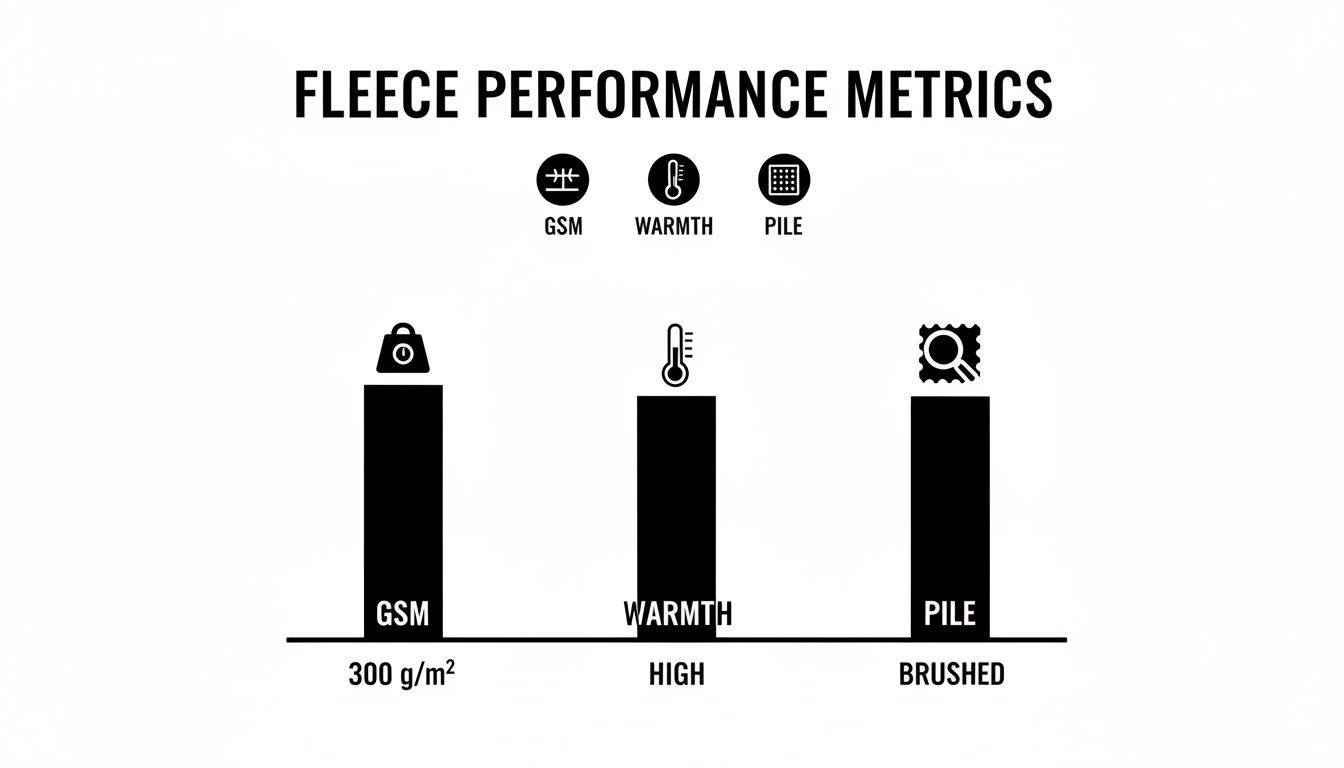
As you can see, a good balance of GSM, warmth, and pile results in a blanket that is both cosy and really effective at keeping you warm.
Potential Downsides to Consider
While the positives are pretty significant, it’s also important to be aware of the potential downsides. As a synthetic material made from polyester, polar fleece has a different profile from natural fibres.
One thing to think about is breathability. While it does a good job of wicking moisture away, it doesn’t breathe quite as well as natural materials like cotton or wool. For those who tend to sleep very hot, this could be a factor. You can explore a detailed comparison in our guide on wool vs synthetic quilts.
Another minor issue is static electricity. In very dry conditions, the synthetic fibres can build up a static charge, though this is usually easily managed with a bit of humidity in the air.
Finally, there are the environmental questions. Standard polar fleece isn't biodegradable and can shed microplastics when washed. However, choosing blankets made from recycled materials can help reduce this impact, turning plastic waste into something warm and genuinely useful.
Choosing The Right Size For Any Situation
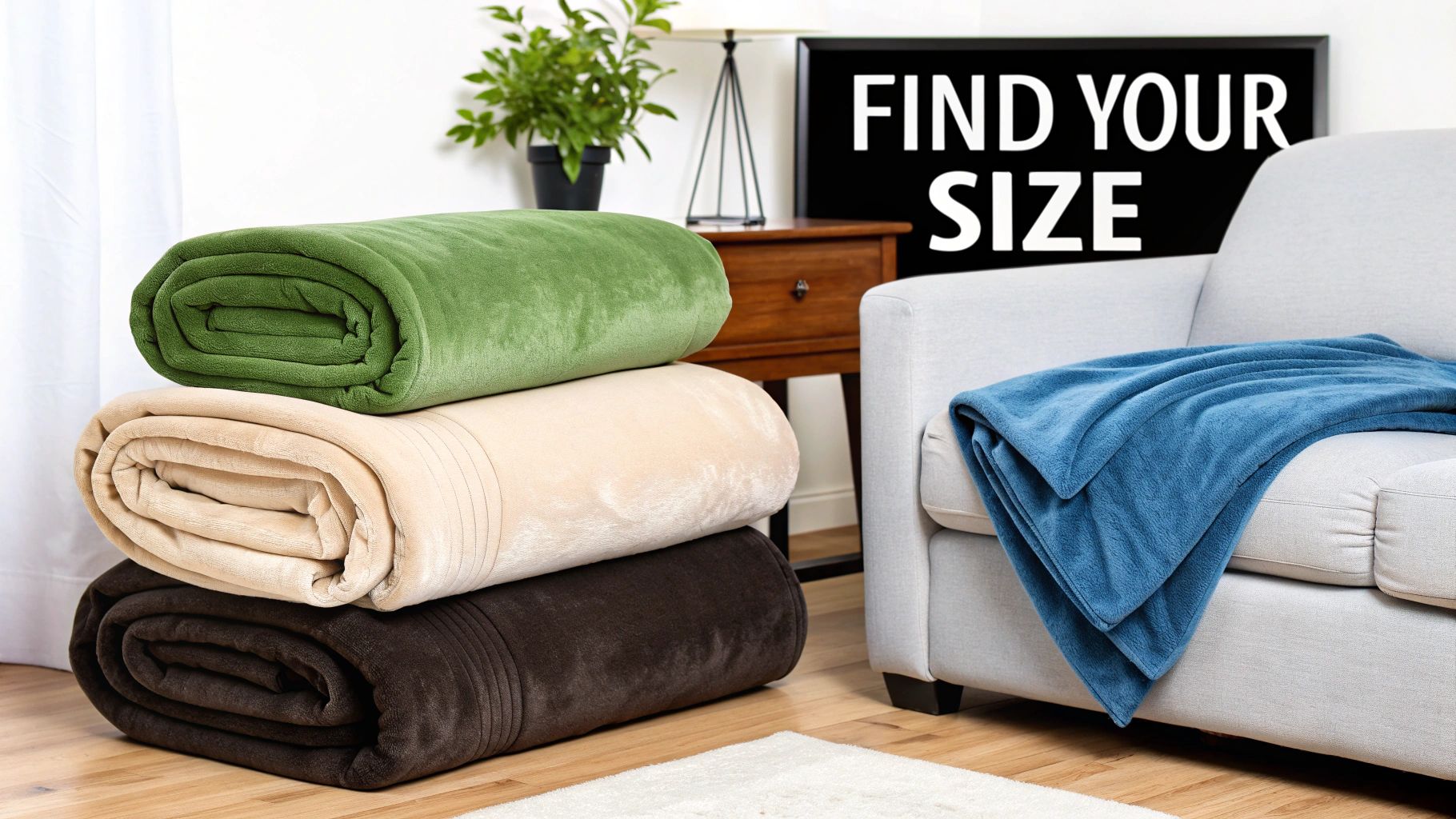
Picking the perfect size for your polar fleece blanket really comes down to matching its dimensions to its job. A blanket that’s too small just won’t give you that proper snuggle coverage, while one that’s way too big can feel a bit cumbersome and get in the way.
Getting the size right transforms it from a simple piece of fabric into a go-to comfort essential, whether it's for the living room or the bedroom.
Standard blanket sizes generally line up with mattress dimensions—single, double, queen, and king—with a special spot for the ever-popular throw. Each one is designed for a specific purpose, whether you’re adding an extra layer of warmth to your bed or just need a quick, cosy wrap on the sofa.
Before you grab a blanket for your bed, it pays to be sure of your mattress dimensions. Knowing how to determine the right mattress size is the first step to making sure your new blanket drapes perfectly over the sides and gives you that full, cosy coverage.
Matching Blanket Size To Everyday Use
The key to making the right choice is thinking about how and where you'll actually use your polar fleece blanket. Will it live on the arm of your couch for movie nights, or will it become a permanent fixture on your bed during winter? Its function really dictates the right form.
Here’s a quick breakdown of common sizes and what they’re best for:
- Throw Size: Usually around 127cm x 152cm, this is the undisputed champion of the living room. It’s perfect for one person to snuggle under, drape over an armchair for a pop of colour, or even keep in the car for spontaneous picnics.
- Single/Double: These sizes work beautifully on kids' beds or as a generous personal blanket for the couch. They give one person plenty of coverage without the extra fabric of the larger sizes.
- Queen/King: Designed as proper bedding layers, these are ideal for adding that extra insulation on cold nights. They’re sized to hang generously over the sides of the bed, ensuring you stay completely covered even if you toss and turn.
Think of a throw as a personal comfort item and a bed-sized blanket as a functional part of your sleep setup. Each is brilliant at its job, but they aren't always interchangeable.
Real-World Scenarios And Sizing Tips
Let’s put this into practice. For a child’s room, a durable single-size polar fleece blanket is a smart choice; it’s big enough to cover them completely but still easy for little hands to manage.
If you're after an extra layer to go over your queen-sized quilt, sticking with a queen blanket ensures a neat, uniform look where everything lines up perfectly.
For more detailed measurements that will guarantee a perfect fit with your existing bedding, it's a great idea to check a complete Australian bedding size chart. It breaks down all the standard dimensions so you can be confident your new polar fleece blanket will integrate seamlessly.
Simple Care Tips to Keep Your Fleece Soft

The best thing about a polar fleece blanket is that incredible, day-one softness. The good news is, keeping it that way is surprisingly simple. You don't need any special treatments or expensive products to maintain that plush, cosy feel for years to come.
Proper washing is really the secret here. The whole goal is to be gentle with those delicate brushed fibres that make the blanket so soft in the first place. Get this right, and you’ll avoid the matting and pilling that can make fleece feel rough over time.
The Correct Washing Method
Your washing machine can either be your fleece blanket's best friend or its worst enemy. A harsh, hot cycle can easily ruin the fabric, but a gentle approach will keep it in top-notch condition.
Just follow these simple steps for the best results every time:
- Go for Cold Water: Always wash your polar fleece blankets in cold water on a gentle or delicate cycle. Hot water is a big no-no, as it can damage the synthetic fibres and might cause the colours to fade.
- Use a Mild Detergent: A small amount of mild liquid detergent is all it takes. Steer clear of harsh chemicals and powdered detergents, which can be too abrasive for the fabric's soft pile.
- Wash with Similar Items: To cut down on friction, it’s best to wash your blanket on its own or with other soft items. Definitely avoid throwing it in with anything heavy or abrasive like denim jeans or towels.
Here's a crucial tip: always skip the fabric softener. It sounds counterintuitive, but fabric softeners leave behind a waxy residue that coats the fibres. This actually reduces the blanket's softness and its ability to keep you warm.
Drying and Finishing Touches
How you dry your blanket is just as important as how you wash it. High heat is the number one enemy of polar fleece because it can permanently melt and mat the fibres, completely ruining that signature soft texture for good.
The best method by far is to tumble dry on a very low or no-heat setting. Even better, air drying your blanket is an excellent option. Since fleece naturally resists moisture, it dries quite quickly when hung over a clothesline or drying rack.
If you ever notice any of those little fabric balls (pilling), you can gently remove them with a fabric shaver or a lint roller to restore a smooth finish. For more in-depth advice, you might find some useful tips in this guide on how to care for your snuggle fleece comforter.
Your Simple Polar Fleece Buying Checklist
Alright, you've got the lowdown on GSM, pile, and how to keep your fleece looking fresh. Now for the best part: picking the perfect polar fleece blanket to take home.
Think of this checklist as a final run-through before you hit "add to cart." It’s designed to make sure the blanket you choose from our Manchester Factory collection is one you’ll be happy with for years to come.
First, What’s This Blanket’s Main Job?
Before you get lost in colours and patterns, ask yourself one simple question: what will I actually use this blanket for? The answer makes every other decision a whole lot easier.
- For the Sofa: Looking for a cosy companion for movie nights or something to throw over your lap while you read? A simple throw-size blanket is your best bet. It’s perfect for one person to snuggle up in without being too bulky.
- For the Bed: Is this an extra layer of warmth for your bedding setup? You’ll want a bigger size, like a queen or king, that matches your mattress properly. This gives you full coverage without any chilly gaps.
Nailing this down first cuts through the noise and helps you focus on what really matters. A blanket with a clear purpose is a blanket you’ll actually use.
Finalising Your Pick
Once you know its main role, you can dive into the details that make it the perfect fit for your home. Just run through these last few points to feel totally confident in your choice.
- Select Your Warmth Level: Think back to our GSM guide. Are you after a light layer (around 150-250 GSM) for a bit of extra comfort, or do you need a seriously warm, heavyweight blanket (350+ GSM) for those frosty winter nights?
- Choose a Style: Now for the fun bit. Pick a colour and pattern that works with your current decor. Are you going for a classic neutral that blends in, or a pop of colour to liven things up?
- Confirm the Perfect Size: Double-check those dimensions. Make sure your throw is generous enough to really wrap up in, or that your bed blanket drapes nicely over the sides of the mattress.
- Explore Our Collections: Take a look at some of our favourites, like the incredibly soft Sienna Living polar fleece blankets, to find a style that feels just right.
With fast, next-day dispatch and a straightforward returns policy, you can shop with complete peace of mind. We’re here to help you get your choice just right.
Got a Few More Questions?
Even after getting all the details, you might still have a couple of things you're wondering about. We get it. Here are some quick, straight-to-the-point answers to the questions we hear most often about polar fleece.
Is Polar Fleece Better Than Wool for Blankets?
This really comes down to what you’re looking for. Polar fleece is lightweight, a total lifesaver for anyone with allergies (it’s hypoallergenic), and is much kinder on the wallet than wool. Plus, it’s a breeze to wash and dries super fast, making it the perfect low-maintenance choice for busy households.
Wool, on the other hand, is a natural fibre and is fantastic at breathing. But, it can be heavy, costs a fair bit more, and needs a gentle hand when it comes to cleaning. For families, especially those with kids or pets, or anyone who just wants something durable, cosy, and fuss-free, polar fleece is almost always the better pick.
How Do I Stop My Polar Fleece Blanket from Pilling?
Ah, pilling—those annoying little fluff balls that can pop up after a few washes. It happens when the fibres get rubbed together. The good news is, you can definitely minimise it. The trick is to always wash your blanket inside out, stick to a gentle cycle, and use cold water.
The golden rule? Keep it away from abrasive fabrics like denim jeans or rough towels in the wash. That friction is what causes the pilling. When it’s time to dry, either air dry it or use the lowest heat setting on your dryer. High heat is the number one enemy of soft fleece fibres.
Are Polar Fleece Blankets Environmentally Friendly?
That’s a great question, and it's something worth thinking about. Traditional polar fleece is a type of polyester, which comes from petroleum, so it's not biodegradable. But there's been a real push in the industry to do better.
These days, you can find brilliant, high-quality fleece blankets made from recycled plastics (like old water bottles). Choosing one of these is a great way to give plastic a second life and keep it out of landfill. Another simple tip: when you wash any synthetic fabric, pop it in a microfibre-catching laundry bag. It helps stop tiny plastic fibres from getting into our waterways, making your cosy choice a more conscious one.
Ready to find that perfect blanket you'll reach for every time? At Manchester Factory, we’ve handpicked a range of premium polar fleece blankets that nail that sweet spot between comfort, style, and durability. Take a look through our collections and enjoy fast, next-day dispatch on your order.
Shop the full range of polar fleece blankets at Manchester Factory today!