

A duck down pillow offers a unique blend of softness and support that’s often compared to resting your head on a cloud. It's filled with the light, fluffy clusters found under the chest feathers of a duck, which are prized for their incredible insulating and cushioning properties. This guide is your complete starting point for understanding what makes this type of bedding a top choice for a truly luxurious night’s sleep.
The Unmatched Comfort of a Duck Down Pillow

Imagine resting your head on a pillow that feels both incredibly soft and gently supportive. That's the exact experience a high-quality duck down pillow delivers, night after night. It’s an investment not just in your bedding, but in achieving a deeper, more restorative sleep.
This guide will walk you through everything you need to know, from where the down comes from to the finer details of its construction. We'll explore what defines a great pillow, helping you feel confident in picking one that can genuinely transform your nightly rest. The right choice is about more than just comfort; it's about proper alignment and waking up feeling refreshed.
What Defines a Premium Pillow Experience
A truly great duck down pillow is defined by more than just its filling. Several factors work together to create that perfect balance of comfort and durability, making it a standout choice for anyone serious about their sleep.
Here are the key elements to look for:
- Superior Softness: Down clusters are naturally light and airy, creating a plush surface that cradles your head without ever feeling too firm or restrictive.
- Excellent Breathability: The natural structure of down allows air to circulate freely. This helps regulate your temperature and prevents that stuffy, overheating feeling during the night.
- Long-Lasting Resilience: With the right care, a quality down pillow can maintain its loft and supportive qualities for many years, easily outlasting most synthetic alternatives.
The demand for natural and luxurious bedding just keeps growing, and it's easy to see why. People are looking for superior comfort and durability, and the global market for down and feather pillows is expanding to match.
Choosing the right pillow is the first step toward building a truly restful sleep environment. It lays the foundation for comfort, allowing your body to fully relax and recharge.
This guide will set the stage, showing you how a duck down pillow isn't just another purchase—it's an investment in your well-being. For more tips on elevating your entire sleep setup, check out our guide on the secret to having the comfiest bed in the world.
Understanding Fill Power and Why It Matters
When you start looking for a duck down pillow, you’ll quickly run into two terms: fill power and fill weight. They might sound a bit technical, but getting your head around them is the secret to finding a pillow that feels like it was made just for you.
Think of them as a team. Together, they decide the exact softness, support, and overall feel of your pillow.
What is Fill Power? The Quality Indicator
Think of fill power as the 'fluffiness factor'. It's a measure of the down's loft, telling you how much space one ounce of down takes up. A higher fill power means the down clusters are bigger and more mature.
Why does this matter? Because larger clusters are far better at trapping air, which results in a pillow that’s lighter, more insulating, and bounces back day after day. It's the best indicator of the quality of the down inside your pillow.
And Fill Weight? The Firmness Factor
On the other hand, fill weight is much simpler. It’s the total weight of the down fill packed inside the pillow, usually measured in grams.
While fill power tells you about the down's quality, fill weight tells you about its quantity. It's this number that directly impacts how firm or soft your pillow will feel.
Why Fill Power is King
Fill power is easily the most important clue to a duck down pillow’s quality and performance. The numbers usually range from around 400 for basic pillows up to 800 or higher for truly premium options. A higher number doesn't just mean a puffier pillow; it means a better pillow.
Here’s a quick breakdown of why it’s so important:
- Cloud-Like Loft: High fill power down (think 700+) gives you that incredible, sink-in loft. The pillow feels light and airy but still offers gentle, resilient support.
- Long-Lasting Durability: Larger, more mature down clusters are stronger. They can handle being squashed every night and still fluff back up for years, meaning a high fill power pillow will last much longer before going flat.
- Better Temperature Control: The way big down clusters trap air makes them amazing insulators. This helps regulate your temperature through the night, keeping you comfortable whether it's summer or winter.
As a rule of thumb, a pillow with a fill power of 600 or above is considered good quality for duck down. Anything less might not have the longevity or luxurious feel that makes these pillows so sought after.
How Fill Weight Creates Your Perfect Feel
While fill power sets the potential for fluffiness, fill weight is what delivers the final level of support. It's the key to how firm or soft the pillow will actually feel under your head.
You could have two pillows with the exact same high fill power, but the one with more down packed inside (a higher fill weight) will feel much firmer and more supportive. This relationship is what lets you really dial in your sleep setup.
The magic of a perfect duck down pillow lies in the balance between high-quality, lofty down (fill power) and just the right amount of it (fill weight) to suit your personal comfort.
Here's a quick reference to see how fill power ratings translate to the softness and support of a duck down pillow.
How Fill Power Affects Pillow Feel
| Fill Power Rating | Typical Pillow Feel | Best For |
|---|---|---|
| Below 500 | Soft, flatter, less resilient. | Stomach sleepers or those who want a very scrunchable pillow. |
| 500-600 | Good quality, balanced softness. | Back sleepers or those wanting a versatile, everyday pillow. |
| 600-700 | Very lofty, light, and supportive. | Side and back sleepers needing gentle support with a plush feel. |
| 700+ | Premium, cloud-like luxury. | Side sleepers who need significant loft and support without the weight. |
Understanding this makes it much easier to pick the right pillow from an online description.
Finding Your Perfect Combination
So, what’s the ideal blend of fill power and fill weight? It comes down to your sleeping style and what you find comfortable.
A stomach sleeper, for instance, might want a pillow with high fill power but low fill weight. This gives them a soft, almost-flat surface that’s still luxurious. On the other hand, a side sleeper needs a pillow with both high fill power and high fill weight. This creates a firm, lofty cushion that properly fills the gap between their shoulder and head to keep the spine aligned.
Once you understand these two elements, you can read any product description with confidence and choose a duck down pillow that will genuinely improve your sleep.
Choosing Your Ideal Pillow Fill Material
When you start the hunt for the perfect pillow, you'll quickly discover the world of bedding has a lot to offer. The biggest decision you'll make is the fill material, as it directly impacts how the pillow feels, how long it lasts, and what you'll pay for it. Let's compare the three main players on the field: duck down, goose down, and modern synthetic alternatives.
Each one brings something different to the bedroom. Understanding these differences is the secret to matching a pillow to your personal sleep style, making sure you invest in something that will deliver restful nights for years to come.
Duck Down: The Smart Choice for Comfort and Value
A duck down pillow is often praised for hitting that sweet spot between luxurious softness and an accessible price. The down clusters are incredibly light and fluffy, creating a pillow that gently cradles your head and neck for a truly comfortable sleep.
While duck down clusters are typically a bit smaller than those from a goose, high-quality duck down still provides excellent loft and breathability. This makes it a fantastic choice for anyone who wants that classic, cloud-like down feel without the premium price tag of goose down. Think of it as the perfect entry point into luxury bedding.
Goose Down: The Premium Loft Experience
Goose down is widely seen as the pinnacle of pillow fillings, and for good reason. Geese are larger birds, which means their down clusters are bigger and more mature.
This size difference translates into a few key advantages:
- Higher Fill Power: Goose down can achieve higher fill power ratings, meaning it offers more loft and insulation for its weight. The result is an exceptionally light, airy, and fluffy pillow.
- Greater Durability: The larger, more resilient clusters in goose down tend to hold their shape and bounce back for longer, often giving these pillows a slightly longer lifespan.
- Minimal Odour: Properly processed goose down is known for having a less noticeable natural scent compared to duck down.
The main trade-off? The cost. Because it's rarer and has superior lofting properties, goose down is the more expensive of the two natural options.
Synthetic Alternatives: The Hypoallergenic Option
For those with significant allergies or who prefer to avoid animal products, synthetic fills like microfibre offer a practical and effective alternative. These materials are man-made and inherently hypoallergenic, making them a safe bet for sensitive sleepers.
It's a common myth that natural down is the problem for allergy sufferers. More often than not, the real culprits are dust or impurities from poor processing. High-quality, properly cleaned down is often perfectly fine for most people.
Synthetic pillows are also usually the most budget-friendly choice and are incredibly easy to care for—most can be tossed in the washing machine and dryer without a second thought. However, they do have some downsides. For a closer look, you can explore the benefits of down alternative bedding to see if it's the right fit for you.
The biggest trade-off with synthetics is breathability; they tend to trap heat more than natural down. They also lack the same long-term resilience, meaning they often flatten more quickly and may need replacing every one to two years. For a broader look at selecting the right head support, this guide on how to choose the perfect pillow is a great resource.
Pillow Fill Comparison Guide
To make the decision clearer, here’s a straightforward table comparing the key characteristics of the three most common pillow fill types. It breaks down what you can expect from each, helping you find the best fit for your sleeping preferences.
| Feature | Duck Down | Goose Down | Synthetic (Microfiber) |
|---|---|---|---|
| Softness | Very soft and plush | Exceptionally soft and cloud-like | Soft, but can feel less airy |
| Loft & Support | Good loft, supportive | Superior loft, very resilient | Can flatten quickly over time |
| Breathability | Excellent | Excellent | Moderate, can retain heat |
| Durability | Very good (5-10 years) | Excellent (often 10+ years) | Fair (1-2 years) |
| Price Point | Mid-range | Premium | Budget-friendly |
| Hypoallergenic | Yes, when properly cleaned | Yes, when properly cleaned | Yes, naturally hypoallergenic |
Ultimately, the best pillow for you comes down to what you value most. If you're looking for a luxurious down experience that delivers fantastic comfort and longevity at a great price, a duck down pillow is an unbeatable option. If your budget allows for the absolute peak of softness and loft, goose down is a worthy upgrade. And if allergies or budget are your main concerns, synthetic fills provide a comfortable and practical solution.
Matching Your Pillow to Your Sleep Style
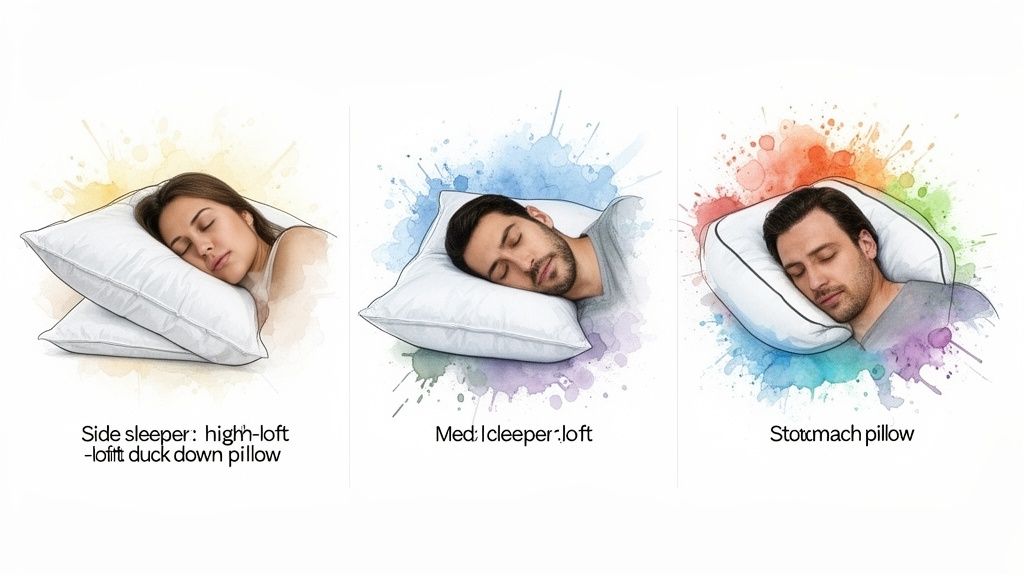
Choosing the perfect duck down pillow isn’t about finding the single "best" one on the market. It’s about finding the best one for you. The secret is to match the pillow’s loft and firmness to the way you sleep. When you get it right, the pillow works with your body, not against it, keeping your spine in a healthy, neutral alignment all night.
Think of it this way: your pillow's main job is to fill the gap between your head and the mattress, which keeps your neck straight. A pillow that’s too high or too low forces your neck into an unnatural angle, leading to stiffness, aches, and a seriously restless night. Figuring out your sleep style is the first step toward waking up refreshed and pain-free.
For Side Sleepers: The Need for Loft and Support
Side sleeping is the most common position, but it also creates the biggest gap between your head and the mattress. To bridge this gap properly, side sleepers need a pillow with plenty of loft and firm support.
A soft, low-profile pillow just won't cut it. Your head will sink way too far, causing your neck to bend awkwardly toward the mattress. Instead, you need a pillow with a higher loft and a decent fill weight to give you consistent support from dusk till dawn.
- Ideal Pillow: A firm or extra-firm duck down pillow with a high fill power (600+) and a generous fill weight.
- Why It Works: This combination of loft and density cradles your head and supports your neck, stopping it from dropping out of line with your spine.
- Tip: Look for pillows with a gusseted edge—that’s the strip of fabric sewn around the sides. It creates a more even sleeping surface and gives you better edge support.
If you mainly sleep on your side, getting the right support is a game-changer. You can dive deeper into this topic by exploring our recommendations for the best pillows for side sleepers.
For Back Sleepers: Cradling Comfort Is Key
Back sleepers need a careful balancing act. Your pillow should be substantial enough to support the natural curve of your neck, but not so thick that it pushes your head too far forward. The goal is to keep your head, neck, and spine in a straight line, just like when you're standing with good posture.
A medium-loft, medium-firmness pillow is pretty much the gold standard here. It offers just enough lift to support the neck without causing any strain.
A great test for back sleepers is to lie down and see how your head rests. Your chin shouldn’t be pushed towards your chest, nor should it tilt back. Everything should feel level and completely natural.
This is where a quality duck down pillow really shines. Its ability to contour to your shape means it fills the space under your neck while letting your head rest comfortably, creating a personalised cradle of support.
For Stomach Sleepers: Soft and Low Is the Way to Go
Stomach sleeping can put a lot of strain on your neck and spine because it forces your head to be turned to one side for hours. To minimise that stress, a soft, low-profile pillow is non-negotiable.
A pillow that's too high will force your neck to arch backwards at an uncomfortable angle, which is a one-way ticket to morning stiffness. In fact, many stomach sleepers find a very thin pillow—or even no pillow at all—is the most comfortable option.
- Ideal Pillow: A soft duck down pillow with a high fill power but a low fill weight.
- Why It Works: This combination gives you that luxurious, cloud-like softness without propping your head up too high, keeping your neck much closer to a neutral position.
In Australia, there's a huge demand for quality bedding that meets specific sleep needs. The Australian cushion and pillow market was valued at USD 478.8 Million, showing a clear desire for pillows that offer personalised comfort and support.
Ethical Sourcing and Allergy Concerns
When you're investing in a quality duck down pillow, two big questions usually pop up: "Is this going to set off my allergies?" and "Where did the down actually come from?" These are completely fair questions, and getting straight answers is the key to buying something you feel genuinely good about.
Let's clear the air on allergies first. It’s probably one of the biggest myths in bedding that down itself is the problem. In reality, a true feather allergy is pretty rare. What usually causes the sniffles is a reaction to dust, dander, or other nasties left behind in cheap, poorly cleaned down.
Debunking the Allergy Myth
Good quality duck down goes through an intensive washing and sterilisation process called hydrolysis. This isn't just a quick rinse; it's a multi-step deep clean that gets rid of virtually all the dust and organic bits and pieces, leaving the down fresh, clean, and hypoallergenic. A premium pillow is often cleaner than many synthetic alternatives, which can become a haven for dust mites over time.
For anyone who's particularly sensitive, the right pillow combined with the right bedding habits is the perfect fix.
- Look for "Hypoallergenic" Labels: This is your signal that the down has been properly cleaned to remove potential allergens.
- Use a Pillow Protector: A good quality, tightly woven protector is your best line of defence. It creates a physical barrier that stops dust mites in their tracks and keeps your pillow feeling fresh.
- Keep it Clean: Regularly washing your pillowcases and protectors is a non-negotiable for a healthy sleep space.
If you choose a high-quality pillow and look after it, most people can enjoy that incredible down comfort without a hint of irritation. For a deeper dive, our guide to hypoallergenic bedding has some great advice for allergy sufferers.
Understanding Ethical Down Sourcing
Just as important as hygiene is knowing the animals were treated well. The bedding industry has come a long way in making sure down is collected responsibly, which gives you the power to make a choice you can stand by.
The single most important thing to look for is an independent certification that guarantees humane treatment.
The Responsible Down Standard (RDS) is the global gold standard for ethical down. It ensures that the down and feathers come from birds that have not been subjected to unnecessary harm, like live-plucking or force-feeding.
When you see that RDS logo on a duck down pillow, it’s not just a sticker. It means the entire supply chain—from the farm right through to the finished product—has been checked and approved by an independent body. It’s a clear promise that you’re buying something that aligns with strong animal welfare values, so you can rest easy in every sense of the word.
How to Care for Your Duck Down Pillow

A great duck down pillow is an investment in years of good sleep. The good news? Looking after that investment is surprisingly simple. With just a little bit of consistent care, you can keep your pillow lofty, clean, and supportive for a long, long time.
The most important habit is a quick, daily fluff. Seriously. Just give it a good shake and a plump up each morning when you make the bed. This simple move helps redistribute the down clusters, stopping them from clumping together and making sure the pillow keeps its airy, cloud-like volume. It takes less than a minute but makes all the difference.
Protecting Your Pillow From Wear and Tear
Beyond the daily fluff, the single best thing you can do for your duck down pillow is slide it into a quality pillow protector. Think of it as a zippered shield that fits under your regular pillowcase. It’s your first line of defence, blocking moisture, body oils, and dust from ever reaching the delicate down fill inside.
Using a protector means you'll need to wash the actual pillow far less often, which is the real secret to making it last. The less you expose the down to water and heat, the better it will hold up over time. It's a simple step that pays off in the long run.
Washing and Drying Your Pillow Correctly
Even with a protector, you'll eventually need to give your pillow a proper clean. Always start by checking the care label, but the majority of duck down pillows are perfectly fine to go in the washing machine.
Just follow these steps to get it right:
- Wash Gently: Pop it in a front-loading machine on a delicate or wool cycle using cool water. Be stingy with the detergent—a small amount of a mild, down-friendly liquid soap is all you need.
- Rinse Thoroughly: Run an extra rinse cycle. This is crucial for washing out every last bit of soap, as any leftover residue will make the down clusters stick together.
- Dry Completely: This is the most important part of the whole process. Tumble dry your pillow on a low-heat setting. To help break up any wet clumps and fluff the down back to life, throw in a few wool dryer balls or clean tennis balls.
Important Takeaway: Your pillow needs to be 100% dry before it goes back on your bed. Even a little bit of dampness can lead to mildew. Be patient here—it can often take a few hours and several dryer cycles to get it fully dry.
Of course, a clean pillow is only one part of a healthy sleep setup. Maintaining your whole bed is key. If you’re ready to tackle the rest, you can learn how to clean a mattress like a pro and get your whole sleep environment feeling fresh.
For a full rundown on keeping your bedding in top shape, check out our guide on how often you should wash and replace your bedding.
Common Questions About Duck Down Pillows
As you get closer to picking the right duck down pillow, a few last-minute questions usually pop up. To help you feel completely confident in your choice, we’ve put together clear, simple answers to the queries we hear most often.
Think of this as your final check-in before you commit to years of better sleep. We'll cover everything from how long your pillow will last to any concerns about odours or allergies.
How Long Does a Duck Down Pillow Last?
With the right care, a high-quality duck down pillow can easily last for 5 to 10 years. That’s a huge step up from most synthetic pillows, which often go flat and lifeless within a year or two. The secret is all in the maintenance.
Using a pillow protector is a non-negotiable—it acts as a shield, protecting the delicate down from body oils and moisture. On top of that, following the right washing and drying instructions is crucial to getting the most out of your pillow. You'll know it's time for a new one when it stops fluffing back up with a good shake or starts to feel lumpy.
Do Duck Down Pillows Have a Smell?
A new, high-quality duck down pillow should have almost no scent at all. This is because good manufacturers put the down through a serious multi-step cleaning and sterilisation process, which removes any natural odours or impurities.
Occasionally, you might notice a very faint, natural smell when you first unbox it, but this almost always disappears after airing it out for a day. If you ever come across a strong or funky odour, it’s usually a red flag for lower-quality down that hasn't been cleaned properly.
The difference is in the details. A high-quality pillow is thoroughly washed and sterilised to be fresh and hypoallergenic from day one, while cheaper options may cut corners on this essential cleaning process.
Can I Use a Down Pillow if I Have Allergies?
Yes, absolutely. It's one of the biggest myths in bedding that down itself causes allergies. The real culprits are usually dust mites or other impurities found in poorly processed fillings.
Premium down is washed so thoroughly that these potential allergens are removed, making it perfectly safe for most people. If you want extra peace of mind, always use a hypoallergenic, mite-proof pillow protector and look for pillows specifically labelled ‘hypoallergenic’. This creates a reliable barrier that keeps your sleep environment clean and healthy, night after night.
At Manchester Factory, we believe everyone deserves a luxurious and restful night's sleep. Explore our curated collection of premium bedding to find the perfect duck down pillow that will transform your comfort. Visit us online to find your perfect match at https://www.manchesterfactory.com.au.