

A gingham quilt cover is one of those timeless bedding classics. It’s that simple, two-colour checked pattern that instantly brings a sense of comfort and effortless style to any bedroom.
What's so great about it? Its versatility. Gingham somehow manages to fit in everywhere, from rustic farmhouse bedrooms to clean, modern spaces, creating an atmosphere that feels both inviting and cosy. It’s a design that feels nostalgic and fresh all at once.
Why Gingham Bedding Remains a Cherished Choice
The real charm of a gingham quilt cover is its simplicity. It has this incredible ability to make a room feel warm and homely without even trying. It’s more than just a pattern; it’s a design that tells a story of comfort, tradition, and quiet style. That lasting quality makes it a smart addition to your linen collection—one you won't get tired of.
Gingham's appeal also taps into a deeper appreciation for well-made textiles. To really get why it works so well, it helps to understand the fundamental principles of quilt making, and see how simple fabric blocks can come together to create something so loved and lasting. This link to true craftsmanship is part of what gives the pattern its enduring character.
A Pattern for Every Style
One of gingham's biggest strengths is how easily it adapts to different interior styles. It just works.
- Farmhouse and Rustic: Pair it with natural wood furniture and neutral tones, and you’ll instantly amplify that cosy, country-inspired feeling.
- Modern and Minimalist: In a room with clean lines and solid colours, a gingham quilt cover adds a pop of visual interest without cluttering the space.
- Family-Friendly and Playful: A brightly coloured gingham can bring fun, vibrant energy to a kid's bedroom or a welcoming guest room.
A Growing Market for Quality
In Australia, the demand for high-quality bedding like a well-made gingham quilt cover is definitely on the rise. The national bed linen market pulled in USD 1,487.4 million in 2022 and is set to grow even more.
Within this market, the quilt and comforter segment is growing the fastest, which shows a real desire for beautiful, durable bedding. This trend makes it clear that choosing the right quilt cover is more important than ever.
Choosing The Right Gingham Quilt Cover Fabric
The secret to a great night's sleep often comes down to one thing: the fabric you're sleeping under. When it comes to a gingham quilt cover, the material you choose defines everything from how it feels against your skin to how it stands up to years of Sunday morning sleep-ins. Your choice directly shapes your comfort, the breathability, and the overall vibe of your bedroom.
Think of it like picking out a favourite shirt. Some fabrics feel crisp, cool, and put-together, while others are soft, relaxed, and lived-in from day one. The exact same logic applies to your bedding, and figuring out what you love is the key to finding your perfect match.
This visual guide breaks down why gingham is such a classic choice, showing how it perfectly balances nostalgia, everyday versatility, and pure comfort.
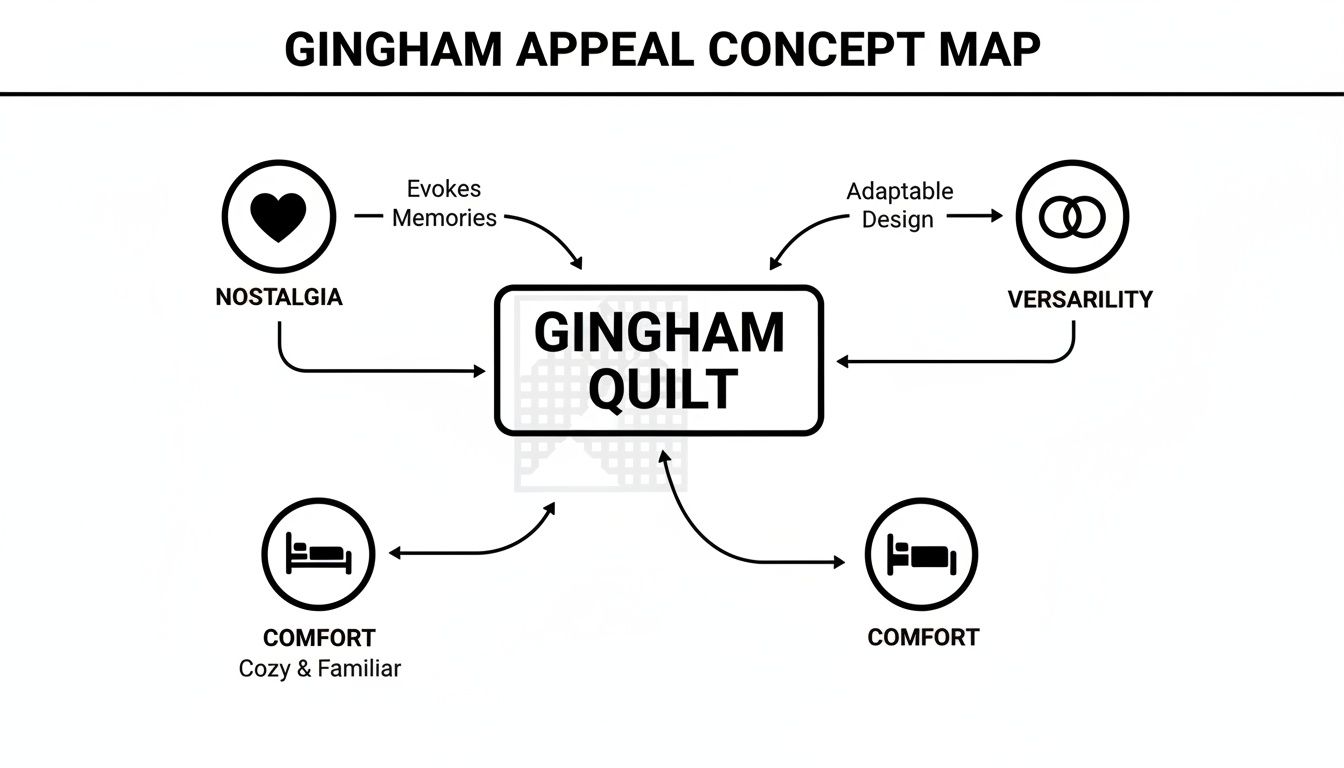
As you can see, the pattern's real strength lies in how it connects these three powerful elements—marrying function with feeling.
Cotton Percale: The Crisp Classic
Cotton percale is the bedding equivalent of a freshly ironed, tailored white shirt. It’s famous for its crisp, cool-to-the-touch feel, thanks to a tight weave that gives it a smooth, matte finish. This material is incredibly breathable, which makes it a fantastic option for hot sleepers or anyone trying to stay comfortable during a warm Australian summer.
If you love that feeling of slipping into a cool, clean, hotel-style bed at the end of a long day, then a cotton percale gingham quilt cover is for you. It's durable, gets even softer with every wash, and always keeps a clean, structured look on the bed.
French Flax Linen: The Relaxed Essential
On the other hand, French flax linen is more like your favourite breezy linen shirt—effortlessly stylish and unbelievably comfortable. It has a more textured, lived-in feel from the very first night. Linen is celebrated for its exceptional breathability and moisture-wicking magic, which works to keep you cool in summer and surprisingly warm in winter.
A key benefit of linen is its natural strength and longevity. While it starts with a distinct texture, it becomes progressively softer and more luxurious over time, making it a true long-term investment in your comfort.
Bamboo And Organic Cotton Blends
Beyond the two classics, other natural fibres bring their own unique perks to the table. Bamboo blends, for instance, are prized for their silky-smooth texture and hypoallergenic qualities, making them a dream for anyone with sensitive skin. They drape beautifully over the bed and have a subtle sheen that adds a little touch of luxury. You can dive deeper into the benefits of natural fibres in bedding to see how they all stack up.
Australian retailers now offer gingham quilt covers in a whole range of fibres, from 100% French flax linen to GOTS-certified organic cotton and bamboo blends. This variety gives you clear choices across different price points and sustainability credentials. Keep in mind that organic cotton often costs 20–60% more than conventional options, but the quality speaks for itself.
To help you decide, here’s a quick rundown of what to expect from each fabric.
Comparing Gingham Quilt Cover Fabrics
| Fabric Type | Feel and Texture | Best For | Typical Care |
|---|---|---|---|
| Cotton Percale | Crisp, smooth, and cool with a matte finish. Feels like a freshly ironed shirt. | Hot sleepers and those who love a clean, hotel-style look. Perfect for summer. | Machine wash warm. Tumble dry low. Becomes softer with each wash. |
| French Flax Linen | Textured, airy, and effortlessly relaxed. Gets softer and more supple over time. | Year-round comfort, as it adapts to body temperature. Ideal for a rustic or coastal vibe. | Machine wash cold on a gentle cycle. Line dry or tumble dry on low heat. |
| Bamboo Blends | Silky-smooth, soft, and drapes beautifully with a slight sheen. | Sensitive skin, allergy sufferers, and anyone wanting a touch of luxury. | Gentle, cold machine wash. Avoid high heat, which can damage the fibres. |
| Organic Cotton | Soft, breathable, and pure. Often feels slightly softer than conventional cotton. | Eco-conscious buyers and anyone looking for chemical-free, high-quality bedding. | Follow the care label, but generally a cold or warm gentle wash works best. |
This table should give you a good starting point, but for a broader understanding of bedding types, a complete guide to bedding materials and care is a great resource. Getting familiar with these differences will help you choose a gingham quilt cover that not only looks fantastic but also perfectly suits your sleep style and priorities.
Finding the Perfect Fit for Your Bed
Choosing the right gingham quilt cover is about more than just the pattern or fabric—getting the size right is everything. A cover that’s too small looks skimpy and leaves you fighting for warmth. One that’s too big can look sloppy and get tangled. The perfect fit, though? That’s what makes your bed look instantly polished, plump, and inviting.
It’s the small detail that takes a bed from looking just ‘okay’ to looking thoughtfully put together.
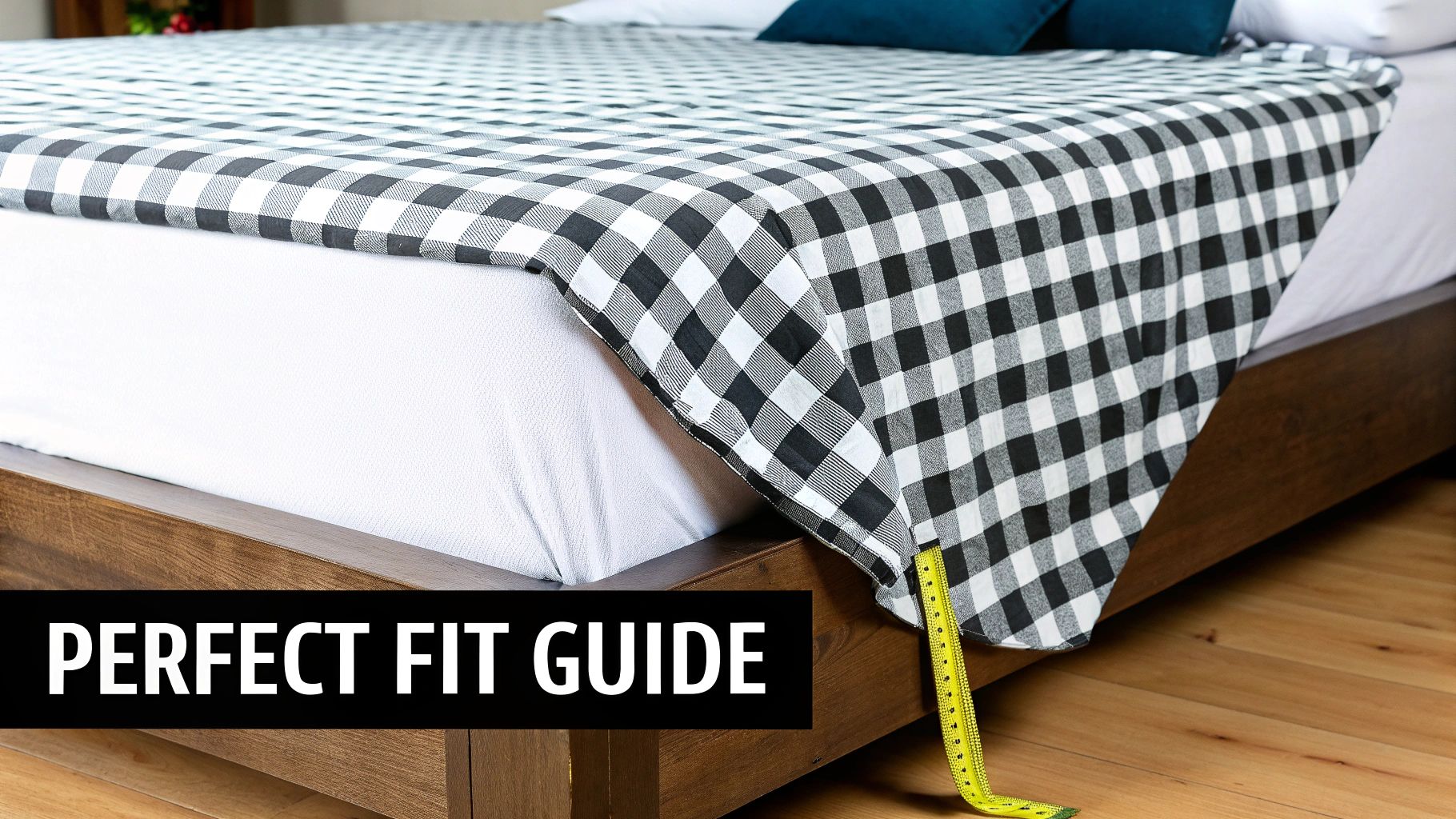
So, where do you start? The first step is to match your cover to standard Australian bed sizes. It sounds simple, but it’s an easy place to get mixed up, especially with all the different mattress depths and quilt lofts out there. Let's get it sorted.
Understanding Australian Quilt Cover Sizes
One thing to remember is that Australian bedding has its own standard measurements. They aren't the same as what you'd find in the US or the UK, so it's key to check the dimensions before you buy to make sure your quilt inner isn't left swimming in fabric or squished too tightly.
Here's a quick rundown of the standard sizes you'll find here in Australia.
Australian Quilt Cover Size Guide
This table breaks down the standard dimensions for quilt covers, making it easy to find the right one for your bed. If you need more detail, our complete bedding size chart for Australia has all the specifics.
| Bed Size | Standard Quilt Cover Dimensions (cm) |
|---|---|
| Single | 140cm x 210cm |
| Double | 180cm x 210cm |
| Queen | 210cm x 210cm |
| King | 245cm x 210cm |
| Super King | 270cm x 240cm |
Keep these numbers handy when you’re shopping – it’s the easiest way to guarantee a perfect fit for your quilt.
Don't Forget About Drape and Mattress Depth
Matching your bed size is the baseline, but the real secret to a beautifully styled bed is the drape. Drape is simply how much of the quilt cover hangs over the sides of your mattress. A generous drape creates that plush, luxurious look, neatly hiding the mattress and bed base for a clean, seamless finish.
A common mistake is forgetting about mattress depth. Modern mattresses, especially pillow-top ones, are much deeper than they used to be. A standard-sized quilt cover might not have enough overhang to properly cover a thicker mattress, leaving it looking a bit short.
If you have a deep mattress or just love that oversized, hotel-worthy look, the solution is simple: size up.
Putting a King size gingham quilt cover on a Queen bed, for example, gives you that extra overhang on both sides. The result is a beautifully layered, full, and elegant bed that looks like it's been professionally styled.
Not sure if you need to? Just measure your mattress from top to bottom on one side. If your current quilt barely covers it, sizing up will give you the generous drape you’re after. It's a simple trick that makes all the difference.
How to Style Your Gingham Quilt Cover
A gingham quilt cover is a bit of a design powerhouse, able to take a bedroom from bland to beautiful in an instant. Its magic is in its versatility—it can feel playful and bright in a family home or calm and refined in a more grown-up space. The secret is all in how you style it and the pieces you choose to pair it with.
Think of your gingham quilt cover as the foundation of your bed’s outfit. Just like a classic checked shirt, you can dress it up or down depending on the occasion and the accessories you bring in. With just a few simple strategies, you can make this timeless pattern perfectly reflect your personal style.
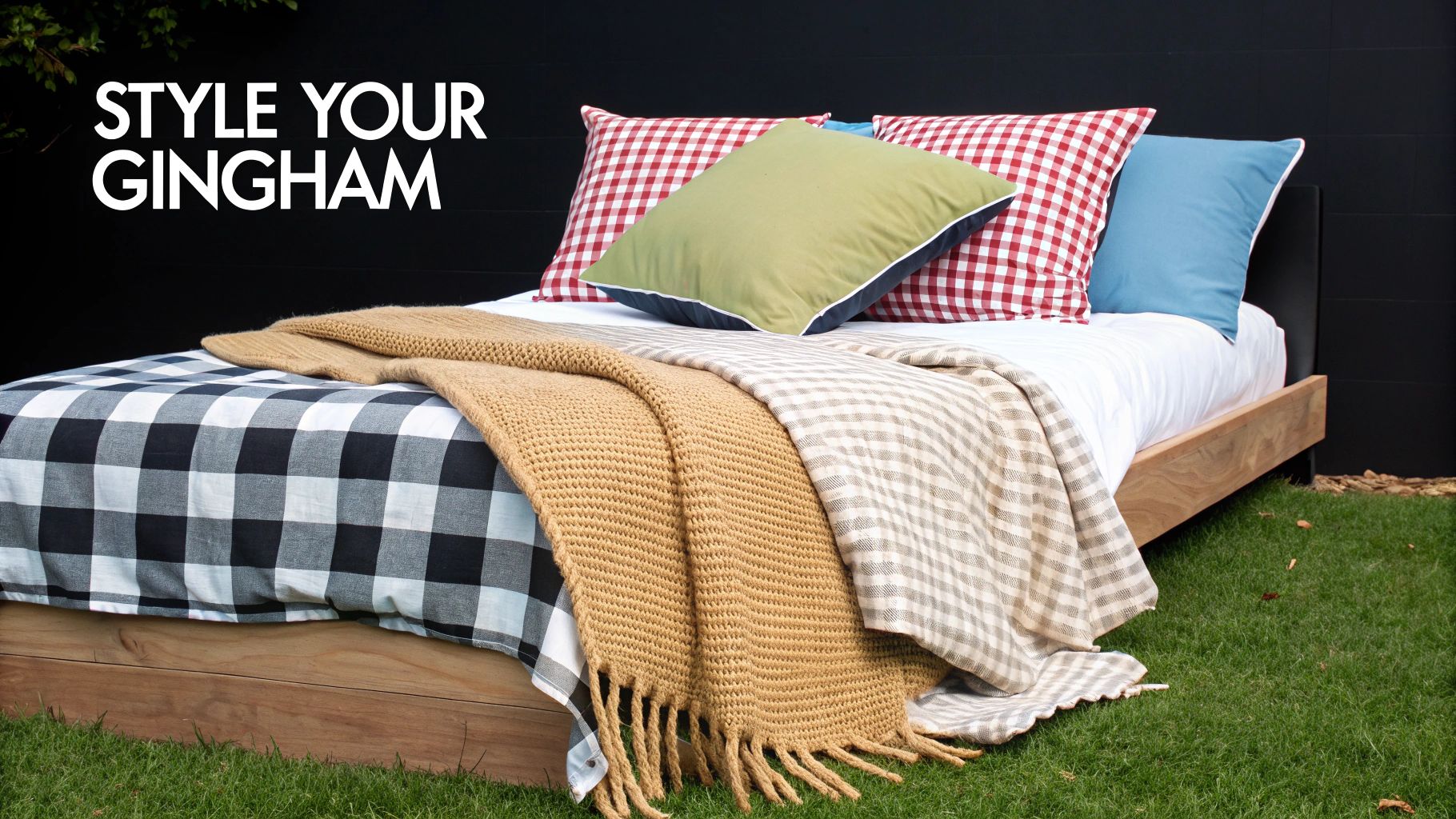
Creating a Fun, Family-Friendly Look
For a bedroom that feels vibrant and welcoming, don't be shy about embracing colour and texture. A gingham quilt cover is the perfect backdrop for a playful and energetic aesthetic, ideal for kids' rooms or a cheerful guest space.
Start by layering your gingham with bright, solid-coloured sheets or pillows. A sunny yellow, a bold primary blue, or even a cheerful coral can instantly lift the mood of the room. The goal is to pick colours that complement the gingham without overwhelming it.
To add a bit more visual interest, try these additions:
- Playful Patterns: Yes, you can mix patterns! Small-scale florals or classic stripes work beautifully alongside gingham, as long as they share a similar colour palette to tie everything together.
- Textured Throws: A chunky knit blanket or a soft fleece throw tossed at the foot of the bed adds a layer of cosiness and tactile comfort that just begs you to jump in.
- Fun Cushions: Add cushions in different shapes and sizes to create an inviting, relaxed atmosphere that encourages lounging and pillow forts.
Achieving a Refined and Mature Style
For a more sophisticated take, the aim is to create a calm, cohesive, and textured retreat. Here, a neutral-toned gingham quilt cover—think soft grey, beige, or a muted sage green—becomes a subtle statement piece rather than the centre of attention.
The key to this look is pairing the classic pattern with luxurious textures and a restrained colour scheme. This approach turns the bedroom into a serene and elegant sanctuary.
To elevate the look, focus on layering rich, tactile materials. The interplay between the simple gingham check and more opulent fabrics creates a sense of depth and understated luxury that feels both timeless and modern.
Here’s how to build this refined look:
- Rich Textures: Introduce materials like a velvet headboard, a woollen throw blanket, or silk-blend cushions. These fabrics create a beautiful contrast with the crispness of a cotton or linen gingham.
- Solid Foundations: Pair the gingham quilt cover with high-quality, solid-coloured sheets in a complementary neutral shade, like crisp white, deep charcoal, or soft oatmeal.
- Minimalist Decor: Keep the surrounding decor simple and uncluttered. A stylish lamp, a single piece of art, and clean-lined bedside tables will allow the beautifully styled bed to remain the focal point.
Mastering the art of mixing and matching bed linen is a skill that lets you adapt your gingham cover for any season or style. Whether you're aiming for playful or polished, these simple techniques will help you create a beautifully styled bed with confidence.
Smart Buying Tips for a Lasting Investment
When you’re ready to buy a gingham quilt cover, a few key details can separate a good purchase from a great one that will last for years. It’s easy to get caught up in the look and feel, but understanding what goes into its construction is your best strategy for making a smart investment in your comfort.
It really comes down to spotting the small things that signal quality craftsmanship. From the way it’s stitched to the type of closure it uses, these little details are the biggest clues to how well your quilt cover will hold up over time.
Decoding Thread Count and Fabric Weave
For years, thread count has been the go-to number for judging quality, but honestly, it doesn't tell the whole story. It simply refers to the number of threads woven into one square inch of fabric. And while a higher number can mean a softer feel, the quality of the yarn itself is far more important.
A quilt cover made from high-quality, long-staple cotton with a modest thread count will always feel better and last longer than one made from inferior, short-staple fibres, even if the thread count is technically higher. Instead of getting fixated on the number, pay attention to the type of weave and the quality of the fibre, like 100% long-staple cotton or genuine French flax linen.
Remember this: Quality over quantity. A well-made 300-thread-count cover from premium cotton will outperform and outlast a flimsy 1000-thread-count cover made from cheap materials every single time.
Closures and Certifications Matter
The small details, like how your quilt cover closes, make a huge difference in day-to-day life. A quality gingham quilt cover will feature durable closures that are built to last through countless washes and bed-making sessions.
- Buttons: Often made from natural materials like wood or shell, buttons give a classic, decorative finish. The key is to look for reinforced buttonholes that won’t stretch or fray after a few uses.
- Zippers: A concealed zipper offers a clean, modern look and does a fantastic job of keeping your quilt securely tucked inside. Check for a sturdy zip that glides smoothly without catching on the fabric.
It’s also worth looking for certifications that guarantee quality and ethical production. A GOTS (Global Organic Textile Standard) certification, for instance, ensures the cotton is organically grown and processed without harmful chemicals, which is better for your skin and the environment. Learning to spot these quality signals is a huge part of being an informed shopper, something we cover in our buyer's guide to bedding essentials.
Caring for Your Gingham Bedding
To keep your gingham quilt cover looking as fresh and feeling as soft as the day you bought it, you don't need a complicated routine. Just a little bit of know-how will protect your investment, preventing common problems like colour fade, shrinking, and pilling down the track.
The first step is always the simplest: check the care label, because different fabrics have different needs. But here’s a fantastic rule of thumb for any patterned bedding—turn your quilt cover inside out before you wash it. This one small action shields the coloured checks from the friction of the machine, which is one of the main culprits behind fading and wear over time.
Washing and Drying Instructions
When it comes to the actual wash, the golden rule is to be gentle. A cool or cold water cycle is nearly always the best choice for a gingham quilt cover. Why? Hot water is notorious for making colours bleed and causing natural fibres like cotton to shrink.
To get the best results every time, just follow these simple steps:
- Use a Mild Detergent: Stick to a gentle, colour-safe liquid detergent. Harsh powders and especially bleach can strip the colour right out of the fabric and weaken the fibres.
- Wash on a Gentle Cycle: Choose the delicate or gentle setting on your machine. This minimises the stress on the fabric and seams, helping it last much longer.
- Dry on Low Heat: If you’re using a machine dryer, always go for the lowest heat setting. High heat is the number one cause of shrinkage in cotton and linen. Even better, line-dry your cover in the shade to protect the colours from harsh, direct sunlight.
The main takeaway here is that less is more. When it comes to heat and harsh chemicals, a gentle approach is the most effective way to maintain the look and feel of your bedding, ensuring it stays soft and beautiful for years.
These practices are a great starting point for any quilt, and you can dive deeper with our ultimate guide to caring for your quilt.
Don't forget about storage, either. When it's not on your bed, make sure your gingham quilt cover is completely dry and store it in a cool, dry spot away from sunlight, like a linen closet. This will stop it from yellowing and keep it feeling fresh for the next time you use it.
Got Questions About Gingham? We've Got Answers.
Choosing new bedding always brings up a few questions. To help you feel confident you're making the right choice, here are the quick answers to the queries we hear most often.
Are Gingham Quilt Covers Good for All Seasons?
Absolutely. It all comes down to the fabric. A light and airy linen or crisp cotton percale gingham cover is a dream for those warm Australian summers, letting your skin breathe all night long.
When things cool down, a high-quality cotton or flannelette gingham cover paired with a warm inner quilt feels incredibly cosy and inviting. The trick is simply matching the material to the season.
How Do I Keep the Colours Looking Fresh?
To keep that classic checked pattern vibrant, always wash your quilt cover in cold water with a gentle, colour-safe detergent. Steer clear of bleach and harsh chemicals, as they'll strip the colour right out.
Our Tip: Turn the cover inside out before you pop it in the machine. This little trick protects the fabric's surface from friction and keeps it looking newer for longer. If you can, line-dry it in the shade—direct sun is the fastest way to fade those beautiful checks.
What's the Difference Between a Quilt Cover and a Comforter?
Think of a quilt cover (or duvet cover) as a big pillowcase for your quilt inner. It’s a protective layer that you can easily slip off and wash.
A comforter, on the other hand, is a single piece of bedding where the filling is stitched right inside the outer fabric. It's an all-in-one solution.
Ready to bring this timeless look home? Explore the beautiful collections at Manchester Factory and find the perfect gingham quilt cover to refresh your space. https://www.manchesterfactory.com.au