

Figuring out which is the best doona in Australia really boils down to three things: what it’s made of (the fill), how warm it is (the warmth rating), and how well it’s put together (the construction). Get these right, and you’ll have the perfect doona for anywhere in Australia, whether you’re battling a chilly Tasmanian winter or a sticky Queensland summer.
Your Quick Guide to Finding the Best Doona in Australia
Choosing a doona is about more than just grabbing something warm off the shelf; it's a genuine investment in how well you sleep. The right doona works with your body to create a little microclimate under the covers, helping you rest deeply without tossing and turning. In a country with weather as varied as ours, a one-size-fits-all approach just doesn't cut it.
This guide is here to cut through the confusion. We'll break down the essentials that make a doona right for you, moving past the marketing buzzwords to focus on what actually matters for a great night’s sleep.
Key Factors to Consider
Before we get into the nitty-gritty, let's look at the main decision points. Each one plays a huge part in how your doona will feel and perform all year round.
- Fill Material: This is the heart and soul of your doona. Things like wool, down, feathers, and microfibre all have their own unique feel when it comes to warmth, weight, breathability, and whether they'll set off your allergies.
- TOG Rating: This is just a simple way to measure how warm a doona is. A higher TOG means more warmth, making it the key to matching your bedding to your local climate and how hot or cold you sleep personally.
- Construction: How a doona is stitched together—whether it's a baffled box design or simpler sewn-through channels—makes a massive difference to its lifespan and its ability to keep you evenly warm without developing annoying cold spots.
A doona should be a long-term investment in comfort. By focusing on high-quality materials and construction suited to your environment, you ensure years of restorative sleep rather than just a quick fix for a single season.
This guide will give you the knowledge to make a smart choice. If you're looking for a wider look at all things bedding, our buyer's guide to bedding essentials is a great place to start.
To make things a bit easier, the table below gives you a quick side-by-side comparison of the most common doona fills. Use it as a starting point to see which material lines up with what you’re looking for.
Doona Fills at a Glance A Quick Comparison Guide
Use this quick reference table to compare popular doona fill types based on key features like warmth, weight, breathability, and allergy friendliness to make a fast, informed choice.
| Fill Type | Best For | Warmth Level | Feel & Weight | Allergy Suitability |
|---|---|---|---|---|
| Australian Wool | Temperature regulation, breathability, and all-season use. | Medium to High | Medium to Heavy | Naturally hypoallergenic |
| Goose/Duck Down | Maximum warmth with minimal weight, luxurious loft. | High | Very Lightweight | Can be an allergen; requires hypoallergenic casing |
| Microfibre | Allergy sufferers, budget-conscious shoppers, and easy care. | Low to High | Lightweight | Excellent; fully synthetic and machine washable |
| Feather & Down | A balance of affordability and natural insulation. | Medium | Light to Medium | Can be an allergen for some individuals |
This table gives you the headlines, but there's a lot more to each fill type. Let's dive deeper into what makes each one unique so you can find your perfect match.
How to Decode Doona Warmth with TOG Ratings
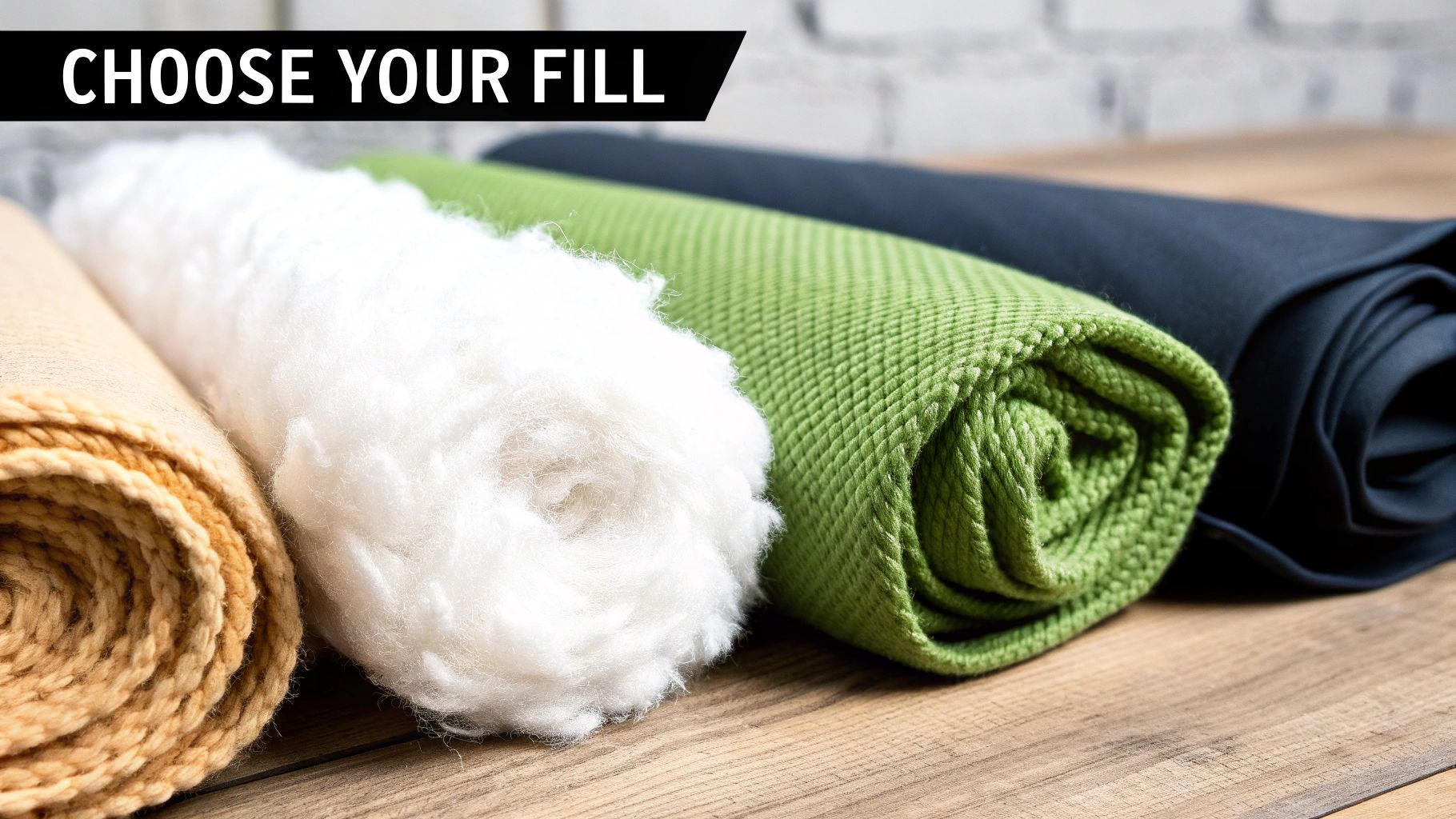
When you’re on the hunt for the best doona Australia has to offer, you’ll keep running into a mysterious three-letter acronym: TOG. Getting your head around this rating is the secret to nailing your perfect sleep temperature, night after night. It’s far more useful than judging a doona by its thickness or weight.
Think of a TOG rating like the insulation in your roof. A higher number means more insulation, trapping heat to keep you toasty during a frosty Melbourne winter. A lower rating means less insulation, letting heat escape to keep you cool through a humid Sydney summer.
That simple number, the Thermal Overall Grade (TOG), is just a standardised way of measuring how well a doona traps warmth. A bigger number means more warmth; a smaller number means a lighter, cooler feel. Easy as that.
Matching TOG Ratings to Australian Seasons
Because Australia’s climate is so varied—from the tropical north to the chilly south—a single doona probably won’t work for everyone all year round. Choosing the right TOG means you won’t wake up shivering or kicking the covers off, which is the key to a truly restorative sleep.
The scale is designed to be pretty intuitive, making it simple to match a doona to what you actually need. Here’s a quick guide to how the ratings line up with our seasons:
- 1.0–4.5 TOG (Summer Weight): Absolutely perfect for hot sleepers or for staying comfortable on those sticky summer nights in places like Brisbane or Perth. These doonas are incredibly light and breathable.
- 5.0–9.5 TOG (Spring/Autumn Weight): This is the sweet spot for that in-between weather. It gives you just enough warmth for cooler nights without feeling heavy, making it a brilliant choice for cities like Adelaide or Canberra during the shoulder seasons.
- 10.0+ TOG (Winter Weight): Built for maximum insulation, these doonas are a must-have for cold sleepers and proper winter nights, especially down in Hobart, Melbourne, or up in the Blue Mountains.
Choosing the right TOG is all about creating your personal comfort zone. It lets you fine-tune your bedding to your body and your bedroom, stopping those restless nights spent tossing and turning because you’re too hot or too cold.
Beyond the Seasons: Personal and Regional Factors
While these seasonal guides are a great starting point, the perfect TOG rating is also a deeply personal thing. You have to think about your own body and your home. Do you naturally run hot, or are your feet always like ice blocks? Do you live in a modern, well-insulated apartment or an older, draughty house?
These things make a huge difference to the insulation you’ll need. For instance, a couple sharing a bed generates more body heat, so a slightly lower TOG doona often ends up being more comfortable for both of you.
If you’re prepping for the cold, our guide on choosing the warmest quilt for winter in Australia goes into even more detail. And to really dial in your comfort, understanding how your doona contributes to your ideal sleep climate is a game-changer.
Ultimately, cracking the TOG code empowers you to make a smart decision. It moves the conversation beyond just what the doona is filled with and puts the focus where it should be: on its actual performance. That’s what really matters for a fantastic night’s sleep.
Choosing Your Perfect Fill: Down, Wool, or Microfibre
Once you’ve figured out the right TOG rating, the next big decision is what’s actually inside your doona. The fill is the heart of your bedding. It determines everything from how it drapes over you and how warm it feels to whether it triggers your allergies.
Think of it like choosing the engine for a car—each type offers a completely different feel and performance. In Australia, the three most popular choices are classic down, natural wool, and modern microfibre. Each one has its own personality, and the best doona Australia has for you will come down to what you value most: luxurious comfort, natural breathability, or hypoallergenic practicality.
Let's break them down.
Goose and Duck Down: The Ultimate in Lightweight Luxury
For pure, cloud-like comfort, nothing really compares to a goose or duck down doona. Down isn't the same as feathers; it's the incredibly soft, fluffy stuff found under the tougher outer feathers. These tiny, three-dimensional clusters are nature’s best insulator, trapping air and warmth with incredible efficiency.
This is why down doonas give you so much warmth with so little weight. You get that wonderfully lofty, puffy feel without feeling pinned down. A great down doona feels like being gently hugged by warmth, making it a top pick for those freezing winter nights when you just want maximum cosiness.
One thing to keep in mind, though: down can be a trigger for some allergy sufferers. While most high-quality down doonas now come in tightly woven, hypoallergenic casings, if you have severe sensitivities, you might be better off with another option.
Australian Wool: The Smart, Natural Choice
Australian wool is a true performance fibre and a brilliant choice for our country's wild and varied climate. It's a fantastic natural insulator, but its real superpower is how it breathes and regulates temperature. A wool doona actually wicks moisture away from your body, keeping you dry and comfortable all night long.
This makes it the perfect peacemaker for couples who sleep at different temperatures. If one of you is always kicking off the covers while the other is shivering, a wool doona can create a happy middle ground. It builds a balanced little microclimate, keeping the cold sleeper warm without causing the hot sleeper to overheat.
Wool's ability to manage both temperature and moisture creates a personal microclimate under the covers. It’s an active fibre that adapts to you, which is why it’s often considered the best all-rounder for Australian homes.
Wool doonas tend to have a flatter, heavier drape compared to the cloud-like puff of down. If you want to dive deeper into what makes it so special, our guide on choosing a wool quilt in Australia is a great read. It's a natural, renewable, and durable fibre that’s a smart investment in year-round comfort.
This quick guide can help you connect your sleeping style to the right TOG rating.
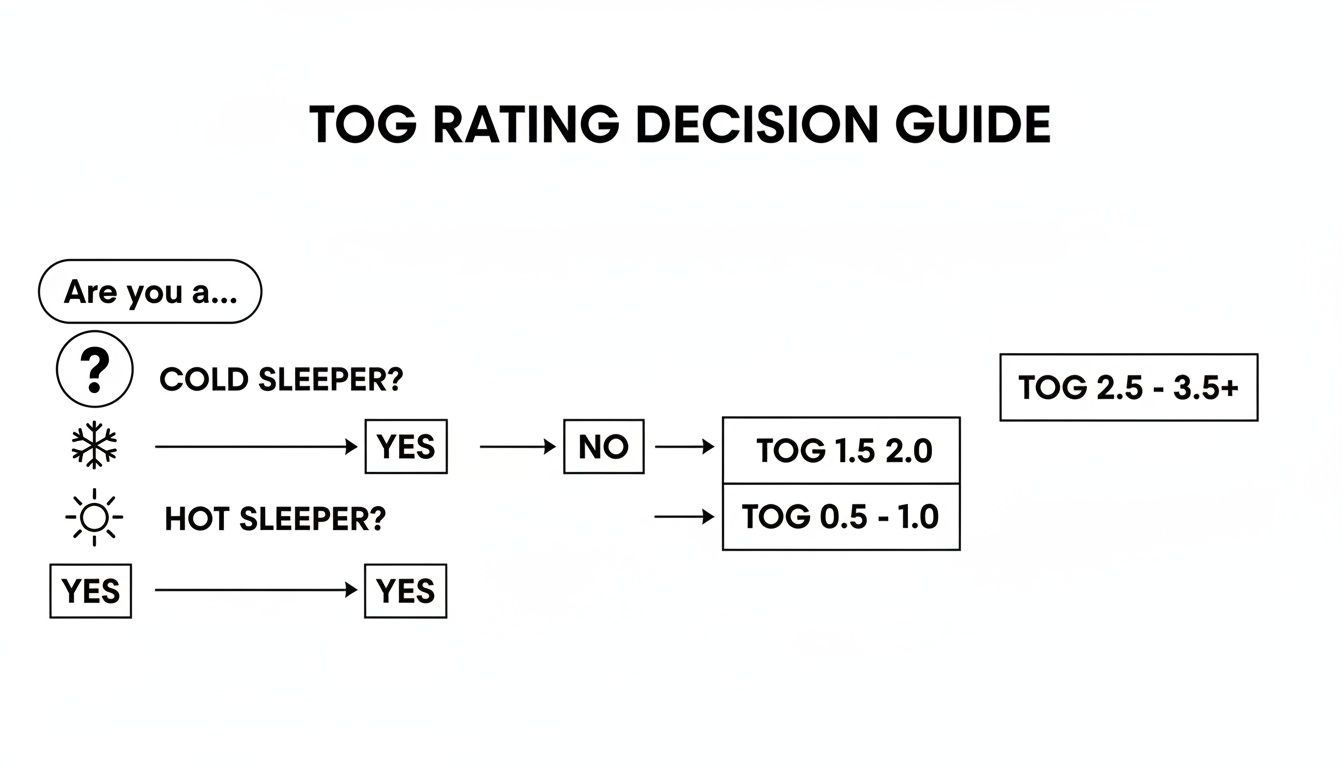
As the chart shows, knowing whether you're a hot, cold, or neutral sleeper is the first step to finding your perfect doona.
Microfibre: The Allergy-Friendly and Easy-Care Solution
For anyone who struggles with allergies or asthma, a quality microfibre doona is usually the safest bet. Often called a "down alternative," microfibre is made from super-fine synthetic threads that are engineered to mimic the light, insulating feel of natural down.
Because it’s synthetic, it’s naturally hypoallergenic and a no-go zone for dust mites, making it a safe haven for sensitive sleepers. This also makes it incredibly easy to look after. Most microfibre doonas can be tossed in the washing machine and tumble dryer at home—a level of convenience that natural fills just can't match.
Modern microfibre has come a long way. Today’s options are soft, light, and provide excellent warmth, offering fantastic value without a huge compromise on comfort. They are the go-to for kids’ rooms, guest beds, or for anyone who puts practicality and easy maintenance at the top of their list.
Why Construction Quality and Durability Matter
You've picked the perfect fill and the right TOG rating, but there's one more piece to the puzzle that separates a good doona from the best doona Australia has to offer: its construction. How a doona is actually put together is a huge deal—it affects how it feels, how it performs, and most importantly, how long it will last.
After all, a premium fill isn’t much good if it ends up in a sad, lumpy pile at the foot of your bed after a few months.
Understanding a couple of key construction details will help you invest in a doona that gives you consistent warmth night after night, for years to come. It’s the difference between a doona that stays fluffy and even, and one that develops those frustrating cold spots and flat patches over time.
Think of it like the foundation of a house. Without a solid structure, even the best materials will eventually let you down. For a doona, that structure is all in the stitching.
Baffled Box vs. Sewn-Through Construction
The biggest factor in a doona's construction is how the outer fabric is stitched to keep all that lovely fill evenly spread out. The two main methods you’ll come across are sewn-through and baffled box designs, and they perform very differently.
A sewn-through construction is the simpler of the two. The top and bottom layers of the doona are stitched directly together, creating a grid of pockets. While this does a decent job of holding the fill in place, it also creates thin, compressed lines along every seam where there's no insulation. You can really feel these as cold spots on a chilly night.
A baffled box construction, on the other hand, is a much smarter design found in higher-quality doonas.
Think of a baffled box doona like a series of individual, 3D fabric cubes. Each box is separated by a thin internal wall of fabric, called a baffle. This design lets the fill—especially lofty down—expand to its maximum height inside each pocket. The result? Consistent, even insulation with absolutely no cold spots.
This method is more complex and costs more to produce, but the payoff is huge. You get a doona that offers far superior warmth and a longer lifespan because the fill is protected and allowed to do its job properly.
Understanding Thread Count and Fill Power
When you're looking at a doona's specs, you’ll often see two other terms pop up: thread count and fill power. They both point to quality, but they measure completely different things.
Thread count is all about the outer casing. It tells you how many threads are woven into one square inch of the fabric. A higher thread count means the fabric is softer, smoother, and more durable. Even more importantly, a dense weave stops the fine fibres of down or microfibre from poking through—a common annoyance with cheaper casings. For the best doona in Australia, look for a thread count of at least 250. This gives you a great balance of touch-me softness and long-term durability.
Fill power is a term you'll only see with down doonas, and it’s probably the single most important measure of their quality. It measures the 'fluffiness' or loft of the down by calculating how much space one ounce of it takes up.
- Higher Fill Power (e.g., 700+): This means the down clusters are large and strong, allowing them to trap more air. This delivers incredible insulation with very little weight, giving you that light, lofty, and incredibly warm doona everyone dreams of.
- Lower Fill Power (e.g., 500): This uses smaller down clusters. You need more of it to get the same level of warmth, which results in a heavier, denser doona.
Ultimately, fill power tells you how well a down doona insulates, not its total weight. A top-quality doona with a high fill power will feel much lighter and keep you warmer than a heavier one with a lower rating, making it a key thing to look for when you invest.
How to Care For Your Doona and Maximise Its Lifespan
A good doona is a real investment in your sleep, and with a little bit of care, it can keep you comfortable for years. The good news is, protecting that investment is much easier than you’d think. A few simple, consistent habits are all it takes to keep your doona fresh, fluffy, and hygienic.
The most important step is also the simplest: always use a doona cover. Think of it as a non-negotiable shield for your doona. It protects the delicate fill from the dirt, sweat, and body oils that can build up and degrade it over time. A cover is so much easier to wash than the doona itself, which means you can go much longer between deep cleans.
Getting into the habit of airing it out is another game-changer. At least once a month, find a dry, breezy day and hang your doona outside in the shade for a few hours. This lets any trapped moisture evaporate and keeps it smelling fresh, stopping those musty odours from ever setting in.
Cleaning Your Doona The Right Way
Even with a cover, your doona will eventually need a proper wash. But how you clean it depends entirely on what’s inside. Getting this part wrong can lead to a lumpy, damaged, or even mouldy doona, so always, always check the care label first.
- Microfibre and Synthetic Fills: Most of these are designed for convenience and are perfectly fine to pop in a home washing machine. Just make sure you use a large-capacity machine, a gentle cycle, and a mild liquid detergent.
- Wool Fills: Wool is a bit of a wonder-fibre; it’s naturally antibacterial and doesn't need to be washed very often. When it does, professional cleaning is usually the safest bet. Some wool doonas are machine washable, but you must use a wool-specific cycle and detergent.
- Down and Feather Fills: These are delicate. Professional cleaning is almost always the way to go. Harsh detergents can strip the natural oils from the feathers, and a standard home machine can cause clumping that’s almost impossible to fix.
For a more detailed walkthrough, check out our comprehensive guide on how to wash a doona correctly. It’ll make sure you get it right every time.
Proper Drying and Off-Season Storage
Drying your doona properly is just as crucial as washing it. In fact, improper drying is the number one cause of clumping and mildew. The best method is to tumble dry on a low heat setting with a few clean tennis balls or dryer balls thrown in. They’ll bounce around inside the machine, breaking up any clumps and helping the fill dry evenly while restoring all that lovely loft.
Make sure your doona is 100% dry before it goes back on your bed or into storage. Even a tiny bit of dampness can lead to mould and that awful musty smell, which will pretty much ruin your doona for good.
When it’s time to pack your doona away for the summer, fight the urge to use those vacuum-sealed plastic bags. Sure, they save space, but they crush the fill—especially delicate down—and can permanently damage its ability to insulate. A much better option is a large, breathable cotton storage bag. Pop it in there and store it in a cool, dry spot like a linen cupboard.
Follow these simple care steps, and your bed will remain the ultimate sanctuary for many years to come.
Finding Your Perfect Doona at Manchester Factory
So, you're now armed with all the insider knowledge you need to tell a great doona from a dud. Understanding TOG ratings, fill materials, and quality construction means you can finally stop guessing and start choosing a doona that will actually improve the way you sleep.
The last step? Finding the perfect one for your bed.
At Manchester Factory, we’ve put in the hard yards to curate a collection specifically for Australia's wild and varied climate. This means you can shop with total confidence, knowing every single doona we stock has already passed our high standards for comfort, quality, and durability.
Your One-Stop Shop for Quality Bedding
Whether you’re after a breathable all-seasons wool doona to handle those unpredictable temperatures or a truly luxurious goose-down option for the depths of winter, our range has you covered. We also have premium hypoallergenic microfibre alternatives, because a great night's sleep should be for everyone. We're all about making quality accessible, which you can read more about here: Manchester Factory your go-to destination for quality bedding.
We like to think of choosing the right bedding like choosing a reliable car. You want something that’s built to last and does its job without any fuss. It’s no surprise that Toyota is on track to be Australia’s top-selling brand again in 2025; their cars are the ultimate 'best doona' of the road—warm, dependable, and perfect for everyday life. Learn more about Australia's new car sales on drive.com.au.
Investing in a high-quality doona is a direct investment in your well-being. Better sleep leads to better days, improved health, and greater overall happiness. It’s one of the most impactful decisions you can make for your daily life.
We invite you to explore the collections at Manchester Factory. With options tailored for every type of sleeper, season, and budget, you're sure to find the doona that will transform your sleep from a necessity into a nightly luxury. Come and feel the difference that premium materials and thoughtful design can make.
A Few Final Questions About Choosing Your Doona
Even after you've narrowed down the options, a few questions can pop up. It’s a big decision, after all! Think of this as the final check-in before you commit to years of better sleep. We’ve answered some of the most common queries we get from customers to help you feel completely confident in your choice.
What Is the Best All-Season Doona for the Australian Climate?
For most parts of Australia, you really can't go wrong with a high-quality wool doona. Wool is a bit of a wonder-fibre; it’s naturally breathable and fantastic at regulating your body temperature. It pulls moisture away from you, keeping you warm and dry in winter without ever feeling stuffy or causing you to overheat on a mild summer night.
Another brilliant option is a dedicated ‘All Seasons’ doona set. These usually come with two separate quilts in different weights. You can use them individually for the shoulder seasons or clip them together for maximum warmth in the dead of winter. It’s the ultimate in versatility, especially if you live somewhere with really distinct seasons.
How Often Should I Replace My Doona?
If you look after it properly, a good quality doona should last you anywhere from five to ten years. The real lifespan comes down to the fill and how well it’s made. As a rule of thumb, premium down and wool doonas will outlast their synthetic counterparts.
You’ll know it’s time for a new one when it’s lost its fluffiness, you can feel lumpy or flat spots, it holds onto odours even after a good airing, or it just doesn’t keep you as warm as it used to.
When your doona stops feeling like a comforting hug and more like a tired, flat sheet, it’s ready for retirement. Trust your gut—if it’s not doing its job anymore, it’s time for an upgrade.
Does a Higher Price Tag Mean a Better Doona?
Not always, but price is often a pretty reliable sign of quality materials and better construction. A premium goose-down doona with a high fill power and a proper baffled-box design will cost more, but it also delivers incredible insulation and is built to last.
That said, the "best" doona is always going to be a personal choice. A top-tier microfibre quilt might be the perfect solution for someone with severe allergies, making it a better investment for them than a down-filled one. The key is to focus on what you actually need—the right warmth rating, the best fill for your sleep style, and any hypoallergenic properties—rather than getting too caught up on the price alone. For a wider look at common questions about home products, you can find some helpful information in these general FAQs on home products and services.
Ready to find the doona that will genuinely transform your sleep? At Manchester Factory, we’ve put together a collection designed to suit every Aussie home and every type of sleeper. Explore our range today and invest in your comfort.