

For Aussies looking for the best bamboo sheets Australia has to offer, the appeal is simple: they perfectly blend silky softness, incredible breathability, and eco-friendly comfort that’s just right for our climate. This combination is a game-changer, tackling common sleep problems like overheating and skin irritation head-on.
Why Australians Are Choosing Bamboo Sheets
Switching from traditional cotton to bamboo sheets is a bit like upgrading from standard earbuds to noise-cancelling headphones. Sure, both do the job, but one delivers a profoundly better experience. This simple bedding swap can make a huge difference, solving real issues that keep many of us tossing and turning at night.
Take those humid Queensland nights or stuffy Sydney summer evenings, for example. They often lead to restless, sweaty sleep. This is where bamboo fabric really shines. Its natural fibres are incredibly breathable and moisture-wicking, pulling perspiration away from your skin to keep you feeling cool and dry all night long. For hot sleepers, it’s a total game-changer.
It’s a similar story for the millions of Australians with sensitive skin or conditions like eczema. The fibres in bamboo fabric are naturally smooth and rounded, so they feel gentle and soothing. Unlike coarser materials that can create friction and trigger flare-ups, bamboo just glides over the skin, helping you get a comfortable, irritation-free sleep.
A Conscious Choice for Comfort and Planet
The move towards bamboo bedding isn’t just about comfort; it’s part of a bigger picture. More and more, Australians are making thoughtful purchasing decisions, looking for quality and sustainability in one package. Bamboo fits the bill perfectly—it’s a fast-growing, renewable grass that typically needs less water and no pesticides to thrive.
This shift in preference is making waves in the market. Australia's bedsheet market, valued at USD 2,236.36 million in 2024 and set to grow, is seeing a huge demand for sustainable options like bamboo. So when you choose bamboo, you’re not just voting for better sleep; you’re making a small but meaningful choice for a more environmentally friendly home.
Choosing bamboo sheets is an investment in your sleep quality. The fabric's natural ability to regulate temperature, soothe sensitive skin, and offer lasting softness addresses key comfort needs for the diverse Australian climate.
To help you see why they're such a popular choice, here’s a quick breakdown of the key benefits.
Bamboo Sheets at a Glance: Why They Are a Top Choice
This table summarises the key benefits that make bamboo sheets a leading choice for Australian homes, especially when compared to traditional materials like cotton.
| Feature | Benefit for Australians | Compared to Traditional Cotton |
|---|---|---|
| Thermoregulation | Keeps you cool on hot, humid nights and cosy during cooler months. Perfect for our varied climate. | Cotton can trap heat, often feeling too hot in summer and not warm enough in winter. |
| Silky-Soft Feel | Luxuriously smooth and gentle, ideal for sensitive skin and reducing friction. | Can feel crisp or even coarse, especially at lower thread counts. Softness often decreases with washing. |
| Moisture-Wicking | Actively pulls moisture away from the skin, preventing that clammy feeling on sweaty nights. | Tends to absorb and hold moisture, which can lead to damp, uncomfortable sheets. |
| Hypoallergenic | Naturally resistant to dust mites and mould, making it a great choice for allergy and asthma sufferers. | Can harbour allergens more easily and often requires special hot washes to stay fresh. |
| Durability | Strong, long fibres make for durable sheets that resist pilling and hold up well to washing. | Prone to pilling and thinning over time, especially in high-friction areas. |
| Sustainability | Made from a fast-growing, renewable resource that requires less water and no pesticides. | Cotton farming can be resource-intensive, often requiring large amounts of water and pesticides. |
Ultimately, bamboo sheets offer a comprehensive upgrade, delivering on comfort, health, and sustainability in a way few other materials can.
Perfect for Every Season
One of the biggest reasons Australians are making the switch is bamboo's year-round versatility. These aren't just summer sheets. Their unique thermoregulating properties mean they keep you cool when it’s hot but also provide a cosy layer of warmth during those chilly months in Melbourne or Tasmania.
This adaptability makes them a practical and luxurious choice for any home. By exploring the benefits of bamboo bedding for year-round use, you can see how one set of sheets can provide consistent comfort, no matter the season. Finding the best bamboo sheets in Australia is really about matching superior comfort with smart, sustainable living—a combination that explains their soaring popularity.
The Different Types of Bamboo Fabric Explained
Not all bamboo sheets are created equal. While the raw material starts as the same fast-growing grass, the journey from plant to fabric can take a few different routes, and the results are worlds apart in quality and environmental impact. Getting your head around these differences is the key to choosing genuinely good bamboo sheets and seeing past the clever marketing spin.
Think of it like this: you can take wheat and turn it into highly processed, fluffy white bread, or you can stone-grind it to make a hearty, whole-wheat loaf. Both start as wheat, but the processing method changes everything. It’s the same story with bamboo fabric. There are two main production methods you’ll see on the label: Viscose (also known as Rayon) and Lyocell.
Viscose or Rayon: The Common Standard
The most common method for making bamboo fabric is the viscose process, which is why you’ll often see sheets labelled as bamboo rayon. This technique dissolves bamboo pulp using some pretty intensive chemicals, like sodium hydroxide, to break down the tough plant material into a soft, spinnable fibre.
While it gets the job done, this process can be harsh on the environment if it’s not managed properly. The chemicals used often end up released into waterways, and the whole thing needs a lot of water and energy. This is the "white bread" of bamboo fabric—it delivers that signature softness, but its production footprint can be pretty big. For many people, the end product is soft and comfy, but it doesn't always live up to the "eco-friendly" promise bamboo is known for.
This visual shows how bamboo's core benefits of softness, breathability, and eco-friendliness work together to create a superior sleep experience.
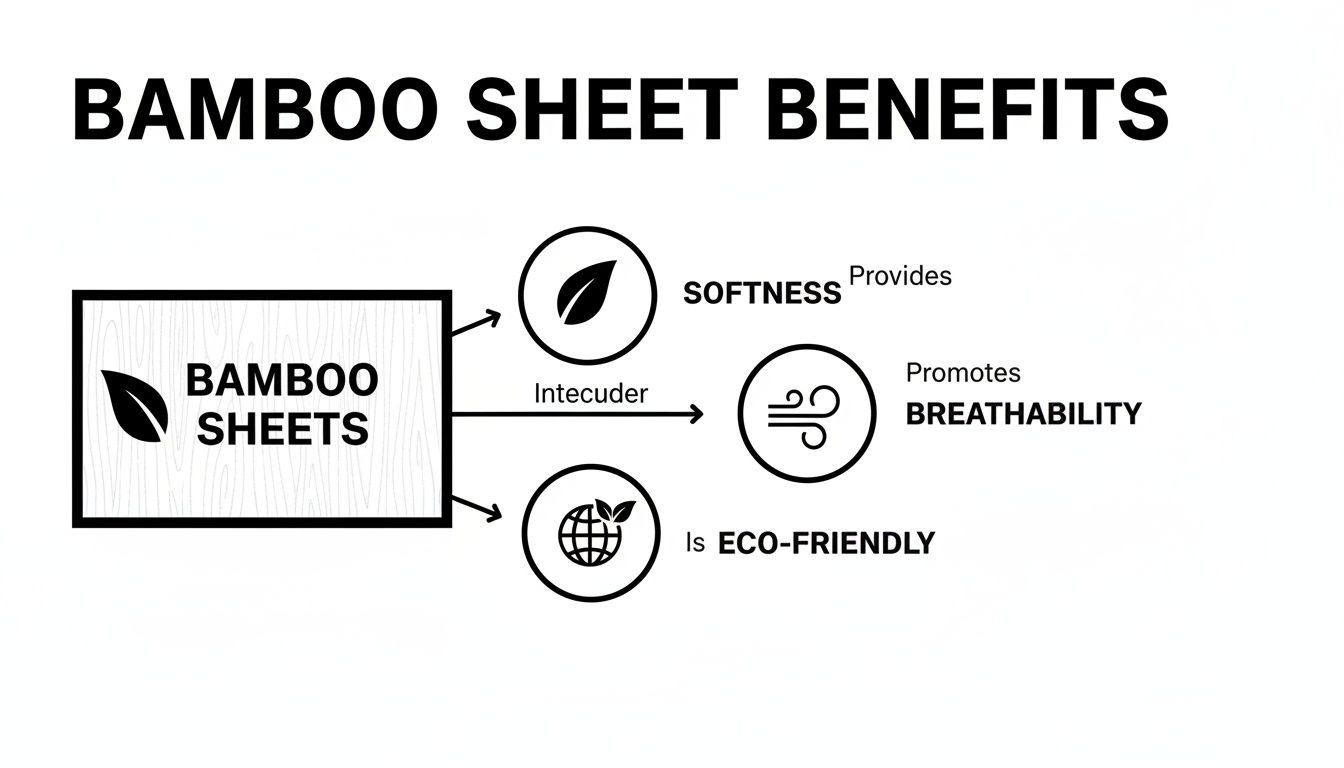
As the infographic highlights, the combination of these three features is what makes bamboo sheets such a compelling choice for Australian homes.
Lyocell: The Sustainable Innovator
On the other hand, the Lyocell process is a huge step forward in sustainable textile production. This is the "stone-ground whole wheat" of bamboo fabric—it keeps more of the plant’s goodness and is made with far more respect for the environment.
The Lyocell method uses a non-toxic organic compound to dissolve the bamboo pulp. What makes this process so impressive is its closed-loop system.
A closed-loop system means that over 99% of the solvent and water used in production is captured, recycled, and reused for the next batch. This drastically reduces water consumption and stops harmful chemicals from being released into the environment.
This smarter approach results in a fabric that is not only exceptionally soft and strong but also genuinely sustainable. Sheets made using the Lyocell process often carry brand names like TENCEL™ and are the gold standard for anyone looking for the highest quality, most eco-conscious bamboo bedding. They deliver that promise of luxury comfort with a clear conscience.
Why Does This Matter For You?
Knowing the difference between Viscose and Lyocell means you can make a much better choice. When you're shopping for the best bamboo sheets Australia has to offer, you can look beyond the simple "100% bamboo" label and ask how the fabric was actually made.
- For Eco-Conscious Shoppers: If sustainability is a top priority, sheets made with the Lyocell process are the clear winner. They really do align with the values of a greener home.
- For Quality Seekers: Lyocell fibres are generally stronger and more durable than their viscose counterparts, which means your investment will last longer while keeping its silky softness.
- For Everyone: Understanding the production method helps you see the true value behind the price tag. A higher price for Lyocell sheets reflects a superior, more ethical manufacturing process.
Ultimately, both types can give you soft bedding, but only one truly combines that luxury feel with modern environmental responsibility. While pure bamboo is a great start, many find that a blend offers the best of both worlds. To understand this further, you can explore our guide on what bamboo cotton sheets are and how they combine the strengths of each material. This knowledge is your best tool for navigating the market and finding sheets that genuinely meet your needs for comfort, quality, and care for the planet.
How Weave and Weight Define Your Comfort
When you’re on the hunt for the best bamboo sheets in Australia, it’s easy to get caught up in the thread count myth. For years, we’ve been told that a higher number means better sheets. But when it comes to bamboo, that’s not the full story. The real secret to how your sheets will feel comes down to two things: the weave and the fabric weight.
Think of it like choosing a paint. The weave is the finish—is it glossy and smooth, or does it have a soft, matte texture? The weight, measured in Grams per Square Metre (GSM), is the thickness of the paint itself—does it feel light and airy, or rich and substantial?
Nailing the right combination of weave and weight for your sleep style and local climate is what will truly make you fall in love with your bedding.
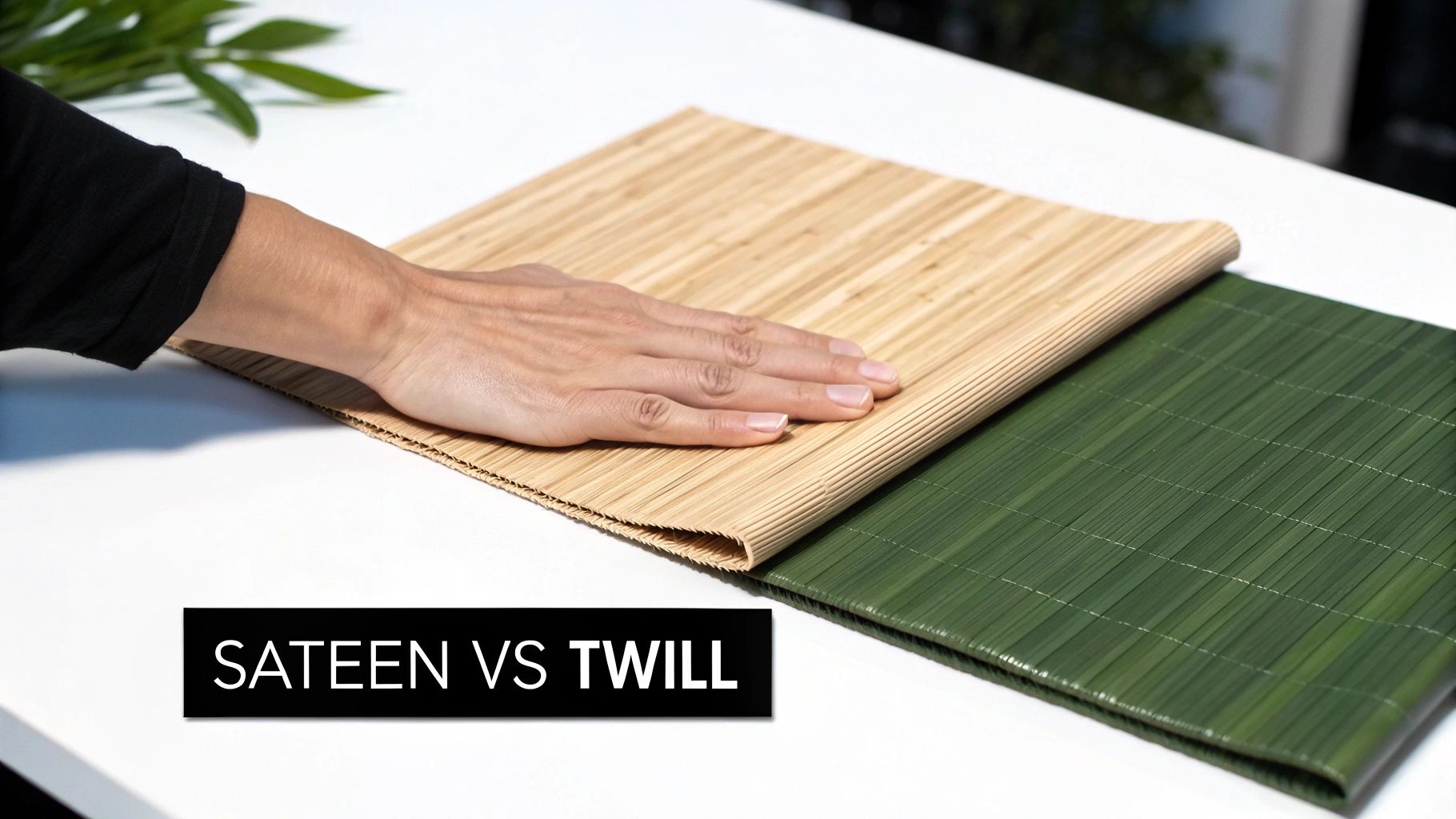
Sateen Weave: The Silky Smooth Favourite
By far the most popular choice for bamboo sheets is the sateen weave. It’s made using a "one yarn under, three or four yarns over" pattern, which puts more threads on the surface of the fabric. The result? That signature lustrous sheen and buttery-soft, silky feel that people rave about.
If you can imagine the cool, smooth glide of a polished marble countertop, that’s what a sateen weave feels like. This finish creates a luxurious drape that flows beautifully over the bed and feels incredible against the skin, making it an easy way to bring a bit of hotel luxury home.
As a bonus, this weave is less likely to wrinkle than other styles, so your bed looks neat and inviting with minimal effort. You can learn more about why sateen weave bamboo bedding is so luxurious and what sets it apart.
Twill Weave: Durable and Softly Textured
The other common weave you’ll come across is twill. You’d probably recognise this pattern from your favourite pair of jeans—it creates a subtle diagonal rib across the fabric. This structure makes twill incredibly durable and resistant to pilling, so it’s a brilliant option for sheets that are going to get a lot of love and use.
While twill doesn’t have the shiny finish of sateen, it has its own unique charm. It offers a soft, pliable feel with a gentle texture that many find really cosy and comforting. It’s the difference between a silk blouse (sateen) and a high-quality, soft-spun flannel shirt (twill). Both are comfortable, but they offer completely different experiences.
The weave of your bamboo sheets directly shapes the final feel and look. Sateen gives you a silky, luminous finish, while twill offers a durable, matte softness. Your choice really just comes down to the texture you prefer.
Finding Your Perfect GSM
Fabric weight, or GSM, tells you how light or substantial your sheets will feel. Unlike thread count, which can be a bit confusing, GSM is a simple measure of density. For bamboo sheets here in Australia, you’ll usually find weights that cater perfectly to our varied climates.
- Lighter Weight (150-180 GSM): Sheets in this range are airy, breezy, and incredibly breathable. They’re a dream for hot sleepers or for anyone navigating the humid summers in places like Brisbane or Darwin. They drape beautifully without ever feeling heavy.
- Mid-Weight (180-220 GSM): This is the sweet spot for most people. It’s a versatile, all-season weight that strikes a perfect balance—feeling substantial and luxurious without trapping too much heat. It's ideal for cities like Sydney, Perth, or Adelaide, where you get both warm days and cool nights.
- Heavier Weight (220+ GSM): While less common for bamboo sheets (since they're naturally so good at temperature regulation), a heavier weight can offer extra cosiness. These are fantastic for colder climates like Melbourne or Hobart, giving you that snug feeling without sacrificing breathability.
For those ready to invest in better sleep, quality bedding options like these natural premium bamboo sheet sets deliver exceptional comfort. By thinking about both the weave and the weight, you can tailor your choice to create the perfect sleep setup all year round.
Decoding Certifications for Safer Sleep
When you see words like "eco-friendly," "natural," or "non-toxic" splashed across bamboo sheet packaging, it’s fair to feel a bit skeptical. In a market flooded with green claims, how can you tell what’s genuine and what’s just clever marketing? This is where independent certifications come in. They’re like a trusted third-party referee, cutting through the noise to give you the facts.
Think of it like getting a roadworthy certificate before buying a car. You wouldn't just take the seller's word that it's safe; you'd want proof from an independent mechanic. Certifications do the same for your bedding, offering concrete evidence that the sheets meet strict global standards for your health and safety.
For anyone hunting for the best bamboo sheets Australia has to offer, getting to know these labels is the key to making a smart, healthy choice for your home.
The Gold Standard: OEKO-TEX STANDARD 100
Among the dozens of labels out there, one stands out as the most recognised and trusted worldwide: OEKO-TEX® STANDARD 100. When you spot this on a set of sheets, it’s a powerful guarantee of safety.
This isn't just a quick check of the final product. The OEKO-TEX® process is incredibly thorough, testing for over 100 different substances known to be harmful to human health. Every single component—from the thread and buttons to the dyes—is put under the microscope and must be cleared.
In simple terms, it means the sheets you’re about to spend a third of your life sleeping in have been given a full health check. They’re certified free from harmful levels of chemicals like pesticides, heavy metals, and formaldehyde. For Aussie families, especially those with kids or sensitive skin, this brings some serious peace of mind.
The OEKO-TEX® STANDARD 100 certification is a global benchmark for textile safety. It confirms that every element of a product has been tested for harmful substances and is therefore harmless for human health, making it safe for prolonged, direct skin contact.
Why Certifications Actually Build Trust
These third-party checks are so much more than just a logo on the box. They’re a direct line between a brand's promises and proven, independent facts. They build trust by showing a company is willing to hold its products to the highest possible standards.
At Manchester Factory, we make sure our bamboo sheet collections, including those from Sienna Living, meet these tough criteria. When you choose certified products, you aren't just buying luxurious bedding—you're investing in a healthier sleep environment, backed by globally respected science. This commitment to safety is a huge part of what makes a product truly high-quality.
Here’s what these certifications really mean for you:
- Health and Safety Assurance: You can rest easy knowing your sheets are free from chemicals that could irritate skin or cause other health issues.
- A Sign of Genuine Quality: Brands that invest in certification are usually committed to higher production standards across the board.
- Makes Your Decision Easier: You can confidently compare products, using certifications as a reliable measure of safety and quality.
This focus on verified, non-toxic materials isn’t just limited to bamboo. For those looking at other natural fibres, understanding similar standards is just as important. You can learn more in our guide on the best organic cotton sheets in Australia, where these same principles of safety and quality apply. Ultimately, these labels empower you to choose bedding that genuinely looks after your family's well-being.
Maintaining the Softness of Your Bamboo Sheets
You’ve invested in that luxurious, silky feeling of bamboo sheets, and now you want to keep them that way. The good news is, protecting that investment is surprisingly simple. Proper care is what keeps them feeling brand new and extends their life, ensuring you get years of incredible sleep.
It’s not about hard work or complicated laundry routines. With just a few small tweaks, you can easily preserve their signature softness, vibrant colour, and natural strength. It all comes down to gentle handling to protect those delicate fibres.
The Golden Rules of Washing Bamboo Sheets
The secret to that buttery-soft feel really begins in the washing machine. Harsh detergents and high temperatures are the biggest enemies of bamboo fibres, causing them to break down way too soon. The trick is to think gentle and cool.
Always go for a cold water wash, and never let it get hotter than 30°C. This simple step not only protects the fabric’s integrity but also helps prevent any shrinking or fading. Your sheets will look and feel new for much longer.
Pair this with a mild, pH-neutral liquid detergent. Steer clear of any products with harsh chemicals, bleach, or optical brighteners—these will strip the fibres of their natural softness and can cause discolouration over time.
Drying Your Sheets the Right Way
How you dry your bamboo sheets is just as crucial as how you wash them. The absolute best method, whenever you can, is to line dry them. There’s nothing better than the Australian sun and fresh air to gently dry your sheets while leaving them smelling incredible.
If you have to use a machine dryer, make sure you choose the lowest heat setting or a delicate, air-dry cycle. High heat is a killer for fine bamboo fibres, making them brittle and rough to the touch. To avoid wrinkles, pull the sheets out of the dryer as soon as the cycle is done, while they’re still just the slightest bit damp.
Pro Tip: Here’s a great little trick—put your sheets straight onto the bed when they are still ever-so-slightly damp. As they finish air-drying, their own weight will smooth out any leftover wrinkles, leaving you with a crisp, inviting bed.
The demand for durable, high-quality bedding is growing rapidly. Bamboo fabric sales in Australia recently hit USD 8.526 million, with projections showing a climb to USD 11.025 million soon. This surge is driven by bamboo's suitability for climates from humid Queensland to dry Perth, with user trials showing it can reduce night sweats by up to 40% compared to cotton. Online sales jumped 30% in 2024, as users report bamboo sheets can have a 50% longer lifespan with proper weekly washing.
Tackling Wrinkles and Pilling
Because their fibres are so fine and smooth, bamboo sheets are naturally prone to a few wrinkles. It’s a sign of quality, really. But following the drying tips above will dramatically reduce them. If you love a completely smooth, hotel-style look, a quick pass with an iron on a low steam setting is all you need.
Pilling—those tiny, annoying balls of fluff—can sometimes happen due to friction. To stop this before it starts, avoid washing your sheets with rough items like towels or jeans with zippers. Giving them their own dedicated load is the best way to keep them perfectly smooth and pill-free. By following these simple steps, you'll find that maintaining your bedding's quality is easy. For more seasonal advice, check out our guide on caring for your bed sheets this spring.
Your Top Bamboo Sheet Questions, Answered
Even after getting all the details, you might still have a few things you're wondering about. To help you feel totally confident in your choice, we’ve pulled together the most common questions we get from shoppers all over Australia. Here are the clear, straightforward answers you're looking for.
Are Bamboo Sheets Better Than Egyptian Cotton?
This is a classic showdown, but honestly, they’re champions of different comfort styles. Think of bamboo as the modern luxury car—it's silky smooth, quiet, and packed with smart tech like temperature regulation. It’s softer right out of the packet and wicks moisture far more effectively, making it a clear winner for hot sleepers or anyone living in our humid coastal climates.
Egyptian cotton, on the other hand, is like a vintage convertible—crisp, classic, and loved for its timeless feel and proven durability. It gives you that traditional, hotel-style crispness. For the best bamboo sheets Australia has to offer, that silky, thermoregulating feel is often a better match for our wildly varied weather.
Do Bamboo Sheets Wrinkle Easily?
Yes, they can, and it's a small trade-off for their incredible softness. Their fine, smooth fibres make them prone to wrinkling, but this is actually a good sign. It shows the fabric is natural and free from the harsh chemical treatments used to create those artificial wrinkle-resistant finishes.
Managing them is simple. Just get your sheets out of the washer promptly and either line dry them or use a low heat setting on your dryer. Here's a great little trick: put them on the bed while they're still slightly damp. Their own weight will naturally smooth out most of the creases as they finish drying.
The incredible softness and skin-friendly feel of natural bamboo fibres are well worth a few wrinkles. With the right care, you can minimise them easily and keep your bed looking luxurious.
How Long Do High-Quality Bamboo Sheets Last?
With the right care, premium bamboo sheets are a fantastic long-term investment and often outlast their traditional cotton counterparts. Their durability comes from the long, strong bamboo fibres that are naturally resistant to pilling and breaking down over time.
You can expect a high-quality set of bamboo sheets to last for several years, staying just as soft wash after wash. The key is to stick to the care instructions: cold water washes, gentle detergents, and avoiding high heat. This simple routine protects the fabric's integrity and makes sure you'll be enjoying that silky feel for years to come.
Are All Bamboo Sheets Genuinely Eco-Friendly?
Not always, and this is a really important distinction to make. The eco-friendly credentials of bamboo sheets depend almost entirely on how the tough plant is turned into soft fabric.
As we covered earlier, the Lyocell method is the gold standard for sustainability. It uses a non-toxic solvent in a closed-loop system that recycles over 99% of the water and materials. In contrast, the more common Viscose process can involve some pretty harsh chemicals. To make a truly sustainable choice, always look for sheets made using the Lyocell process and check for certifications like OEKO-TEX®.
Ready to feel the difference for yourself? Explore the full range of luxurious, certified, and sustainably sourced bedding at Manchester Factory. Discover the perfect sheets to transform your sleep at https://www.manchesterfactory.com.au.