

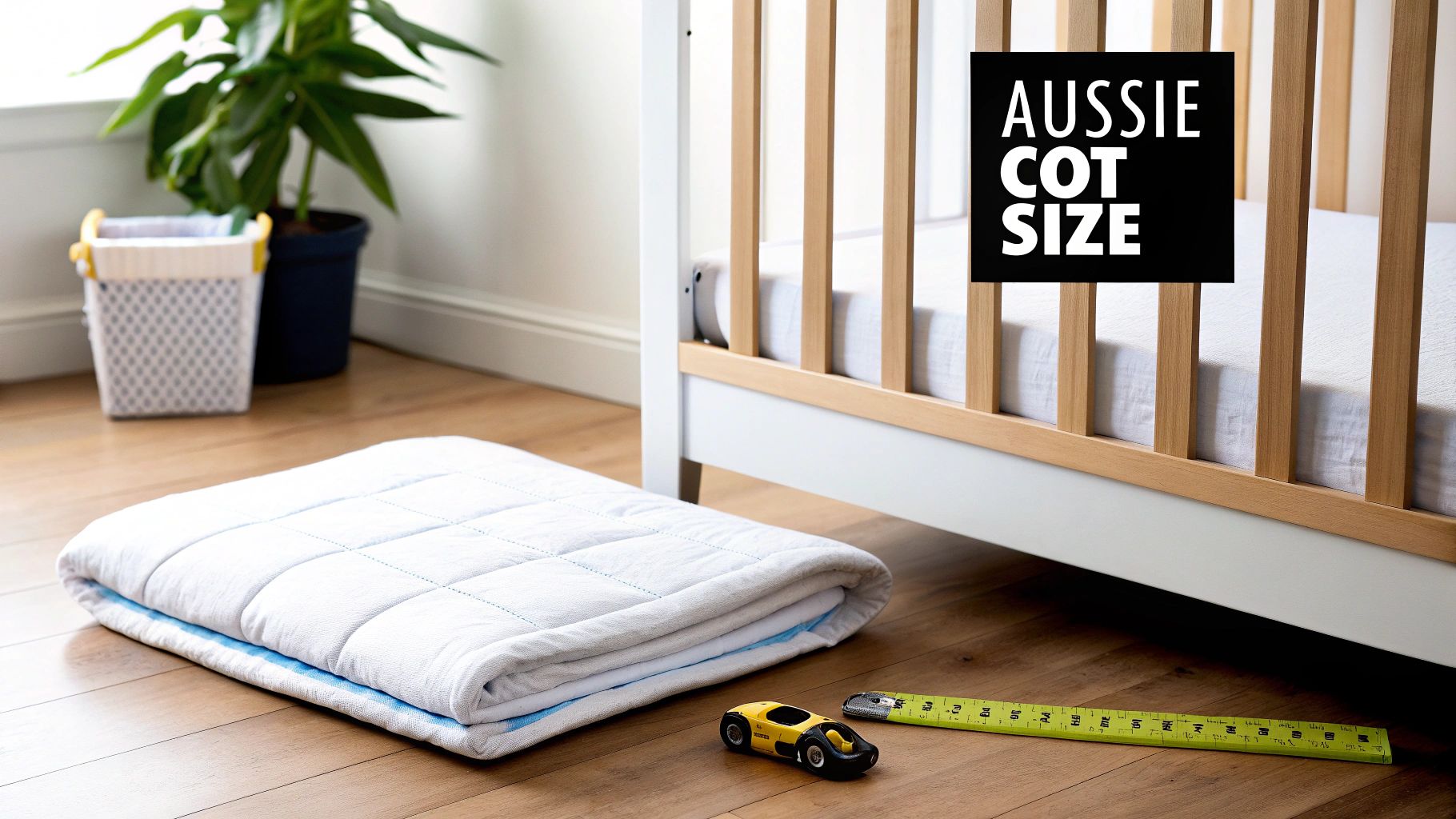
Trying to find the right cot quilt size can feel a bit like guesswork, but it's actually much simpler than you might think. Here in Australia, there's a standard size that most brands stick to: 100 cm x 135 cm.
This specific measurement isn't random; it's designed to perfectly fit standard Aussie cots, keeping your little one snug while making sure their sleeping space is safe. It gives you just enough fabric to tuck them in securely without leaving lots of bulky, excess material.
Your Guide to Australian Cot Quilt Sizes
Picking out bedding for your baby's nursery is one of those first, lovely decisions you get to make as a new parent or grandparent. It’s all about creating a space that feels safe, warm, and inviting. While you'll be thinking about sheets, blankets, and sleeping bags, the cot quilt is often the centrepiece that pulls the whole room's look together.
But it’s so much more than just a decorative touch. Getting the size right is a big deal for both safety and everyday use.
Understanding the Standard Measurement
So, why 100 cm x 135 cm? It all comes down to the cot itself. A standard Australian cot mattress is usually around 132 cm long by 72 cm wide. A quilt this size gives you enough length to cover your bub from shoulder to toe, with just the right amount of width to tuck it in securely on both sides and at the foot of the bed.
If you're curious about how cot sizing fits into the bigger picture of bedding, you can explore it in our complete Australian bedding size chart.
This thoughtful design has some real-world benefits:
- Safety First: A good fit minimises loose bedding, which is a key part of creating a safer sleep environment for your baby.
- A Snug Fit: The dimensions are just right for a tight tuck, which helps keep your little one securely covered and cosy all night long.
- Grows with Them: It's a generous size that will last from their first days in the cot right through to their first toddler bed, making it a purchase that goes the distance.
Here’s a quick breakdown to help you visualise the fit:
Standard Australian Cot and Quilt Dimensions at a Glance
This table shows you exactly how the standard quilt size is designed to work with a standard cot mattress, giving you that perfect tuck-in allowance.
| Item | Standard Australian Dimensions (cm) | Recommended Quilt Size (cm) |
|---|---|---|
| Standard Cot Mattress | 132 cm (L) x 72 cm (W) | - |
| Standard Cot Quilt | - | 100 cm (L) x 135 cm (W) |
As you can see, the quilt provides that little bit of extra fabric on all sides needed for a secure and tidy fit.
The standard 100 cm × 135 cm cot quilt size provides a deliberate 10–20% extra fabric for overhang, ensuring a perfect tuck around a standard Australian cot mattress.
This careful approach to sizing means you get a quilt that not only looks fantastic but works perfectly too. It's become the go-to measurement for Australian retailers, which brings a welcome consistency when you're out shopping for your nursery.
Why the Right Cot Quilt Size Is a Safety Essential
Choosing your baby's first quilt is one of those lovely moments, full of dreaming about colours and patterns for a cosy nursery. But once you get past the cute designs, the cot quilt size is probably the single most important thing to consider for your little one’s safety and comfort. It's a decision that really sets the foundation for a secure sleep environment.
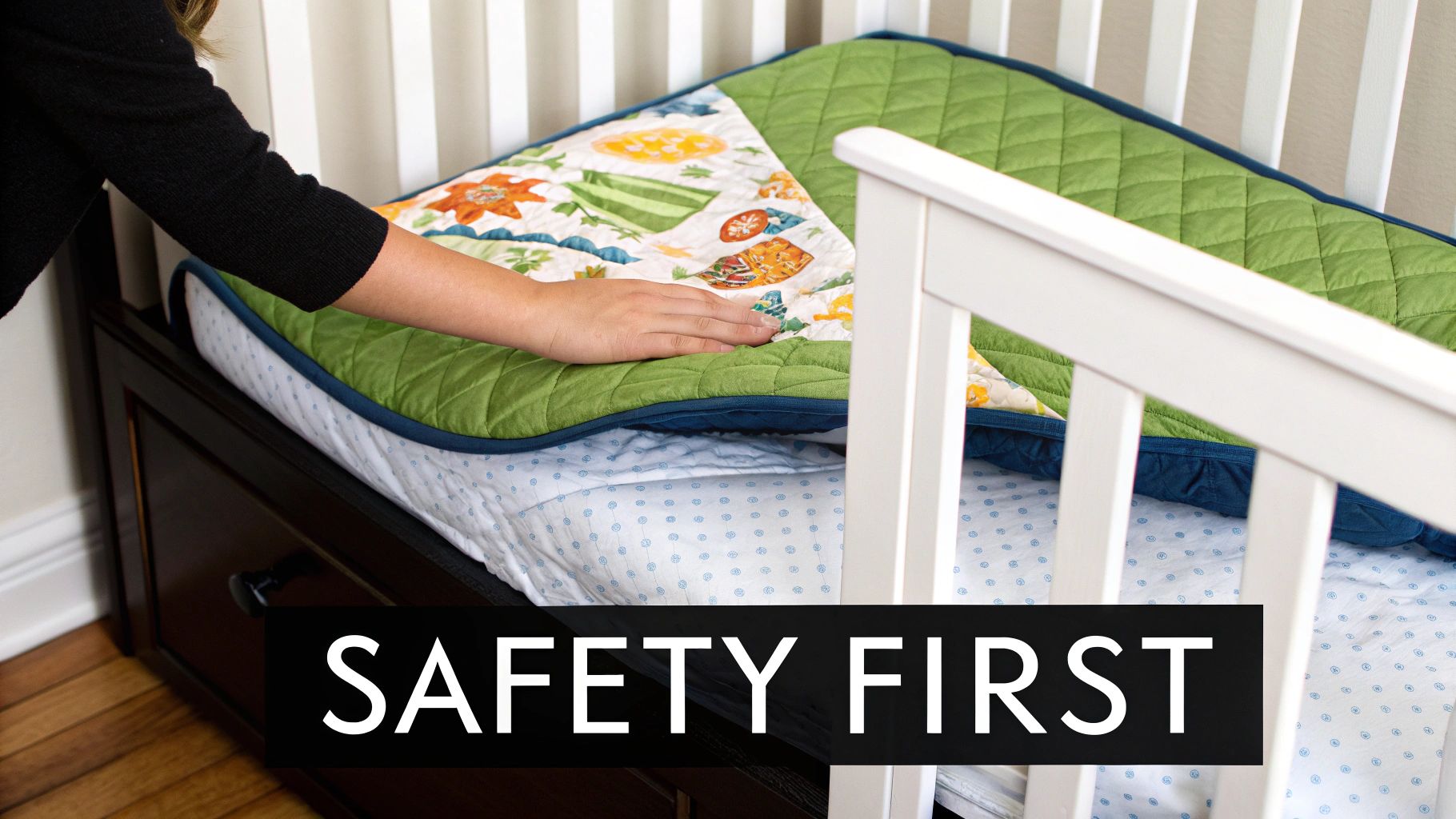
Think of it like a car seat. One that’s too loose can’t do its job properly in a pinch, and one that’s too tight is just plain unsafe. A cot quilt works the same way—it needs to fit the mattress just right. It should be snug enough to stay put but have absolutely no dangerous excess fabric.
The Risks of an Ill-Fitting Quilt
An improperly sized quilt can introduce hazards into your baby’s cot that are completely preventable. Getting your head around these risks makes it clear why sticking to the standard dimensions is so important for your peace of mind.
A quilt that is too large for the cot is the biggest worry. Even if you tuck it in tightly, the extra fabric can easily work its way loose, creating a suffocation or entanglement risk. Babies can pull loose bedding over their faces, which is a terrifying thought as it can obstruct their breathing.
On the other hand, a quilt that is too small brings its own set of problems. It simply won't have enough length or width to be tucked securely under the mattress on all sides. This means it can come undone with a few wriggles, leaving your baby cold or, worse, tangled in the loose material as they move.
A correctly sized cot quilt is designed to be tucked in firmly at the foot and sides of the mattress, creating a secure pocket that keeps your baby warm without the risk of the quilt covering their face.
Creating a Safe Sleep Zone
The main goal here is to get rid of as much loose bedding from the cot as you possibly can. A quilt with the right dimensions allows for a firm, flat fit over the mattress, which helps it stay put all night long.
Here’s why that snug fit is non-negotiable:
- Minimises Loose Fabric: The correct cot quilt size leaves no bulky, bunched-up material inside the cot.
- Ensures Secure Tucking: It gives you just enough overhang to tuck tightly under the mattress, stopping it from being kicked off or pulled up.
- Regulates Temperature: A secure quilt helps maintain a consistent, comfortable temperature for your baby, so they don’t get too cold from uncovered arms or legs.
Ultimately, picking the right quilt size is a fundamental part of safe sleep practices. It’s a simple, active choice that helps protect your baby, letting both you and your little one rest a whole lot easier.
How to Measure Your Cot for the Perfect Quilt Fit
Figuring out the right cot quilt size isn’t about guesswork. It’s about a few simple measurements that guarantee a safe and cosy fit for your little one. Taking a moment to measure the cot mattress means you’ll choose a quilt that tucks in perfectly, getting rid of the safety risks that come with loose, oversized bedding. Think of it like tailoring a suit—a precise fit makes all the difference.
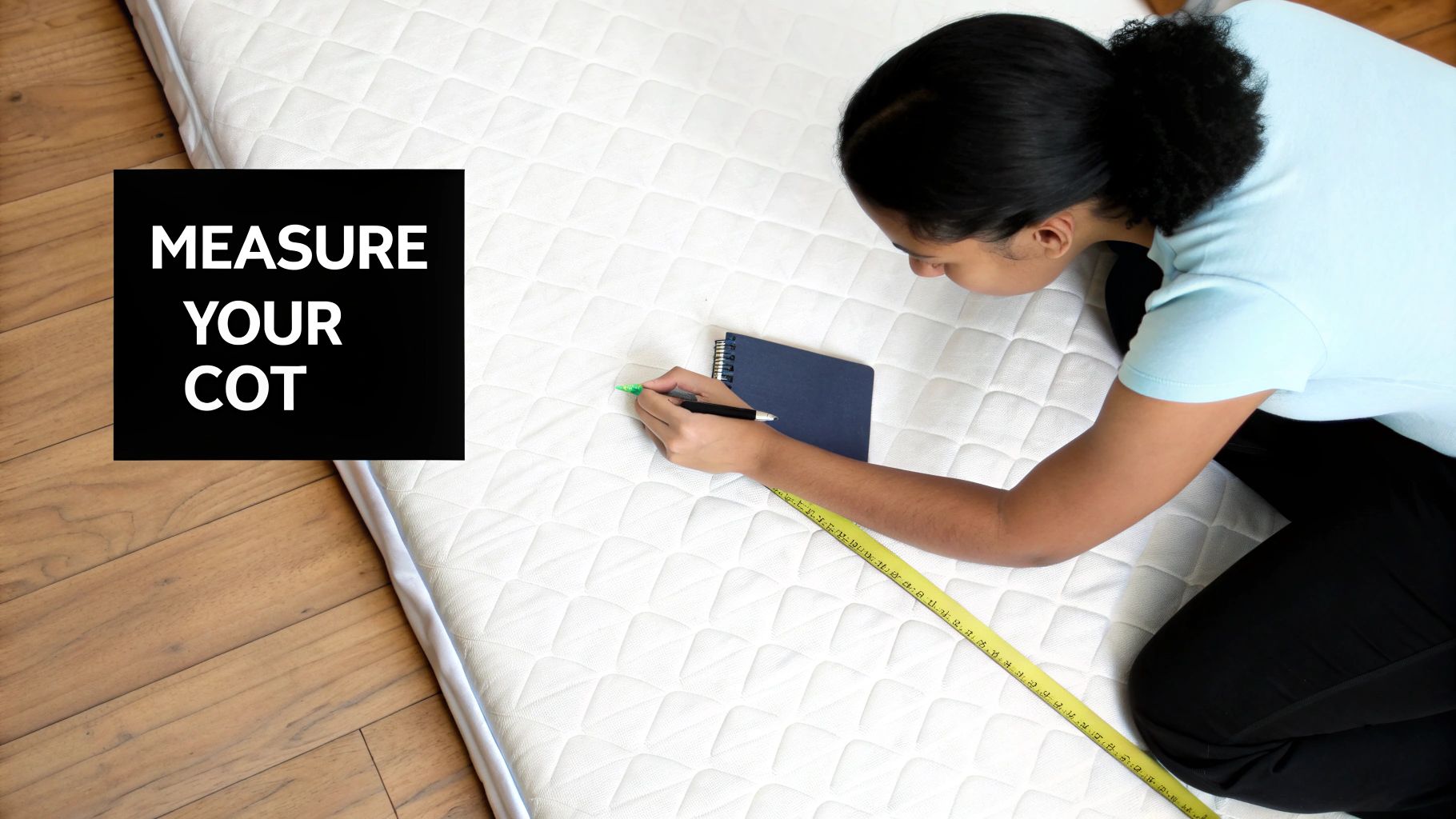
The good news is, this is a really straightforward process and all you need is a tape measure. There are just three key numbers you need to jot down from the mattress to find your ideal quilt size.
The Three Essential Measurements
Before you can pick the perfect quilt, you need to know exactly what space it needs to cover. So grab your measuring tape and get these three figures from the mattress itself, not the cot frame.
- Mattress Width (W): Measure from the left edge straight across to the right edge.
- Mattress Length (L): Measure from the top edge all the way down to the bottom.
- Mattress Thickness (T): Measure the height of the mattress, from the bottom seam to the top.
These three numbers are your foundation for getting a flawless, snug fit every single time.
Think about it like you're wrapping a present. You need enough paper to cover the top, but you also need enough to fold neatly down the sides. A cot quilt works the same way—it has to cover the surface of the mattress and both sides for a secure tuck.
Calculating Your Ideal Cot Quilt Size
Once you’ve got your numbers, you can pop them into a simple formula to work out the minimum size your quilt needs to be. This little calculation makes sure you have full coverage on top, plus enough fabric to tuck securely under both sides and the foot of the mattress.
The Foolproof Quilt Size Formula:
- Ideal Quilt Width: Mattress Width + (2 x Mattress Thickness)
- Ideal Quilt Length: Mattress Length + Mattress Thickness
Let's walk through it with a standard Australian cot mattress as an example:
- Mattress Width (W): 72 cm
- Mattress Length (L): 132 cm
- Mattress Thickness (T): 12 cm
Now, using the formula:
- Ideal Quilt Width: 72 cm + (2 x 12 cm) = 96 cm
- Ideal Quilt Length: 132 cm + 12 cm = 144 cm
So, based on these calculations, the ideal quilt would be around 96 cm x 144 cm. This explains why the standard 100 cm x 135 cm cot quilt size is so popular—it provides a fantastic fit for most Aussie cots.
And when the time comes to size up for a bigger bed, our guide to the king single quilt cover size can help you navigate that next transition. By following these easy steps, you can confidently choose a quilt that is perfectly sized for both safety and comfort.
Navigating Variations in Australian Cot Quilt Sizes
While a standard cot quilt size gives you a reliable starting point, you’ll quickly notice that not all quilts on the market fit neatly into one box. Once you start shopping, especially for handmade or specialty items, you'll find a world of slight variations.
This diversity isn’t a sign of missing standards; it’s actually a good thing. It reflects different manufacturing traditions, creative choices, and the practical needs of families. Understanding these subtle differences is the key to finding a quilt that’s a perfect match for your nursery.
Why Cot Quilt Sizes Can Vary
So, why isn't every cot quilt made to the exact same measurements? A few factors come into play. A cot from an international brand might have a slightly different mattress, or a quilt maker might design a quilt to grow with your child.
Here are the most common reasons you'll see different sizes:
- Brand-Specific Designs: Some cot manufacturers, particularly those from overseas, use mattress dimensions that don’t quite align with Australian standards. Naturally, they offer bedding to match.
- Handmade Quilting Traditions: The crafting community often works with a bit of creative freedom. Rather than sticking to a single rigid dimension, they create quilts within a flexible range that allows for different fabric cuts and patterns.
- Toddler Bed Transition Quilts: Many quilts are cleverly designed with a longer lifespan in mind. They’ll have extra length or width so they can comfortably move from the cot to a toddler bed when the time comes.
If you're curious about how these sizes compare to quilts for bigger beds, our guide on the different sizes of quilts available offers some helpful insights.
Common Cot Quilt Size Ranges and Their Uses
To make choosing a little easier, we've broken down the common size categories you're likely to find. This table outlines their approximate dimensions and what they're best suited for, helping you find the perfect fit for your little one's cot.
| Size Category | Approximate Dimensions (cm) | Best For | Considerations |
|---|---|---|---|
| Small/Pram Quilt | 70 cm x 90 cm | Prams, bassinets, or as a decorative throw over the end of the cot (when not in use). | Too small for full cot coverage or tucking in. Best for supervised use. |
| Standard Australian Cot | 100 cm x 135 cm | Most standard Australian cots. Provides ample room for a secure tuck-in. | This is the most common size and offers the best balance of safety and comfort. |
| Handmade Range | 92 cm x 120 cm to 120 cm x 140 cm | A wide variety of local and international cots, including custom-made ones. | Offers flexibility. Always measure your mattress to ensure a good fit within this range. |
| Toddler Transition | 120 cm x 140 cm or larger | Cots with the intention of moving the quilt to a toddler bed later on. | Can feel a bit bulky in a smaller cot. Ensure it can still be tucked securely. |
Ultimately, the goal is to find a quilt that provides enough coverage for a safe tuck-in without creating too much excess fabric in the cot.
The Handmade Quilt Size Range
The world of handmade and custom quilts is driven by practicality. Australian quilters and fabric suppliers know that a one-size-fits-all approach doesn't always work.
Many Australian quilting guides and fabric retailers recommend cot quilts between about 92 cm × 120 cm and 120 cm × 140 cm. This flexibility ensures a good fit for most local cot mattresses while providing enough coverage for a secure tuck.
You'll often see this practical range reflected by suppliers across Australia and New Zealand, who cater to very similar bedding standards. It's common to find sizes like 92 cm × 120 cm and 100 cm × 135 cm listed as typical options for baby quilts in guides for quilters and fabric buyers. For those interested, you can find helpful charts and more on regional standards on sites like NZfabs.com.
At the end of the day, whether a quilt is a few centimetres smaller or larger than the 100 cm x 135 cm standard isn’t a deal-breaker. The most important thing is that it allows for a safe and secure tuck-in. The key is to measure your own cot mattress first, then choose a quilt that provides enough overhang for safety without creating bulky, bunched-up fabric inside the cot. This ensures you’ll choose a quilt that’s not only beautiful but perfectly suited to your needs.
Choosing the Best Cot Quilt Materials and Fillings
Once you've sorted out the right cot quilt size, the next big decision is what it’s made from. This is just as important for your baby's comfort and, let's be honest, your peace of mind. The materials touching your little one's skin and keeping them at the right temperature are crucial for a good night's sleep. It’s like picking your own bedding—you want something soft, breathable, and right for the season.
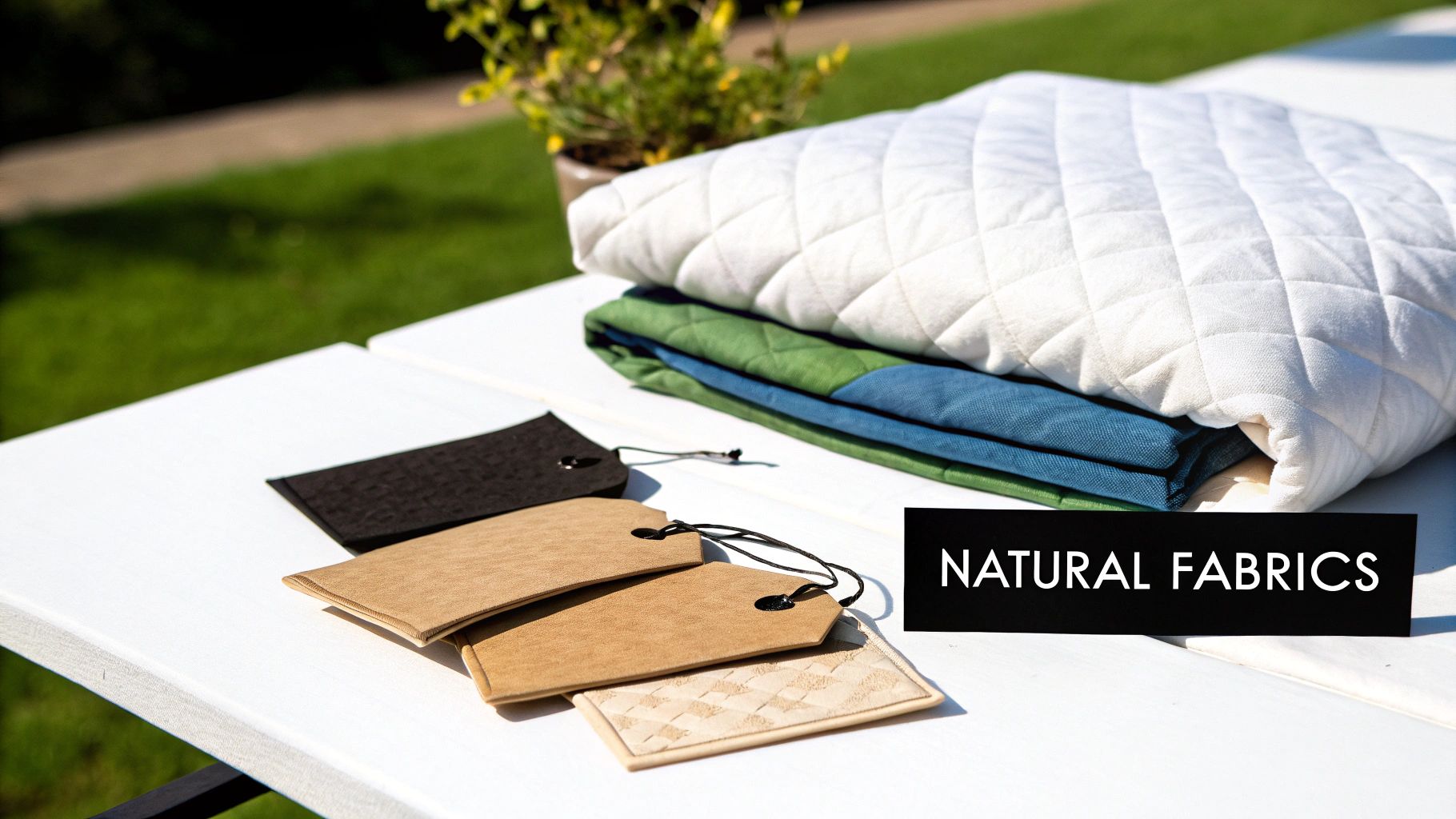
For a baby's delicate skin, natural fibres are always the way to go. They’re much gentler, they breathe well, and they’re far less likely to cause irritation. It's no surprise that materials like cotton and bamboo are staples in nursery bedding.
Breathable Fabrics for Sensitive Skin
When you're looking at a cot quilt, always check the outer fabric first. This is the part that will be in direct contact with your baby’s skin.
- 100% Cotton: This is the gold standard for a reason. It's incredibly soft, super breathable, and tough enough to handle the endless cycle of washing. Cotton is brilliant at wicking moisture away from the skin, which helps keep your baby comfortable and dry all night.
- Bamboo: Famous for its silky-soft feel, bamboo fabric is also hypoallergenic and has natural antibacterial properties. It’s a fantastic choice for babies who have particularly sensitive skin or are prone to allergies.
Selecting the Right Quilt Filling
The filling, also known as the batting, is the engine room of the quilt. It dictates how warm and heavy it feels. Given Australia's varied climate, getting the filling right is key to keeping your baby cosy without letting them get too hot.
The perfect cot quilt filling offers just the right amount of warmth for the season. A lightweight, breathable filling helps prevent overheating, which is a major factor in safe sleep practices for babies.
Here are a few common fillings you'll come across:
- Cotton Batting: Lightweight and breathable, this is an ideal pick for summer or homes in warmer climates. It gives a little bit of cosiness without trapping too much heat.
- Wool Batting: Wool is a natural wonder when it comes to regulating body temperature. It keeps your baby warm in winter and surprisingly cool in summer, making it a brilliant year-round option.
- Polyester/Synthetic Batting: While synthetics are often more budget-friendly, they just don't breathe as well as natural fibres. If you're weighing up your options, our guide comparing wool vs synthetic quilts can help you make a more informed choice.
And a final tip: always follow the care instructions on the label. Most cot quilts made from cotton or bamboo can be popped in the washing machine on a gentle cycle, keeping them fresh, hygienic, and soft for your little one.
Your Checklist for Buying the Perfect Cot Quilt
Feeling ready to find the one? This final checklist pulls everything we've talked about into a simple, easy-to-follow plan. Think of it as your final once-over before you make a decision you’ll feel great about, ensuring your little one’s nursery is as safe as it is beautiful.
Let these steps guide your purchase, clear up any last-minute wobbles, and help you choose the best possible cot quilt for your family.
Prioritise Safety Above All
Before you even think about colours or cute patterns, safety has to come first. This is the one area where there's absolutely no room for compromise.
- Follow Safe Sleep Guidelines: Remember that experts like Red Nose strongly recommend waiting until your baby is over 12 months old before introducing any soft bedding, including quilts, into the cot.
- Avoid Hazards: Give the quilt a good once-over. You want to see clean, simple construction with no loose threads, buttons, or little decorative bits that could come off and become a choking hazard.
Measure Twice, Buy Once
Getting the right cot quilt size is non-negotiable. It’s all about a secure fit that gets rid of any dangerous slack or excess fabric. Don’t just guess.
- Get Your Cot's Dimensions: Grab a tape measure and get the exact width, length, and even the thickness of your cot mattress.
- Calculate the Ideal Size: With those numbers in hand, look for a quilt that gives you enough overhang (around 15-20 cm) to tuck it in securely on both sides and at the foot of the mattress.
- Stick to Cot-Specific Bedding: Never, ever be tempted to use a single bed quilt or any other oversized blanket in a cot. It’s a serious suffocation risk.
The perfect cot quilt fits like a glove—snug, secure, and without any risky slack. A proper fit is the cornerstone of a safe and comfortable sleep space for your child.
Choose Quality Materials
The fabric and what’s inside it play a huge role in your baby's comfort and health. This is where you want to look for natural, breathable materials that are kind to sensitive skin.
- Select Natural Fibres: Keep an eye out for quilts made from 100% cotton or bamboo. These materials are incredibly soft, let air circulate, and do a fantastic job of helping regulate temperature.
- Check the Filling: A lightweight cotton or wool filling is perfect for providing just the right amount of warmth without running the risk of overheating.
- Ensure It's Easy to Wash: Let's be realistic—babies and messes are a package deal. A machine-washable quilt isn't just a nice-to-have; it's a must for keeping their sleep space clean and hygienic.
Beyond your quilt purchase, a comprehensive newborn checklist can guide Australian parents through all essential preparations. For more tips on selecting the right items for your home, explore our complete buyer's guide to bedding essentials.
A Few Common Questions About Cot Quilts
Choosing the right bedding for your little one's nursery can feel a bit overwhelming, and it's normal to have a few questions. To help you feel completely confident, we've put together some clear, straightforward answers to the queries we hear most often from parents and caregivers.
Can I Use a Standard Single Bed Quilt on a Cot?
No, you should never use a single bed quilt in a cot. It’s far too large and heavy, creating a serious safety risk from overheating and potential suffocation. Always, always choose a quilt that is specifically designed for the dimensions of your cot to ensure a safe sleep environment.
A correctly sized quilt is key because it allows you to tuck it in securely without any dangerous excess fabric bunching up inside the cot.
When Is It Safe to Introduce a Quilt Into a Cot?
This is a really important one. Leading Australian safe sleep organisations, like Red Nose, advise waiting until your baby is over 12 months old before introducing any soft bedding. This includes quilts, pillows, or bumpers.
For infants under one year, a safe baby sleeping bag is definitely the recommended choice for warmth and safety. It keeps them cosy and secure without the risks that come with loose bedding.
Key Takeaway: For babies under 12 months, the safest cot is a clear cot. Stick to a firm mattress with a fitted sheet and a safe sleeping bag for warmth.
How Much Overhang Should a Cot Quilt Have?
The ideal cot quilt size gives you just enough overhang to be tucked securely under the mattress on both sides and at the foot. A good rule of thumb is to aim for about 15-20 cm of extra fabric on each of these three sides.
This sweet spot allows the quilt to stay firmly in place all night long, without leaving too much loose material inside the cot with your little one.
Are Handmade or DIY Cot Quilts Safe?
Absolutely! A handmade quilt can be perfectly safe, as long as it follows the same safety principles as any store-bought one. Just make sure the finished size is correct for your cot, you use breathable fabrics like 100% cotton, and you avoid any embellishments like buttons or ribbons that could become choking hazards.
The quilting stitches also need to be really secure to prevent the filling from shifting around and creating unsafe lumps. If you're keen to create your own, this step-by-step guide to quilting for beginners is a fantastic resource to get you started on the right track.
At Manchester Factory, we're here to help you create a nursery that's safe, comfortable, and beautiful for your little one. Explore our curated collection of high-quality, perfectly sized cot bedding to find the ideal addition to your home. Discover the difference at https://www.manchesterfactory.com.au.