

Think of a quilted coverlet as the perfect light jacket for your bed. It adds a layer of style and a bit of warmth, but without the heavy bulk of a full-blown doona. It’s a single, versatile piece of bedding defined by its beautiful stitching, which gives it texture and a polished, finished look.
In short, quilted coverlets for beds are a practical and elegant solution that’s perfectly suited to modern Australian homes.
What Exactly Is a Quilted Coverlet?
A quilted coverlet is a lightweight, non-reversible bed cover that’s designed to sit on top of your sheets. It’s not meant to be as warm as a thick doona or a heavy traditional quilt; its main job is to add a decorative layer of colour and texture while providing just the right amount of warmth for most nights of the year.
It’s made by stitching three layers together: a decorative top fabric, a thin inner layer of fill (usually cotton or polyester), and a simple backing fabric.
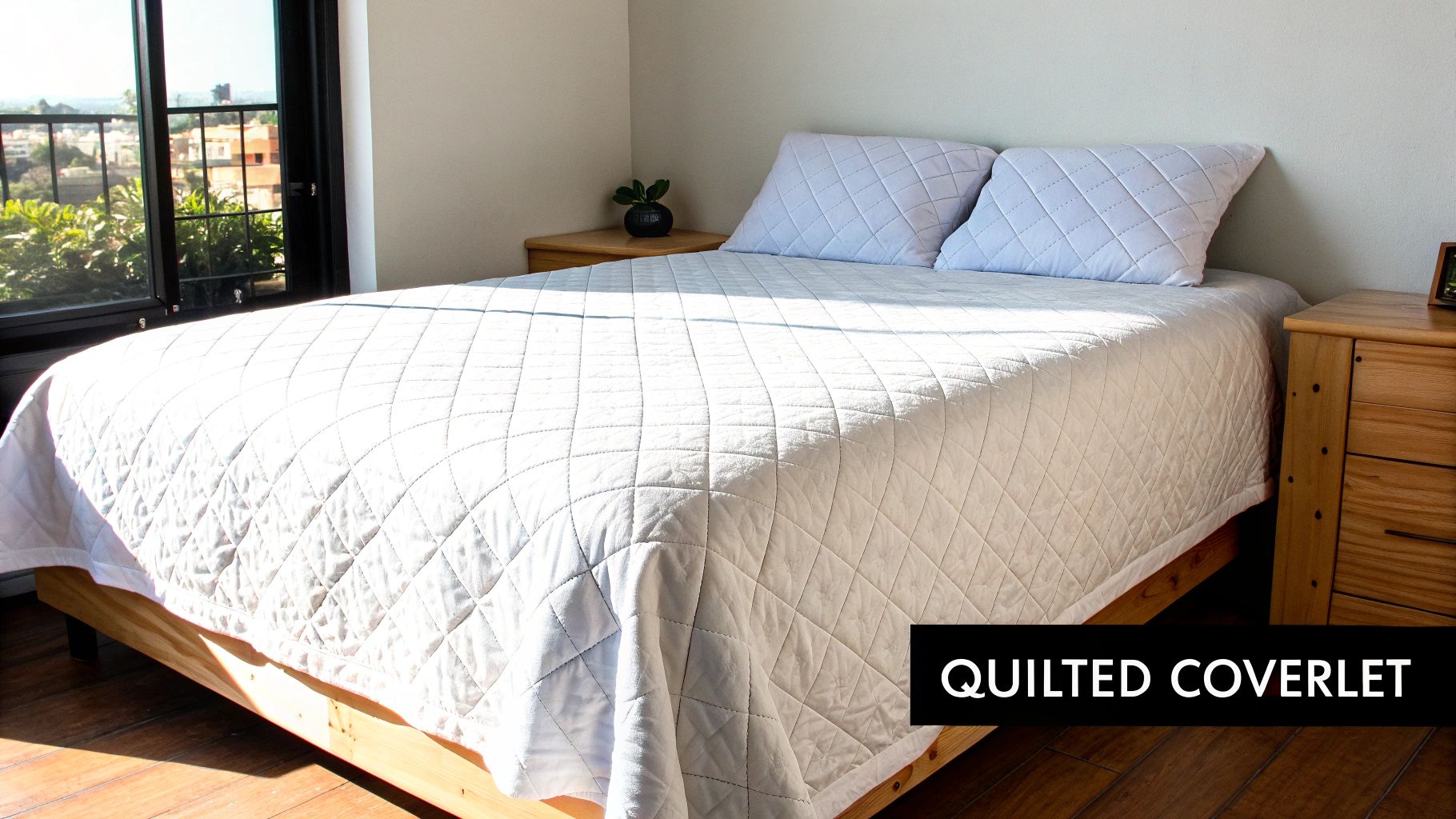
The real magic is in the quilting. That stitching pattern isn't just for looks—it has the crucial job of holding the thin inner fill in place, stopping it from bunching up in the wash. This is what keeps the coverlet looking smooth and sleek for years. The stitching can be anything from a simple diamond pattern to more intricate floral designs, adding a lovely visual touch to your bed.
If you want to dive deeper into how they fit into modern styling, you can explore our guide on why the modern-day bedspread is known as a coverlet.
More Than Just a Blanket
It helps to know where a coverlet fits in with its heavier cousins. Think of it this way:
- Doona (Duvet): This is the heavyweight champion of warmth. It’s filled with down or synthetic fibres and needs a separate cover. This is what you reach for on the coldest winter nights.
- Quilt: Traditionally heavier than a coverlet, quilts often have patchwork designs and provide a lot of warmth. They can be beautiful but are often much bulkier.
- Coverlet: This is your lightweight, versatile option. It’s thin enough to use on its own in summer but is also perfect for layering over a doona in winter for extra warmth and style.
A coverlet bridges the gap between a simple flat sheet and a bulky quilt. It gives your bed a finished, hotel-like appearance without overwhelming the space, making it a favourite for both designers and homeowners.
The All-Season Solution
In Australia’s varied climate, the coverlet really shines. It's the ideal standalone blanket for those warm summer evenings, giving you just enough comfort without making you overheat.
Then, as the weather cools down, it becomes the perfect layering piece. You can fold it at the foot of your bed for a touch of elegance or lay it over a thicker blanket for an added layer of insulation.
This adaptability makes quilted coverlets for beds an incredibly practical investment. Brands like Sienna Living and Morgan & Reid have collections that really showcase this versatility, with options that work beautifully in any season and with any decor. They deliver that clean, tailored finish that effortlessly elevates the whole look of a bedroom.
Why a Quilted Coverlet Is a Smart Choice for Your Bed
Quilted coverlets are more than just a pretty top layer; they’re one of the most practical and hardworking pieces of bedding you can own, especially in an Australian home. They offer a simple solution to a lot of common bedding frustrations, blending good looks with everyday convenience. Think of it as a smart investment in better sleep and easier mornings.
One of the biggest wins? Their incredible versatility. A good quilted coverlet is a true bedding chameleon, adapting effortlessly to Australia’s famously unpredictable seasons.
Year-Round Comfort, No Matter the Weather
On those hot, sticky summer nights, a bulky doona is the last thing you want. A lightweight quilted coverlet, paired with just a top sheet, gives you that comforting feeling of being covered without trapping heat. It's breathable and substantial enough to feel cosy, but never so heavy that you'll wake up overheating.
Then, when a cold snap hits in winter, your coverlet becomes the perfect layering tool. Instead of buying a whole new heavy winter doona, you can simply throw the coverlet over your existing setup. This traps an extra layer of insulating air, adding a surprising amount of warmth without the suffocating weight of multiple blankets.
It’s all about curating your own comfort, whether it's a mild autumn evening or a frosty winter morning.
An Instant Style Upgrade for Any Bedroom
If you're looking for a quick and easy way to give your bedroom a refresh, a quilted coverlet is your answer. The clean lines and textured stitching instantly make a bed look more polished and ‘finished’ in a way a plain doona cover just can’t. That quilted detail adds visual interest and a subtle touch of luxury.
A single quilted coverlet can tie your whole room together. Choose a colour or pattern that picks up on tones in your curtains, rug, or artwork, and suddenly the space looks cohesive and intentionally designed—with almost zero effort.
This is especially true for collections like our Morgan & Reid coverlets, which are designed to act as a stylish centrepiece. Whether you’re after a clean, minimalist vibe or something more classic and cosy, the right coverlet lays the perfect foundation.
Practicality for Busy Homes and Families
For most of us, practicality is key. This is where quilted coverlets really shine. They are far less bulky than traditional doonas, which makes them so much easier to handle day-to-day.
- Making the bed is a breeze. They’re light enough for kids to pull up themselves, which is a small victory for any parent trying to encourage a tidy room.
- Washing is simple. Forget expensive trips to the dry cleaner. Most coverlets are designed to fit into a standard home washing machine.
- They dry much faster. Because they're thinner than a doona, they dry in a fraction of the time, so you can get them washed, dried, and back on the bed the same day.
These features make them a lifesaver in households with kids or pets, where spills and frequent washes are just part of life. It’s no wonder their popularity is soaring, with Australia’s bedding market projected to hit US$720.85 million by 2025 as more people discover these stylish, practical solutions. (Read more about Australia’s home textiles market trends).
How to Choose the Right Fabric and Material
Picking the perfect fabric for your new quilted coverlet is the secret to finding a piece you’ll love for years. It's not just about how it looks; the material directly impacts how it feels, how warm it keeps you, and how much effort it takes to keep it clean.
Think of it like choosing an outfit—some materials are made for a hot summer afternoon, while others are all about cosy comfort. Each fabric has its own personality and purpose, so let’s break down the most popular options to help you find the ideal match for your home.
The Everyday Essential: Cotton
It's no surprise that cotton is the undisputed champion of bedding. It’s a natural fibre that is incredibly breathable, making it a fantastic choice for a comfortable night's sleep, especially during those warm Australian nights. Its natural ability to wick moisture away from your body helps regulate your temperature all year round.
Better still, cotton is naturally hypoallergenic, which is great news for anyone with sensitive skin or allergies. That softness and gentleness make it a go-to for family homes, from the main bedroom right through to the kids' rooms. It’s just a reliable, comfortable choice that never really goes out of style.
The Durable Duo: Polyester and Microfibre
When durability and easy care are your top priorities, polyester and microfibre are the workhorses of the bedding world. These synthetic fabrics are engineered to be incredibly resilient, making them an excellent choice for high-traffic areas like kids' bedrooms or guest rooms that see a lot of use.
They hold their colour exceptionally well, meaning they resist fading wash after wash and keep your coverlet looking vibrant for longer. Plus, they’re often more budget-friendly, so you can get great style and performance without the hefty price tag.
For a busy family, a microfibre coverlet is a game-changer. It’s lightweight, resists wrinkles, and can be thrown in the washing machine and dryer without a second thought. It just simplifies the whole laundry routine.
If you’re interested in exploring the world of textiles, it can be insightful to see how different materials are used in other crafts. For an overview of essential materials needed for a popular needlecraft, you might refer to A Stitcher's Guide to Cross Stitch Material to see how fabric choice is fundamental everywhere.
Luxurious Options for a Touch of Elegance
Sometimes, you want a bit more than just practicality—you want a touch of luxury. This is where materials like velvet or linen blends come into play. A velvet coverlet adds instant opulence and a rich, tactile feel to a room, creating a cosy, inviting atmosphere that’s perfect for a main bedroom retreat.
Linen and cotton blends, on the other hand, offer a more relaxed, sophisticated look. They combine the breathability of cotton with the beautiful, textured drape of linen, resulting in a coverlet that feels soft, looks effortlessly chic, and only gets better with time. For a deeper understanding of how different textiles contribute to comfort, check out our guide on the benefits of natural fibres in bedding.
This handy flowchart simplifies the decision-making process by focusing on what matters most: your style, the season, and your care needs.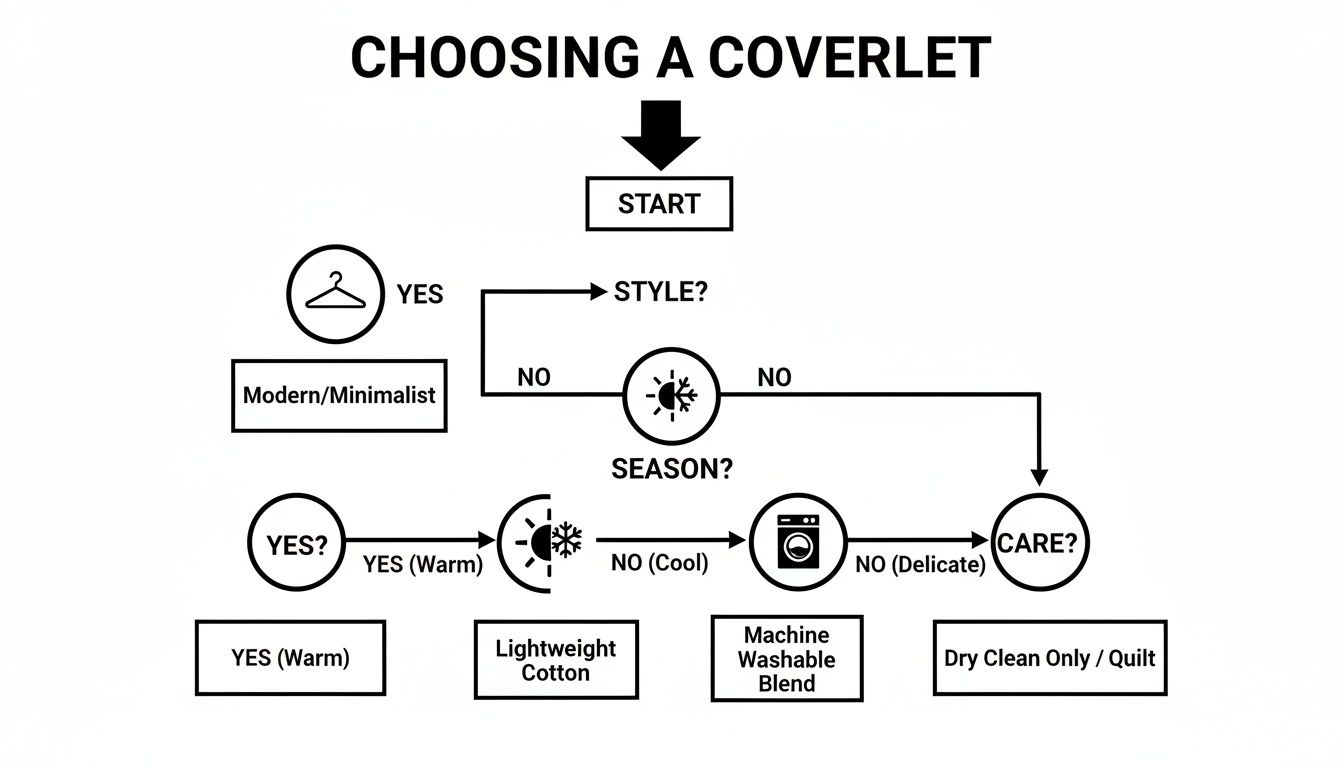
By answering just a few simple questions, it points you straight to the fabric that best fits your lifestyle.
Coverlet Fabric Comparison
Choosing a fabric can feel overwhelming, so here’s a quick guide to help you compare the main players based on comfort, durability, and care.
| Fabric Type | Best For | Key Benefits | Care Level |
|---|---|---|---|
| Cotton | Everyday comfort, hot sleepers, and sensitive skin. | Breathable, hypoallergenic, soft, and durable. | Easy (Machine washable) |
| Polyester/Microfibre | Kids' rooms, guest beds, and busy households. | Highly durable, fade-resistant, and budget-friendly. | Very Easy (Machine wash & dry) |
| Velvet | Creating a luxurious, warm, and opulent look. | Rich texture, excellent warmth, and a sophisticated feel. | Moderate (Often requires gentle cycle or spot cleaning) |
| Linen Blends | A relaxed, elegant, and sophisticated style. | Breathable, gets softer with age, and has a beautiful drape. | Moderate (Prone to wrinkling, gentle wash recommended) |
This table should give you a clear starting point, whether you need something tough enough for the kids or a touch of elegance for your own space.
How Stitching Patterns Make a Difference
Beyond the fabric itself, the quilting pattern—that is, the stitching that holds all the layers together—plays a huge role in both the look and durability of your coverlet. Different patterns create completely different styles.
- Diamond Stitching: This is the timeless classic. The crisscross pattern creates that familiar, elegant texture that works with almost any decor, from traditional to modern.
- Channel Stitching: Featuring clean, straight lines, this pattern offers a distinctly modern and minimalist vibe. It’s perfect for a sleek, uncluttered look.
- Intricate Patterns: Things like floral, scroll, or geometric designs can turn a coverlet into a real statement piece, adding a layer of detailed artistry to your bed.
As a rule of thumb, the tighter the stitching, the more durable the coverlet will be. It does a better job of holding the inner fill securely in place, helping it stand up to years of use and washing.
Finding the Perfect Size for Your Bed
Choosing the right size for a quilted coverlet is less about matching the label on the packet to the label on your mattress. It's all about getting the drape just right—that's the word we use for how the fabric hangs over the sides and foot of your bed. Get this wrong, and even the most beautiful coverlet can look a bit awkward.
A coverlet that’s too small looks skimpy and unfinished, leaving the mattress or bed frame exposed in a way that just feels off. On the other hand, a coverlet that’s way too big can swamp the bed, looking messy instead of luxurious. The perfect fit creates that polished, intentional look that makes the whole room feel complete.
This guide will help you skip the guesswork and measure for a flawless, professionally styled result every time.
Start with Your Bed Measurements
Before you even start browsing, grab a measuring tape. Bedding labels like 'Queen' or 'King' are a decent starting point, but they don't account for the most important factor: your mattress height. Modern mattresses, especially those with plush pillow-tops or extra toppers, are often much thicker than they used to be.
Follow these simple steps:
- Measure the Width: Run your tape measure across the top of your mattress from one side to the other. Jot it down.
- Measure the Height (Depth): Measure from the top surface of your mattress down to where you want the coverlet to hang. Do you want it to just cover the sides of the mattress, reach the bottom of the bed frame, or almost touch the floor? This is a personal style choice.
- Calculate Your Ideal Width: Take your mattress height measurement, multiply it by two (for both sides of the bed), and add it to your mattress width. This total is the minimum width your coverlet should be to get the look you're after.
Here’s how that works in real life:
Your Queen mattress is 153 cm wide.
Your mattress is 35 cm high, and you want the coverlet to hang down and cover it completely.
Your Ideal Width = 153 cm (mattress width) + 35 cm (left side drape) + 35 cm (right side drape) = 223 cm.
This simple formula ensures you're shopping for the right dimensions, not just a name on a tag. For a handy overview of standard measurements, our bedding size chart for Australia is an excellent resource to check out.
Choosing Your Desired Drape Style
How much your coverlet hangs over the edge really defines the style of your bed. There are a few popular looks you can aim for, and each one creates a different feel in the bedroom.
- The Tucked-In Look: For a crisp, clean, hotel-style finish, you only need enough fabric to tuck the coverlet tightly under the mattress. This means you'll want a coverlet that is only slightly wider than your mattress.
- The Standard Drape: This is the most common style. The coverlet hangs just below the bottom of the mattress, neatly covering it and any sheets underneath for a tidy, put-together appearance.
- The Floor-Grazing Look: For a truly luxurious and dramatic effect, choose a coverlet that drapes all the way to the floor. This often means buying a size up (like a King coverlet for a Queen bed) to get that generous length and width.
Common Sizing Mistakes to Avoid
One of the most frequent mistakes people make is forgetting about mattress height. A standard Queen coverlet might fit a slim, 20 cm mattress perfectly, but it will look comically short on a deep, 40 cm pillow-top mattress. Always, always measure your mattress depth first.
Another common oversight is not thinking about the bed frame itself. If you have a high sleigh bed or a tall ensemble base, you’ll need a wider coverlet to get enough coverage. On the flip side, if you have a low-profile platform bed, a standard size might be too large and puddle unattractively on the floor. Take a moment to measure from the top of your mattress to the floor to understand the maximum drape your bed can handle before you buy.
Styling Your Quilted Coverlet Like a Designer
Think of your quilted coverlet as the secret weapon in your bedroom styling toolkit. It’s not just another blanket; it's the piece that pulls the whole room together, setting the mood and acting as a canvas for your personal style. With a few simple layering tricks, you can take your bed from just okay to a stunning, magazine-worthy centrepiece.
The real magic of quilted coverlets for beds is how adaptable they are. A single coverlet can anchor a clean, modern look one day and a plush, luxurious one the next. It all comes down to what you pair it with. Let's walk through a few easy recipes for creating a bed that looks like it was styled by a pro.
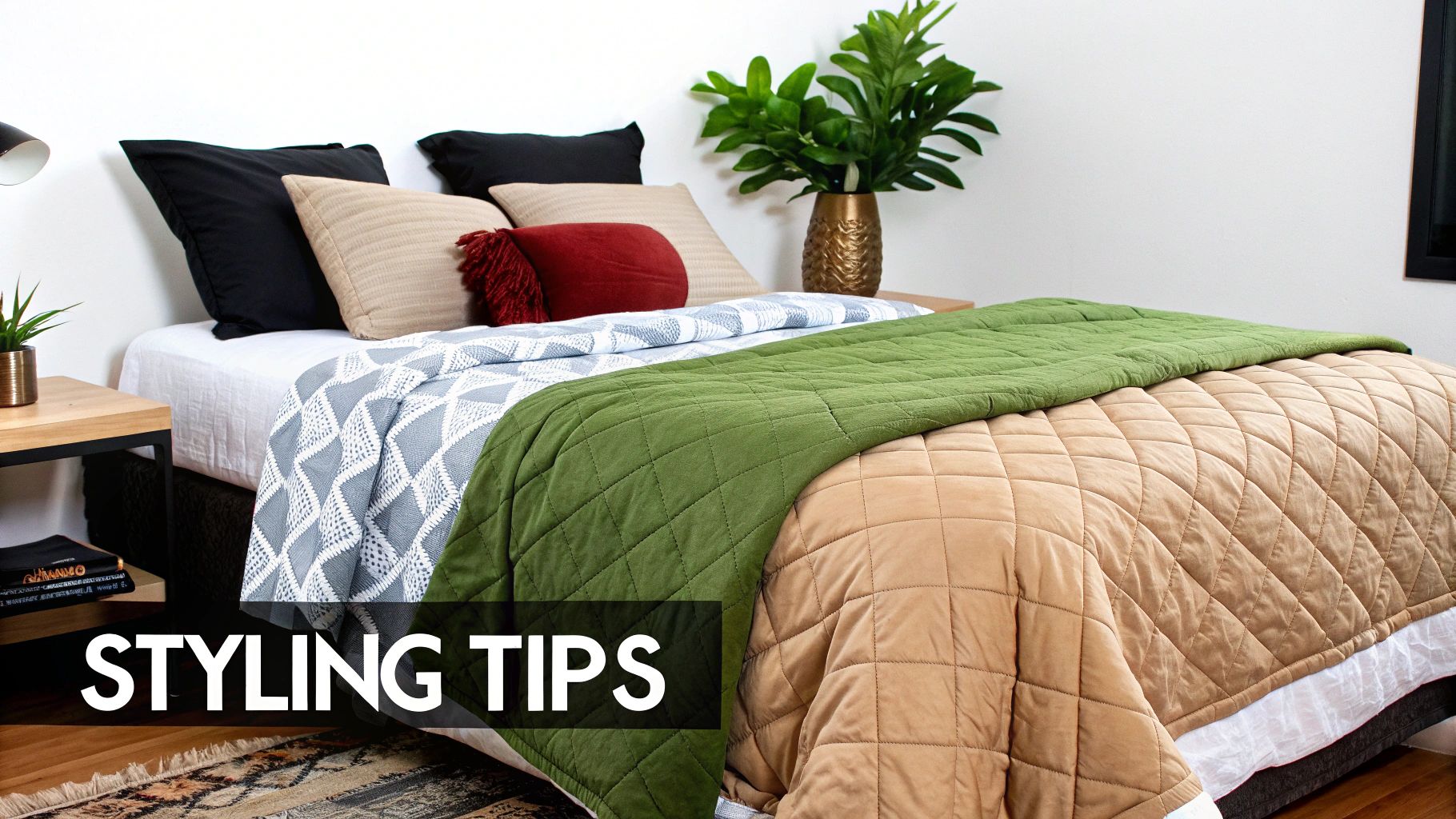
Recipe 1: Minimalist and Modern
If you’re aiming for a calm, uncluttered bedroom, the minimalist approach is your best friend. This style isn’t about piling things on; it’s about showcasing texture and clean lines to create a serene, restful space.
Start with a coverlet in a solid, neutral colour—think crisp white, soft grey, charcoal, or even a muted beige. The goal is to let the quilted texture, whether it's a simple channel stitch or a classic diamond pattern, do all the talking.
How to get the look:
- Smooth It Out: Lay your coverlet flat over your sheets for a taut, clean surface.
- Fold with Precision: Fold the top quarter of the coverlet back neatly to show off your crisp sheets underneath.
- Cushion Edit: This is key—less is more. Stick to your two sleeping pillows, then add two statement cushions in a complementary shade or a subtle pattern.
This pared-back style instantly makes a room feel bigger and more organised. It’s a sophisticated look that just never goes out of style.
Recipe 2: Luxe and Layered
Love that plush, ridiculously inviting look of a high-end hotel bed? This style is for you. Layering different textures and weights creates a sense of depth and opulence, making your bed the one thing you can't wait to dive into at the end of the day.
This aesthetic is all about abundance and comfort. Start with your quilted coverlet as the base, then build it up with softer, richer elements.
A layered bed is a story told in textiles. Each piece, from the coverlet to the throw, adds a chapter of comfort and visual appeal, inviting you to dive in.
To nail this luxurious feel, try this:
- Fold Back a Doona: Place a fluffy doona over the bottom two-thirds of your bed and fold it back on itself to show off the coverlet.
- Add a Plush Throw: Casually drape a chunky knit or faux fur throw across one corner of the bed for an extra touch of softness.
- Mix and Match Pillows: Now you can have some fun. Combine your standard sleeping pillows with a couple of European pillows and a variety of decorative cushions. Think different shapes, sizes, and textures like velvet or linen.
Recipe 3: Cosy and Rustic
To create a warm, welcoming vibe with a rustic touch, it's all about natural textures and earthy tones. This look is perfect for turning your bedroom into a cosy retreat that feels relaxed, unpretentious, and full of character. To see how a coverlet works as a foundation for different looks, check out our article explaining what a coverlet is used for.
A coverlet with a more intricate or organic quilting pattern works beautifully here. Think shades like terracotta, olive green, or deep navy to set a comforting mood.
This desire for comfort and style is a huge part of the Australian home textiles market. In fact, bed linen—including versatile quilted coverlets—is projected to command a massive 38.3% of the nation's USD 2.24 billion market by 2025. This shows just how central they are to creating beautiful bedrooms. It’s why collections like our Morgan & Reid range are so popular, offering on-trend styles that real homeowners love.
Caring for Your Coverlet to Make It Last
A good quality quilted coverlet is an investment in your comfort, not to mention your bedroom's style. With a simple care routine, you can keep it looking and feeling fresh for years to come. Think of it less like a chore and more like a way to protect the fabric, stitching, and feel of your favourite bedding piece.
Taking a little bit of care prevents the usual wear and tear that shortens the life of bedding, like fabric pilling, colours fading, or the fill bunching up. A little attention really does go a long way.
Washing Your Quilted Coverlet
Before you do anything else, always check the care label. It’s your most reliable guide, as different fabrics and fills have their own specific needs. For most cotton, polyester, and microfibre coverlets, a machine wash is a perfectly safe and easy option.
Here’s how to get the best results:
- Prep Work: Treat any obvious stains before they go in the wash. A gentle stain remover applied right on the spot usually does the trick.
- Machine Settings: Use a gentle or delicate cycle with cold or lukewarm water. Hot water can make colours fade and might damage delicate stitching over time.
- Detergent Choice: Go for a mild, liquid detergent. Powdered ones can sometimes leave a residue if they don’t dissolve properly.
- Balance the Load: Wash the coverlet by itself or with a few similar items. This keeps the machine drum balanced and prevents extra strain on your coverlet and your washing machine.
A great little trick is to add a quarter-cup of white vinegar to the rinse cycle. It acts as a natural fabric softener, keeping your coverlet feeling soft without the waxy buildup that commercial softeners can leave behind.
Drying and Storing Your Coverlet
How you dry your coverlet is just as important as how you wash it. The wrong method can lead to shrinkage or damage the delicate quilting that gives these coverlets their unique texture.
If you’re using a machine, stick to a low-heat or tumble-dry setting. High heat is the enemy of longevity. Throw in a few wool dryer balls to help fluff things up, speed up drying, and stop any clumping.
If you have the space, line-drying is a fantastic alternative. It’s much gentler on the fabric and leaves your bedding with that amazing, naturally fresh scent. Just try to keep it out of harsh, direct sunlight to stop the colours from fading.
When it’s time to store it for the off-season, make sure your coverlet is completely clean and dry to avoid any chance of mildew. Pop it in a breathable cotton bag or a sealed container and store it somewhere cool and dry, like a linen closet or under the bed.
For more in-depth advice on looking after your bedding, you can read our ultimate guide to caring for your quilt. By following these simple steps, you'll protect your investment and enjoy lasting comfort.
Still Have a Few Questions?
Even after diving into the details, you might have a couple of questions rattling around. That’s completely normal. We get asked these all the time, so let's clear them up and get you feeling confident about your choice.
What’s the Difference Between a Quilted Coverlet, a Quilt, and a Doona?
The easiest way to think about it is in terms of weight and warmth. A doona is your winter heavyweight, filled with down or synthetic fibres, and it always needs a separate cover. A traditional quilt is also pretty warm, often featuring patchwork, but it's a single, stitched piece that doesn’t need a cover.
So where does a quilted coverlet fit in? It's the lightest of the three. It's a decorative, single layer with just a whisper of fill, making it perfect for styling your bed or using as a light blanket on its own.
A quilted coverlet gives you that perfectly styled, finished look without the bulk. It's the ideal middle ground between just a sheet and a heavy doona, which is why it's a staple in Australian homes with our varied climate.
Can I Use a Quilted Coverlet in Winter?
Absolutely! This is actually one of its best features. While it probably won’t be warm enough on its own during a chilly winter night, a quilted coverlet is an incredible layering piece.
Try placing it over your flat sheet but under your doona. This creates an extra layer of insulation that traps warmth, giving you that extra cosiness without feeling weighed down by multiple bulky blankets. Plus, it adds a beautiful, textured look to your winter bed setup.
How Do I Choose a Coverlet Colour That Won’t Go Out of Style?
If you want a look that feels fresh for years, stick to versatile, neutral colours. You can't go wrong with shades like crisp white, soft cream, charcoal grey, or calming natural tones like sage green or dusty blue.
These colours create a serene, inviting vibe and act as a perfect foundation. When you feel like a change, you can easily update the room by swapping out less expensive items like cushions or a throw rug, while your classic coverlet remains the stylish anchor.
Are Quilted Coverlets Good for Kids' Beds?
They're a brilliant choice for kids' rooms, and for a few very practical reasons. First, they’re lightweight, which makes it much easier for a child to pull up and make their own bed in the morning—a small win that makes a big difference for parents.
Second, they’re incredibly durable and a breeze to clean. Look for machine-washable fabrics like cotton or microfibre, which are built to handle frequent washing and the general chaos that comes with family life. It’s a practical, stylish solution that simplifies everyone’s routine.
Ready to find the perfect addition to your bedroom? At Manchester Factory, we have a huge variety of stylish and practical quilted coverlets to suit any home. Explore our beautiful collections today.