

A great bedroom is more than just a place to sleep—it’s your personal sanctuary, a space designed for true rest and rejuvenation.Getting the interior design right is all about creating a personal retreat that blends comfort with your unique style. It comes down to making smart choices in colour, layout, and textiles to build a room that genuinely promotes rest and reflects who you are.
The goal is simple: to craft a space you truly love waking up in every single day.
Creating Your Ultimate Bedroom Sanctuary
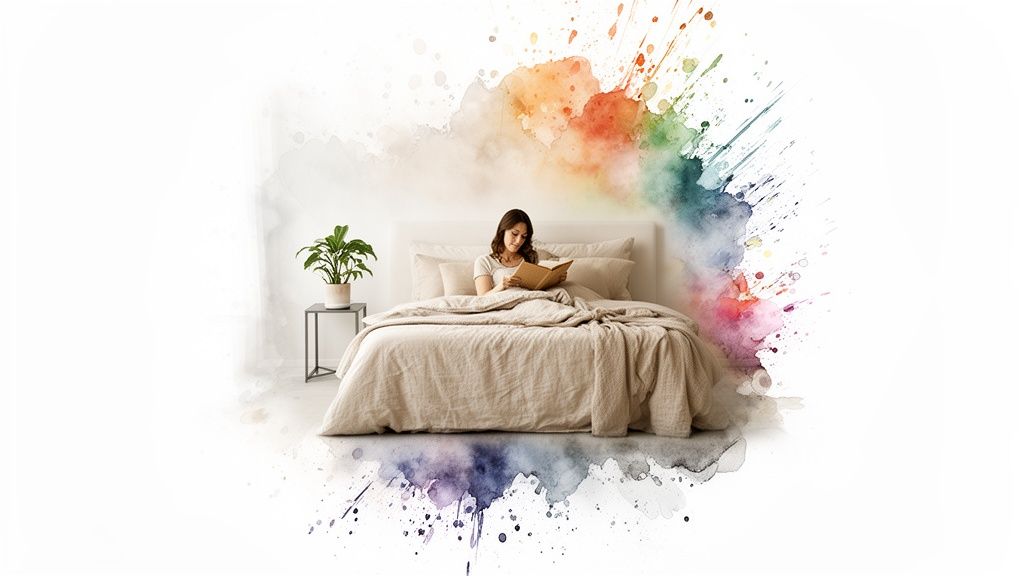
Imagine a bedroom that's not just a room, but your personal escape designed for real rest. This guide isn't about chasing fleeting trends; it's about timeless design principles that genuinely improve your quality of life. We'll explore how a few intentional choices can transform your room into a peaceful haven you'll never want to leave.
Building Your Foundation for Comfort
The cornerstone of any great bedroom is, without a doubt, the bed. Creating an inviting sleep space involves more than just picking a mattress; it's about layering quality textiles to build ultimate comfort and style. Think of high-quality bedding as the foundation for both a good night's sleep and a beautifully styled room.
You can learn more about how to pull this off by styling your bedroom with thoughtful details.
Making Smart, Personal Choices
Crafting a beautiful and functional bedroom doesn't have to break the bank. It's really about making smart, personal choices that fit your lifestyle and what you actually need. This guide will give you actionable bedroom interior design tips to help you create a space that feels uniquely yours.
Your bedroom should be the one place in your home where you can completely switch off from the outside world. Every design choice, from the wall colour to the texture of your quilt cover, should contribute to that sense of calm and personal comfort.
If you're working with a smaller space, checking out practical bedroom design ideas for small rooms can offer some brilliant strategies for making the most of what you've got. By focusing on the core principles of layout, colour, and texture, you can turn any room into a restful retreat you’ll be excited to come home to at the end of each day.
Choosing a Calming Colour Palette and Layout
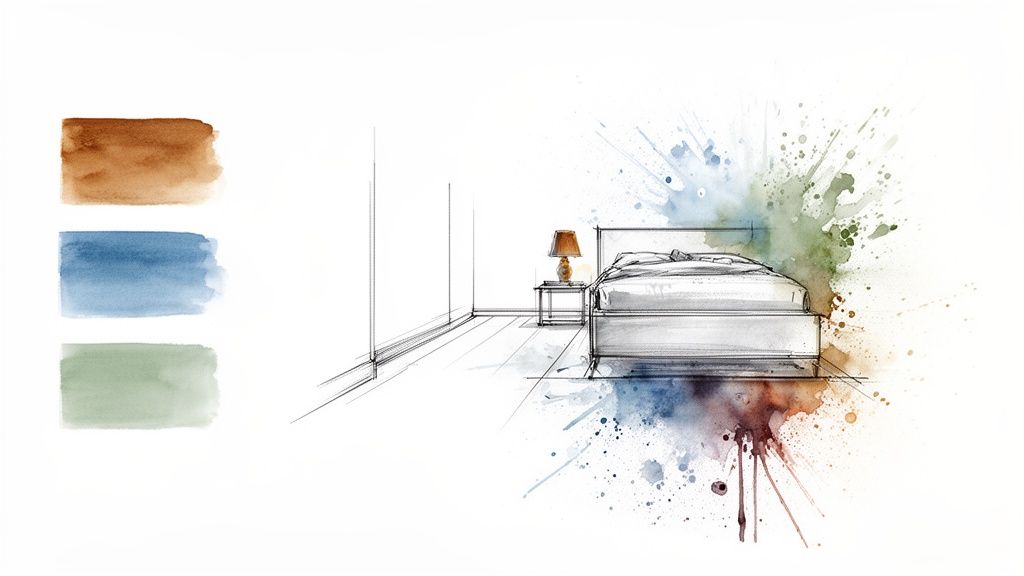
Before you even think about furniture, let's talk about the two pillars of any great bedroom design: colour and layout. These are the foundational elements that set the entire mood and functionality of your space. They genuinely influence how you feel the moment you walk in, so getting them right is the first step toward creating a true sanctuary.
Your room's colour palette is so much more than an aesthetic choice; it’s a powerful tool for promoting relaxation. While trends come and go, certain colour families have a timeless ability to soothe the mind. For a bit of local inspiration, look to the natural Australian landscape—those warm, earthy tones create a grounded and comforting atmosphere that’s hard to beat.
Crafting Your Colour Scheme
First up, think about how you want to feel in your bedroom. Are you aiming for a warm, cosy retreat or a cool, serene escape? This personal preference is your best starting point.
- Warm Tones: Colours like terracotta, soft greys, muted greens, and sandy beiges can make a room feel instantly inviting and snug. They’re perfect for creating a cocoon-like environment that helps you unwind after a long day.
- Cool Tones: On the other hand, shades of soft blue, lavender, and gentle greys evoke a sense of calm and spaciousness. These colours are known to lower stress levels, making them an excellent choice for a restful sleep environment.
Understanding the psychology behind different shades is a game-changer. For a deeper dive, you can learn more about how bedroom colours impact your mood and wellbeing. It helps you pick hues that don’t just look good but actually support your wellness goals.
Planning a Functional Layout
Once you have a colour direction, it’s time to plan your layout for the best possible flow and function. The main goal here is to create a space that feels organised, is easy to navigate, and stays uncluttered. A well-planned layout is one of the most effective tricks for enhancing a room's peaceful atmosphere.
The bed is the natural focal point and anchor of the room, so its placement dictates the flow of the entire space. Ideally, you should position the bed so you have a clear view of the door from where you lie down, but without being directly in line with it. It’s a subtle thing, but it creates a real sense of security.
Pro Tip: Try to leave at least 60-70 cm of clear space on either side of the bed and at its foot. This simple rule of thumb guarantees you can move around comfortably without feeling cramped, even in smaller rooms.
Finally, think about scale. Select furniture that is proportionate to the size of the room. A massive bed frame in a tiny room will feel overwhelming, while small, spindly furniture can get lost in a large master suite. Measure your space carefully and choose pieces that complement its dimensions, ensuring your layout remains balanced and breathable.
Mastering Layered Bedding for Hotel-Like Comfort

The bed is the undeniable centrepiece of your bedroom, so making it look and feel irresistible should be a top priority. The secret to getting that plush, five-star hotel comfort at home isn’t complicated—it’s all about the art of layering.
This goes way beyond just throwing a quilt over your sheets. It’s about strategically combining different textiles to create a look that feels professionally styled, incredibly inviting, and a dream to crawl into at the end of the day.
Start with a Quality Foundation
Think of your sheets as the primer before you paint; they set the stage for everything that comes next. Starting with a high-quality sheet set makes a world of difference to your overall comfort and the final look. Crisp, breathable sheets create the perfect base to build upon.
Build Your Layers with Texture
Once your base is sorted, the real fun begins. Layering is all about mixing textures to add visual depth, warmth, and a touch of luxury. This is where you can really let your personality shine through.
Imagine pairing the smooth, cool feel of a cotton sheet with the rich softness of a velvet quilt. Or maybe draping a chunky wool throw over a crisp linen coverlet. This interplay between different materials is one of the most effective bedroom interior design tips for creating a sophisticated and cosy sleep space.
Ready to build the perfect bed? Here’s a simple table to guide you through each step.
Your Guide to Layering Bedding Like a Pro
| Layer | Product Suggestion | Styling Tip |
|---|---|---|
| 1. The Base | A fitted and flat sheet. | Choose something breathable like the sets from the Sienna Living collection for year-round comfort. |
| 2. The Mid-Layer | A quilt or coverlet. | This is your main style element. Pick a colour or pattern that anchors your room's theme. |
| 3. The Comfort Layer | A doona or comforter. | Fold it neatly at the foot of the bed for that hotel-luxe look. It’s ready to be pulled up on chilly nights. |
| 4. The Finishing Touches | Decorative cushions and a throw blanket. | This is where you add personality. Mix cushion sizes and use a textured throw to tie everything together. |
Layering isn't just about piling things on; it's about creating a bed you can't wait to sink into.
The Power of Warm Tones and Soft Textiles
Lately, Australian bedroom design has shifted dramatically towards warm, inviting spaces that put comfort first. This means leaning into layered textiles like luxurious linen sheets, which perfectly capture the soft textures in caramel, rust, and ochre tones dominating Aussie homes.
It's not just a vibe, either. A 2023 study found that properties with warm-toned bedrooms sold 22% faster, with buyers pointing to the 'cozy factor' as a key reason. You can read more about these comforting interior design trends.
The secret to a well-styled bed is creating contrast. Don’t be afraid to mix different materials and weights. A lightweight linen sheet set paired with a heavier, more substantial quilt creates a dynamic and appealing look that feels as good as it looks.
This trend highlights that it’s not just about how your bed looks but how it feels. Using different materials creates a tactile experience that makes your room feel more relaxing.
For a complete walkthrough on getting that five-star feel, check out our guide on how to create a luxury hotel experience at home.
Selecting Furniture and Smart Storage Solutions
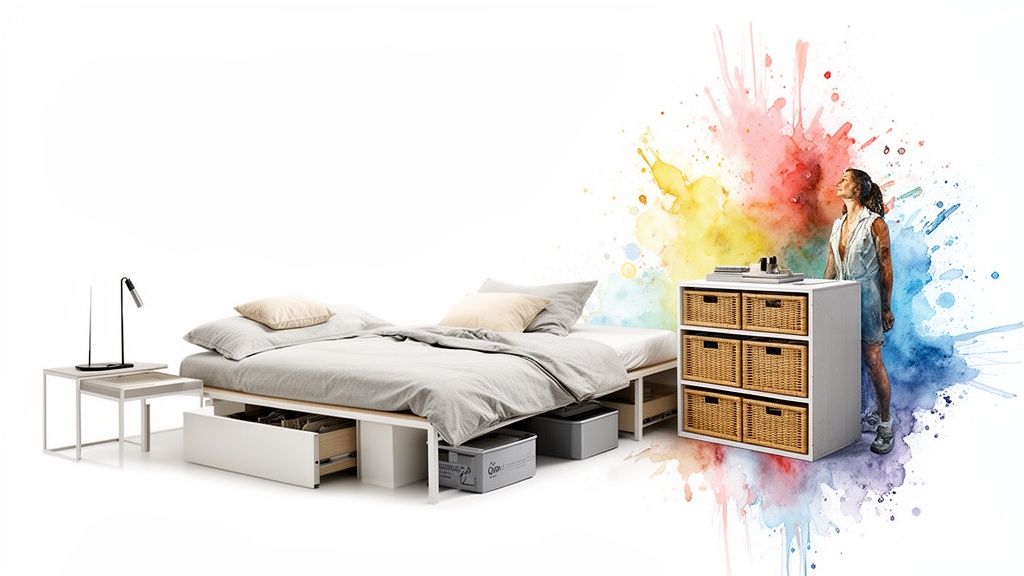
A truly restful bedroom is a clutter-free one, and the right furniture is your first line of defence against chaos. Choosing pieces that speak to your style while also boosting functionality is the secret to keeping that peaceful, sanctuary-like vibe. This is where clever bedroom design can genuinely make your daily life feel easier.
Start with the essentials: bedside tables and a dresser or chest of drawers. The golden rule here is scale. A tiny bedside table can look completely lost next to a big, upholstered bed, just as a bulky dresser can easily overwhelm a small space. Aim for balance to create a feeling of harmony.
Choosing Functional and Stylish Pieces
When you’re picking out furniture, try to think beyond just how it looks. Ask yourself how each piece can serve your needs and make your daily routine that little bit smoother.
- Bedside Tables: I always look for options with at least one drawer. It’s the perfect spot to hide away charging cords, hand cream, and books, which keeps the surface clear and tidy. For smaller rooms, a floating shelf or a wall-mounted nightstand is a brilliant way to save precious floor space.
- Dressers and Wardrobes: The size you need really depends on your clothing collection and the room you have to work with. A tallboy dresser is a fantastic vertical solution for rooms with limited width, while a wider, low-line dresser can double as a surface for a television or a few decorative items.
Think of your furniture as an investment in a more organised life. Multi-functional pieces are especially brilliant for modern families and compact living, helping you get more out of every square metre.
Unlocking Smart Storage Potential
The real secret to a tidy bedroom? It’s all about smart storage that works hard behind the scenes. We all know clutter is a source of stress, so finding a proper home for everything is essential for creating a space that feels genuinely relaxing.
Beds with built-in drawers, for instance, are an absolute game-changer. They offer a huge amount of hidden space for extra bedding, seasonal clothing, or shoes. If your bed frame is already raised, you can easily slide some shallow storage boxes on wheels underneath. And if you're trying to get your linen collection in order, check out our guide on how to organise your linen cupboard for tips that work just as well for bedroom storage.
A well-organised bedroom does more than just look good; it actively contributes to a calmer state of mind. When everything has its place, your room becomes a genuine retreat from the noise of the outside world.
It's also worth thinking about accessibility. For older family members or anyone with mobility challenges, choose furniture at a comfortable height. Bedside tables should be roughly level with the mattress, and drawers should glide open smoothly without a struggle. Making sure the bedroom is a safe and comfortable haven makes it functional for everyone, at every stage of life.
Get Your Bedroom Lighting Right
Lighting is one of those things that can completely make or break a room, but it's so often an afterthought. It’s the secret weapon in any designer's toolkit for a reason: it sets the mood. Good lighting can shift a space from a bright, get-ready-for-the-day zone to a soft, relaxing sanctuary for unwinding at night.
A single overhead light just won't cut it. To create a truly functional and beautiful space, you need to think in layers. This is how the pros do it, and it gives you complete control over the feel and function of your bedroom.
The Three Layers of Light You Actually Need
Forget about finding one perfect light fixture. A great bedroom lighting scheme is a team effort. Each of these three layers has a specific job, and when you combine them, you create a space that’s ready for anything.
-
Ambient Lighting: This is your room’s main source of light, the foundation that fills the whole space. It’s usually a central ceiling light, a set of downlights, or even a tall floor lamp that bounces light off the ceiling for a wide, even glow.
-
Task Lighting: This is focused, practical light for doing specific things. Think of a bedside lamp for reading, a light over a vanity for doing your makeup, or a small desk lamp for that little work-from-home corner.
-
Accent Lighting: This is where you have some fun. Accent lighting is all about highlighting the features you love in your room—a beautiful piece of art, a textured wall, or an interesting architectural detail. Small, directional spotlights or picture-style wall lights are perfect for this.
When you layer these three types, you can flick a few switches and completely change the room's personality.
My best tip? Install dimmer switches on your main ambient lights. It's a relatively small change that makes a massive difference, letting you dial the brightness up or down to instantly match your mood.
The type of light bulb you choose is just as crucial. Look for a warm, soft white bulb (around 2700K on the Kelvin scale). This creates that cosy, inviting glow you want in a bedroom. Steer clear of harsh, cool-toned bulbs, which can feel a bit like a doctor's office and mess with your wind-down routine.
Adding Personality with Decor and Final Touches
Alright, the big pieces are in place. The bed is positioned, the lighting is sorted, and the room has a good flow. Now for the fun part—turning it from a well-designed room into a space that feels completely, authentically you. This is where the story of your bedroom really comes to life.
Think of your walls as a blank canvas. This is your chance to hang art that makes you feel something, display photos that bring back happy memories, or show off treasures you've collected. You don’t need to spend a fortune on expensive art, either. A gallery wall of family photos, prints from a local market, or even your own kids' creations can add so much character.
Weaving in Colour and Softness
Textiles are the quickest way to inject colour, pattern, and a sense of cosiness into a room. A great rug can anchor the whole space and tie everything together, while curtains can add a bit of drama or just a soft, dreamy filter to the morning light. Cushions are where you can really let loose and play with textures and prints without a huge commitment.
This is also a great place to explore your own style, whether you’re a minimalist at heart or lean towards something more expressive. For example, recent Australian design trends are really embracing a playful maximalism. It's no longer about everything being perfectly matched. Instead, it’s about having the confidence to clash a leopard print rug with vintage velvet cushions or fill your bookshelves with an eclectic mix of treasures. A 2024 CoreLogic report even showed that homes with this 'joyful, curated maximalism' in bedrooms achieved 15% higher buyer satisfaction scores.
Don’t underestimate the power of the small details. A stack of your favourite books on the bedside table, a beautiful ceramic vase, or a unique tray for your jewellery—these are the things that make a house feel like a home.
Budget-Friendly Finishing Touches
Adding personality doesn't have to be expensive. Bringing a few indoor plants into your bedroom is a fantastic way to add life, colour, and a touch of nature. They also help improve air quality, which is always a welcome bonus for a sleep space.
And don't forget scent. Beyond how a room looks, how it smells plays a massive role in setting a calm, relaxing mood. Consider using specialised candles for sleeping to help signal to your brain that it's time to wind down.
Ultimately, styling is all about creating a space that tells your story and makes you feel good. For more ideas on pulling it all together, check out our guide on the art of mixing and matching bed linen combinations.
Common Questions About Bedroom Design
When you're diving into the world of bedroom design, a few common roadblocks always seem to pop up. Don't worry, they're the same questions everyone asks. Here’s some quick, practical advice to get you past the tricky parts so you can get on with creating a room you love.
How Can I Make My Small Bedroom Look Bigger?
Making a compact room feel spacious is all about clever tricks, and thankfully, they're easier than they sound.
Start with your walls. A lighter colour palette is your best friend here—think soft whites, pale greys, or even a muted blush. These shades reflect natural light, instantly making the room feel more open and airy.
Next, bring in a large mirror. This is a classic designer move for a reason. Placing one on a key wall can visually double the space and bounce light around, making the room feel significantly larger than it is.
Then, think about the footprint of your furniture.
- Opt for pieces that don't feel bulky. A bed with a simple, low-profile headboard or even no headboard at all works wonders.
- Consider floating nightstands. Getting furniture off the floor frees up visual space and creates a much less cluttered feel.
- Look for "leggy" furniture. Pieces that are raised on slender legs let you see more of the floor, which enhances that sense of spaciousness.
What Is the Best Bedding Material for a Comfortable Sleep?
This really comes down to what feels good to you, but natural fibres almost always win out for a truly comfortable night's sleep.
100% cotton is the timeless favourite for a reason. It’s celebrated for its breathability, softness, and durability, making it a reliable, all-round choice that just gets softer with every wash.
If you're in a warmer part of Australia or just tend to sleep hot, linen is a game-changer. It has exceptional moisture-wicking properties that keep you cool and dry. For those who are after a silky, luxurious feel, bamboo sheets are a brilliant choice and have the added bonus of being hypoallergenic.
How Do I Mix Patterns Without Making the Room Look Chaotic?
The secret to mixing patterns like a pro is all about scale and colour. If you vary the size of your patterns while sticking to a consistent colour palette, the look feels intentional and pulled-together, not messy.
Start with one large-scale pattern as your anchor—this could be a bold print on your quilt cover or a feature rug. Next, layer in a medium-scale pattern, like stripes on a cushion. Finish it off with something small and subtle, maybe on a throw or a single pillowcase. As long as they all share a couple of common colours, they’ll work together beautifully.
Ready to put these tips into action? Explore the beautiful and comfortable bedding collections at Manchester Factory to find the perfect pieces for your sanctuary. Shop now at Manchester Factory.