

If you’ve ever slipped into a set of cotton sateen sheets and wondered what makes them feel so silky and smooth, you're not alone. The first thing to know is that sateen isn't a type of material—it's all about the weave. This special structure is what gives the fabric its signature lustrous finish and luxurious drape, making it a favourite in stylish, comfortable Aussie homes.
The Secret Behind Sateen's Silky Weave
So, what gives sateen that buttery-soft texture? The magic is in its unique weaving pattern. Unlike a basic grid-like weave, sateen is crafted with a four-over, one-under thread structure.
Think of it like this: a standard cotton weave (like percale) alternates threads evenly, creating a crisp, matte surface that’s sturdy but can feel a bit rough. Sateen, on the other hand, floats four threads over the top for every single thread it tucks underneath. This technique exposes more of the thread’s surface to the light, which is exactly what creates that beautiful sheen and exceptionally smooth feel.
This construction also results in a fabric that feels a little heavier and more substantial than other cotton weaves. It offers a cosy warmth that’s perfect for year-round comfort in most Australian climates, from cool Melbourne nights to milder evenings up north.
From Weave to Wonderful
The sateen weave doesn’t just feel luxurious; it also behaves differently. The way the threads are arranged gives the fabric a beautiful, fluid drape that looks incredibly elegant on any bed.
Picture the difference between a crisp business shirt and a soft, flowing scarf—the sateen weave lets the fabric hang gracefully rather than holding a rigid shape. This quality is what instantly elevates your bedroom, giving it that polished, hotel-like appearance we all love.
Of course, the quality of the raw material plays a huge part. To really get why sateen feels so good, it helps to understand the cotton itself. For instance, premium fibres like long-staple Egyptian cotton fabric are often used to create the smoothest, most durable sateen sheets.
Sateen's defining characteristics are born from its structure. The four-over, one-under weave minimizes texture and maximizes the light-reflecting surface, resulting in a fabric celebrated for its lustre, softness, and elegant drape.
Brands like Sienna Living have perfected this process, using high-quality, long-staple cotton to create sheets that aren't just incredibly soft but are also durable enough to handle family life. As a bonus for busy households, the tight weave also makes the fabric naturally wrinkle-resistant. It’s this combination of beauty, comfort, and practicality that keeps cotton sateen a firm favourite for creating a restful sanctuary at home.
How Sateen Feels Compared to Percale and Other Weaves
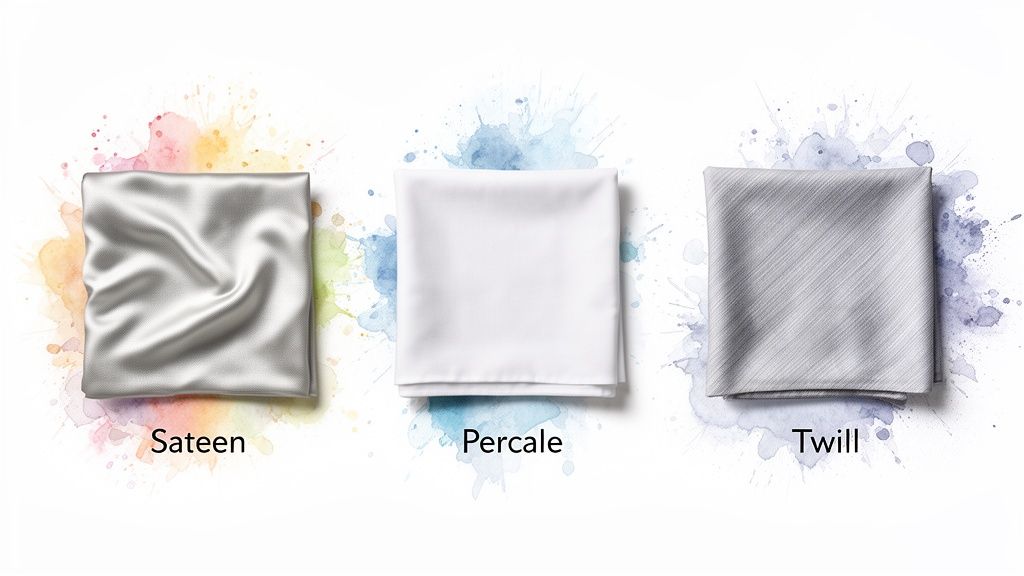
Choosing new sheets really comes down to one simple thing: how do you want your bed to feel? The texture of your bedding is deeply personal, and the fabric’s weave is the biggest player in creating that feel.
Cotton sateen is famous for its signature silky softness, but understanding how it stacks up against other popular weaves like percale and twill is the key to finding what you really love.
Imagine running your hand over a smooth, fluid silk blouse. That’s the feeling of sateen. It drapes beautifully, has a subtle, elegant sheen, and feels exceptionally soft against the skin. This comes from its unique four-over, one-under weave, which puts more threads on the surface to create that buttery-smooth finish.
Now, think of a crisp, freshly ironed cotton shirt. That’s percale. It’s light, airy, and has a cool, matte finish that feels incredible on a warm night. Its simple one-over, one-under grid lets air flow freely, making it a dream for anyone who sleeps hot.
Sateen vs Percale for the Australian Sleeper
In most Aussie homes, the choice between sateen and percale really depends on your climate and what feels most comfortable to you. Sateen offers a cosy-yet-breathable feel that’s perfect for most of the year. Its slightly denser weave gives it a comforting weight without trapping too much heat, making it a brilliant all-rounder.
On the other hand, percale is the undisputed champion for hot sleepers, especially during a sweltering Aussie summer. Its crisp, open weave feels noticeably cooler to the touch and is fantastic at wicking away moisture. If that sounds like you, it’s worth diving deeper into what percale sheets are.
The simplest way to remember the difference is through feel and finish. Sateen is silky and lustrous, while percale is crisp and matte. Your preference will guide you to the right choice for your sleep sanctuary.
Another practical win for cotton sateen sheets is their natural resistance to wrinkles. Because of that fluid drape and smooth surface, they come out of the wash looking much neater than percale, which is notorious for creasing. For busy families, this can mean less time ironing and more time enjoying a beautifully made bed.
Adding Twill into the Mix
While sateen and percale get most of the attention, you might also come across twill. This weave is easy to spot by its distinct diagonal pattern—the same kind you see on your favourite pair of jeans or chinos. Twill is known for being incredibly durable and having a soft, pliable texture. It drapes well like sateen but has a more textured feel and less shine.
It's clear just how much Aussies value great bedding. In Australia, sheets and mattress covers make up a huge 42.02% of the bed linen market, which is valued at around USD 1.49 billion. It just goes to show how central these essentials are to creating a comfortable home.
To make the decision even easier, here’s a quick breakdown of how these three popular cotton weaves compare side-by-side.
Sateen vs Percale vs Twill at a Glance
This table cuts straight to the chase, comparing the key features of the three most common cotton weaves. Use it to quickly see which one best fits what you’re looking for in a set of sheets.
| Feature | Cotton Sateen | Cotton Percale | Cotton Twill |
|---|---|---|---|
| Primary Feel | Silky, smooth, and buttery-soft | Crisp, cool, and light | Soft, durable, and textured |
| Appearance | Subtle lustre and elegant sheen | Matte, classic finish | Distinct diagonal pattern |
| Best For | Those who love a luxurious, soft feel | Hot sleepers and warm climates | Durability and a textured feel |
| Wrinkle Factor | Naturally wrinkle-resistant | Prone to wrinkling | Moderately wrinkle-resistant |
| Breathability | Good breathability, slightly warmer | Excellent breathability, very cool | Good breathability, durable |
Ultimately, whether you lean towards the silky drape of sateen, the cool crispness of percale, or the sturdy softness of twill, the best choice is the one that makes you look forward to climbing into bed each night.
Decoding Thread Count (and Why It’s Not Everything)
For years, we’ve all been told that a higher thread count means better, more luxurious sheets. It’s an easy number to look for when you're shopping, but this is probably one of the biggest myths in the bedding world. When it comes to cotton sateen sheets, focusing only on a sky-high thread count can actually lead you away from true quality.
The truth is, the magic number for high-quality sateen is somewhere between 300 and 600. This range really hits the sweet spot, offering the perfect balance of silky smoothness, breathability, and durability. A thread count in this zone means the fabric is dense enough to feel soft and substantial, but still open enough to let air circulate, keeping you comfortable all night long.
If you spot a thread count soaring to 800, 1000, or even higher, it pays to be a bit sceptical. To get those impressive numbers, manufacturers often have to use ultra-thin, weaker yarns or twist multiple short threads together. This can result in a sheet that feels heavy and less breathable, and it's less likely to stand the test of time.
The Real Mark of Quality: Long-Staple Cotton
So, if thread count isn't the ultimate sign of quality, what is? The answer is all in the cotton fibre itself—specifically, its staple length. Staple just refers to how long the individual cotton fibres are that get spun into the yarn.
Think of it like building a rope. A rope woven from one long, continuous piece of fibre will be incredibly strong and smooth. But if you try to make a rope by twisting together lots of short, frayed pieces, it’ll be weaker, rougher, and more likely to break apart under stress.
The exact same idea applies to your sheets.
- Long-Staple Cotton: These fibres are longer, finer, and much stronger. When they’re spun into yarn, they create a thread that is exceptionally smooth and resilient. This is the gold standard for premium bedding.
- Short-Staple Cotton: These shorter fibres need a lot more twisting to hold them together. The result is a coarser, weaker yarn that’s much more prone to pilling and breaking down over time.
This is exactly why sheets made from long-staple cotton, like those in the Sienna Living collection, feel smoother and softer with every single wash. The long, unbroken fibres resist pilling and create a durable fabric that keeps its luxurious feel for years, making it a much smarter investment. To get a better grasp of this, you can learn more about what thread count really means in bed sheets and why the quality of the fibre is so crucial.
Prioritising Fibre Over Figures
At the end of the day, a super-high thread count is often more of a marketing gimmick than a genuine indicator of quality. It’s an easy number to pop on the packaging, but it just doesn’t tell the whole story. By understanding how important fibre quality is, you can shop with confidence, knowing you’re choosing sheets based on what truly matters.
The secret to luxurious, long-lasting cotton sateen sheets isn't found in an inflated thread count, but in the strength and smoothness of long-staple cotton fibres. This is the foundation of true comfort and durability.
The growing demand for high-quality bedding reflects a broader trend right across Australia. In fact, the Australian bed linen market reached a value of USD 11,221.7 million in 2024 and is projected to climb to USD 21,099.5 million by 2034. This boom is driven by Aussie families wanting premium, durable sheets that deliver on both comfort and style. You can explore more about this market growth in this detailed report from IMARC Group.
When you’re next shopping for cotton sateen sheets, try to look beyond the numbers on the packaging. Instead, keep an eye out for descriptions that mention long-staple or Egyptian cotton. This small shift in focus will help you choose sheets that not only feel incredible on the first night but continue to get better with age.
Your Practical Guide to Shopping for Sateen Sheets
Shopping for new sheets online can sometimes feel like a bit of a guess, but knowing what to look for turns it from a gamble into a guaranteed win. Beyond the weave and thread count, it's the practical details—like fit, fabric finishing, and safety certifications—that really determine how happy you’ll be with your new cotton sateen sheets.
This guide will walk you through exactly what to keep an eye on, so your choice not only feels luxurious but also fits perfectly and contributes to a healthier home.
Securing the Perfect Fit
There’s nothing more frustrating than a fitted sheet that constantly pings off the corners of your mattress. Nine times out of ten, the culprit is a pocket depth that’s just too shallow for your bed. Modern mattresses, especially those with plush pillow tops, are often much deeper than older styles.
To sidestep this common problem, just follow these simple steps before you buy:
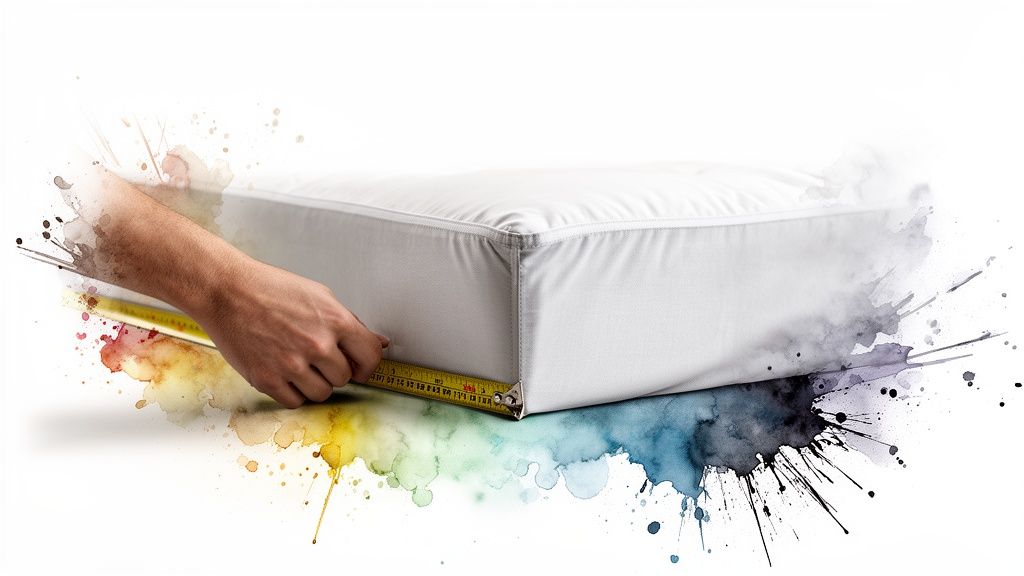
- Measure Your Mattress Depth: Grab a tape measure and check the height of your mattress, from the bottom edge right to the very top.
- Add Extra Room: Look for a fitted sheet with a pocket depth that’s at least 5-10 cm deeper than what you measured. That extra fabric is what allows the sheet to tuck securely underneath, stopping it from slipping off when you move.
It’s a small step that makes a massive difference in your day-to-day comfort and is a detail that's so often overlooked.
Understanding Fabric Finishes
The journey of a cotton sateen sheet doesn’t just end at the loom. Special finishing processes can make a huge difference to the fabric's look, feel, and durability. One of the most important treatments to look out for is mercerisation.
Mercerisation is a process where the cotton fabric is treated to strengthen the fibres and boost its lustre. You can think of it like a spa treatment for the cotton—it leaves it smoother, more durable, and better at taking on colour.
What Mercerisation Means for You:
- Enhanced Lustre: It brings out the natural sheen of the sateen weave, giving your sheets a richer, more luxurious look.
- Increased Strength: Mercerised threads are stronger and more resistant to pilling, which helps your sheets last longer through wear and washing.
- Vibrant Colour: The process helps the fabric hold dye more effectively, so your sheets stay vibrant and true, wash after wash.
Prioritising Health and Safety
For families, or really anyone mindful of what they bring into their home, knowing your bedding is free from harmful substances provides real peace of mind. This is where independent certifications become so valuable.
When you're browsing for cotton sateen sheets, keep an eye out for the OEKO-TEX STANDARD 100 label. This is a globally recognised certification that guarantees every part of the product—from the thread right down to the buttons—has been tested for and cleared of a long list of harmful chemicals.
Choosing OEKO-TEX certified sheets means you’re investing in a product that is safer for you and your loved ones. It’s a simple way to make sure your sleep sanctuary is as healthy as it is comfortable. For a more detailed walkthrough, check out this ultimate guide to buying the right bed sheets. When you focus on these practical details, you can shop with total confidence.
How to Care for Sateen Sheets to Keep Them Silky
So, you’ve invested in that buttery softness of cotton sateen sheets. The good news is, with a little care, you can protect that silky feel for years to come. Getting the washing and drying right is simple, but it’s the secret to maintaining the fabric’s strength, shine, and luxurious touch.
Following these steps will help you dodge common problems like shrinking, pilling, or losing that beautiful sheen. It’s all about gentle handling to protect those long cotton fibres that make your sheets feel so special in the first place.
The Ideal Washing Routine
The golden rule for washing your cotton sateen sheets is to avoid high heat. Hot water can make cotton fibres shrink and weaken over time, which is the fastest way to lose that signature softness.
- Choose the Right Temperature: Always go for a cool or warm wash (around 30-40°C). This is more than enough to get your bedding properly clean without being harsh on the delicate sateen weave.
- Select a Gentle Detergent: Harsh chemicals are the enemy of soft fabrics. Stick to a mild, pH-neutral liquid detergent to protect the fibres. It's best to steer clear of powdered detergents, as they can sometimes leave a chalky residue behind.
- Skip the Fabric Softener: This might sound strange, but fabric softeners often do more harm than good on sateen. They work by coating the fibres in a waxy film, which blocks their natural breathability and can lead to a build-up that dulls the fabric's shine over time.
For a truly gentle clean, it’s a great idea to wash your sheets on their own, away from towels or heavier clothing. This stops rougher fabrics, zippers, or buttons from snagging the smooth surface of your sateen.
Drying for Lasting Softness
How you dry your sheets is just as critical as how you wash them. Once again, high heat is the main offender when it comes to fibre damage and shrinkage, so a gentle touch is always the way to go.
The best method, especially with our Aussie climate, is to line dry your sheets in the shade. Direct sun can fade colours and make the cotton fibres brittle over time. A shady, breezy spot will leave them feeling fresh and naturally soft without any of the damage.
If you have to use a machine dryer, always pick a low heat, gentle tumble dry setting. Try to pull the sheets out as soon as the cycle finishes—or even while they’re still the tiniest bit damp—to keep wrinkles at bay. Popping them straight onto the bed while they're still warm helps smooth out any last creases for that perfect, hotel-crisp finish. For a deeper dive into laundry best practices, our guide on how to wash bed sheets correctly has even more helpful tips.
For those bigger items like doonas or delicate mattress toppers that need a bit more attention, exploring professional bedding cleaning services can be a real lifesaver. By following these simple steps, you’ll ensure your beautiful cotton sateen sheets keep delivering that luxurious, silky comfort, night after night.
Styling Your Bedroom with Sateen's Elegant Drape
Your bed is more than just a place to sleep; it’s the centrepiece of your bedroom. The beautiful drape and subtle lustre of cotton sateen sheets are powerful design tools that can instantly lift the entire look and feel of your space, turning it from just a room into a genuine retreat.
The real magic of sateen is in how it plays with light. Its smooth surface catches the morning sun or soft evening lamplight, creating a gentle glow that adds depth and warmth. This subtle sheen can make a room feel more spacious and inviting—a simple trick that works wonders in smaller bedrooms or spaces with limited natural light.
Creating a Luxurious Layered Look
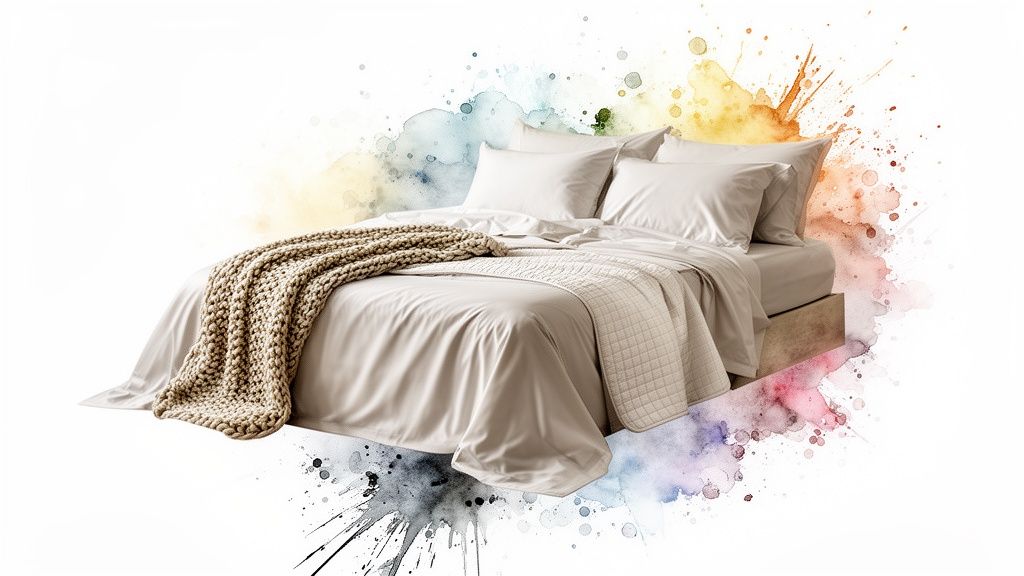
One of the best ways to style cotton sateen is by playing with texture. The silky smoothness of sateen provides the perfect base for layering different materials, creating a bed that looks as good as it feels. This technique adds visual interest and a sense of cosy sophistication, just like what you’d find in a high-end hotel.
To get this polished look, try a few of these pairings:
- Chunky Knit Throws: The contrast between sleek sateen and a plush, chunky knit blanket is stunning. Drape one casually across the end of the bed for an effortlessly chic and inviting touch.
- Crisp Quilts or Coverlets: Layering a textured quilt or a matelassé coverlet over your sateen top sheet adds lovely dimension. Fold it back halfway to show off the beautiful sheen of the sheets underneath.
- Velvet or Linen Cushions: A mix of cushions in materials like velvet, linen, or even faux fur can complete the look, adding pops of colour and rich texture that feel truly inviting.
By mixing these elements, you create a bed that’s dynamic and appealing, practically begging you to relax and unwind. For more ideas on transforming your space, explore our guide to styling your bedroom for a dreamy and relaxing atmosphere.
Choosing the Perfect Colour Palette
Sateen's gentle sheen beautifully enhances colour, making both soft neutrals and rich jewel tones come alive. When you're picking a colour for your cotton sateen sheets, think about the mood you want to create in your bedroom.
Soft, classic colours like white, ivory, or a gentle dove grey are timeless. They reflect light beautifully and create a serene, calming environment. These shades act as a perfect canvas, allowing you to easily introduce other colours through your quilt cover, cushions, or artwork.
The elegant drape of sateen isn't just a feature; it's a styling tool. Let the fabric flow naturally over the sides of the bed to create soft, graceful lines that soften the overall look of your room.
On the other hand, if you prefer a bit of drama, sateen sheets in deeper hues like navy, charcoal, or emerald look incredibly rich and opulent. The fabric's lustre gives these darker colours a sophisticated depth that feels both cosy and luxurious, making them a fantastic choice for a feature bedroom. No matter your style, sateen provides a beautiful foundation for a polished, cohesive, and deeply personal space.
Got Questions About Sateen Sheets? We've Got Answers.
Even after you've narrowed it down, a few practical questions always seem to pop up before you hit "buy". To help you feel completely confident in your choice, we’ve put together straightforward answers to the queries we hear most often.
Think of it as your final checklist, here to clear up any last-minute doubts so you can choose a set of sheets you’ll genuinely love sleeping in.
Are Cotton Sateen Sheets Good for Hot Sleepers in Australia?
This is a big one for anyone who’s sweated through an Aussie summer, and the short answer is yes, they're a fantastic option for most of the year. While sateen has a slightly tighter weave than its crisp cousin, percale, it’s still made from 100% cotton—a naturally breathable fibre that lets air flow freely.
The silky, smooth finish of sateen feels cool and pleasant against the skin, which is a real bonus in warmer climates. Now, if you're up in the seriously hot and humid parts of northern Australia, the ultra-airy feel of percale might just win out. But for everyone else wanting that perfect balance of breathability and a luxuriously soft, cosy feel, sateen is an excellent all-rounder.
Will My Sateen Sheets Pill Over Time?
Pilling—those tiny, annoying balls of fluff—is all about the quality of the cotton fibres, not the weave itself. This is great news for sateen lovers. High-quality sheets made from long-staple cotton are naturally very resistant to pilling.
Long, strong fibres are much less likely to break, fray, and tangle up. The best way to give your sheets a long, smooth life is to follow the care instructions. Washing in cool water with a gentle detergent and staying away from high heat in the dryer will protect the fabric and keep it feeling new.
Quality is your best defence against pilling. Investing in sateen sheets made from long-staple cotton means you’re getting a durable, smooth surface that stands up to washing and sleeping on, night after night.
How Do I Keep My Sateen Sheets From Wrinkling?
One of the best practical perks of sateen is how well it resists wrinkles. The fluid, drapey nature of the weave means it simply doesn't hold onto creases as stubbornly as other fabrics like percale.
For the smoothest possible finish without pulling out the iron, the secret is all in how you dry them.
- Get Them Out Quick: Pull your sheets out of the dryer the moment the cycle finishes. Letting them sit in a crumpled heap is what really sets in wrinkles.
- Make the Bed While They’re Warm: Put the sheets straight onto the bed while they're still a little warm. The slight tension as you tuck them in helps the last few creases fall right out.
- The Water Spritz Trick: For a quick, no-iron fix, make the bed and then lightly spritz any wrinkled spots with a little water. Smooth the fabric out with your hands, and it’ll dry perfectly flat in a few minutes.
Answering these questions really highlights why cotton sateen sheets are such a go-to choice for anyone looking for that perfect mix of luxury, comfort, and real-life practicality.
Ready to feel the silky-smooth difference for yourself? Explore the stunning range of high-quality cotton sateen sheets at Manchester Factory and find the perfect set to upgrade your bedroom. You can check out beautiful collections from trusted brands like Sienna Living right here at https://www.manchesterfactory.com.au.