

The secret to keeping white sheets looking hotel-fresh isn't about using harsh chemicals. It’s all about a consistent routine with the right basics: proper sorting, warm water, and gentle whitening boosters like oxygen bleach. This simple approach stops the build-up of body oils and sweat that yellows sheets over time, keeping your bedding bright and inviting.
Why Perfectly White Sheets Matter
There’s a special kind of satisfaction that comes from slipping into a bed made with crisp, brilliantly white sheets. It’s a feeling of pure calm and cleanliness, the kind you get at a luxury hotel. And there’s a reason hotels almost exclusively use white—it’s a powerful symbol of hygiene. Since white can’t hide a single stain, a spotless sheet instantly tells you the bedding is impeccably clean.
That same feeling of comfort is just as important in our own homes. White sheets help turn your bedroom into a true sanctuary, creating a serene space to unwind. But we’ve all felt that frustration of watching those pristine sheets slowly turn dull or yellow, no matter how often they’re washed.
Understanding Why Sheets Go Yellow or Dingy
The good news is that discolouration isn’t inevitable. It’s usually caused by a few common culprits that are surprisingly easy to manage. Once you know what you’re up against, you can build a simple laundry routine to stop it from happening in the first place.
Here are the main reasons your white sheets might be losing their sparkle:
- Body Oils and Sweat: We all shed natural oils, sweat, and skin cells in our sleep. Over time, these build up in the fabric fibres and oxidise, which is what creates those stubborn yellow stains.
- Product Buildup: Residue from body lotions, face creams, and even some fabric softeners can coat the fibres, acting like a magnet for dirt and leading to discolouration.
- Too Much Detergent: It sounds counterintuitive, but using more detergent than you need can leave behind a soapy film. This film traps grime, making your whites look grey and dingy.
- Hard Water Minerals: Many parts of Australia have hard water. The high mineral content can leave deposits on fabric over time, giving them a dull, yellowish tinge that’s hard to shift.
The goal isn’t just to remove stains after they appear, but to build a preventative laundry routine that keeps them bright from the start. This guide will walk you through everything, from choosing the right sheets to perfecting your wash day.
It all starts with good quality sheets. If you’re looking for guidance on what fabric will work best for you, our ultimate guide on buying the right bed sheets is the perfect place to start. From there, we’ll show you exactly how to maintain that hotel-fresh feeling for years to come.
Building Your Laundry Toolkit for Whites
Getting that crisp, hotel-white look for your sheets at home doesn't mean you need a cupboard overflowing with harsh chemicals. Honestly, the secret is a simple, effective toolkit, probably using things you already have or can grab easily at the local supermarket. Nailing this setup is the first real step to keeping your white sheets looking brilliant.
First things first, let's forget the old advice about chlorine bleach being the only way. While it’s a powerful disinfectant, it can be incredibly harsh on lovely cotton fibres, causing them to weaken and even turn yellow over time. It can actually react with the proteins in sweat and body oils, making those pesky stains even worse.
Instead, a gentler, more fabric-friendly approach is the way to go. It focuses on alternatives that brighten and clean without causing that long-term damage.
The Core Whitening Agents
The foundation of your toolkit is built around just a few key players. These items work beautifully together to tackle stains, dissolve grime, and bring back that brightness safely.
Top of the list is oxygen bleach. Unlike its chlorine cousin, oxygen bleach (you’ll usually find it as a powder) is a colour-safe brightener that works by releasing tiny oxygen bubbles to break down dirt and stains. It’s so much gentler on fabrics, which makes it perfect for regular use on your favourite cotton or linen sheets.
Next up are two pantry staples: baking soda and distilled white vinegar. These are the true unsung heroes of the laundry room. Baking soda is a natural deodoriser and a mild alkali, which helps soften water and gives your detergent a real boost. Vinegar, on the other hand, is a mild acid that works wonders in the rinse cycle, cutting through any leftover soap residue that can leave sheets feeling stiff and looking a bit grey.
My Tip: A quick but important warning – never mix vinegar and chlorine bleach, as it creates toxic chlorine gas. By sticking to this gentler toolkit of oxygen bleach, baking soda, and vinegar, you completely avoid that risk and get far better results for your white sheets anyway.
Essential Laundry Boosters and Tools
Beyond the core whiteners, a few other items can take your laundry routine from good to great, especially if you’re dealing with things like hard water or stubborn buildup.
- Washing Soda: Also known as sodium carbonate, this is like baking soda’s more powerful cousin. It's highly alkaline, making it fantastic at cutting through grease and softening hard water—a common issue in many parts of Australia. Just a small amount can dramatically improve how well your detergent cleans.
- A Quality Detergent: It pays to choose a high-quality liquid or powder detergent, preferably one without any added fabric softeners. And while you're thinking about your machine, don't forget its filter. An often-overlooked part of the puzzle, keeping it clean is vital for your washer to work properly. You can learn exactly how to clean a washing machine filter to prevent gunk from redepositing on your lovely whites.
- Wool Dryer Balls: When it’s time to dry, please ditch the chemical-heavy dryer sheets and fabric softeners. These products coat fibres in a waxy film that actually attracts dirt and makes your sheets less absorbent. Wool dryer balls are a brilliant, natural alternative that softens fabric, cuts down on static, and even shortens drying time, all without leaving any residue behind.
And don't forget to protect your pillows! They absorb a huge amount of body oils and sweat over time. Using quality pillow protectors is a simple, preventative step that makes a massive difference. You can see the different options available in our guide to cotton pillow protectors.
With these simple tools on hand, you’re perfectly set up to tackle laundry day and keep those white sheets looking their absolute best.
Your Washing Routine for Pristine Results
Right, now that you have your laundry arsenal sorted, it’s time to get down to business. This is where a little bit of consistency goes a long way, turning wash day from a chore into a foolproof method for brilliantly white sheets, every single time. A good, repeatable routine is really the secret to keeping that crisp, hotel-fresh feeling at home.
The first rule is the most important, and it’s non-negotiable: always wash your white sheets separately. I can’t stress this enough. Even the palest of colours can bleed a tiny amount of dye into the wash, and over time, that’s what turns your beautiful whites into a sad, greyish disappointment. By giving your sheets their own dedicated cycle, you completely sidestep the risk of dye transfer.
Pre-Treating for a Flawless Finish
Before your sheets even see the inside of the machine, a bit of targeted attention can make a world of difference. The main culprits behind that dreaded yellowing are body oils and sweat, which always build up around the pillowcases and the top edge of the flat sheet where it’s folded over. A simple pre-treatment paste is your best friend here.
Just mix a few tablespoons of baking soda with a splash of water until you get a thick, spreadable paste. Gently rub this into any discoloured spots on your dry sheets and let it sit for at least 30 minutes. The baking soda gets to work breaking down the oils, lifting them out of the fabric fibres so your detergent can wash them away properly. It gives your main wash a huge head start.
This little graphic sums up the core parts of a powerful, natural laundry routine that really works.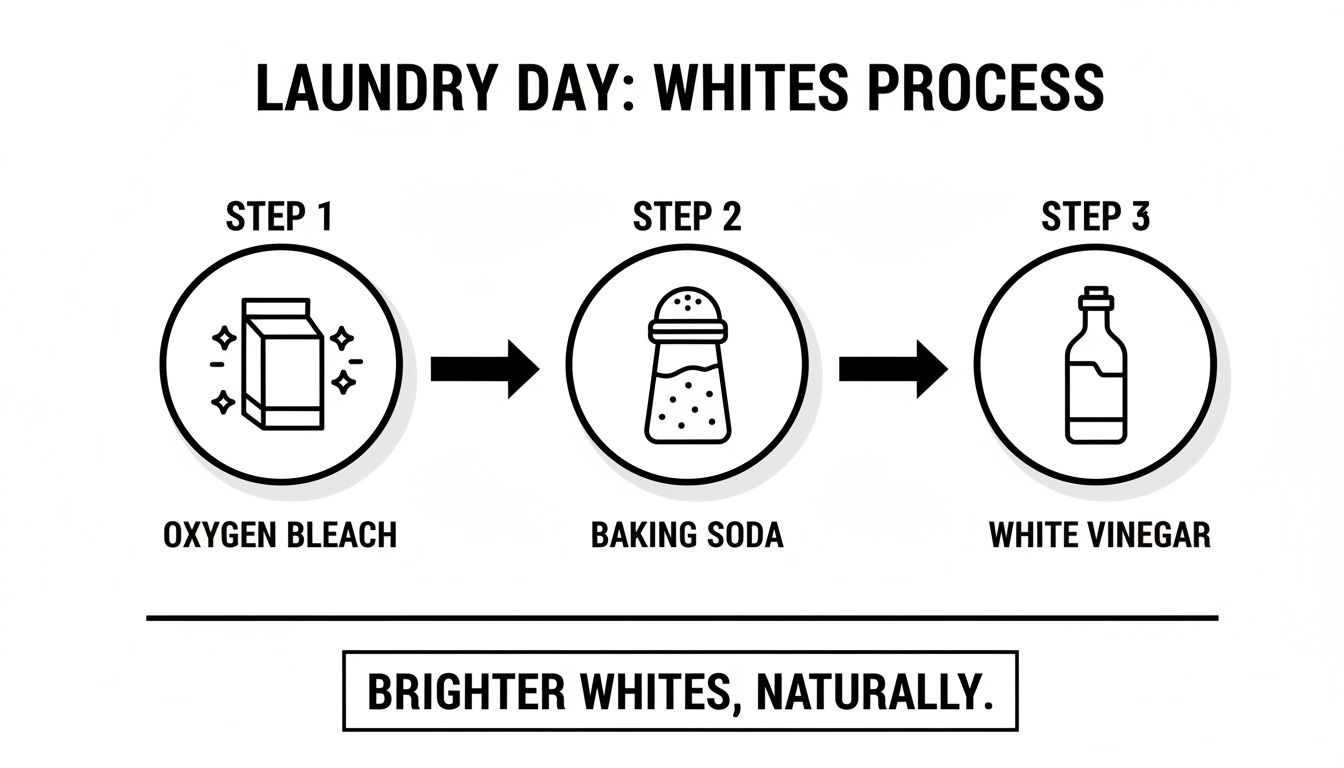
By using oxygen bleach for brightening, baking soda for pre-treating, and vinegar for the final rinse, you’ve got a complete system for keeping those white sheets looking brand new.
Setting Up the Perfect Wash Cycle
Once your sheets are pre-treated, it’s time for the main event. Getting the machine settings right is crucial for a deep clean that also looks after the fabric. For white cotton or linen sheets, a hot wash is your greatest ally.
Aim for a water temperature of around 60°C. That heat is brilliant at killing off bacteria, dust mites, and other allergens that not only make sheets look dingy but can also cause musty smells. In fact, washing at this temperature can eliminate 99.9% of common household bacteria, so you know your sheets are hygienically clean, not just visibly clean.
A common mistake is cramming too much into the machine to save time. Sheets need plenty of room to tumble and swish around in the water. If they’re packed in too tight, they won’t get cleaned properly, and you’ll end up with detergent residue trapped in the folds.
For those looking to make their laundry a bit more sustainable, adopting an eco wash system can help you use less water and energy without sacrificing results.
How Often Should You Wash Your Sheets?
How often you wash them is just as important as how you wash them. Regular washing stops that gradual build-up of body oils and dirt that becomes so much harder to shift later on. We’re already pretty good at it here in Australia; a 2022 Canstar Blue survey found that 75% of Aussies wash their sheets at least every two weeks.
To keep them truly bright white, though, a weekly wash is the gold standard. If you’re a hot sleeper or it’s the middle of a steamy summer, washing them every three to four days is even better. This consistent routine is a huge part of the puzzle. For more tips on finding the perfect schedule, check out our guide on how often to wash bed sheets.
When you combine a hot wash, the right frequency, and a good detergent, you’ve got a solid foundation. To take it one step further, add a cup of white vinegar to the final rinse cycle. It works as a natural fabric softener and also helps dissolve any mineral build-up from hard water, which is common in many Aussie cities. This simple trick ensures no soapy residue gets left behind, leaving your sheets feeling softer and looking noticeably brighter.
Drying and Storing for Lasting Brightness
The quest for perfectly white sheets doesn't end when the washing machine chimes. How you dry and store your bedding is just as crucial as the wash itself, playing a huge part in keeping that crisp, brilliant white colour for years to come.
It’s tempting to just toss everything into the dryer, but this is where unseen damage often happens. High heat can effectively “bake” any leftover stains or body oils into the fabric, making them almost impossible to remove later on. It also weakens delicate cotton fibres, leading to premature wear and a scratchy feel.
Harnessing the Power of the Sun
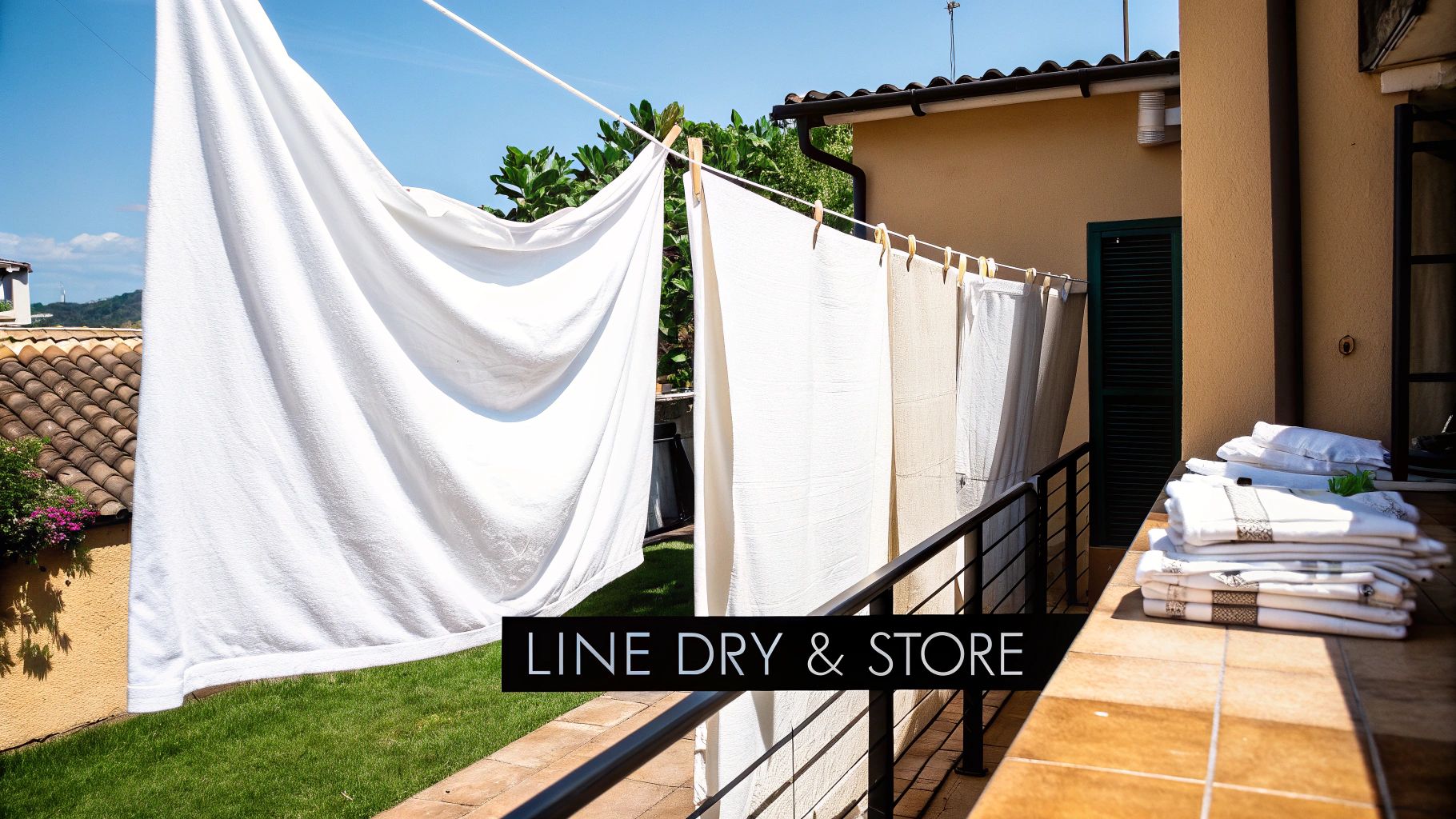
Whenever you can, let Mother Nature do the work. Line-drying white sheets in the sun is one of the oldest and most effective laundry tricks in the book. The sun’s ultraviolet (UV) rays act as a natural bleach and disinfectant, breaking down stubborn stain molecules through a process called photobleaching.
This is especially true here in Australia. Perth, for instance, gets around 3,200 hours of sunshine a year, providing a free, chemical-free way to whiten and kill up to 99% of germs. One study even found that Sydneysiders who regularly line-dried their sheets kept them 40% whiter after six months compared to those who only used a machine.
To lock in that brightness and prevent the 25% of dirt that can get trapped in wrinkles, a quick iron on a cotton setting works wonders.
My grandmother always swore by a sunny day for her whites, and she was right. There’s a unique freshness to sun-dried sheets that no dryer sheet can replicate. Plus, it’s completely free and much gentler on your bedding.
Smart Machine Drying Techniques
Of course, line-drying isn't always practical, especially during a rainy week or if you live in an apartment. If you have to use a machine dryer, a few small adjustments can protect your sheets and keep them looking their best.
The golden rule is to use a low to medium heat setting. High temperatures are the enemy of white fabrics, causing potential yellowing and fibre damage. It’s far better to let them tumble for a little longer on a gentler cycle.
Here are a few tips to get it right:
- Use Wool Dryer Balls: Ditch the commercial dryer sheets. They coat fibres in a waxy film that builds up over time, making your whites dull and less absorbent. Wool dryer balls are a fantastic alternative—they soften fabrics naturally, cut down on static, and help sheets dry more evenly.
- Don't Over-Dry: This is a big one. Pull your sheets out of the dryer while they are still the slightest bit damp. Over-drying makes cotton fibres brittle and prone to wrinkling. Spreading them on the bed or hanging them over a door to air-dry for the final few minutes will leave them feeling incredibly soft and fresh.
Storing Your Sheets for Freshness
Proper storage is the final piece of the puzzle. Tossing freshly laundered sheets into a plastic tub or a crowded, stuffy linen cupboard can undo all your hard work. You want to store them in a way that allows the fabric to breathe.
Plastic storage tubs are a common mistake. They trap moisture and stop air from circulating, creating a humid environment where mildew can grow and fabrics can develop a musty smell or even yellow.
The best place for your white sheets is a cool, dark, and well-ventilated linen cupboard. For long-term storage or to keep sets organised, use breathable cotton bags. This protects them from dust while allowing air to flow freely.
A great little trick is to store each complete sheet set inside one of its matching pillowcases. This keeps everything neatly bundled and makes grabbing a fresh set an absolute breeze. For more advice, check out our guide on how to store your bedding properly. It's filled with tips to keep your linens fresh and ready for use.
Even with the best care routine, there might come a day when your crisp white sheets start looking a little… sad. You might notice a faint yellow tinge creeping in, or just a general dullness that wasn't there before. Don't worry, it happens to all of us. This is your rescue guide for bringing those tired sheets back from the brink and restoring their brilliant white sparkle.
First, it helps to understand what you’re up against. Yellowing and dinginess usually have different causes. That yellowish tint is often the result of body oils, sweat, and even skincare products oxidising in the fabric over time. A grey, dingy look, on the other hand, is more likely a sign of detergent residue, a bit of dye transfer from other items, or mineral buildup from hard water.
Identifying the Main Culprits
Before you can fix the problem, you need to play detective. Pinpointing the issue helps you choose the right solution and, more importantly, stop it from happening again.
Here are the most common reasons your white sheets might be losing their brightness:
- Product Buildup: Residue from body lotions, natural oils, and even fabric softeners can coat the fibres, creating a sticky film that dirt just loves to cling to.
- Detergent Overload: Using too much laundry detergent is one of the biggest mistakes people make. The excess soap doesn't rinse out properly, leaving a residue that makes whites look dull and feel a bit stiff.
- Hard Water Minerals: Many parts of Australia have hard water, which is high in minerals like calcium and magnesium. These minerals can deposit onto fabrics over time, giving them a stiff feel and a yellowish tint.
A simple yet effective natural brightener might already be in your fruit bowl. A study of 500 Melbourne users found that adding half a cup of lemon juice to a hot wash can boost brightness by 35%, thanks to its natural citric acid. It's a great eco-friendly trick, especially if you're mindful of water restrictions.
How to Strip Your Laundry for a Deep Refresh
When your sheets need a serious intervention, a technique called laundry stripping can work absolute wonders. This process uses a hot water soak with a special combination of boosters to dissolve months—or even years—of stubborn, invisible buildup. It’s incredibly satisfying (and a little horrifying) to see the colour of the water change as all that hidden grime is pulled from the fabric.
Be warned, though, this is an intensive treatment. It shouldn't be done too often—maybe once or twice a year for sheets that get regular use. It’s also best suited for durable fabrics like cotton and linen.
Here is a simple recipe for laundry stripping:
- Fill a bathtub or a large laundry tub with the hottest water your tap can manage.
- Add the stripping agents: Stir in ¼ cup of borax, ¼ cup of washing soda (sodium carbonate), and a full scoop of a good-quality, enzyme-based laundry detergent until dissolved.
- Submerge your clean sheets: Pop your already-washed sheets into the mixture, making sure they are fully covered by the water.
- Soak and stir: Let the sheets soak for at least four to five hours, giving them a good stir with a wooden spoon every hour or so.
- Wash again: After soaking, drain the (now likely very murky) water. Wring out the sheets and run them through a final, rinse-only cycle in your washing machine—no extra detergent needed.
This process effectively resets your sheets by removing all the gunk that regular washing can leave behind. Think of it as the ultimate deep clean for bringing back that brand-new brightness.
Adjusting Your Approach for Different Fabrics
Not all white sheets are created equal, and your troubleshooting method should reflect that. While durable cotton can handle intensive treatments like stripping, more delicate fabrics need a much gentler touch.
For instance, fabrics like bamboo or modal are much softer and can be damaged by prolonged exposure to high heat and harsh alkalis. For these materials, definitely skip the stripping. Instead, opt for a gentler pre-soak in a tub of warm water with a cup of white vinegar or a scoop of oxygen bleach. Let them soak for about an hour before washing as you normally would on a cooler, delicate cycle.
By adapting your technique to the fabric, you can revive your sheets without compromising their beautiful feel or lifespan. For more seasonal advice, our guide on caring for your bed sheets this spring offers plenty of extra tips for keeping all types of bedding fresh.
Common Questions About Keeping Sheets White
Even when you have a good routine down pat, a few questions always pop up. To wrap things up, let's go through some of the most common queries we hear from customers trying to keep their white sheets looking brand new.
How Often Should I Wash My White Sheets?
The golden rule here is a weekly wash. Sticking to this schedule is the best way to stop the gradual build-up of body oils, sweat, and skin cells that slowly turns sheets yellow. Think of it as preventative maintenance for your bed.
If you live in a warmer part of Australia or tend to get a bit sweaty at night, you might even find washing them every three or four days works wonders. The key takeaway is consistency—frequent washing stops grime from setting in and becoming a much bigger headache down the track.
Can I Use Chlorine Bleach for Extra Whiteness?
Honestly, it’s best to steer clear of chlorine bleach when it comes to your good sheets. While it’s known as a powerful disinfectant, it’s incredibly harsh on natural fibres like cotton and linen. Over time, it can cause them to weaken, feel brittle, and lose that lovely softness.
Worse still, chlorine bleach can have the opposite effect you're looking for. It can react with the proteins in sweat and body oils, which can actually cause more intense yellowing. A much safer and more effective choice for brightening is an oxygen-based bleach; it lifts stains and whitens without damaging the fabric.
It's a common myth that more bleach means whiter sheets. In reality, overusing harsh chemicals is one of the main reasons fabrics get damaged and discoloured, shortening the life of your favourite bedding.
What Causes a Greyish Tint on My White Sheets?
Seeing your crisp white sheets take on a dull, greyish hue is so frustrating. It usually points to one of three common laundry mistakes. Once you figure out the cause, you can easily tweak your routine and bring back that brilliant white.
The most frequent culprits behind grey sheets are:
- Dye Transfer: This happens when you wash your whites with even lightly coloured items. Tiny amounts of dye can bleed into the wash and settle on your white fabric, creating that dingy look. Always, always run a dedicated whites-only load.
- Using Too Little Detergent: If you skimp on detergent, there just isn't enough cleaning power to lift the dirt and hold it in the water. This allows grime to be redeposited back onto your sheets, leaving them looking dull.
- Overloading the Washing Machine: This is a big one. Your sheets need plenty of room to move around in the drum to get properly clean. If the machine is crammed full, water and detergent can't circulate, trapping dirt in the folds.
Is Fabric Softener Really Bad for White Sheets?
Yes, when it comes to keeping sheets brilliantly white, fabric softener is definitely one to avoid. Both the liquid stuff and dryer sheets work by coating fabric fibres in a waxy, water-resistant residue. While this might make them feel soft at first, it causes a few problems in the long run.
This waxy coating acts like a magnet for dirt, body oils, and detergent residue, trapping them in the fabric. This build-up is a major cause of both dinginess and yellowing. Plus, it makes absorbent fabrics like cotton less effective, which isn’t what you want for a comfortable night's sleep.
For natural softness without the build-up, add half a cup of distilled white vinegar to your machine’s rinse cycle instead. Vinegar is a fantastic natural softener. It works by dissolving any leftover soap residue, leaving your sheets feeling wonderfully soft, fresh, and noticeably brighter—with no vinegary smell, I promise. It's a simple, cheap swap that makes a huge difference.
At Manchester Factory, we believe everyone deserves the luxury of crisp, clean, and comfortable bedding. Explore our beautiful collections of high-quality sheets and find the perfect set to create your own bedroom sanctuary. Visit us today and experience the difference for yourself.