

A cotton pillow protector is a simple, zippered cover that acts as a barrier between your pillowcase and your actual pillow. Think of it as the unsung hero of the bedroom—it’s the crucial layer that shields your pillow from moisture, oils, and allergens.
It works behind the scenes to extend the life of your pillow and create a much healthier, more hygienic place to rest your head every night.
Your First Line of Defense for Healthier Sleep
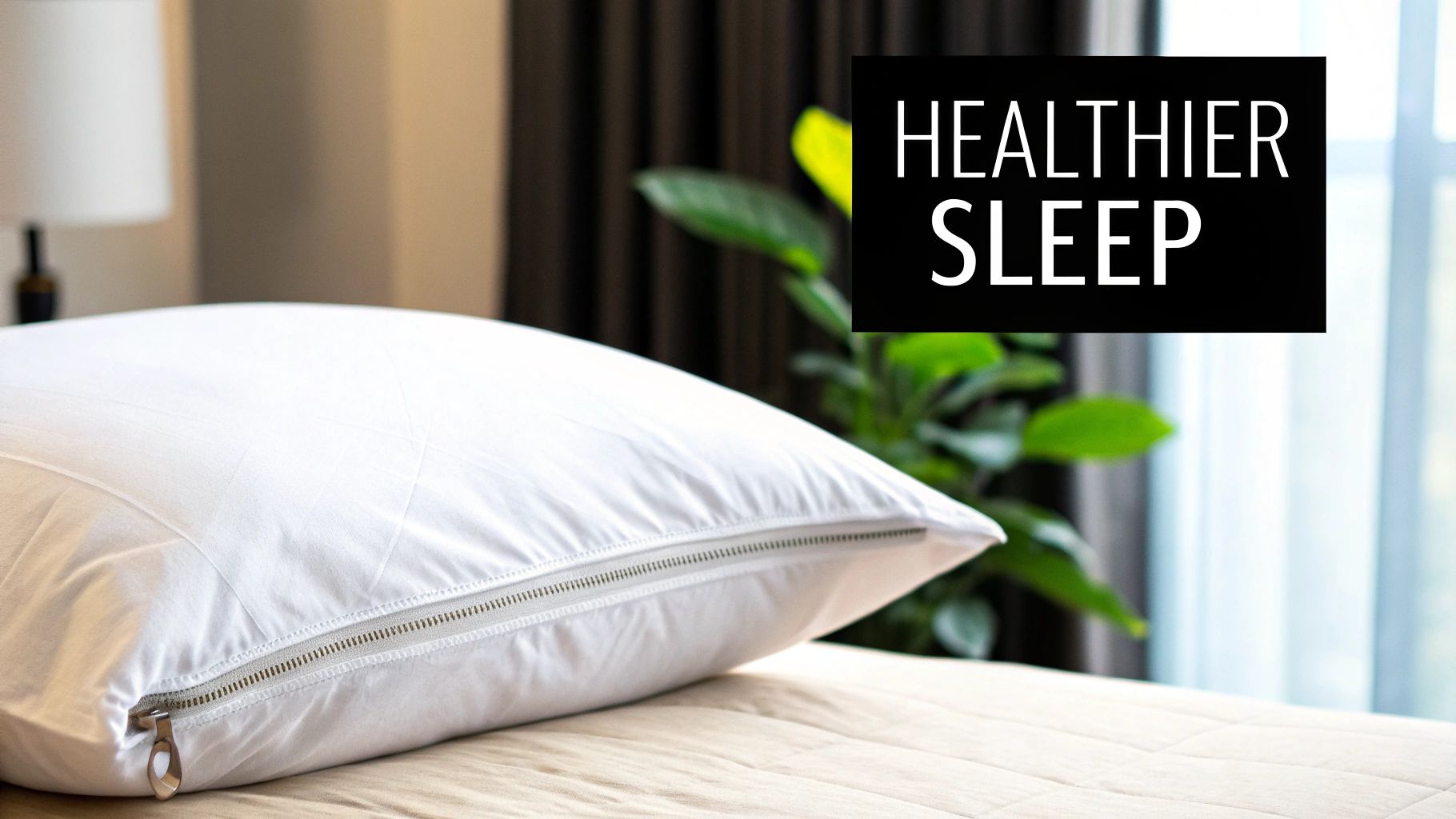
Think of your favourite pillow as a good quality smartphone—it’s an investment you rely on every single day. You’d never dream of using that phone without a screen protector to guard it against scratches, smudges, and accidental drops, right? A cotton pillow protector does the exact same job for your bedding. It's the silent bodyguard that absorbs all the daily wear and tear so the expensive item underneath stays pristine.
This simple addition is much more than just an extra layer of fabric. It’s a vital part of maintaining a clean and healthy sleep sanctuary. Without one, your pillow is left exposed to a nightly barrage of sweat, body oils, dead skin cells, and allergens that easily seep through a standard pillowcase.
Over time, this buildup doesn't just create unsightly stains and odours; it creates the perfect breeding ground for microscopic irritants. This is where a cotton pillow protector becomes absolutely essential.
The Protective Barrier for Hygiene and Longevity
A good quality cotton protector creates a tightly woven barrier that intercepts all of this mess before it can penetrate the core of your pillow. This has a massive impact on both your sleep environment and your health.
- Allergen Reduction: It acts as a physical shield against common household allergens. By blocking them from settling deep within your pillow’s fibres, you can significantly reduce those night-time sniffles and irritation.
- Enhanced Hygiene: The protector is what catches the sweat and oils, preventing them from soaking into the pillow itself. This keeps your pillow feeling and smelling fresh for much, much longer.
- Pillow Longevity: By stopping moisture and grime from building up, the protector safeguards the integrity of your pillow's filling, whether it's down, memory foam, or synthetic fibre. This helps it maintain its supportive loft and shape, easily doubling or even tripling its lifespan.
By creating this fundamental barrier, a cotton protector doesn't just keep your pillow clean—it actively contributes to a healthier sleep cycle. It’s a small, affordable step that pays huge dividends in both comfort and well-being.
Of course, managing your sleep environment goes beyond what you sleep on. For those who are particularly sensitive, a holistic approach is best. Alongside the direct protection from a pillow protector, consistently improving indoor air quality with HVAC filters for allergies can make a huge difference by reducing airborne irritants.
For an in-depth guide on the tiny culprits that could be affecting your sleep, you can learn more about understanding dust mites and protecting your sleep sanctuary in Australia.
Decoding the Different Types of Cotton Weaves
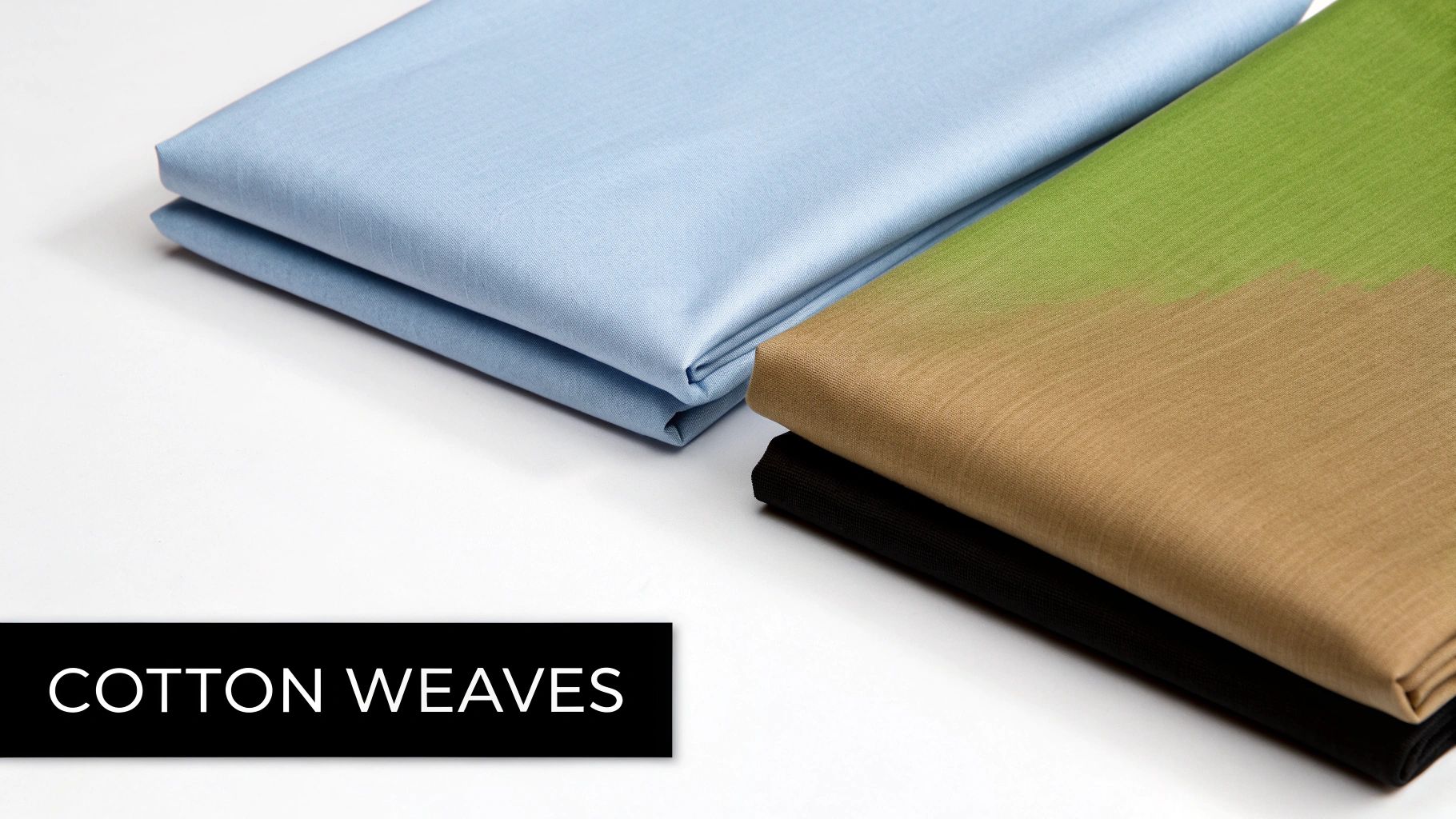
When you choose a pillow protectors cotton product, you aren't just picking a material; you're choosing a specific texture and feel for your sleep. Not all cotton is the same, and the secret lies in the weave—the pattern in which individual threads are interlaced to create the fabric.
Understanding the weave turns confusing jargon into real, tangible benefits. It's the difference between a protector that feels crisp and cool against your skin and one that feels silky and smooth. It’s what helps you find the protector that truly matches your comfort needs.
Let’s break down the two most popular weaves you’ll come across—Percale and Sateen—and demystify how they shape the character of your bedding.
Crisp and Cool Percale
Imagine the feeling of a freshly ironed, high-quality dress shirt. That's the essence of a percale weave. Percale is built using a simple one-thread-over, one-thread-under grid pattern. This classic technique creates a fabric that is light, crisp, and incredibly breathable.
The tight, flat weave gives percale its signature matte finish and a cool-to-the-touch feel. If you're someone who often wakes up feeling too warm or lives in a hotter climate, a percale cotton pillow protector is your best friend. Its structure allows air to circulate freely, helping to move body heat away from you all night long.
- Feel: Crisp, cool, and smooth, like luxury hotel bedding.
- Best For: Hot sleepers and anyone living in warmer climates like Queensland or the Northern Territory.
- Finish: Matte and clean, with no noticeable sheen.
This breathability is a key reason why natural fibres are becoming so popular in Australian homes. The demand for quality, comfortable bedding is growing fast. In fact, one market overview projects the Australian home bedding market to expand by over USD 1 billion between 2023 and 2028, largely thanks to people preferring natural materials like cotton for better temperature regulation.
Silky and Smooth Sateen
If percale is that crisp shirt, then sateen is a luxurious, flowing blouse. A sateen weave uses a different structure—typically one-thread-under and four-threads-over. This technique exposes more thread surface on one side, creating that distinctively silky feel and a subtle, elegant lustre.
Sateen feels incredibly smooth and soft, draping beautifully over your pillow. It’s a little heavier and less crisp than percale, making it a warmer, cosier option. For those who prefer a more plush and decadent feel, or for sleepers in cooler climates, a sateen cotton protector offers a touch of everyday luxury.
While sateen is exceptionally soft, its looser weave structure means it can be slightly less durable and more prone to snagging over the long term compared to the workhorse durability of percale.
Demystifying Thread Count and GSM
Beyond the weave, you’ll often see two other terms used to describe fabric quality: thread count and GSM. While they sound technical, they’re really just simple measurements of density.
- Thread Count: This is the number of horizontal and vertical threads woven into one square inch of fabric. A higher thread count often points to a smoother, more durable fabric, but it's not the only thing that matters.
- GSM (Grams per Square Metre): This measures the fabric's weight. A higher GSM usually means a thicker, heavier, and often more durable material.
It’s a common myth that a higher thread count always means better quality. The truth is more nuanced; the ideal number really depends on the weave. For example, a percale protector with a thread count of 200-400 will feel wonderfully crisp and breathable. Pushing it higher can actually reduce airflow, defeating the whole point.
Sateen, on the other hand, benefits from a higher thread count of 300-600 to get that signature silky smoothness.
Cotton Weave and Fabric Guide
Here's a quick reference guide to help you choose the right texture and quality for your pillow protector.
| Feature | Percale Weave | Sateen Weave | High Thread Count | High GSM |
|---|---|---|---|---|
| Feel | Crisp, cool & matte | Silky, smooth & lustrous | Denser, smoother feel | Heavier, more substantial |
| Best For | Hot sleepers, warm climates | Sleepers seeking luxury, cooler climates | Durability & softness (in the right weave) | Added warmth & durability |
| Breathability | High | Moderate | Can be less breathable | Lower |
| Ideal Thread Count | 200-400 | 300-600 | Varies by weave | Not a direct measure |
| Durability | Very durable, resists pilling | Prone to snagging over time | Generally durable | Very durable |
Ultimately, choosing the right weave and fabric specs comes down to what you personally find comfortable.
For a deeper dive into this topic, our guide on understanding thread count and whether it really matters can offer even more clarity. In the end, choosing the right pillow protectors cotton is all about personal preference—do you crave the cool crispness of percale or the silky warmth of sateen?
The Real Benefits of Using a Cotton Pillow Protector
So, beyond the feel of the fabric, what does a cotton pillow protector actually do for you night after night? Let's be clear: its job goes way beyond just covering your pillow. This simple addition can transform your bed into a healthier, comfier, and longer-lasting place to sleep.
Think of it less as another accessory and more as a fundamental upgrade for your bedding. The benefits really fall into four key areas that all work together to improve your sleep and protect the pillows you've invested in. Let's dig into how this unassuming layer delivers some surprisingly powerful advantages.
Superior Hygiene and Allergen Protection
Every single night, your pillow comes into contact with sweat, body oils, and dead skin cells. Without a barrier, all of that sinks directly into the pillow's filling, creating a damp, warm environment—the perfect breeding ground for bacteria and allergens like dust mites. Yuck.
A good cotton protector acts as a formidable shield. Its tightly woven fibres create a physical barrier that stops these unwanted elements right in their tracks. This is an absolute must-have for anyone dealing with seasonal allergies or skin sensitivities. By blocking irritants from embedding in your pillow, you’re creating a much cleaner and healthier surface to rest your head on.
This directly translates to a more peaceful sleep, with fewer irritants to disrupt your rest.
Enhanced Comfort Through Breathability
One of cotton’s best qualities is its natural breathability. Unlike synthetic materials that can trap heat and moisture right against your skin, cotton lets air circulate freely. This is a game-changer for sleep comfort, especially during those warm Aussie nights.
A cotton protector helps regulate your temperature by wicking away moisture and letting excess body heat escape. It stops that clammy, overheated feeling that leads to restless tossing and turning. The result is a cooler, drier, and more consistently comfortable sleep all year round.
By maintaining a balanced temperature, a cotton protector doesn't just feel better—it actively supports an uninterrupted sleep cycle, helping you wake up feeling properly refreshed.
Imagine protecting a child's brand-new pillow from an inevitable juice spill or drink of water. A protector makes cleanup simple and prevents permanent stains, keeping the pillow fresh for years.
Extended Pillow Lifespan and Value
Pillows are an investment in your comfort, and a cotton protector is the best insurance policy for that investment. The build-up of moisture and oils doesn't just create hygiene issues; it also causes the pillow's filling to degrade, clump together, and lose its supportive loft.
By blocking this damaging build-up, a protector effectively preserves the integrity of your pillow's structure. This means your pillow will keep its shape, firmness, and comfort for much longer, potentially doubling or even tripling its useful life.
This delivers real long-term value in two ways:
- Financial Savings: It’s simple—you'll spend less money over time because you won't need to replace expensive pillows so often.
- Consistent Support: You get to enjoy the comfort of your favourite pillow for years, without it becoming a flat, lumpy mess before its time.
Effortless Maintenance and Care
Finally, the sheer practicality of cotton pillow protectors is a huge plus. They are designed for real life, which means they are incredibly easy to look after. Most are fully machine washable and can be thrown in right alongside your regular sheets and pillowcases.
This simple care routine makes it easy to keep your sleep environment hygienic with almost no effort. Instead of tackling the difficult (and often damaging) process of washing an entire pillow, you can just unzip the protector and toss it in the machine. It’s a small convenience that makes maintaining a pristine, healthy bed an absolute breeze.
How to Find the Perfect Fit for Your Pillow
You've picked the right material, but an ill-fitting protector can be just as frustrating. One that’s too tight will compress your pillow, making it feel strangely firm and lumpy. Too loose, and it’ll bunch up inside your pillowcase, creating annoying wrinkles under your head.
Getting the fit right isn't just about comfort; it's about making sure the protector can do its job properly. A snug, perfectly fitted pillow protectors cotton product creates a seamless barrier, giving you total protection without changing the feel of your favourite pillow. Let's take the guesswork out of it.
Matching Protectors to Australian Pillow Sizes
Here in Australia, pillows thankfully stick to a few standard sizes, and protectors are made to match. The first step is figuring out which one you've got on your bed.
Here are the common sizes you'll come across:
- Standard Pillow: Measures around 48cm x 73cm. This is the one you’ll find in most homes and it fits a standard pillowcase perfectly.
- Queen Pillow: A little longer than a standard, coming in at about 50cm x 80cm. It’s designed to sit more neatly across the width of a queen bed.
- King Pillow: The longest of the lot, measuring approximately 50cm x 90cm. Two of these fit side-by-side across a king bed without leaving a gap.
If you’re not sure, just check the tag on your pillow or grab a tape measure for a quick check. A good fit is essential for keeping the pillow's supportive qualities intact, a topic we dive into deeper when finding the correct pillow for neck and back support.
Choosing Your Closure Type
Once you’ve got the size sorted, the next thing to consider is the closure style. This really comes down to what you prioritise: maximum protection or a streamlined look and feel. The two main players are zips and envelope closures.
A protector’s closure is the gatekeeper of your pillow's hygiene. A fully sealed closure offers the best defence, while a simpler style offers convenience and a seamless look.
Zippered Enclosures
This is the gold standard for anyone serious about pillow hygiene. A zippered protector fully encases the pillow, sealing it off from the outside world for 360-degree protection.
Think of it as an impenetrable fortress against dust mites, pet dander, and other microscopic allergens that love to burrow into pillow fillings. For this reason, a zippered pillow protectors cotton option is always our top recommendation for allergy and asthma sufferers.
Envelope Closures
An envelope closure works just like a sham-style pillowcase, with an overlapping flap of fabric at one end that tucks the pillow in. The big advantage here is a clean, seamless look with no zips or hard bits to worry about.
While it doesn't offer the same airtight seal as a zippered one, it still does a fantastic job of shielding your pillow from the nightly wear and tear of sweat and oils. It’s a great choice if your main goal is stain protection and you prefer a minimalist feel with zero hardware.
Cotton Protectors Compared to Other Materials
When you're choosing a pillow protector, it’s easy to get lost in all the different fabrics. Classic cotton is a fantastic all-rounder, but how does it really stack up against popular alternatives like polyester, bamboo, or waterproof options? The truth is, there's no single "best" material. It all comes down to what you need for a good night's sleep.
Instead of just listing features, let's look at this through the lens of real-life scenarios. This will help you weigh up the important trade-offs between breathability, softness, durability, and total protection, making it much easier to find the material that fits your life.
Pillow Protector Material Showdown
To make things simple, here’s a quick comparison of the most common materials. This table breaks down what each fabric does best, helping you pinpoint the right choice for your sleep needs at a glance.
| Feature | Cotton | Polyester (Microfibre) | Bamboo | Waterproof (TPU Lined) |
|---|---|---|---|---|
| Breathability | Excellent | Low to Moderate | Very Good | Low |
| Feel | Crisp & cool (percale) or soft (sateen) | Smooth, sometimes slippery | Silky soft & smooth | Soft top, unnoticeable lining |
| Durability | Very Good | Excellent | Good (more delicate) | Very Good (top layer dependent) |
| Best For | Hot sleepers, everyday use, natural feel | Budget-conscious, kids' rooms, high-use | Luxury feel, sensitive skin, eco-conscious | Allergy sufferers, kids, spills & accidents |
| Moisture-Wicking | Good | Fair | Excellent | None (it's a barrier) |
| Price | Mid-range | Budget-friendly | Mid-to-High | Mid-range |
Now that you've got the overview, let's dive into what these differences actually feel like and who they're really for.
Cotton: The Breathable Champion
For the classic hot sleeper, nothing really beats pillow protectors cotton. It's just brilliant. Cotton's natural fibres are inherently breathable, letting air move freely all night long. This airflow is exactly what you need to wick away moisture and stop body heat from building up, preventing that clammy, stuffy feeling that ruins sleep.
Think of it like wearing a cotton t-shirt on a warm day versus a synthetic one—the cotton just feels cooler and more comfortable against your skin. This makes it the undisputed winner for anyone who puts airflow and temperature control first.
Polyester: The Durable Workhorse
Now, let's think about a busy family home or a protector for the guest room bed. This is where polyester (often sold as microfibre) really shines. It's a synthetic material known for being incredibly tough and resistant to shrinking and wrinkles.
While it won't give you the same cool breathability as cotton, it's often more affordable and can handle countless wash cycles without looking worn out. It’s a practical, no-fuss choice when durability is the top priority.
The key trade-off with polyester is airflow. It tends to trap more heat than natural fibres, so it may not be the ideal choice for individuals who are prone to sleeping warm.
Bamboo: The Silky Eco-Conscious Choice
For those who want a touch of luxury without compromising on their eco-conscious values, bamboo is a fantastic option. Bamboo fabric is famous for its incredibly soft, silky feel that drapes beautifully and feels amazing on the skin. It also has excellent moisture-wicking properties, often even better than cotton.
Bamboo is also a more sustainable resource, growing rapidly without needing a lot of pesticides. The downside? It can be a bit more delicate and might cost a little more. If you're curious about how these two natural fibres compare, we break it all down in our guide comparing bamboo vs cotton sheets.
Waterproof Protectors: The Ultimate Safeguard
Finally, for those situations where protection is everything—like for a child's bed, managing incontinence, or just guarding against a major spill—a waterproof protector is non-negotiable. These are usually made with a cotton or polyester top layer that’s bonded to a thin, quiet polyurethane (TPU) membrane underneath.
This TPU layer creates an impenetrable barrier against liquids, offering complete peace of mind. The main compromise here is, you guessed it, breathability. While modern waterproof protectors are far less noisy and "plasticky" than older versions, they will always trap more heat than a simple cotton protector. This makes them a specialist choice for when maximum liquid protection is the absolute priority.
This simple decision tree can help you visualise whether a zipper or envelope style is right for you, based on what matters most.
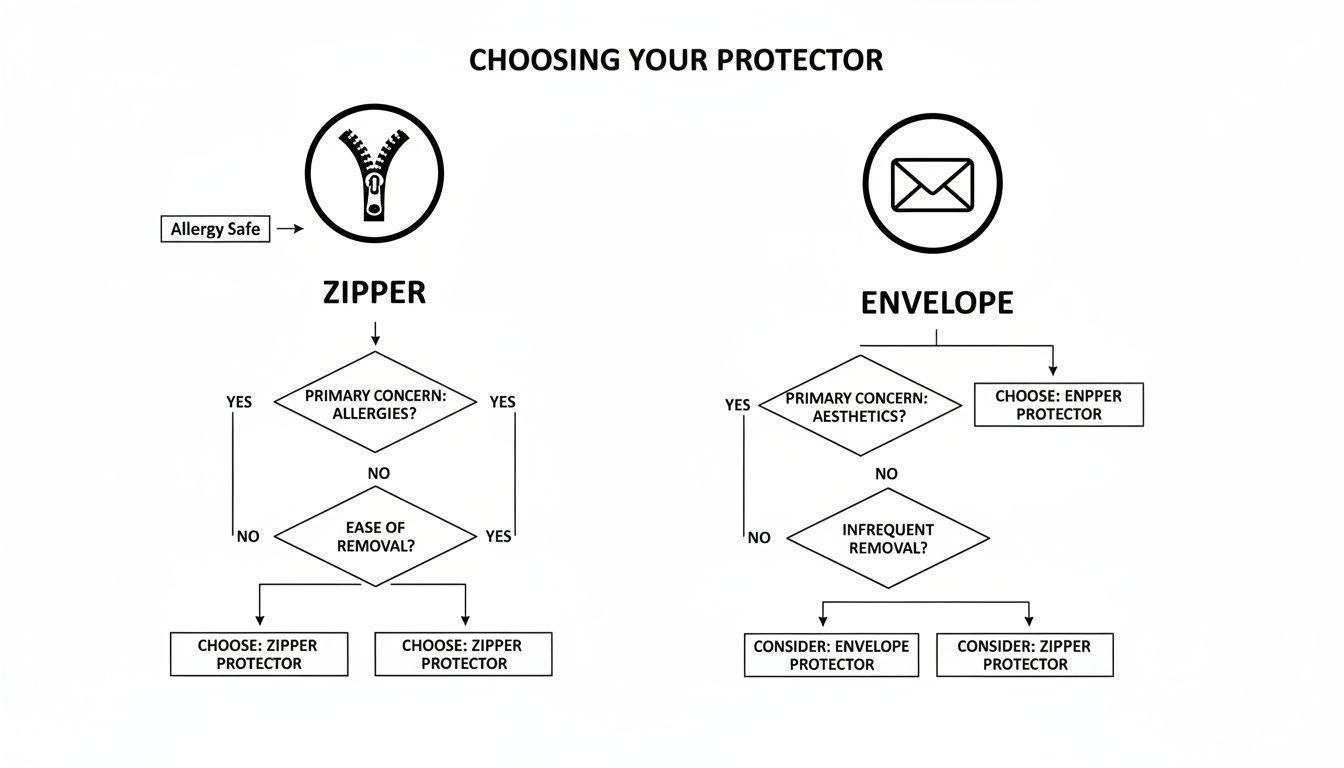
As you can see, if you're trying to create an allergy-safe space, the complete seal of a zipper closure is the clear winner. For everyone else, an envelope closure often provides a cleaner, more seamless look.
How to Look After Your Cotton Pillow Protectors
To get the most out of your pillow protectors cotton investment, a little bit of care goes a long way. Think of it like any quality bedding – look after it, and it will look after you, keeping your pillows fresh, soft, and hygienic for years. The good news is, it's incredibly simple.
Your protector is on the front line, absorbing everything from sweat and skin oils to allergens that would otherwise seep into your pillow. A regular wash hits the reset button on this barrier, making sure it stays clean and effective. It's a small routine that makes a big difference to your entire sleep setup.
Washing Your Protectors the Right Way
Consistency is key here. We recommend washing your cotton pillow protectors every one to two weeks, right along with your sheets and pillowcases. This rhythm stops irritants from building up, which is better for both your skin and your breathing.
When it's time to wash, a warm cycle (around 40°C) is your best bet. It’s warm enough to deal with bacteria and body oils but gentle enough not to stress the natural cotton fibres.
My Tip: Always reach for a gentle, liquid detergent. Powdered detergents can sometimes leave behind a gritty residue that clogs up the fabric's weave, which gets in the way of that lovely breathability cotton is famous for.
Simple Steps for the Best Results
Follow these easy steps to keep your protectors in top shape:
- Skip the Fabric Softeners: While they promise softness, fabric softeners actually coat cotton fibres in a waxy film. This film blocks the fabric's natural pores, which kills its breathability and moisture-wicking powers.
- Wash with Similar Friends: To avoid pilling or snagging, wash your protectors with other soft items like sheets. Keep them away from heavyweights like towels or anything with zippers that could cause damage.
- Check for Stains First: Give them a quick look-over before they go in the wash. A gentle spot treatment on any noticeable stains will help make sure they come out completely.
For a deeper dive into cleaning schedules for all your bedding, our guide on how often to wash and replace bedding has plenty more detailed advice.
Drying for Longevity
How you dry your cotton protectors is just as important as how you wash them. Luckily, you have a couple of great options.
Line drying in the fresh air is the gold standard, especially under the Australian sun. The sun's UV rays are a natural sanitiser, helping to knock out any lingering bacteria while leaving your protectors smelling amazing.
If you're using a machine, always choose a low-heat, gentle tumble dry setting. High heat is the enemy of cotton, as it can cause the fibres to shrink and weaken over time.
Got Questions About Cotton Pillow Protectors? We've Got Answers
Even after you've weighed up all the benefits, a few questions tend to pop up. Think of this as the final checklist before you commit, making sure you're picking the perfect protector for a great night's sleep.
Let's clear up some of the common queries we hear from customers.
Will a Cotton Protector Make My Pillow Hot?
No, quite the opposite! This is one of the biggest myths we see. Unlike synthetic materials that can trap air and make you sweat, 100% cotton is naturally breathable. Its fibres let air move freely, which helps pull heat away from your head and wick away moisture.
It's this natural temperature regulation that makes cotton protectors a brilliant choice for hot sleepers, especially during those warm Aussie summers. You get a cooler, drier, and far more comfortable rest.
Can I Use a Protector and a Pillowcase Together?
Absolutely. In fact, that’s exactly how they’re designed to be used. It’s a two-layer system that gives you the best of both worlds: protection and comfort.
- The Pillow Protector: This is layer one. It zips snugly around your pillow, acting as a functional shield against moisture, oils, and allergens.
- The Pillowcase: This is layer two, which goes right over the top. Its job is all about comfort and style—giving you that soft surface to sleep on and matching the rest of your bedding.
This combo keeps your actual pillow in pristine condition, while you can still swap out your pillowcases whenever you feel like a change of style.
How Often Should I Replace My Cotton Protectors?
While a good quality pillow protector is made to last, we generally suggest replacing them every 1-2 years. With repeated washing, the cotton fibres can start to break down over time, making the barrier a little less effective.
A good rule of thumb is to look for signs of wear and tear. If you see thinning fabric, stains that won't budge, or a zipper that's seen better days, it's definitely time for a fresh set. This ensures you're always getting the best possible protection for your pillow and your health.
While this guide focuses on protecting your pillows for a healthier sleep, if you're looking for decorative options to add a personal touch to your space, you might also like to explore things like personalized photo pillows.
Ready to give your pillows the protection they deserve? Explore the full range of high-quality bedding and homewares at Manchester Factory and find the perfect cotton pillow protectors for a cleaner, healthier sleep. Visit us at https://www.manchesterfactory.com.au to shop now.