

When you’re trying to decide between bamboo and cotton sheets, it really boils down to two things: how they feel and how they perform. Bamboo sheets have a silky-soft, drapey texture and are brilliant at regulating temperature, which is a game-changer for hot sleepers. On the other hand, traditional cotton offers that classic, crisp feel that many of us grew up with, along with reliable breathability.
Your choice really hinges on what you prefer climbing into at night. Do you love a smooth, cool-to-the-touch surface, or is that familiar crispness of a classic bed what you’re after?
Unpacking the Great Bedding Debate
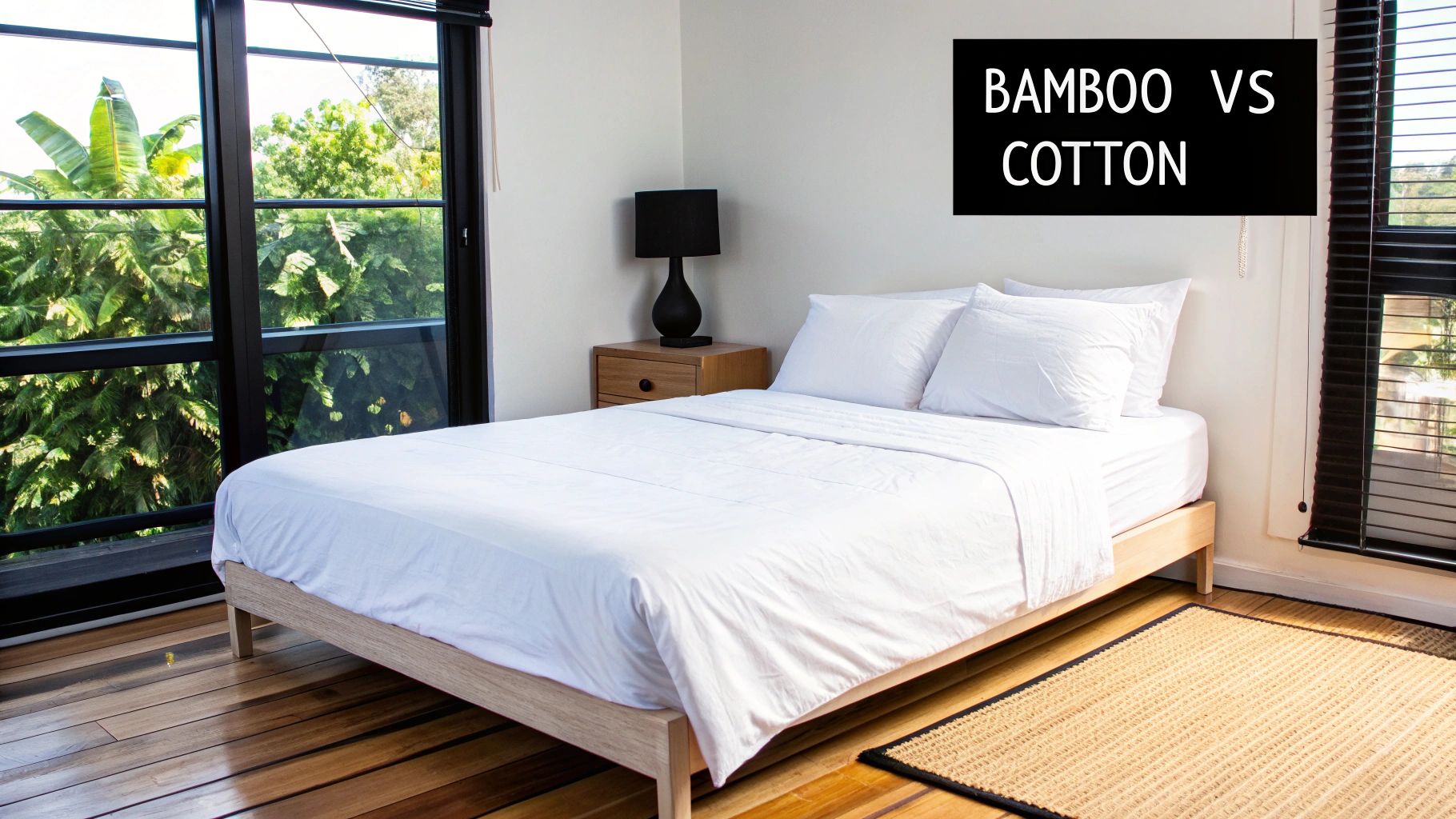
Choosing the right bed sheets is about so much more than picking a colour or pattern; it’s a decision that genuinely impacts your sleep quality, comfort, and even your well-being. For those of us in Australia, where the weather can swing from sticky, humid heat to surprisingly chilly nights, getting this choice right is even more important.
The conversation nearly always lands on two main contenders: bamboo and cotton.
While both come from natural sources, they create vastly different experiences in bed. This guide is here to cut through the marketing fluff and give you a practical, detailed comparison to help you invest wisely in your comfort. We’ll look at everything from the raw fibres themselves to how they actually hold up, night after night, in a typical Aussie home.
A Quick Side-by-Side Look
Before we get into the nitty-gritty, here’s a quick snapshot to frame the key differences. This table breaks down the core features that shoppers care about most, giving you an instant feel for which fabric might be the better fit for you.
Quick Comparison Bamboo Sheets vs Cotton Sheets
| Feature | Bamboo Sheets | Cotton Sheets |
|---|---|---|
| Feel & Texture | Silky, smooth, and drapey with a slight sheen. Often compared to high-end silk. | Varies by weave from crisp and cool (percale) to smooth and soft (sateen). |
| Temperature Regulation | Excellent. Highly breathable and moisture-wicking, keeping you cool in summer and warm in winter. | Good. Naturally breathable, but less effective at wicking moisture than bamboo. |
| Hypoallergenic | Naturally hypoallergenic and antibacterial, resisting dust mites and mould. Ideal for sensitive skin. | Generally gentle on the skin, especially high-quality or organic varieties. |
| Durability | Very durable and resistant to pilling with proper care, maintaining colour vibrancy over time. | High-quality cotton (like Egyptian) is extremely durable but can be prone to fading. |
| Environmental Impact | Generally more sustainable, requiring less water and no pesticides to grow. | Varies greatly; conventional cotton is resource-intensive, while organic is much better. |
The main takeaway here is that bamboo really shines when it comes to delivering a luxurious, temperature-regulating sleep. This makes it a fantastic choice for hot sleepers or anyone with sensitive skin. Meanwhile, cotton remains the versatile, reliable option, loved for its classic comfort and the sheer variety available.
If you're a hot sleeper or have sensitive skin, bamboo is a clear winner for its incredible temperature regulation and hypoallergenic properties. Cotton, however, is the go-to for its timeless, crisp feel and wide range of textures.
For those keen to explore this further, our detailed guide on the best bamboo sheets in Australia offers more insights and our top product recommendations.
Understanding the Fabric Behind the Feel
To really settle the bamboo vs. cotton debate, you need to look past the marketing claims and understand what you’re actually buying. The final feel, breathability, and lifespan of your sheets all start with the raw fibres and how they’re turned into the fabric you sleep on every night.
It's not as simple as one being better than the other; the terms can be confusing. A little knowledge here goes a long way, helping you choose sheets based on what’s actually in the box, not just what's on it.
The Two Faces of Bamboo Fabric
When you see "bamboo sheets" on the shelf, you’re almost always looking at a fabric made from bamboo pulp that's been processed into a textile. How that transformation happens is what really defines the final product.
You’ll generally come across two main types:
- Bamboo Viscose (or Rayon): This is the most common kind of bamboo fabric you'll find. The process involves dissolving bamboo pulp with chemicals to create a thick, syrupy liquid, which is then spun into the soft fibres we know and love. While it’s effective, this method can be chemically intensive unless it’s managed in a closed-loop system.
- Bamboo Lyocell: This is the more modern, eco-conscious approach. It uses a non-toxic solvent in a closed-loop process, which means over 99% of the solvent and water are recaptured and reused. The fabric that comes out of it is exceptionally smooth, strong, and incredibly gentle on the skin.
Key Takeaway: The word "bamboo" on a label can mean different things. Lyocell is widely seen as the premium, more sustainable choice, giving you that signature silky softness with a much smaller environmental footprint.
Getting this distinction is the first step. For a deeper look at how this translates to comfort, our guide on what bamboo cotton sheets are offers some more context.
Decoding the Language of Cotton Sheets
Cotton has been the go-to for bedding for generations, but the quality and feel can vary wildly. The secret is in the length of the cotton fibres—what’s known as the "staple"—and the way those fibres are woven together.
For many Aussie households, cotton's long-standing popularity isn't a shock. In our local home bedding market, traditional bed linen like cotton sheets has held the top spot for years, making up a huge 38.3% of total home textiles revenue in 2024. This shows why so many families stick with the cotton sets they know and trust.
But with the whole home bedding sector set to grow significantly by 2030, eco-aware shoppers are increasingly looking to bamboo, especially for its better performance in our warm climate.
This long history is built on a few key types and weaves.
Cotton Fibre Quality
The plant itself has a massive impact on softness and durability:
- Egyptian Cotton: Famous for its extra-long staple (ELS) fibres. These long fibres create yarns that are incredibly smooth, strong, and have a beautiful lustre. The result is sheets that are both supremely soft and built to last.
- Pima Cotton: Another ELS cotton, mostly grown in the US, Peru, and right here in Australia. It’s very similar to Egyptian cotton, offering a soft hand-feel and excellent longevity.
- Upland Cotton: This is the most common type of cotton out there, with much shorter staple fibres. It’s still comfortable and definitely more affordable, but it just won't have that luxurious softness or the same durability as its long-staple cousins.
How Weave Shapes the Feel
Once the yarn is spun, the weaving technique creates the final texture of the sheets. The two most common weaves deliver completely different sleep experiences.
- Percale: This is a simple, grid-like weave: one thread over, one thread under. It creates a light, crisp, and matte-finish fabric that feels cool against the skin. If you love that classic, freshly-laundered hotel sheet feeling, percale is for you.
- Sateen: This weave uses a "one thread under, three or four threads over" pattern. By exposing more of the yarn's surface, this technique creates a silkier, smoother feel with a subtle sheen. Sateen sheets feel incredibly soft and have a heavier, more luxurious drape than percale.
If you’re keen to explore different weaves and types, resources covering specific bedding like jersey cotton bed sheets can offer more detail. At the end of the day, whether you prefer the crispness of percale or the silky touch of sateen, understanding the weave is just as important as knowing the fibre.
Comparing Real-World Sleep Performance
Online specs and features are one thing, but the real test in the bamboo vs cotton debate happens when you’re actually trying to sleep. How a fabric performs in real-world Australian conditions—from a humid Queensland summer to a crisp Melbourne winter—is what truly matters. This is where we move beyond the label and look at how each material holds up, night after night.
We'll break down the key things that directly impact how well you sleep. By looking at specific scenarios, you can get a much better feel for which fabric is going to work for you and your personal comfort needs.
This chart shows how the Aussie bedding market is split between cotton and bamboo, along with the growth we’re seeing in the industry.
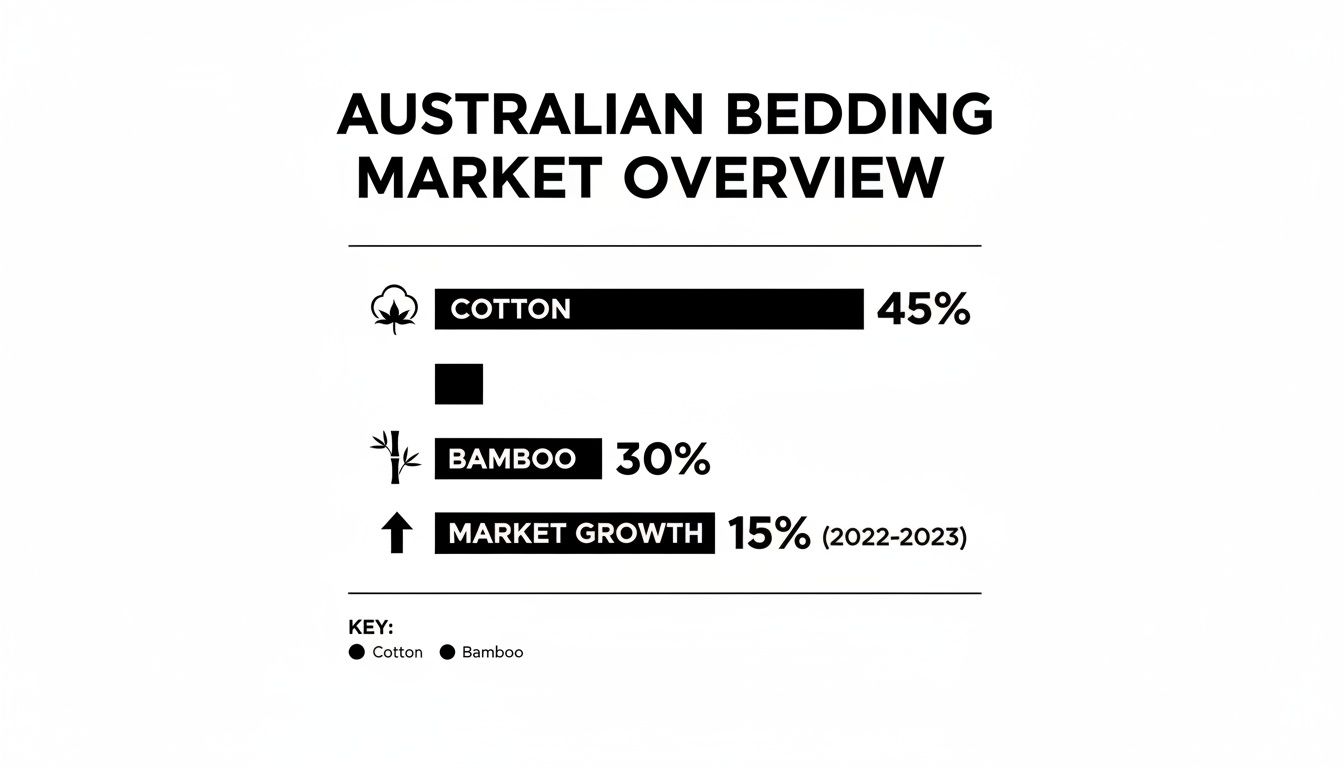
It’s clear cotton still holds a big slice of the pie, but it also shows just how popular bamboo has become and that the entire bedding sector is on a strong growth track.
Temperature Regulation Through the Seasons
One of the biggest factors for a good night's sleep in Australia is temperature control. Our climate is anything but predictable, so you need bedding that can keep up.
Bamboo Sheets: The secret to bamboo is in its unique fibre structure. It’s filled with tiny micro-gaps that boost airflow and moisture absorption. In summer, this means bamboo sheets feel cool to the touch because they pull sweat away from your skin and let it evaporate fast. But in the cooler months, those same gaps trap a thin layer of warm air next to your body, giving you a bit of insulation without making you overheat.
Cotton Sheets: Everyone knows cotton is breathable. A crisp percale weave, for example, lets air flow freely, making it a classic choice for hot nights. The catch is how cotton handles moisture. It can absorb a lot of it—up to 27% of its own weight—but it’s slow to let it go. If you’re a heavy sweater, this can leave you feeling damp and clammy, which isn’t ideal in really humid weather.
For those who really struggle with getting too hot, it's worth checking out our full guide to the best sheets for a hot sleeper to find some more tailored solutions.
Moisture Wicking for Hot Sleepers
If you run hot or deal with night sweats, how your sheets manage moisture isn't just a small detail—it's everything. This is a huge point of difference when you’re comparing bamboo and cotton.
Key Differentiator: Bamboo wicks moisture away, spreading it across the fabric to dry quickly. Cotton absorbs moisture, holding onto it like a sponge, which can make for a damp, uncomfortable sleep.
You really feel this difference in coastal cities like Sydney or Brisbane. On a sticky summer night, bamboo’s ability to pull moisture off your skin and dry out keeps you feeling fresh. Cotton might feel cool at first, but it can start to feel heavy and damp as the night goes on.
The Feel: Softness and Drape
How sheets feel is incredibly personal. What one person finds luxurious, another might not like at all.
-
Bamboo's Silky Drape: Bamboo sheets are famous for their incredibly smooth, fluid feel. The fabric glides over your skin instead of sticking to it, a feeling people often compare to silk or cashmere. This makes bamboo a fantastic choice for anyone with sensitive or easily irritated skin.
-
Cotton's Classic Textures: Cotton gives you more variety depending on the weave. Sateen offers a silky-smooth surface with a slight lustre, a bit like bamboo. On the other hand, percale has that light, crisp, and airy feel that so many people love, especially when it's warm. It really just comes down to whether you prefer a silky glide or a crisp embrace.
Performance Under Pressure: Allergies and Skin Sensitivity
For a lot of families, especially those with kids or older members, hypoallergenic properties are a must-have.
Australia's home bedding scene is booming, and this choice between bamboo and cotton is central to getting comfortable in our variable climate. While cotton sheets are still incredibly popular, their habit of holding onto moisture can be a real problem for the 40% of Aussies in warmer states who say heat disrupts their sleep. This is where bamboo shines; its micro-gapped fibres make it up to three times more breathable, keeping you 2-3°C cooler all night. This is a game-changer for anyone dealing with hot flushes, a big reason why our cooling bedding options have earned over 4,500 five-star reviews at Manchester Factory.
Bamboo’s natural properties make it resistant to dust mites, mould, and mildew. These antimicrobial qualities help create a healthier sleep environment by cutting down on triggers for allergies and asthma. While high-quality organic cotton is also very gentle on the skin, bamboo's active resistance to common allergens often makes it the better pick for those with serious sensitivities.
Evaluating Durability, Care, and Long-Term Value
A good set of sheets is an investment in your sleep. And like any decent investment, you want it to last. When comparing bamboo and cotton, durability isn’t just about which fabric feels stronger on day one; it’s about how they handle real life—the constant washing, nightly tossing and turning, and the occasional spill. Understanding how they hold up and what they need from you is the secret to getting real value for your money.
Both materials can give you years of comfort, but they age differently. High-quality cotton is famous for being tough as nails, but bamboo often surprises people with its resilience, especially when it comes to keeping its colour and silky feel.
Lifespan and Common Wear Issues
The true test of any sheet set is how it stands up to common problems like pilling, thinning, and fading over time.
Bamboo Sheets: One of bamboo’s best features is its resistance to pilling. The fibres are long and smooth, so they’re less likely to break and knot up. This means the fabric stays silky and sleek, wash after wash. Bamboo also holds onto dye incredibly well, so you’ll find those deep, rich colours stay vibrant for much longer than most other textiles.
Cotton Sheets: There’s no denying that high-quality, long-staple cottons like Egyptian are incredibly durable. They can last for years and often get softer and more beautiful with age. The catch? Lower-grade cotton with shorter fibres is a different story. It's far more likely to pill and can start feeling rough after just a few washes. Fading can also be a problem, particularly with darker colours, as cotton fibres don’t always lock in dye as effectively as bamboo.
For a busy family, bamboo’s natural resistance to pilling and its brilliant colour retention mean less work to keep the bedding looking fresh. It holds onto that ‘just-bought’ feel for ages, which is a massive plus.
Practical Care Instructions for Longevity
How you care for your sheets is the single biggest factor in how long they’ll last. While both fabrics are pretty low-maintenance, they do have different needs. Following the right steps prevents shrinkage, keeps them soft, and makes sure you get the most out of your purchase.
To get a better idea of how often you should be washing your bedding, you can find some great advice in our guide on how often to wash and replace bedding. It can make a huge difference to the lifespan of your sheets.
Here’s a quick breakdown of what works best for each:
-
Washing Bamboo Sheets:
- Stick to a gentle cycle with cold water. Hot water is the enemy here; it can damage the delicate fibres and cause them to shrink.
- Use a mild, liquid detergent. Steer clear of harsh chemicals, bleach, and fabric softeners—they break down the fibres and strip away the fabric's natural moisture-wicking magic.
-
Washing Cotton Sheets:
- You can generally wash in warm water. Most cotton sheets can handle warmer temperatures, which is great for getting rid of germs.
- Just be mindful of the colours. Wash lights and darks separately to stop dye from running, especially for the first few washes.
Analysing Long-Term Value
When it comes to the long-term value of bamboo vs cotton, you have to look past the initial price tag. While top-tier cotton is an excellent investment, bamboo often makes a more compelling case for value over its entire lifespan.
Initial Cost vs. Total Value:
Sure, bamboo sheets usually have a higher upfront cost than your standard cotton set. But their superior durability, colourfastness, and refusal to pill mean you won’t be replacing them nearly as often. This makes them a smarter choice for anyone looking at the bigger picture.
For an older shopper or a family wanting a single, reliable set of sheets, bamboo's longevity and easy-care nature provide fantastic value. The sheets look and feel luxurious for years, making that initial investment pay off in lasting comfort and fewer replacement costs down the line.
A Nuanced Look at Eco-Friendliness and Health
For a lot of us, choosing between bamboo and cotton sheets goes beyond just how they feel. We’re thinking more about where our products come from, how they’re made, and what that means for the planet and our families.
When you really dig into it, the sustainability story for both fabrics isn't as clear-cut as you might think. To get the real picture, you have to look at the whole journey—from the farm to the factory.
The Environmental Footprint Explained
On the surface, bamboo looks like the obvious eco-champion. It’s a bit of a wonder plant, really. It grows like a weed, doesn't need pesticides or fertilisers, and sips about a third of the water that conventional cotton guzzles. In a country like Australia, that’s a big deal.
Conventional cotton, on the other hand, has a reputation for being thirsty and heavily reliant on pesticides. But the rise of organic cotton has started to level the playing field. Organic farming cuts out the nasty chemicals and often uses smarter water management, bringing its environmental impact much closer to bamboo’s.
The real environmental differentiator often lies not in the field, but in the factory. The methods used to turn raw plant material into soft, luxurious fabric are what truly separate these two options.
This whole discussion is changing the way Aussies shop for bedding. While cotton has been the go-to for generations, people are now actively looking for greener options. With 62% of homeowners in Australia now putting sustainable products first, bamboo's popularity is soaring. It grows 35% faster than cotton and its low-maintenance farming aligns perfectly with our climate and environmental goals.
Manufacturing and Chemical Processing
This is where things get tricky for bamboo. The biggest question mark hangs over how it’s turned from a tough, woody plant into a silky fabric. Most of the bamboo bedding out there is bamboo viscose, which can involve some pretty harsh chemicals like carbon disulphide. If these chemicals aren’t handled in a "closed-loop" system where they're captured and reused, the process can be damaging.
That’s why bamboo lyocell is the far better choice. This method uses a non-toxic solvent in a closed-loop process that recycles over 99% of the water and solvent. It’s the premium, and genuinely sustainable, option for bamboo sheets.
Cotton processing is generally more straightforward and mechanical, but it’s not always chemical-free. Dyes, bleaches, and other finishing agents are common unless you’re specifically buying unbleached, undyed organic cotton.
Health Benefits for Sensitive Sleepers
When it comes to your health—especially for anyone with sensitive skin or allergies—bamboo often comes out on top.
-
Hypoallergenic Properties: Bamboo is naturally antimicrobial and antibacterial. It helps keep dust mites, mould, and mildew at bay, which are huge triggers for asthma and allergies.
-
Skin-Friendly Surface: The fibres in bamboo are incredibly smooth and round, creating a fabric that glides over the skin with very little friction. This makes it a dream for anyone with eczema or irritation-prone skin.
While a good set of high-quality cotton sheets is soft and breathable, it just doesn’t have those same natural antimicrobial perks. For anyone trying to create a cleaner, healthier sleep space, bamboo is usually the way to go. If you want to dive deeper into this topic, our guide on the benefits of natural fibres in bedding offers further insights.
Making the Right Choice for Your Home
So, bamboo or cotton? The truth is, there’s no single winner. It’s all about matching the right fabric to what you need for a good night’s sleep. After weighing up the feel, performance, and how they’ll last, the best choice really comes down to your lifestyle and what you prioritise.
Instead of giving a one-size-fits-all answer, let's walk through a few real-life scenarios. This way, you can pick the perfect sheets with confidence.
For Families with Young Children
When you’re buying sheets for kids, you’re usually thinking about three things: durability, easy washing, and whether they’ll irritate sensitive skin. You need something that can stand up to spills, frequent washes, and the general chaos of family life.
In this case, a quality cotton percale is a fantastic workhorse. It’s tough, actually gets softer the more you wash it, and handles a warm cycle for extra hygiene. But for kids with eczema or really sensitive skin, bamboo is the clear winner. Its fibres are incredibly smooth, which means less friction and irritation, and its natural hypoallergenic properties help create a healthier sleep space.
Our Recommendation: For a robust, everyday set that can take a beating, you can't go wrong with classic cotton. But if your child has allergies or sensitive skin, the gentle, antimicrobial feel of bamboo sheets from a trusted line like Sienna Living gives you comfort and total peace of mind.
For Hot Sleepers and Those with Night Sweats
If you’re constantly kicking off the covers or dealing with night sweats, your sheets can make or break your sleep. It’s a common problem, especially during those humid Aussie summers or for anyone going through hormonal changes.
This is where bamboo truly shines. Its ability to wick moisture and regulate temperature is pretty much unmatched by most cotton weaves. Bamboo pulls sweat away from your skin and helps it evaporate fast, keeping you noticeably cooler and drier all night long.
A crisp cotton percale is also a decent choice for breathability, but it tends to absorb moisture instead of wicking it away. If you sweat a lot, this can leave you feeling damp and clammy, which is the last thing you want when you’re trying to sleep.
Situational Scenarios at a Glance
| Your Primary Need | The Better Fabric Choice | Why It Wins |
|---|---|---|
| Ultimate Softness | Bamboo | Nothing beats that silky, smooth feel that drapes beautifully over you. |
| Classic Crisp Feel | Cotton (Percale) | Delivers that cool, fresh hotel-bed experience so many people love. |
| Allergy Relief | Bamboo | Naturally resists dust mites and mould, making it ideal for sensitive sleepers. |
| Budget-Friendly Durability | Cotton | A high-quality cotton set offers fantastic longevity at a more accessible price. |
Ultimately, choosing between bamboo and cotton is about figuring out your main goal. Are you chasing the coolest sleep possible? The most durable option for a busy household? Or the gentlest touch for sensitive skin? Once you answer that, you can invest in sheets that will keep you comfortable for years.
A Few Final Questions About Bamboo and Cotton Sheets
Choosing new bedding always brings up questions, especially when you’re weighing up two popular choices like bamboo and cotton. To make things a little clearer, we've answered some of the most common queries we get from Aussie shoppers. This should give you the final bits of info you need to choose with confidence.
Is Bamboo Bedding Worth the Higher Price in Australia?
For many people, the answer is a definite yes. While bamboo sheets often have a higher price tag upfront, their long-term value is fantastic. They're incredibly durable, resist pilling, and hold their colour much longer than a lot of cotton options.
And when you think about Australia's warm, humid climate, bamboo’s knack for regulating temperature and wicking away moisture offers a level of comfort that's hard to beat for a good night's sleep. That performance, paired with its durability, makes it a pretty smart investment.
Does Thread Count Matter for Bamboo Sheets?
Thread count is a term that really belongs to the cotton world; it’s not a great measure of quality for bamboo fabric. Bamboo fibres are naturally much finer and softer than cotton, which means a bamboo sheet set with a 300-400 thread count can feel just as luxurious—if not more so—than a cotton set with a much higher number.
When you're comparing bamboo sheets vs cotton, it's better to focus on the fabric type (like lyocell) instead of getting caught up on thread count. Bamboo's natural softness means even a lower thread count delivers that premium, silky feel.
Which Is Better for Sweating: Bamboo or Cotton?
When it comes to handling sweat and heat during the night, bamboo is the clear winner. Cotton is breathable, sure, but it also absorbs moisture and tends to hang onto it. On a humid night, that can leave you feeling damp and clammy.
Bamboo works differently. It actively wicks moisture away from your skin, pulling sweat to the surface of the fabric where it can evaporate quickly. The result? You stay noticeably cooler and drier all night long. This makes it the perfect choice for hot sleepers or anyone who deals with night sweats.
Ready to feel the difference for yourself? At Manchester Factory, we’ve put together a curated selection of premium bamboo and cotton bedding designed for Australian homes. Find the perfect sheets to upgrade your sleep by exploring our collection today.