

Ever wondered what a quilt cover set actually is? Think of it as a giant, stylish pillowcase for your quilt (or as we often call it in Australia, your doona).
A standard set will usually include the main cover plus one or two matching pillowcases, making it an all-in-one package for your bed.
Understanding Quilt Cover Sets
A quilt cover set really does two jobs at once. First, it’s a practical barrier, protecting your inner quilt from daily dirt, spills, and general wear and tear. This makes laundry day so much simpler—you just slip off the cover and wash it like a sheet.
Second, it’s a decorator’s best friend. A new quilt cover is the fastest, easiest way to completely change the look and feel of your bedroom without having to buy a whole new quilt. This mix of practicality and style is key to why a quilt cover is important for keeping your bedroom fresh and hygienic.
It's no surprise they're a huge part of the bedding scene here in Australia. In fact, the Australian bed linen market pulled in an estimated USD 1,487.4 million in revenue back in 2022. Quilt cover sets are a favourite for their sheer convenience and aesthetic flexibility, sold as coordinated bundles that take the guesswork out of styling your bed. You can learn more about the Australian bed linen market on grandviewresearch.com.
Decoding Bedding: Quilt Cover vs Comforter vs Duvet
Walking through the bedding aisle can feel a bit confusing, especially with words like quilt, doona, duvet, and comforter getting thrown around. But here in Australia, it’s actually pretty simple.
A quilt (or what many of us call a doona) is the thick, fluffy insert that keeps you warm. A quilt cover is the separate, decorative case you slip it into. Think of it like a pillow and a pillowcase—the cover is there to protect the quilt and lets you change up your bedroom style in minutes.
On the other hand, a comforter is an all-in-one deal. The filling is stitched right into the patterned or coloured fabric, so you don’t need a separate cover.
This little map breaks down how a standard quilt cover set works.
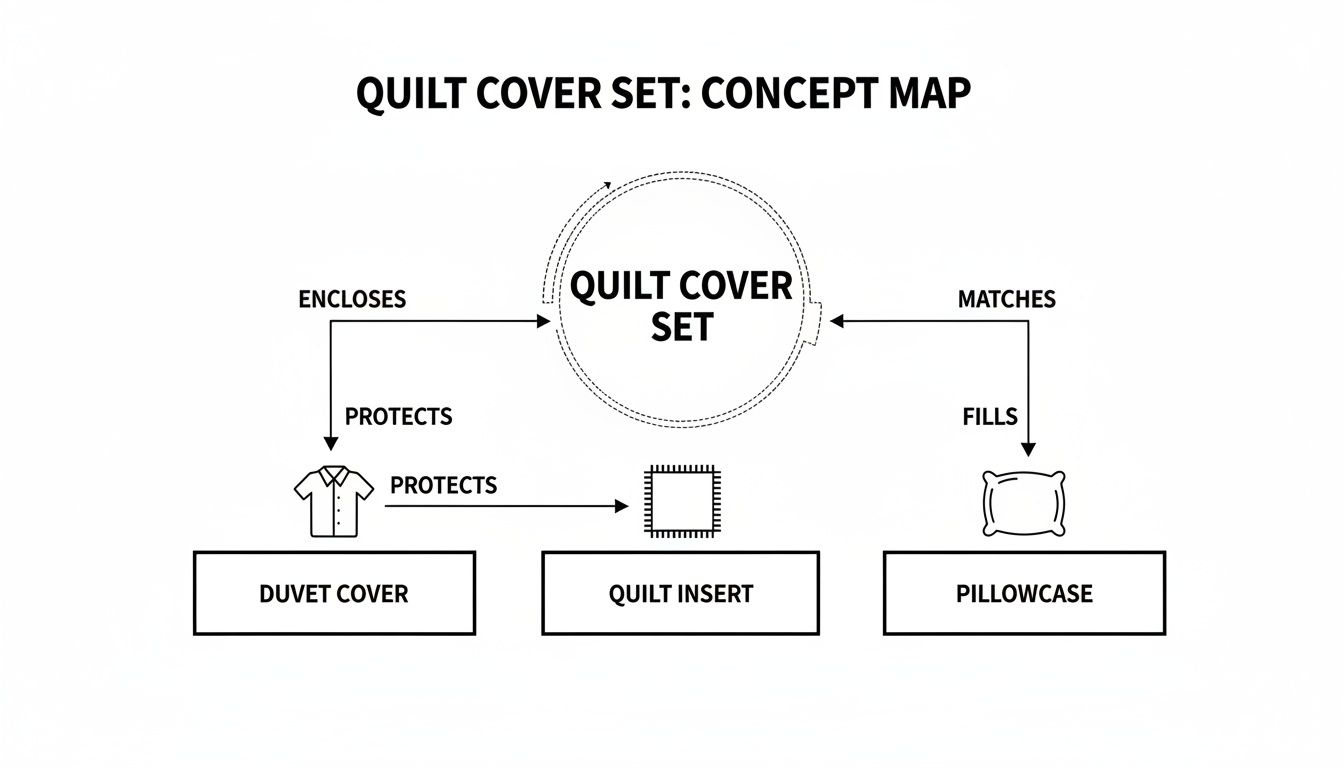
You can see how the cover, insert, and pillowcases all come together to create a complete look.
To help clear things up even further, here's a quick table comparing the most common bedding terms you'll come across.
Bedding Terminology at a Glance
| Bedding Type | What It Is | Key Feature | Best For |
|---|---|---|---|
| Quilt / Doona | The insulated insert filled with down, wool, or synthetic fibres. | Designed to be placed inside a cover. | Providing warmth and comfort. |
| Quilt Cover | A decorative, protective case for a quilt/doona. | Easily removable and washable. | Changing styles and easy cleaning. |
| Comforter | An all-in-one bedding piece with filling stitched inside. | Doesn't require a separate cover. | A simple, no-fuss bedding solution. |
| Duvet | The international term for a quilt or doona. | Often used interchangeably with quilt. | International travellers or shoppers. |
This table makes it easy to see the role each piece plays on your bed, so you know exactly what you're looking for when you shop.
If you're curious to learn more about the finer details, especially when considering different materials like a luxurious Mulberry Silk Duvet, have a look at our guide that goes deeper into duvet vs quilt.
Choosing the Perfect Material for Your Quilt Cover
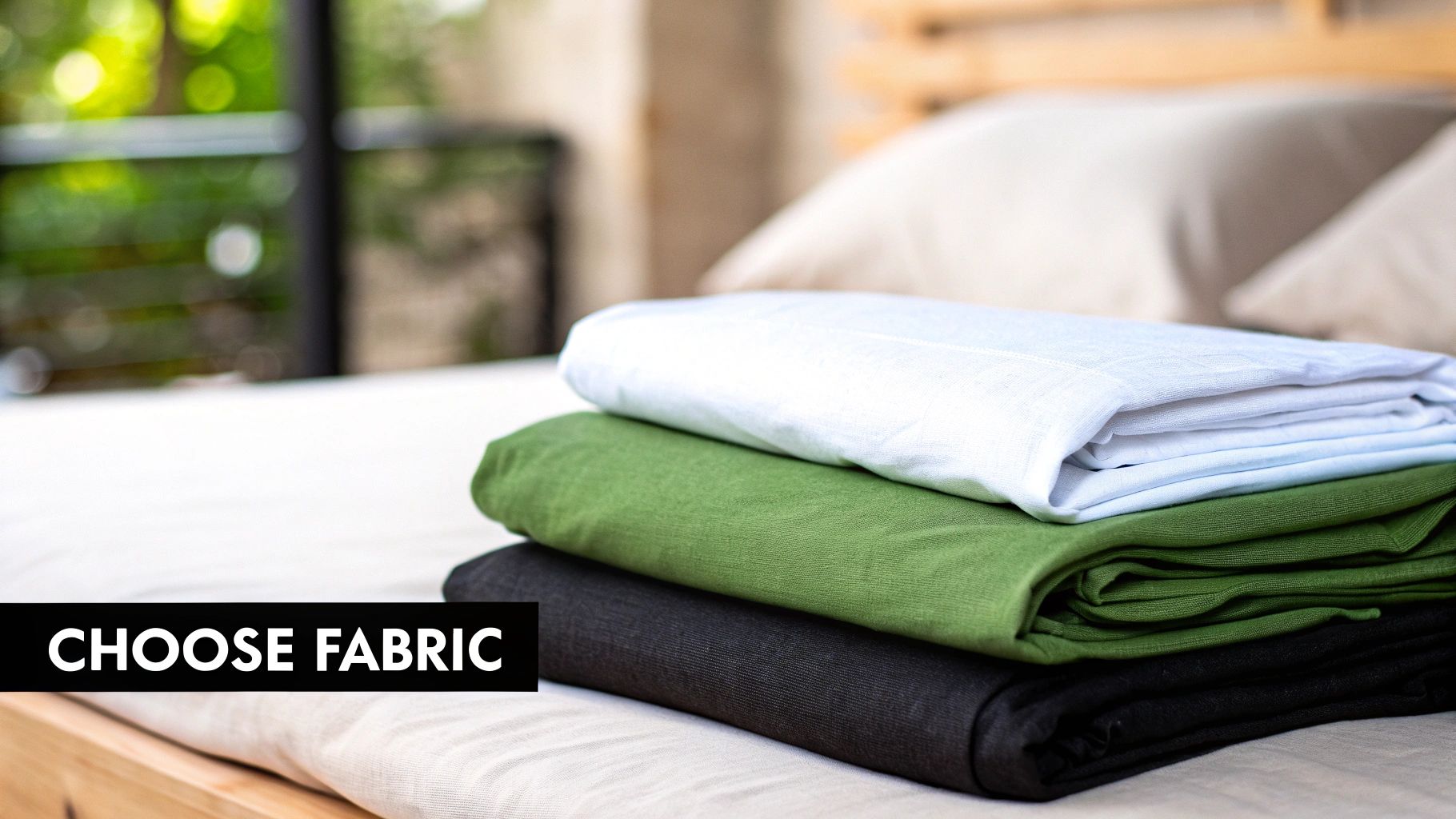
The fabric of your quilt cover set is about more than just looks—it’s what you feel against your skin all night, and it plays a huge part in your sleep quality. Here in Australia, the right choice often comes down to your local climate and, of course, what feels best to you.
Natural fibres are almost always the top pick, and for good reason. They just breathe better. Cotton is that crisp, reliable favourite you can use year-round, while linen gives you that beautiful, relaxed feel that’s an absolute lifesaver for regulating your temperature on those warm, sticky nights. If you want to take things up a notch, it’s worth understanding the benefits of Egyptian cotton fabric for a truly premium feel.
When the cooler months roll in, nothing beats the cosy warmth of flannelette. But if you’ve got a busy household where easy maintenance is king, a durable poly-blend can be a really practical choice that stands up to frequent washing. Getting to know the benefits of natural fibres in bedding can help you make a decision that leads to a much healthier, more comfortable sleep.
Finding the Right Quilt Cover Size for Your Bed
Getting the size of your quilt cover right is one of those small things that makes a huge difference to how your bed looks and feels. Too small, and the quilt inside bunches up into a lumpy mess. Too big, and it looks sloppy and flat, with annoying empty fabric flapping around the edges.
A good fit isn't just about looks, either—it means your quilt stays evenly spread out for a comfy, uninterrupted night's sleep.
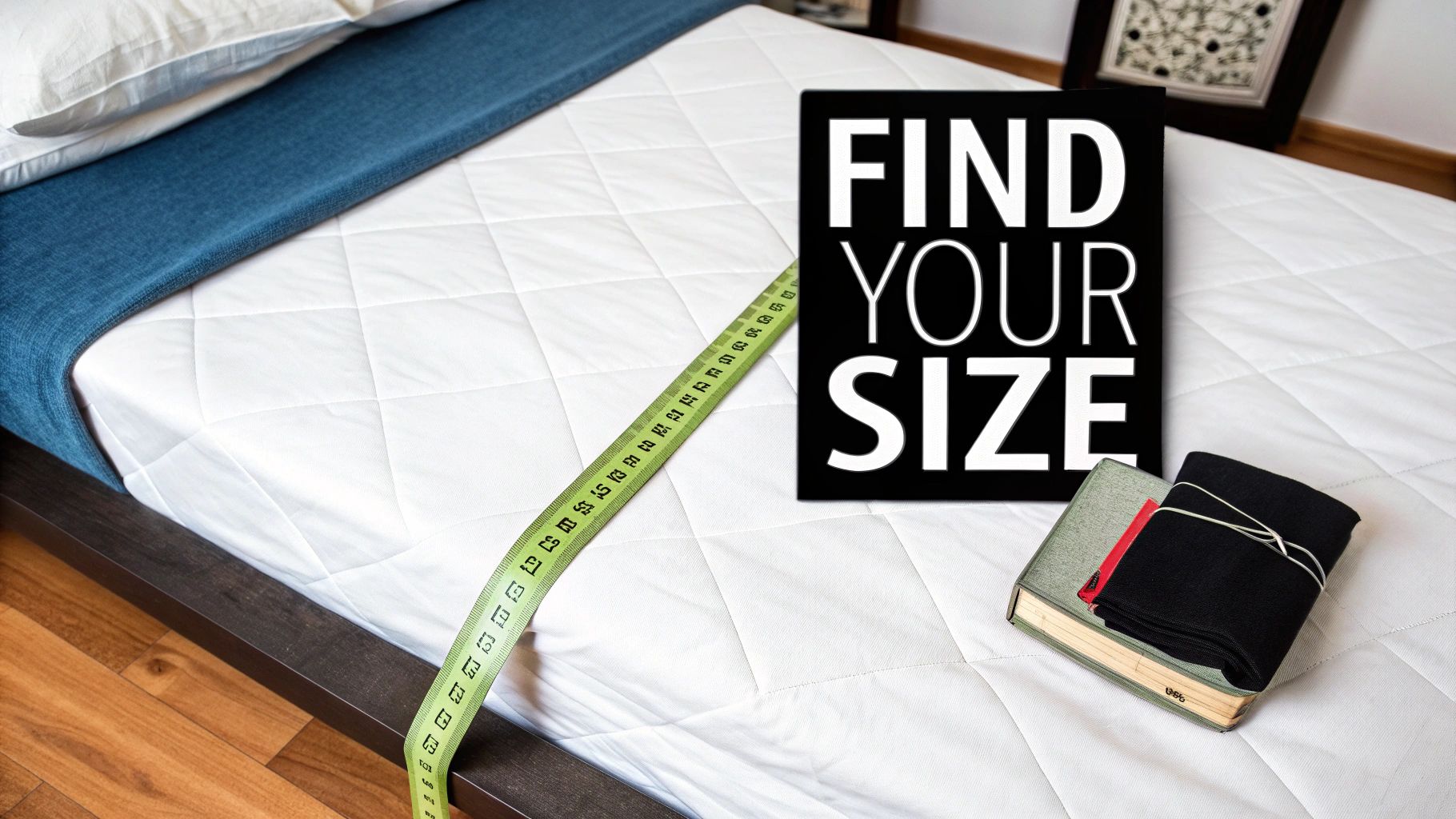
Standard Australian Quilt Cover Dimensions
Luckily, here in Australia, our bedding sizes are pretty straightforward, which makes matching your cover to your quilt a simple job. Most of the time, a Queen quilt cover will fit a Queen quilt perfectly.
Here’s a quick reference chart of typical quilt cover measurements to help you get that perfect fit.
| Bed Size | Typical Quilt Cover Size (cm) |
|---|---|
| Single | 140cm x 210cm |
| Double | 180cm x 210cm |
| Queen | 210cm x 210cm |
| King | 245cm x 210cm |
| Super King | 270cm x 240cm |
For a more detailed look at every measurement from Single to Super King, including mattress and pillowcase dimensions, our complete bedding size chart for Australia is the best place to start.
Pro Tip: If you love that luxurious, hotel-style drape, try sizing up. Using a King size quilt and cover on a Queen bed gives you a much more generous overhang. It also happens to be the secret weapon against any late-night tugs-of-war over the blankets
How to Look After Your Quilt Cover Set
A little bit of care goes a long way in keeping your favourite quilt cover set looking vibrant and feeling soft for years to come. You don't need any complicated routines, just a few simple habits.
Always turn your quilt cover and pillowcases inside out before they go into the machine. This is a simple trick that works wonders to protect the colours and any prints from fading or rubbing away during the wash. Stick to a gentle cycle with cold or warm water and use a mild detergent.
When it's time to dry, the best thing you can do for the fabric is to line dry it in the shade. The sun can be harsh and cause colours to fade over time. If you need to use a tumble dryer, just make sure it’s on a low heat setting to be safe.
For a complete guide on keeping all your bedding fresh, you can learn more about how often to wash and replace bedding in our detailed article.
Where to Buy Quilt Cover Sets in Australia
You’re in luck—finding a great quilt cover set in Australia is easier than ever. You can pop into any of the big department stores like Myer or David Jones, or head to specialty bedding shops like Adairs or Sheridan for a more curated selection.
For stylish sets that won’t break the bank, places like Kmart, Target, and Spotlight are always worth a look. They’re fantastic for giving your bedroom a quick, affordable refresh whenever the mood strikes.
But the real game-changer has been the explosion of online stores. With so many brands now selling directly to customers, you've got a massive range of unique designs right at your fingertips, often bundled into value-packed sets. This competition keeps prices sharp, and you can get a better sense of what’s out there by looking at Australian manchester retailing trends on ibisworld.com.
Got Questions About Quilt Cover Sets? We've Got Answers
Still have a few things you're wondering about? It's completely normal. Choosing new bedding can feel like a big decision, so let's clear up some of the most common questions we hear from our customers.
This quick guide will tackle everything from whether you still need a top sheet to what you can expect to find inside the packaging. Think of it as your final checklist to help you buy with confidence.